





Can high frequency power inverters handle motor startup loads?
- Understanding High-Frequency Power Inverters: Key Considerations for Your Purchase
- 1. What are high-frequency power inverters?
- 2. How do high-frequency inverters differ from low-frequency inverters?
- 3. What are the advantages of using high-frequency inverters?
- 4. Can high-frequency inverters handle motor startup loads?
- 5. What applications are high-frequency inverters best suited for?
- 6. What are the limitations of high-frequency inverters?
- 7. How do high-frequency inverters contribute to energy efficiency?
- 8. What factors should be considered when selecting a high-frequency inverter?
- About Congsin
Understanding High-Frequency Power Inverters: Key Considerations for Your Purchase
High-frequency power inverters have become integral in various applications due to their compact design and efficiency. However, selecting the right inverter requires a comprehensive understanding of their characteristics and suitability for specific tasks. Below are some frequently asked questions to guide your decision-making process.
1. What are high-frequency power inverters?
High-frequency power inverters are devices that convert direct current (DC) into alternating current (AC) using high-frequency switching technology, typically operating at frequencies above 20 kHz. This design allows for smaller, lighter components, making them ideal for applications where space and weight are critical factors.
2. How do high-frequency inverters differ from low-frequency inverters?
The primary differences between high-frequency and low-frequency inverters include:
Size and Weight: High-frequency inverters are compact and lightweight, while low-frequency inverters are bulkier and heavier due to larger transformers.
Efficiency: High-frequency inverters maintain high efficiency under light load or no load, beneficial for energy saving. In contrast, low-frequency inverters are more efficient under heavy load or overload conditions.
Surge Capacity: Low-frequency inverters can handle higher surge capacities, making them suitable for motorized equipment that requires significant startup power.
3. What are the advantages of using high-frequency inverters?
High-frequency inverters offer several benefits:
Compactness: Their small size makes them suitable for applications with limited space.
Lightweight: Reduced weight is advantageous in mobile power supplies and portable devices.
High Efficiency: They provide high efficiency under light load or no load, contributing to energy savings.
4. Can high-frequency inverters handle motor startup loads?
High-frequency inverters are generally not recommended for motor or compressor loads due to their limited surge capacity. They can be modified for such use in certain applications where weight savings are critical, but this requires consultation with the manufacturer.
5. What applications are high-frequency inverters best suited for?
High-frequency inverters are ideal for powering electronic devices, lighting, and small appliances that do not require high surge capacities. They are also suitable for off-grid power systems where space and weight are constraints.
6. What are the limitations of high-frequency inverters?
While high-frequency inverters are efficient and compact, they have limitations:
Surge Capacity: They may not handle high surge loads effectively, which is crucial for motorized equipment.
Output Waveform Quality: The output waveform may have certain distortion and harmonic content, making them less suitable for applications requiring high-quality power.
7. How do high-frequency inverters contribute to energy efficiency?
High-frequency inverters maintain high efficiency under light load or no load, which is beneficial for energy saving and consumption reduction. However, under heavy load or overload conditions, their efficiency may be greatly affected.
8. What factors should be considered when selecting a high-frequency inverter?
When choosing a high-frequency inverter, consider the following:
Load Type: Ensure the inverter matches the power requirements of your devices.
Surge Requirements: Verify if the inverter can handle the initial surge currents of your equipment.
Efficiency Needs: Assess the efficiency of the inverter under your typical operating conditions.
Size and Weight Constraints: Determine if the compactness and light weight of the inverter align with your application needs.
In conclusion, understanding the characteristics and limitations of high-frequency power inverters is essential for making informed purchasing decisions. For applications requiring handling of motor startup loads, consulting with manufacturers or considering low-frequency inverters may be more appropriate.
About Congsin
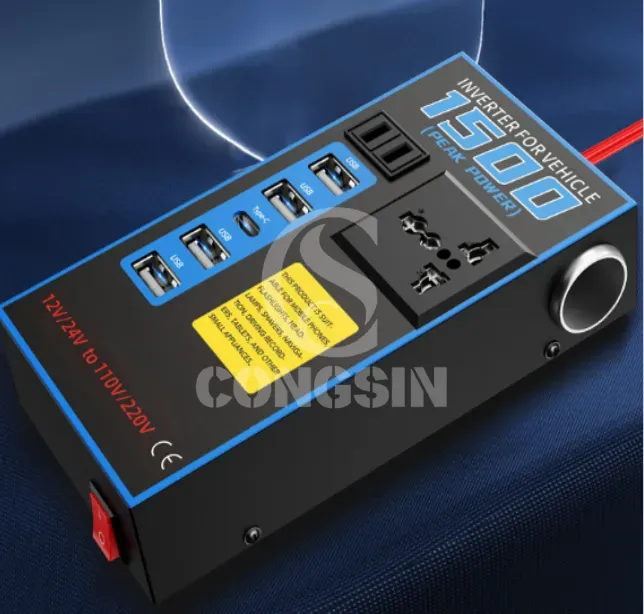
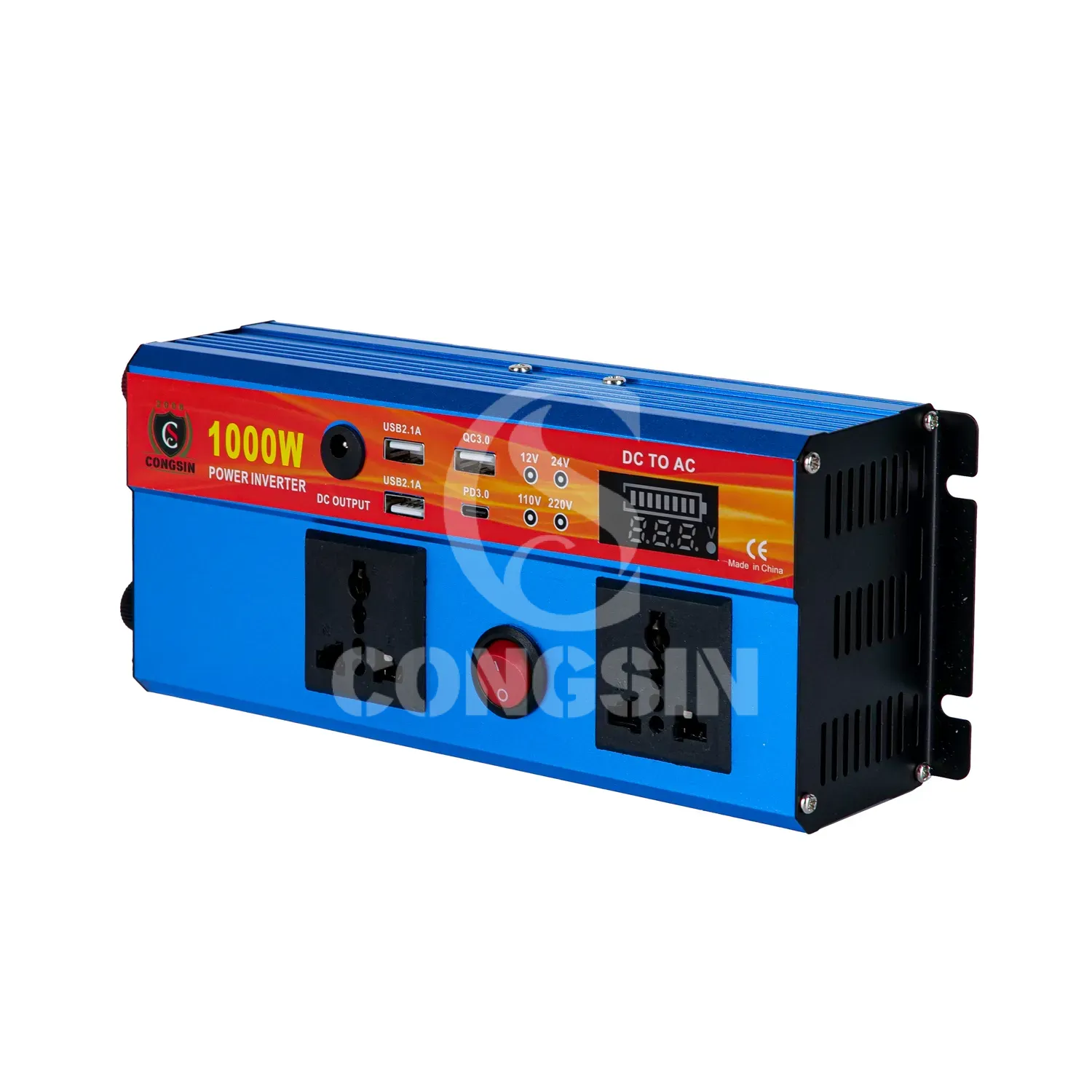
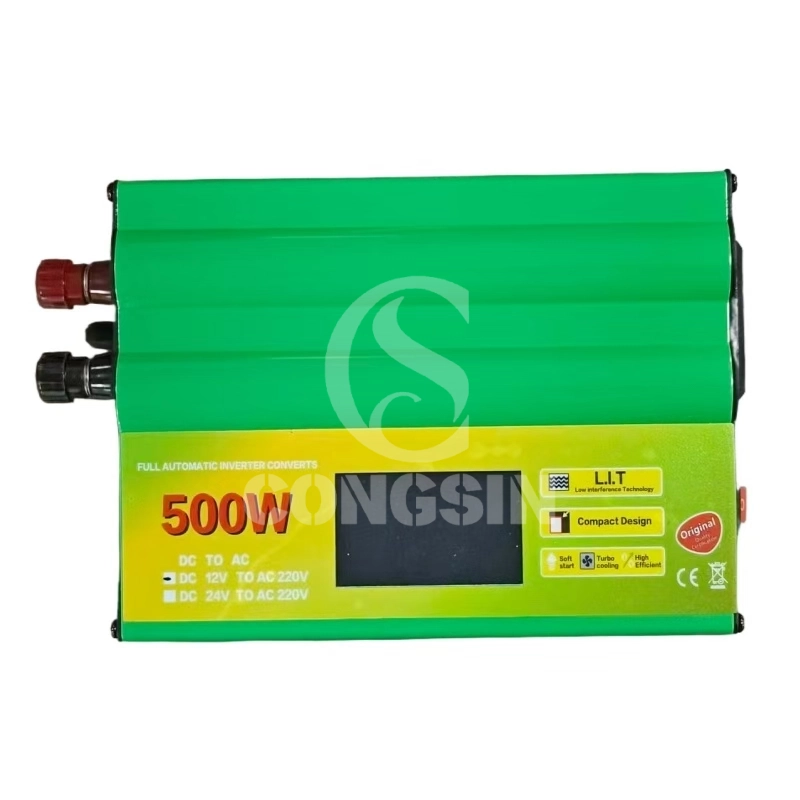
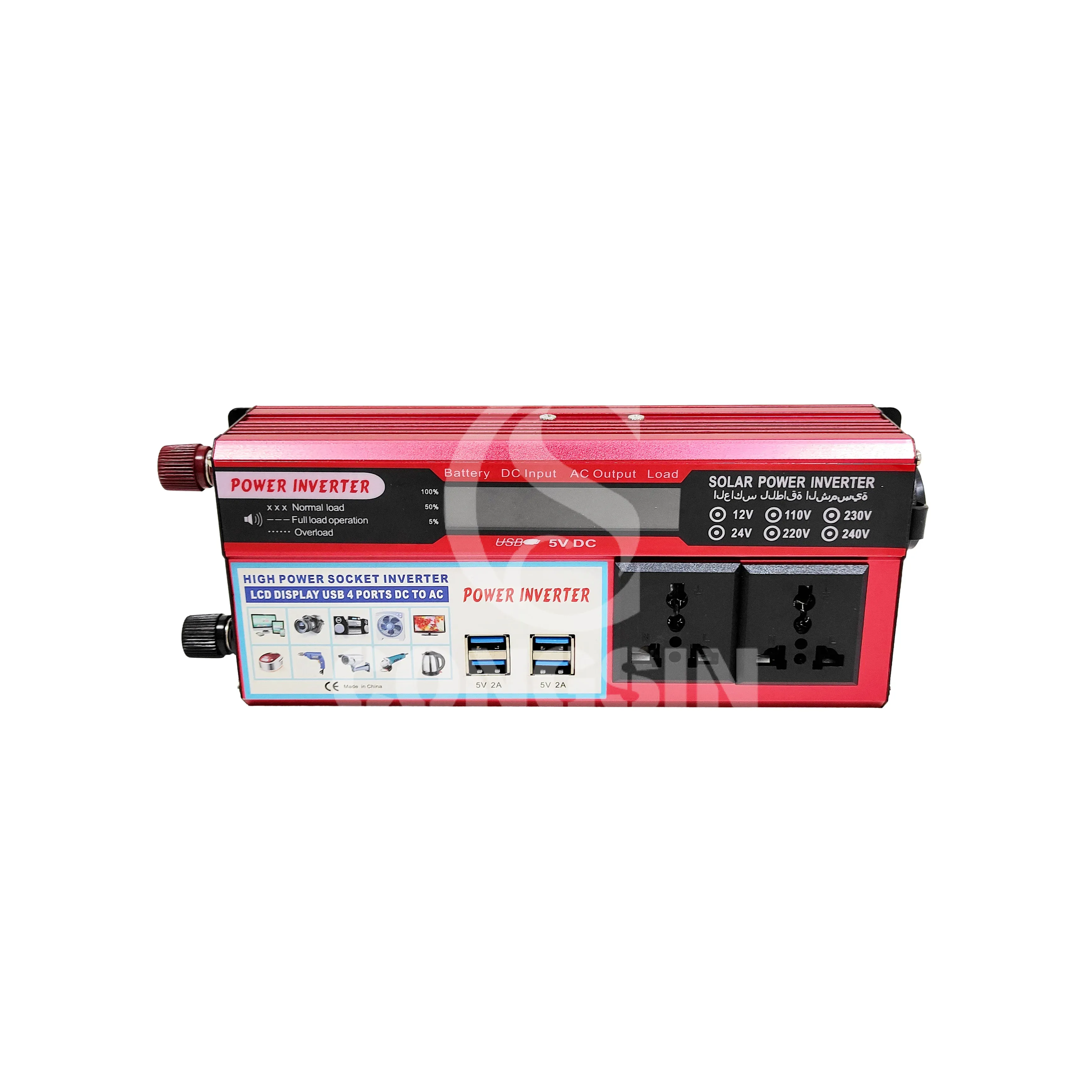
Congsin offers a range of high-quality power inverters designed to meet diverse application needs. With a focus on reliability, efficiency, and customer satisfaction, Congsin provides solutions tailored to your specific requirements.
References:


Modified Sine Wave Inverters
How to install the battery terminal wire?
Connect the red terminal wire to the positive pole of the battery and the black terminal wire to the negative pole. Ensure the interface is firm and there is no short circuit when connecting.
Can this 2000W inverter power an air conditioner?
If the air conditioner power is within 2000W and the input is AC220V, it can supply power normally. It is recommended to ensure stable power when starting.
Can other input voltages be customized?
Yes, the regular is DC12V, and DC24V, etc. can be customized. Please consult customer service for details.
What devices can this inverter support?
It can power laptops, phones, cameras, and other small appliances.
Pure Sine Wave Inverters
Can the 3 AC sockets drive high-power devices at the same time?
Yes, but it is necessary to ensure that the total power of the 3 devices does not exceed 2000W (continuous power). For example, it can drive 1 1000W electric oven + 1 500W microwave + 1 400W printer at the same time (total power 1900W), avoiding total power overload to trigger the protection mechanism.
Get in Touch with Our Team
You can also communicate with us directly through our online contact form. Please fill in the following information, and our team will contact you as soon as possible after receiving your message.

CONGSIN is a trusted OEM factory for power inverters, solar charge controllers, and DC converters. Reliable solutions for global B2B buyers.
 High Quality
 7/24 Service
 Guaranteed Warranty
© 2025 Congsin. All Rights Reserved.