





Are there OEM options from solar inverter manufacturers?
When embarking on the journey to integrate solar energy into your operations, selecting the right solar inverter manufacturer and understanding the availability of Original Equipment Manufacturer (OEM) options are pivotal. This guide addresses six specific, often overlooked questions that beginners frequently encounter, providing in-depth answers to assist you in making informed decisions.
1. What are the key factors to consider when selecting a solar inverter manufacturer?
Choosing the right solar inverter manufacturer involves evaluating several critical factors:
Proven Track Record and Reputation: Opt for manufacturers with a history of delivering reliable and efficient inverters. A strong reputation often correlates with product quality and customer satisfaction.
Manufacturing Process and Innovation: Assess the manufacturer's commitment to research and development, as well as their adherence to industry standards. Innovative manufacturing processes can lead to more efficient and durable products.
Product Certifications and Standards: Ensure the manufacturer complies with international certifications and standards, which are indicative of product safety and performance.
Warranty and Support Services: A robust warranty and responsive customer support are essential for long-term system reliability.
Range of Products and Inverter Types: Consider whether the manufacturer offers a variety of inverters suitable for your specific application, whether residential, commercial, or industrial.
Sustainability and Manufacturing Ethics: Evaluate the manufacturer's commitment to sustainable practices and ethical manufacturing processes.
By thoroughly assessing these factors, you can select a manufacturer that aligns with your project's requirements and values.
2. How do OEM solar inverter options differ from standard models?
Original Equipment Manufacturer (OEM) solar inverters are custom-designed to meet specific requirements, offering several advantages over standard models:
Customization: OEM inverters can be tailored to fit unique project specifications, including size, capacity, and functionality.
Branding: They allow for private labeling, enabling companies to market the inverters under their own brand name.
Integration: OEM inverters can be seamlessly integrated with other components of a solar energy system, ensuring optimal performance.
Support: Manufacturers often provide dedicated support for OEM products, ensuring they meet the specific needs of the client.
Opting for OEM inverters can lead to a more cohesive and efficient solar energy solution, tailored to your project's unique demands.
3. What are the common challenges faced by beginners when selecting solar inverters?
Beginners often encounter several challenges when selecting solar inverters:
Overlooking System Compatibility: Ensuring the inverter is compatible with existing solar panels and other system components is crucial.
Underestimating Power Requirements: Accurately calculating the energy needs of the system to select an appropriately sized inverter is essential.
Ignoring Environmental Conditions: Considering the operating environment, such as temperature extremes and humidity, can affect inverter performance and longevity.
Neglecting Future Scalability: Choosing an inverter that accommodates potential system expansions can save time and money in the long run.
Disregarding Warranty and Support: A robust warranty and responsive customer support are essential for long-term system reliability.
Addressing these challenges involves thorough research, accurate system assessments, and consultations with industry experts to ensure the selected inverter meets all project requirements.
4. How can I verify the reliability and quality of a solar inverter manufacturer?
To verify the reliability and quality of a solar inverter manufacturer:
Review Certifications and Standards: Check for compliance with international standards and certifications, which indicate adherence to quality and safety protocols.
Assess Manufacturing Facilities: Evaluate the manufacturer's production facilities for advanced technology, quality control measures, and adherence to industry best practices.
Examine Product Testing Procedures: Inquire about the manufacturer's testing protocols to ensure products perform reliably under various conditions.
Seek Customer Testimonials and Reviews: Look for feedback from previous clients to gauge satisfaction and product performance.
Evaluate Warranty and Support Services: A comprehensive warranty and accessible customer support are indicative of a manufacturer's confidence in their products.
By conducting thorough due diligence, you can confidently select a manufacturer that offers reliable and high-quality solar inverters.
5. What are the benefits of partnering with a reputable solar inverter manufacturer?
Partnering with a reputable solar inverter manufacturer offers several benefits:
Enhanced Product Quality: Established manufacturers are more likely to produce inverters that meet high standards of performance and durability.
Access to Advanced Technology: Reputable manufacturers often invest in research and development, providing access to the latest technological advancements.
Comprehensive Support Services: They typically offer robust customer support, including installation assistance, maintenance, and troubleshooting.
Long-Term Reliability: Products from reputable manufacturers are more likely to have longer lifespans and better warranties, ensuring sustained performance.
Choosing a reputable manufacturer can lead to a more efficient and reliable solar energy system, maximizing your investment.
6. How do I assess the scalability of a solar inverter for future system expansions?
To assess the scalability of a solar inverter:
Review Manufacturer Specifications: Examine the inverter's capacity and expansion capabilities as outlined by the manufacturer.
Consult with Industry Experts: Engage with professionals who can provide insights into the inverter's performance and scalability based on real-world applications.
Consider Modular Designs: Inverters with modular designs can facilitate easier upgrades and expansions.
Evaluate Compatibility with Future Technologies: Ensure the inverter can integrate with emerging technologies and system components.
By considering these factors, you can select an inverter that accommodates future growth and technological advancements, ensuring long-term system viability.
In conclusion, selecting the right solar inverter manufacturer and understanding the availability of OEM options are crucial steps in establishing a reliable and efficient solar energy system. By addressing these specific questions and considerations, you can make informed decisions that align with your project's unique requirements and objectives.
For personalized assistance and to receive a tailored quote, please contact us at info@csinverter.com or visit our website at www.csinverter.com.


Modified Sine Wave Inverters
How to install the battery terminal wire?
Connect the red terminal wire to the positive pole of the battery and the black terminal wire to the negative pole. Ensure the interface is firm and there is no short circuit when connecting.
How to connect to the battery?
Use the included battery clips, connect the red clip to the positive pole of the battery and the black clip to the negative pole. Ensure good contact and no short-circuit risk when connecting.
How to connect the battery with the battery clip?
Connect the positive and negative poles of the battery clip to the positive and negative poles of the battery respectively, and ensure a firm connection.
Can it be used with a car cigarette lighter socket?
Yes, it supports both battery clip and cigarette lighter connection.
Do you support OEM branding?
Yes, we offer logo, packaging, and label customization.
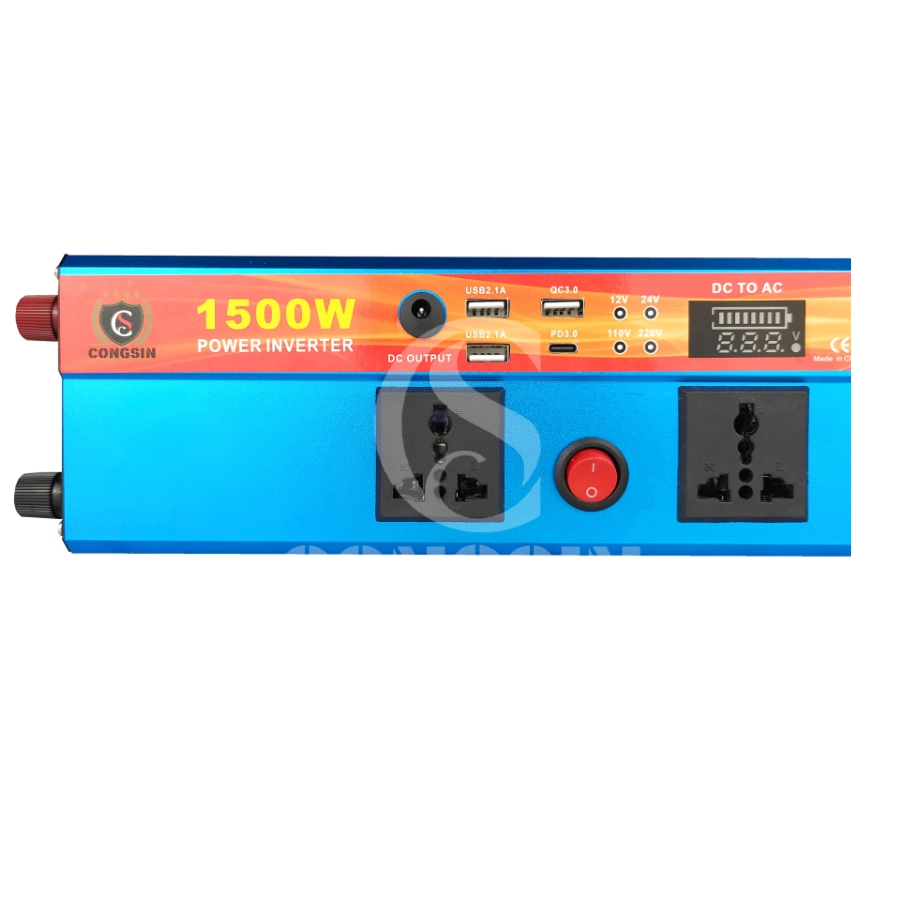
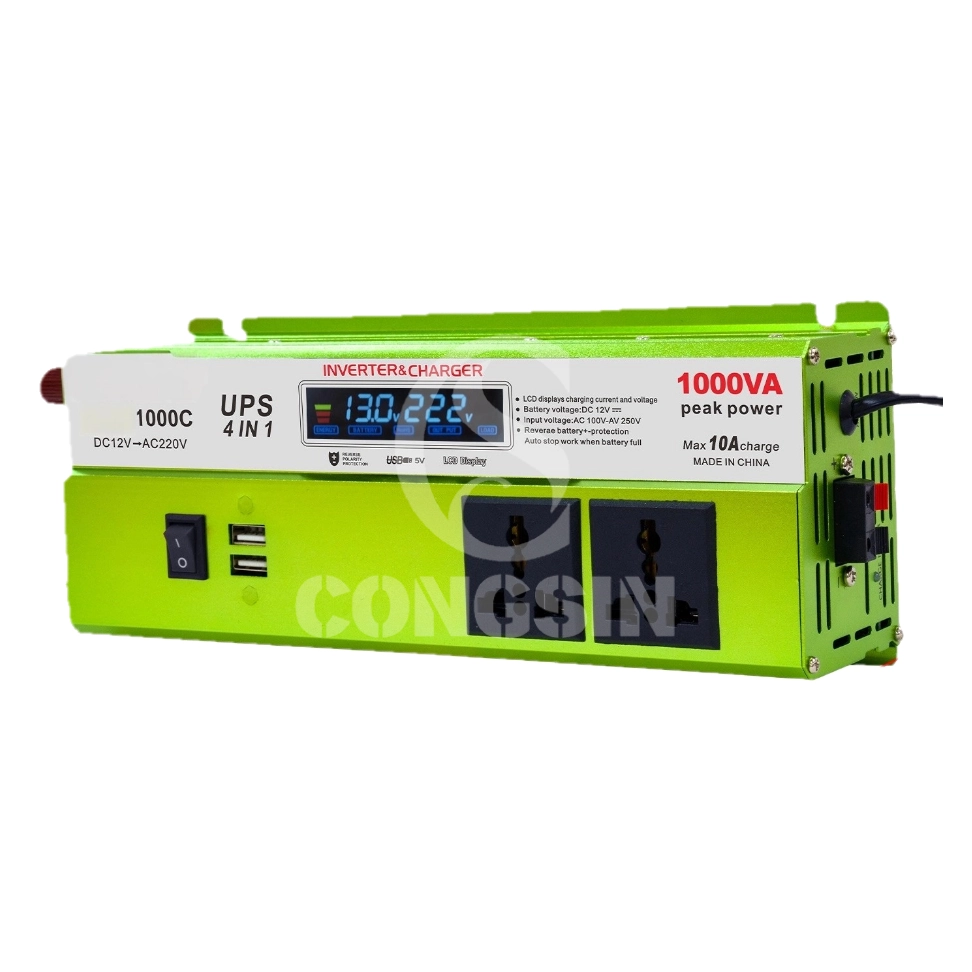
Our CS1000DDBC 1000W modified sine wave inverter is a professional power conversion device that converts DC 12V from batteries into AC 220V electricity. It is designed with user convenience in mind, featuring an LED display for real-time status monitoring, multiple charging ports (3 USB, 1 Type-C, 1 DC 12V) and two universal sockets to power a wide range of devices simultaneously. Its compact size (250×95×55mm) and lightweight design (NW: 0.84kg) make it easy to carry, ideal for outdoor activities, emergency home use, and on-the-go power needs.
Get in Touch with Our Team
You can also communicate with us directly through our online contact form. Please fill in the following information, and our team will contact you as soon as possible after receiving your message.

CONGSIN is a trusted OEM factory for power inverters, solar charge controllers, and DC converters. Reliable solutions for global B2B buyers.
 High Quality
 7/24 Service
 Guaranteed Warranty
© 2025 Congsin. All Rights Reserved.