





How do solar inverter manufacturers ensure grid compatibility?
- 1. What are the key factors to consider when selecting a solar inverter for residential use?
- 2. How do solar inverter manufacturers ensure grid compatibility?
- 3. What are the advantages of microinverters over traditional string inverters?
- 4. How do solar inverters contribute to energy storage solutions?
- 5. What are the latest technological advancements in solar inverter design?
- 6. How do environmental factors affect the performance of solar inverters?
1. What are the key factors to consider when selecting a solar inverter for residential use?
When choosing a solar inverter for your home, consider the following factors:
Type of Inverter: Decide between string inverters, microinverters, or hybrid inverters based on your system's needs.
Efficiency: Look for inverters with high conversion efficiency to maximize energy production.
Grid Compatibility: Ensure the inverter complies with local grid standards and regulations.
Warranty and Support: Opt for manufacturers offering robust warranties and reliable customer service.
Monitoring Capabilities: Choose inverters that provide real-time monitoring for system performance tracking.
Installation and Maintenance: Consider ease of installation and the availability of maintenance services.
2. How do solar inverter manufacturers ensure grid compatibility?
Solar inverter manufacturers ensure grid compatibility through several key measures:
Compliance with Standards: Manufacturers design inverters to meet international and local grid codes, ensuring safe and efficient operation.
Advanced Grid Support Features: Incorporating features like voltage and frequency ride-through, power factor correction, and anti-islanding protection to maintain grid stability.
Continuous Testing and Certification: Regular testing and obtaining certifications from recognized authorities validate the inverter's grid compliance.
Software Updates: Providing firmware updates to adapt to evolving grid requirements and standards.
Collaboration with Utilities: Engaging with utility companies to ensure inverters meet specific regional grid requirements.
3. What are the advantages of microinverters over traditional string inverters?
Microinverters offer several advantages over traditional string inverters:
Panel-Level Optimization: Each panel operates independently, reducing the impact of shading or panel mismatch.
Enhanced Safety: Lower DC voltage reduces the risk of electrical hazards.
Scalability: Easier to expand the system by adding more panels without significant redesign.
Improved Monitoring: Allows for detailed performance tracking of individual panels.
Increased Reliability: Reduces the likelihood of system-wide failures due to localized issues.
4. How do solar inverters contribute to energy storage solutions?
Solar inverters play a crucial role in energy storage solutions by:
DC to AC Conversion: Converting stored DC energy from batteries into usable AC power for home appliances.
Battery Management: Monitoring and managing battery charge and discharge cycles to prolong battery life.
Grid Interaction: Facilitating the export of excess stored energy to the grid or importing energy when necessary.
System Integration: Ensuring seamless integration between solar panels, batteries, and the grid for optimal energy flow.
5. What are the latest technological advancements in solar inverter design?
Recent technological advancements in solar inverter design include:
Smart Inverters: Incorporating advanced communication capabilities for grid management and monitoring.
Energy Management Systems: Integrating inverters with software solutions for real-time energy optimization.
Enhanced Efficiency: Utilizing wide voltage ranges and improved MPPT algorithms for better performance.
Compact and Modular Designs: Developing smaller, more efficient inverters for easier installation and scalability.
Advanced Cooling Techniques: Implementing innovative cooling methods to enhance reliability and lifespan.
6. How do environmental factors affect the performance of solar inverters?
Environmental factors can significantly impact solar inverter performance:
Temperature Extremes: High temperatures can reduce efficiency, while low temperatures may affect startup capabilities.
Humidity and Corrosion: High humidity levels can lead to corrosion of internal components, affecting longevity.
Dust and Debris: Accumulation can obstruct ventilation and cooling, leading to overheating.
Altitude: Higher altitudes with lower oxygen levels can affect cooling efficiency and inverter performance.
Electromagnetic Interference: Proximity to high-voltage lines or industrial equipment can cause interference, impacting inverter operation.
Understanding these factors is essential for selecting inverters with appropriate environmental ratings and ensuring optimal performance.
In conclusion, selecting the right solar inverter involves considering factors such as grid compatibility, efficiency, and environmental resilience. By understanding these aspects, you can make informed decisions that align with your energy needs and contribute to a sustainable future.
For personalized recommendations and a detailed quote, please contact us at info@csinverter.com or visit our website at www.csinverter.com.


Modified Sine Wave Inverters
Which country’s voltage standards does it support?
It defaults to AC 220V output, suitable for regions with 220V voltage standards such as China and Europe; it can also be customized to output AC 110V, suitable for regions with 110V voltage standards such as the United States and Japan.
Which regional plugs can be used with the universal socket?
The universal socket supports most national plug specifications, such as GB, US, EU, etc. (some require adapters), and can meet the use of devices in multiple regions.
Distributor
What kind of support can I expect from Feifan after becoming a distributor?
You will receive ongoing sales support, product training, technical assistance, and marketing resources to ensure your success.
Pure Sine Wave Inverters
Can the 3 AC sockets drive high-power devices at the same time?
Yes, but it is necessary to ensure that the total power of the 3 devices does not exceed 2000W (continuous power). For example, it can drive 1 1000W electric oven + 1 500W microwave + 1 400W printer at the same time (total power 1900W), avoiding total power overload to trigger the protection mechanism.
OEM & ODM Services
What certifications do your products comply with?
All products meet CE, RoHS, FCC, and other market-specific compliance standards.
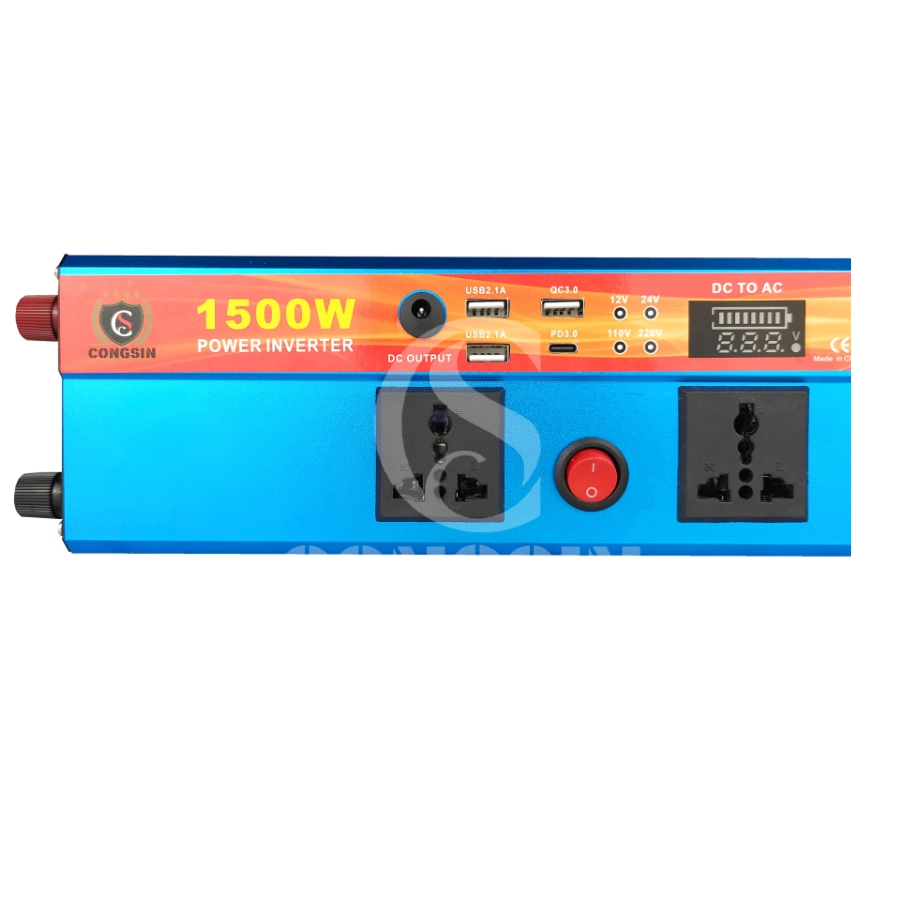
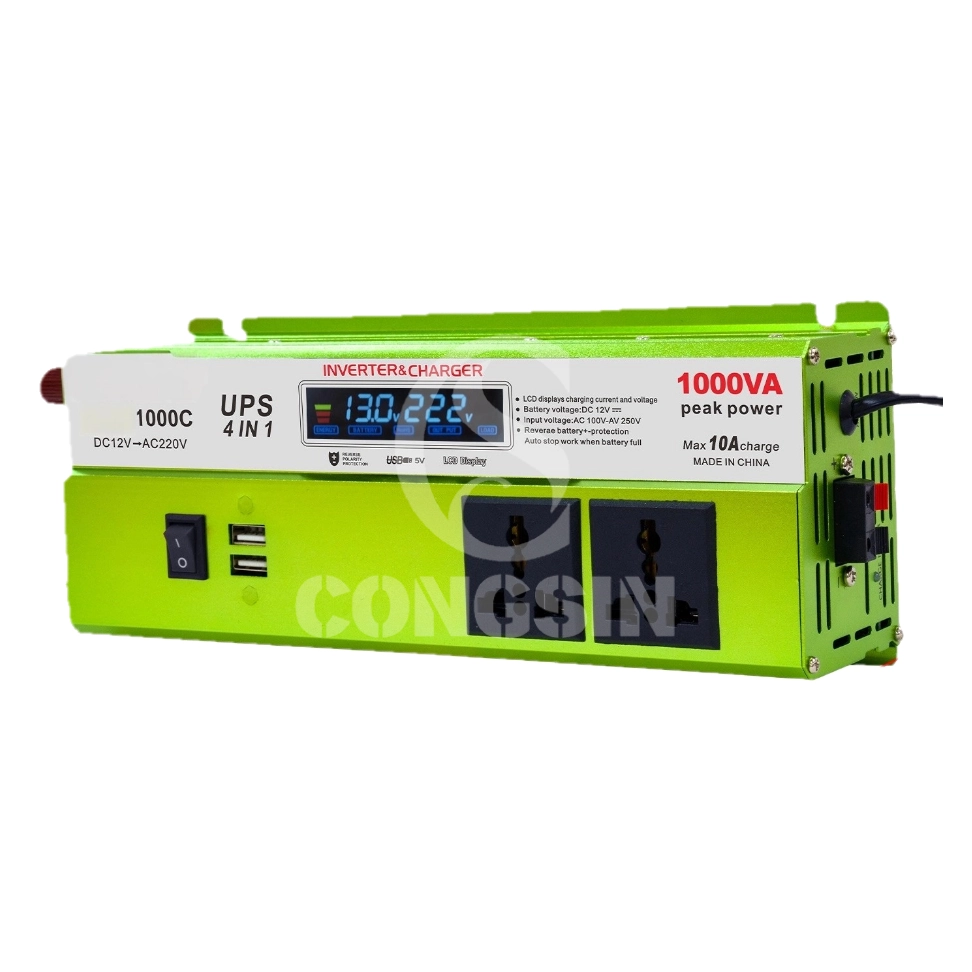
Our CS1000DDBC 1000W modified sine wave inverter is a professional power conversion device that converts DC 12V from batteries into AC 220V electricity. It is designed with user convenience in mind, featuring an LED display for real-time status monitoring, multiple charging ports (3 USB, 1 Type-C, 1 DC 12V) and two universal sockets to power a wide range of devices simultaneously. Its compact size (250×95×55mm) and lightweight design (NW: 0.84kg) make it easy to carry, ideal for outdoor activities, emergency home use, and on-the-go power needs.
Get in Touch with Our Team
You can also communicate with us directly through our online contact form. Please fill in the following information, and our team will contact you as soon as possible after receiving your message.

CONGSIN is a trusted OEM factory for power inverters, solar charge controllers, and DC converters. Reliable solutions for global B2B buyers.
 High Quality
 7/24 Service
 Guaranteed Warranty
© 2025 Congsin. All Rights Reserved.