





DIY 12V to 220V Car Inverter Circuit: Components, Working, and Step-by-Step Guide
- Introduction
- How does a car inverter circuit work?
- How do you build a simple 12V to 220V car inverter circuit?
- What components are needed to make a car power inverter?
- Is it safe to build a DIY car inverter circuit?
- What is the difference between a pure sine wave and modified sine wave inverter?
- How many watts can a standard car inverter handle?
- How do you safely connect an inverter circuit to a car battery?
- Why does a car inverter circuit need a transformer?
- Conclusion
- Call to Action
Introduction
Having the ability to harness household alternating current from your vehicle opens up a world of possibilities for road trips, mobile work environments, and emergency power backups. A car inverter circuit is the crucial piece of technology that bridges the gap between your vehicle's low-voltage electrical system and the high-voltage demands of standard consumer appliances. By understanding the inner workings of this system, you can unlock reliable, on-the-go electricity.
Building a DIY 12V to 220V car inverter circuit is an excellent endeavor for electronics enthusiasts wanting to deepen their knowledge of circuit design and power mechanics. This comprehensive guide will walk you through the core components, the fundamental working principles, and the step-by-step processes required to safely assemble and utilize your own battery power conversion system.
How does a car inverter circuit work?
A car inverter circuit operates by transforming the low-voltage direct current (DC) from your vehicle's battery into the high-voltage alternating current (AC) required by standard household appliances. According to Wikipedia, a power inverter is an electronic device or circuitry that changes direct current to alternating current, noting that the inverter itself does not produce power but simply relies on the DC source. This process is the foundation of battery power conversion, enabling you to run laptops, tools, and televisions right from your vehicle.
The core operation begins with an oscillator circuit. Since DC power is a flat, continuous line of voltage, it cannot pass through a transformer to be stepped up. The oscillator's job is to rapidly turn this DC voltage on and off, creating a pulsing or oscillating signal at a specific frequency, typically 50Hz or 60Hz, depending on your region's grid standard.
Once the oscillating signal is generated, it must be amplified before it reaches the transformer. This is where MOSFET switching comes into play. High-power MOSFETs act as electronic switches that take the weak pulsating signal from the oscillator and drive large amounts of current from the car battery into the transformer's primary winding in an alternating fashion.
Finally, this alternating high-current, low-voltage electricity is fed into a step-up transformer. The transformer uses electromagnetic induction to convert the 12V AC input into a 220V AC output. By utilizing a push-pull power inverter topology, the circuit efficiently alternates the current through the transformer coils, completing the 12V DC to 220V AC converter process.
How do you build a simple 12V to 220V car inverter circuit?
Building a functional DIY 12V to 220V car inverter circuit requires a systematic approach, starting with a clear schematic and a stable workspace. For beginners, utilizing a solderless breadboard is highly recommended for initial prototyping. This allows you to test the oscillator and switching stages without permanently soldering delicate electronic components, ensuring your logic is sound before moving to a printed circuit board (PCB).
The first practical step is to assemble the oscillator and driver stage. Using an integrated circuit (IC) like the CD4047 or the popular NE555 timer, you can generate the required 50Hz square wave. You will need to wire the IC with specific resistors and capacitors to tune the frequency accurately. A multimeter or oscilloscope is invaluable here to verify that the IC is producing a clean, stable pulse.
Once the oscillator is functioning, the next phase is connecting the MOSFETs. The outputs from your IC will connect to the gate pins of your MOSFET transistors. Because these components will handle significant battery power conversion, they must be mounted on robust aluminum heat sinks to dissipate extreme temperatures. The source pins are grounded, while the drain pins are connected to the primary side of your transformer.
The final step involves connecting the step-up transformer and rigorously testing the system. Wire the center tap of the transformer's primary coil to the positive terminal of your 12V battery. Before connecting any high-value appliances, use a multimeter to measure the output voltage on the secondary coil. Start testing with a low-wattage load, like a small incandescent bulb, to ensure the circuit operates safely and without overheating.
What components are needed to make a car power inverter?
To successfully construct a reliable 12V DC to 220V AC converter, you must gather a specific set of active and passive electronic components. Sourcing high-quality parts is crucial, as the stresses of power conversion can quickly destroy cheap or under-rated materials. You will primarily need components divided into three functional categories: signal generation, power switching, and voltage transformation.
The brain and brawn of your inverter circuit will consist of standard, easily accessible components. Here is a fundamental checklist of what you will need:
- Oscillator IC: A CD4047, SG3524, or NE555 timer chip to generate the base frequency.
- Power MOSFETs: N-channel MOSFETs like the IRFZ44N or IRF3205 for high-current switching.
- Passive Components: Assorted resistors (e.g., 1kΩ, 10kΩ) and capacitors (e.g., 0.1µF, 2200µF) for frequency tuning and noise filtering.
- Step-Up Transformer: A heavy-duty 12V-0-12V to 220V center-tapped transformer rated for your target wattage.
Beyond the electronic components, you must also invest in hardware designed to manage heat and extreme current. Massive amounts of current will flow through the low-voltage side of the circuit, necessitating thick copper wiring (at least 10 AWG or thicker, depending on wattage) and large aluminum heat sinks for the MOSFETs. Without adequate cooling, the transistors will experience thermal runaway and fail catastrophically.
Finally, protective equipment and casing are non-negotiable for a permanent build. You will need inline DC fuses to protect against short circuits, a rugged enclosure to prevent accidental contact with the 220V AC output, and properly rated AC sockets. Adding a small DC cooling fan to the enclosure will drastically improve the longevity and reliability of your DIY power inverter.
Is it safe to build a DIY car inverter circuit?
Safety is the single most critical factor when designing and building a DIY car inverter circuit. You are inherently dealing with 220V AC, which is a lethal voltage capable of causing severe injury or death upon contact. Therefore, this project should only be undertaken by individuals with a solid understanding of electrical safety protocols, proper high-voltage insulation techniques, and circuit protection mechanisms.
While the high-voltage side poses a severe shock hazard, the low-voltage DC side presents an equally dangerous fire hazard. A standard car battery can deliver hundreds of amps of current in an instant. If your MOSFET switching stage fails or a short circuit occurs in the primary wiring, the resulting current draw can instantly melt wires, destroy components, and cause catastrophic battery explosions or engine compartment fires.
To mitigate these extreme risks, implementing strict safety measures is absolutely mandatory. Always use an inline fuse placed as close to the positive terminal of the car battery as physically possible. Ensure that all high-voltage connections on the step-up transformer and AC output sockets are heavily insulated with heat shrink tubing or electrical tape. Never operate a bare, live circuit board on a conductive surface or near flammable materials.
Ultimately, a DIY inverter is an excellent educational tool for understanding power inverter topology, but it may not be safe for long-term, unattended consumer use in a moving vehicle. For daily applications—such as powering medical devices, RV appliances, or running heavy power tools—purchasing a commercially manufactured and safety-certified (e.g., UL or CE rated) inverter is always the smartest and safest route.
What is the difference between a pure sine wave and modified sine wave inverter?
The primary difference between a pure sine wave and a modified sine wave inverter lies in the quality and physical shape of the AC waveform they produce. A pure sine wave inverter generates a smooth, rolling, continuous wave that perfectly mimics the electricity supplied by your local utility grid. As detailed by experts at Inverter.com, pure sine wave inverters produce high-quality AC power that is universally compatible with sensitive electronic equipment and complex inductive loads.
Conversely, a modified sine wave inverter produces a "blocky" or stepped waveform. Instead of a smooth transition, the voltage jumps abruptly from zero to peak positive, back to zero, and then to peak negative. While this method is much easier and cheaper to achieve electronically using basic MOSFET switching, the resulting harmonic distortion can cause inefficiencies and operational issues in modern appliances.
The impact of these waveforms on your equipment is highly noticeable. Simple resistive loads, such as incandescent light bulbs or basic heating elements, will run perfectly well on a modified sine wave. However, sensitive electronics, devices with AC motors (like refrigerators, fans, or power tools), and audio equipment often suffer. They may run hotter, produce a loud audible hum, or fail to operate entirely when powered by a modified block wave.
When building or buying a 12V DC to 220V AC converter, the choice ultimately comes down to a trade-off between cost and performance. A DIY modified sine wave or square wave inverter is an excellent, low-cost weekend project for lighting and basic tools. However, if your goal is reliable battery power conversion for modern laptops, medical CPAP machines, or variable speed motors, investing in pure sine wave architecture is absolutely essential.
How many watts can a standard car inverter handle?
The total wattage a car inverter can handle depends entirely on how it is connected to the vehicle's electrical system and the thermal rating of the inverter itself. If you are plugging a small commercial inverter directly into your car's 12V auxiliary power outlet (traditionally the cigarette lighter), you are severely limited by the vehicle's internal wiring and cabin fuses. Typically, these convenience outlets can only safely provide 120W to 150W of continuous power.
To handle significantly higher electrical loads, the inverter must bypass the internal dashboard wiring and connect directly to the car's 12V battery using heavy-duty cables. When hardwired in this robust manner, standard consumer inverters can easily handle anywhere from 300W to 3000W or more. However, the physical size of the internal step-up transformer and the heat dissipation capacity of the MOSFETs will dictate the absolute maximum continuous draw.
It is also vital to consider the capability of your vehicle's alternator. While the battery provides the initial surge of energy, the alternator is responsible for replenishing it. Most standard car alternators generate between 50 and 100 amps, meaning they can sustain a continuous power draw of about 600W to 1200W while the engine is running. Pulling 3000W continuously will rapidly drain the battery, even with the vehicle running.
When calculating your specific wattage needs, you must always account for both continuous running watts and peak surge watts. Devices with electric motors, such as power saws or mini-fridges, can draw two to three times their rated running wattage during the first few seconds of startup. Your inverter circuit must be properly sized to handle this brief power spike without tripping its internal overload protection.
How do you safely connect an inverter circuit to a car battery?
Safely connecting an inverter to a car battery requires precision and the correct gauge of power wiring. Because of the low DC voltage (12V), pulling a high wattage output requires a massive amount of input current. Using undersized wires will result in severe voltage drops, rapid overheating, and a significant risk of an electrical fire. Always consult an AWG wire chart to select the appropriate cable thickness for your inverter's maximum amp rating.
The physical connection process should be handled with extreme care to avoid sparking, shorts, or battery damage. Begin by ensuring the inverter's main switch is in the "OFF" position. First, bolt the thick red cable to the positive (+) terminal of the inverter, and then clamp or bolt it to the positive (+) terminal of the car battery. Next, connect the thick black cable to the negative (-) terminal of the inverter, and finally to the vehicle's chassis ground or the negative battery terminal.
Integrating an inline DC fuse is a non-negotiable safety step in this connection process. The fuse should be permanently installed on the positive power cable, as close to the car battery terminal as physically possible. If the main power cable ever gets pinched or shorts out against the vehicle's metal frame during transit, this fuse will blow instantly, severing the connection and preventing a catastrophic fire.
Finally, always consider the operational environment and battery health. Operate the inverter in a well-ventilated area to prevent the dangerous buildup of heat or explosive battery gases. Furthermore, if you are drawing significant power through battery power conversion, it is best practice to keep the vehicle's engine running. This allows the alternator to shoulder the load, preventing you from completely draining the battery and getting stranded.
Why does a car inverter circuit need a transformer?
A step-up transformer is the heavy, beating heart of any traditional car inverter circuit because it fundamentally bridges the massive voltage gap between the power source and the load. Your vehicle's electrical system operates at a nominal 12 Volts DC, but household appliances require 220 Volts AC. Electronic switching logic alone cannot increase the amplitude of the voltage to this extreme level; it requires magnetic transformation.
The transformer accomplishes this incredible feat through the principles of electromagnetic induction. When the MOSFET switching stage sends rapid pulses of low-voltage AC into the primary winding of the transformer, it creates a violently fluctuating magnetic field in the iron core. This changing magnetic field induces a voltage in the secondary winding. Because the secondary winding has significantly more turns of copper wire than the primary winding, the voltage is physically "stepped up" to 220V.
In a typical push-pull power inverter topology, a center-tapped transformer is heavily utilized for efficiency. The 12V positive connection is wired directly to the center tap of the primary coil, while the MOSFETs alternately ground the outer ends of the coil. This creates an alternating magnetic flux that efficiently pushes and pulls energy through the core, reliably generating the required high voltage on the output side.
Beyond simple voltage conversion, the transformer provides a crucial safety feature known as galvanic isolation. Because the 12V primary side and the 220V secondary side are only linked by an invisible magnetic field—not by direct electrical wires—a catastrophic failure on the high-voltage side is less likely to send lethal currents back into the vehicle's sensitive 12V electronics. This isolation protects both the user and the car's expensive computer systems.
Conclusion
Building a DIY 12V to 220V car inverter circuit is an exceptionally rewarding project that completely demystifies the complex mechanics of battery power conversion. By understanding the intricate, synchronized dance between oscillator ICs, MOSFET switching logic, and the vital role of the step-up transformer, electronics enthusiasts can gain invaluable hands-on experience with fundamental power electronics. Whether you aim to run basic lights during a remote camping trip or power emergency tools, knowing exactly how these circuits operate is highly beneficial.
However, as with any advanced project involving high voltage, profound respect for electrical safety must remain your top priority. While creating a square or modified sine wave inverter is highly achievable on a home workbench, scaling up to handle massive wattages or powering sensitive pure sine wave electronics demands precision engineering. Always utilize proper fusing, thick-gauge wiring, and robust heat management to ensure your bespoke 12V DC to 220V AC converter serves you safely, efficiently, and reliably for years to come.
Call to Action
If you need expert assistance, professional-grade components, or custom safety advice for your next electrical project, contact us today for a comprehensive professional consultation.


Modified Sine Wave Inverters
Can 4 USB ports charge 4 mobile phones at the same time?
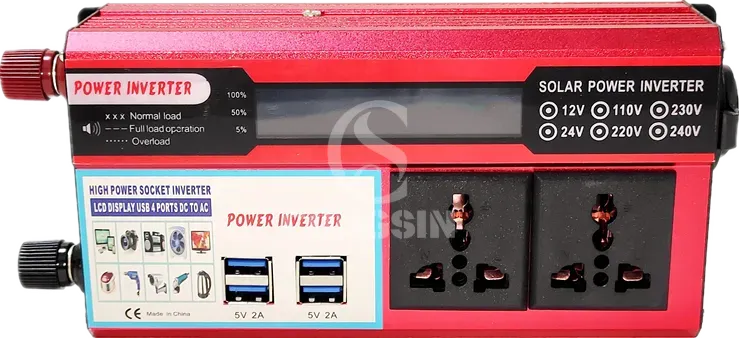
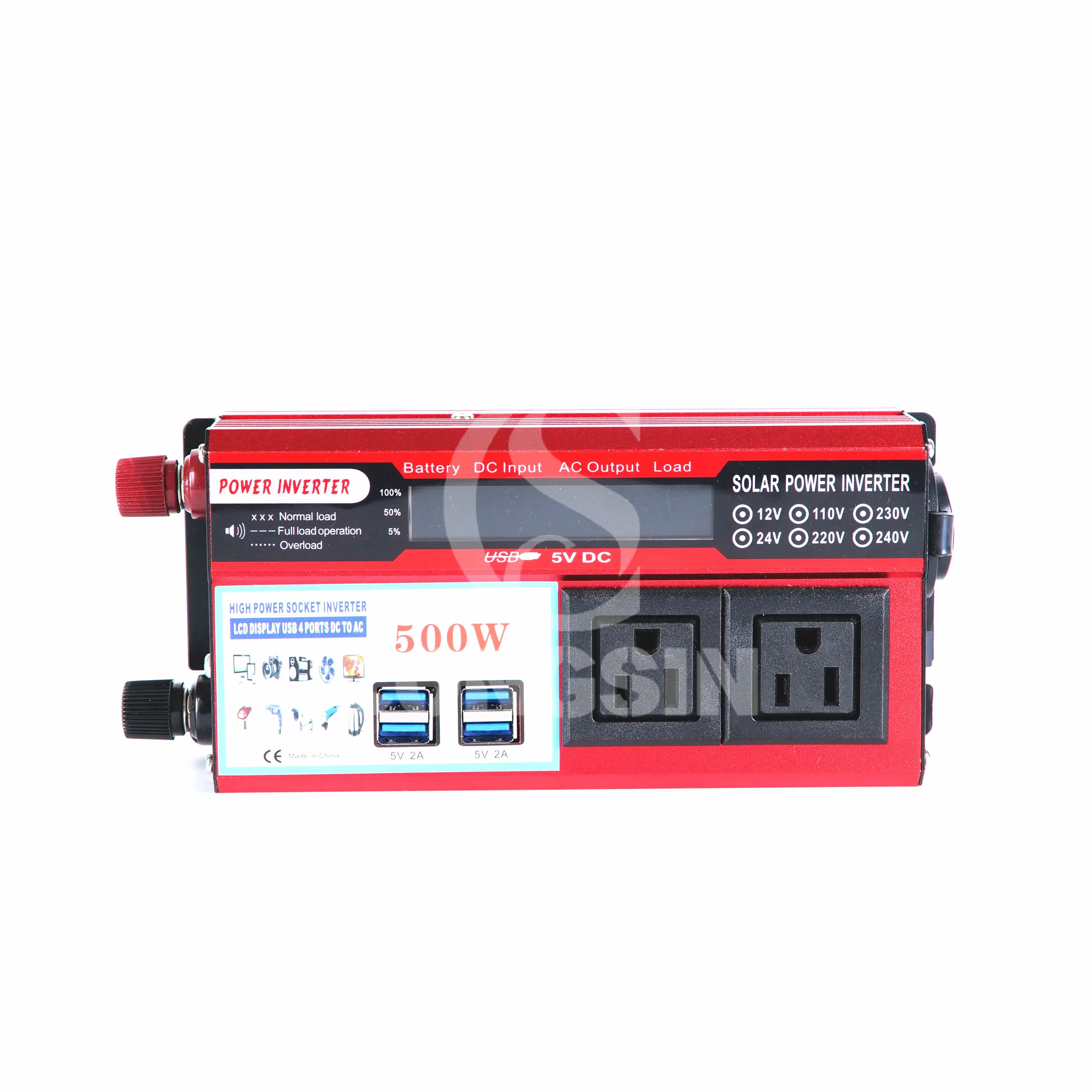
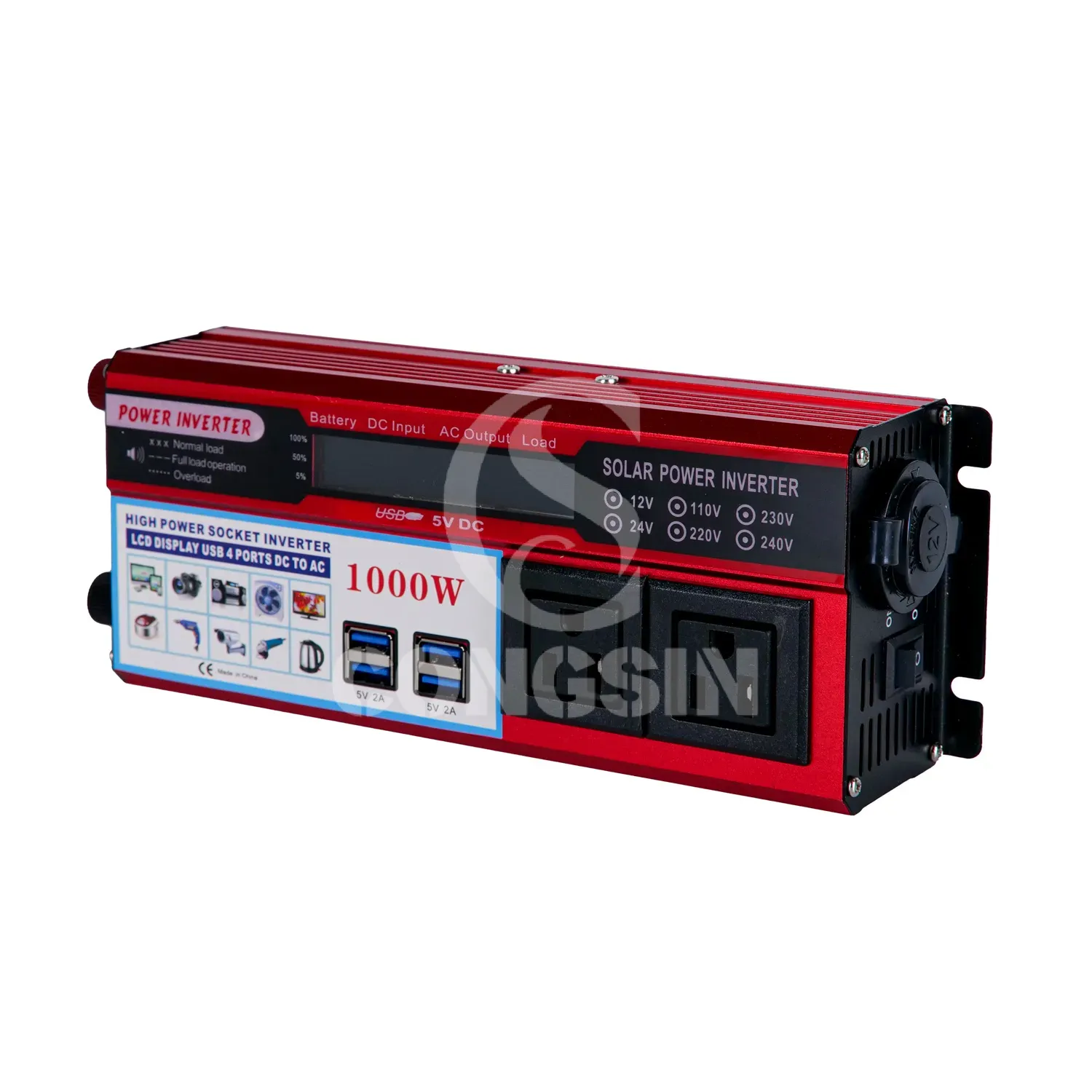
Yes, the total current of 6.8A can support simultaneous fast charging of multiple devices, and the charging efficiency is guaranteed.
What devices can this inverter support?
It can power laptops, phones, cameras, and other small appliances.
What is the function of the independent control switch?
The independent control switches for DC and AC can respectively control the on and off of DC and AC circuits, facilitating the separate management of power supply for different types of devices and improving power usage safety and flexibility.
How many devices can it power at the same time?
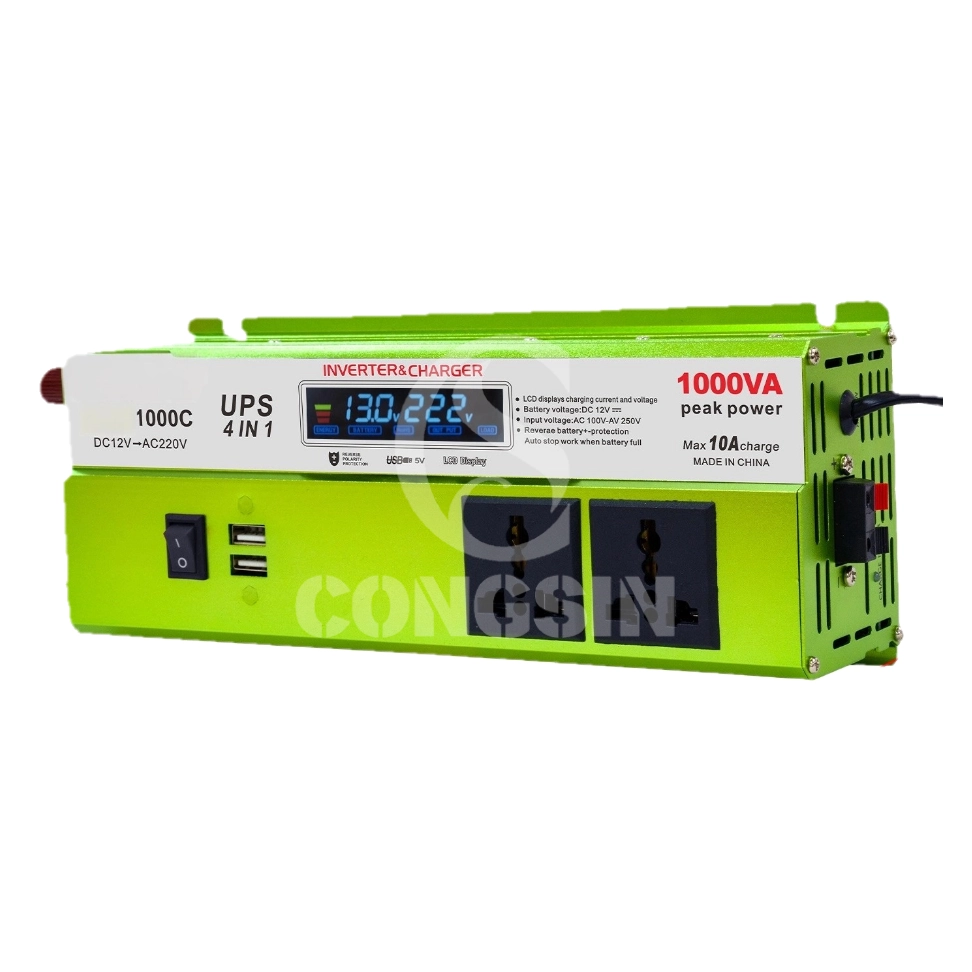
Dual universal sockets + two USB ports can power multiple devices (such as two home appliances + two mobile phones) at the same time, as long as the total power does not exceed 600W.
Pure Sine Wave Inverters
Is the remote control standard?
It’s optional and available upon request.
Get in Touch with Our Team
You can also communicate with us directly through our online contact form. Please fill in the following information, and our team will contact you as soon as possible after receiving your message.

CONGSIN is a trusted OEM factory for power inverters, solar charge controllers, and DC converters. Reliable solutions for global B2B buyers.
 High Quality
 7/24 Service
 Guaranteed Warranty
© 2025 Congsin. All Rights Reserved.