





How to choose the best bidirectional battery inverter?
Selecting the right bidirectional battery inverter is crucial for optimizing your energy system's performance and ensuring long-term reliability. This guide addresses common questions faced by beginners and provides in-depth answers to assist in making an informed decision.
1. What is a bidirectional battery inverter, and how does it differ from unidirectional inverters?
A bidirectional battery inverter is a device that facilitates two-way energy flow between your battery storage and the electrical grid or connected loads. Unlike unidirectional inverters, which only convert DC to AC for powering appliances, bidirectional inverters also convert AC from the grid into DC to charge batteries. This functionality enables energy storage during low-demand periods and supplies power during outages or peak demand times, enhancing energy independence and system efficiency.
2. How do I determine the appropriate power capacity for my bidirectional battery inverter?
To select an inverter with the right power capacity, assess your maximum load requirements and consider the startup surge of appliances. For instance, devices like refrigerators and air conditioners may require 3-5 times their rated power during startup. It's advisable to choose an inverter with a capacity 20-30% higher than your total load to accommodate these surges and prevent overloading.
3. What are the key efficiency metrics to consider when selecting a bidirectional battery inverter?
Inverter efficiency is a critical factor in minimizing energy loss. Look for inverters with high conversion efficiency (above 95%) to ensure optimal performance. Additionally, consider the Maximum Power Point Tracking (MPPT) efficiency, which affects how effectively the inverter manages varying solar input. High MPPT efficiency (close to 99%) is particularly important in installations with limited space or variable sunlight conditions.
4. How do I ensure compatibility between my inverter and battery system?
Compatibility between the inverter and battery is essential for system performance and longevity. Verify that the inverter supports your battery type (e.g., lead-acid, LiFePO₄, or ternary lithium) and matches the battery's voltage and communication protocols. Mismatched components can lead to inefficiencies or potential damage. Consult both the inverter and battery manufacturers' specifications to confirm compatibility.
5. What safety features should I look for in a bidirectional battery inverter?
Safety is paramount when selecting an inverter. Ensure the inverter includes essential protection mechanisms such as overload, short-circuit, and over-temperature protection. Additionally, features like arc fault detection and ground fault protection can prevent potential hazards. Review the inverter's certifications to confirm compliance with industry safety standards.
6. How do I assess the warranty and support services offered by inverter manufacturers?
A robust warranty and reliable customer support are vital for long-term system reliability. Look for inverters that offer a minimum of a 5-year warranty, with extended warranties providing additional peace of mind. Evaluate the manufacturer's reputation for customer service, availability of technical support, and responsiveness to inquiries. Research user reviews and testimonials to gauge overall satisfaction with the manufacturer's support services.
By carefully considering these factors, you can select a bidirectional battery inverter that aligns with your energy needs, enhances system efficiency, and ensures safety and reliability.
For personalized assistance and a detailed quote, please contact us at info@csinverter.com or visit our website at www.csinverter.com.


Pure Sine Wave Inverters
Can the 3 AC sockets drive high-power devices at the same time?
Yes, but it is necessary to ensure that the total power of the 3 devices does not exceed 2000W (continuous power). For example, it can drive 1 1000W electric oven + 1 500W microwave + 1 400W printer at the same time (total power 1900W), avoiding total power overload to trigger the protection mechanism.
Does it include protection features?
Yes, it has sixfold safety protection for reliable performance.
Modified Sine Wave Inverters
Can it drive a 3000W air conditioner?
Yes. Air conditioners have instantaneous power during startup (about 2-3 times the rated power), and this product has a peak power of 6000W, which can meet the startup and operation needs of a 3000W air conditioner; the battery capacity must be ≥150Ah to ensure continuous power supply.
Can I customize the color and logo?
Yes, OEM/ODM customization is supported.
How to connect the battery with the battery clip?
Connect the positive and negative poles of the battery clip to the positive and negative poles of the battery respectively, and ensure a firm connection.
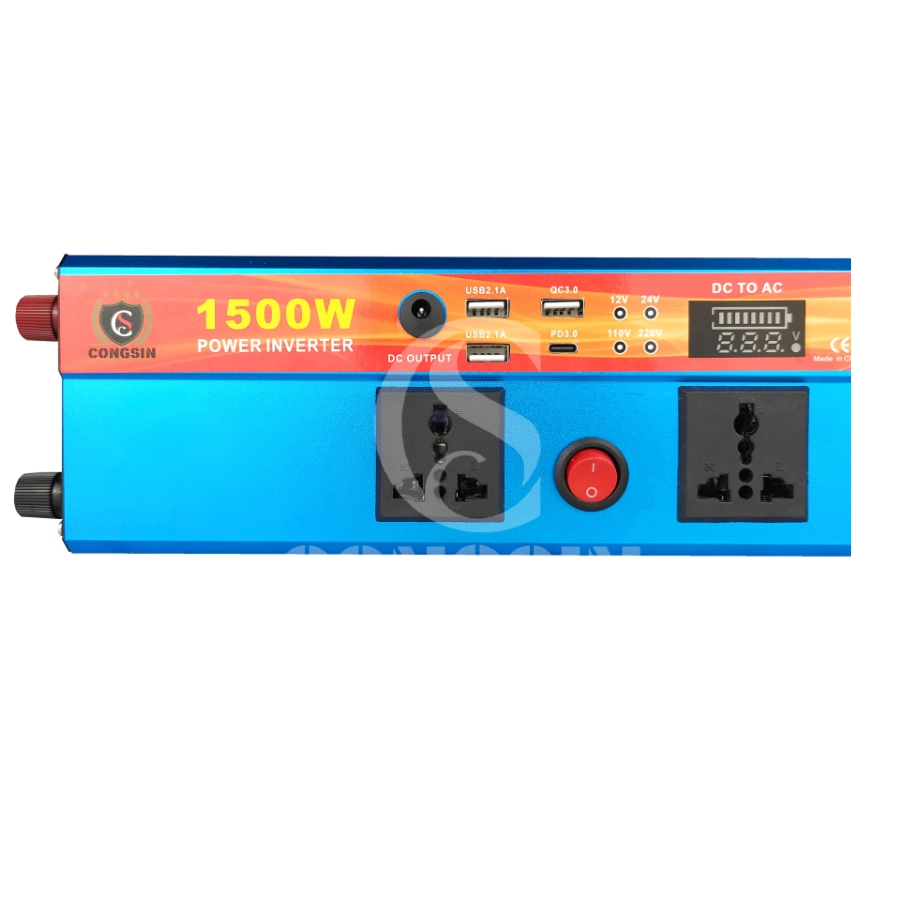
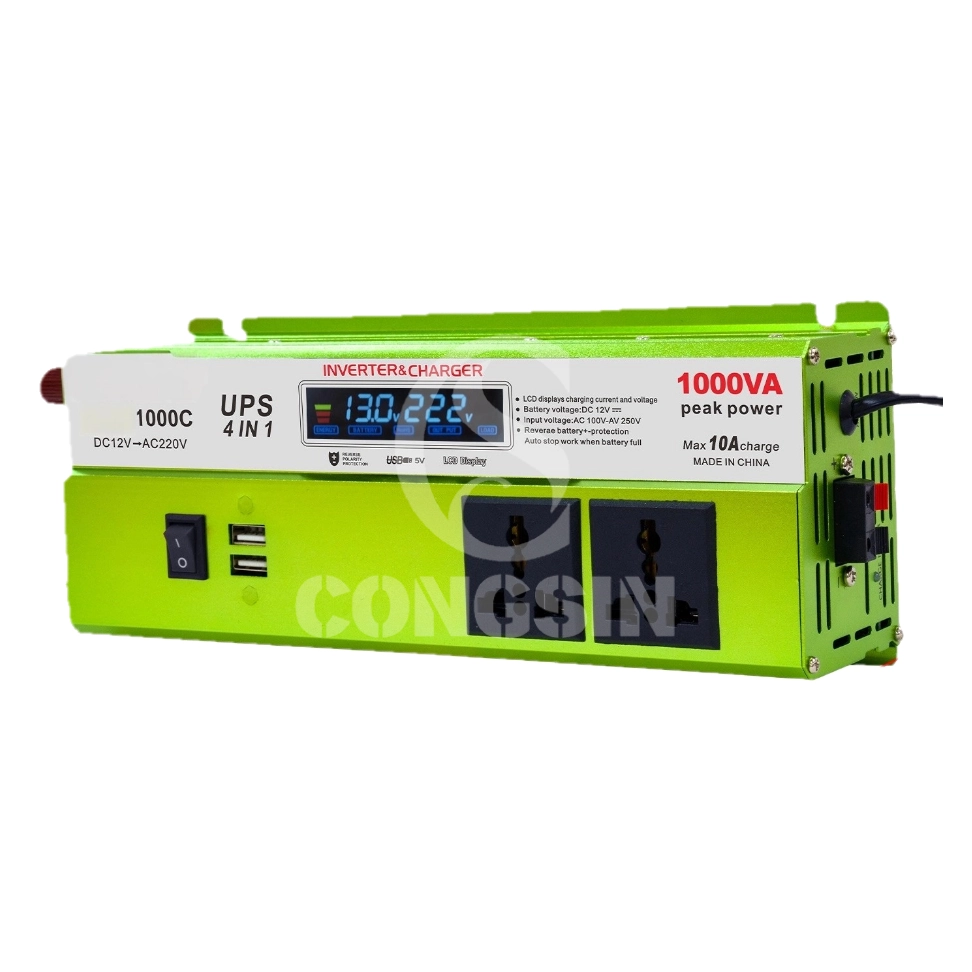
Our CS1000DDBC 1000W modified sine wave inverter is a professional power conversion device that converts DC 12V from batteries into AC 220V electricity. It is designed with user convenience in mind, featuring an LED display for real-time status monitoring, multiple charging ports (3 USB, 1 Type-C, 1 DC 12V) and two universal sockets to power a wide range of devices simultaneously. Its compact size (250×95×55mm) and lightweight design (NW: 0.84kg) make it easy to carry, ideal for outdoor activities, emergency home use, and on-the-go power needs.
Get in Touch with Our Team
You can also communicate with us directly through our online contact form. Please fill in the following information, and our team will contact you as soon as possible after receiving your message.

CONGSIN is a trusted OEM factory for power inverters, solar charge controllers, and DC converters. Reliable solutions for global B2B buyers.
 High Quality
 7/24 Service
 Guaranteed Warranty
© 2025 Congsin. All Rights Reserved.