





How to choose the best off grid inverter charger for solar systems?
- 1. How do I accurately determine the continuous and surge power requirements for my off-grid solar system?
- 2. What is the significance of matching the inverter charger’s voltage with my battery bank, and how do I select the appropriate voltage?
- 3. How do I assess the efficiency and reliability of an off-grid inverter charger to ensure long-term performance?
- 4. What are the advantages of pure sine wave inverters over modified sine wave inverters for off-grid solar systems?
- 5. How can I ensure that my off-grid inverter charger is compatible with future system expansions?
- 6. What are the key considerations for integrating an off-grid inverter charger with a solar charge controller?
1. How do I accurately determine the continuous and surge power requirements for my off-grid solar system?
Accurately determining your system's power requirements is crucial for selecting an appropriate off-grid inverter charger. Begin by listing all appliances and devices you intend to power, noting their individual wattage and the duration of use. For instance, a refrigerator may consume 150 watts continuously, while a water pump might require 1,500 watts during startup but only 500 watts during operation. Sum the continuous wattage to establish your continuous power requirement. For surge power, identify devices with high startup demands and calculate the total surge wattage. Ensure the chosen inverter charger can handle both continuous and surge demands to maintain system stability.
2. What is the significance of matching the inverter charger’s voltage with my battery bank, and how do I select the appropriate voltage?
Matching the inverter charger’s voltage with your battery bank is essential for efficient energy conversion and system longevity. Common battery voltages include 12V, 24V, and 48V. For systems exceeding 2 kW of continuous power, a 48V system is typically recommended due to its ability to handle higher power loads more efficiently. Selecting the correct voltage ensures optimal performance and minimizes energy losses.
3. How do I assess the efficiency and reliability of an off-grid inverter charger to ensure long-term performance?
Assessing the efficiency and reliability of an off-grid inverter charger involves examining several key factors:
Efficiency Ratings: Choose inverters with high efficiency (above 90%) to minimize energy losses.
Surge Capacity: Ensure the inverter can handle the surge power requirements of your appliances.
Brand Reputation: Opt for reputable brands known for quality and customer support.
Warranty and Support: Consider the length and terms of the warranty, as well as the availability of customer support.
By thoroughly evaluating these aspects, you can select an inverter charger that offers both efficiency and reliability for your off-grid solar system.
4. What are the advantages of pure sine wave inverters over modified sine wave inverters for off-grid solar systems?
Pure sine wave inverters provide a smooth, consistent waveform that closely resembles grid power, making them suitable for all types of electronic devices. They offer lower harmonic distortion, reduced electromagnetic interference, and are less likely to cause overheating in appliances. In contrast, modified sine wave inverters produce a more jagged waveform, which can lead to inefficiencies and potential damage in sensitive electronics. Therefore, for optimal performance and appliance longevity, pure sine wave inverters are recommended for off-grid solar systems.
5. How can I ensure that my off-grid inverter charger is compatible with future system expansions?
To ensure compatibility with future system expansions, consider the following:
Parallel Capability: Select an inverter charger that allows for paralleling multiple units, enabling increased power output as your energy needs grow.
Modular Design: Choose systems with a modular design that facilitates easy addition of components like batteries or solar panels.
Scalability: Opt for inverters that support scalability in terms of voltage and power capacity.
By planning for future expansions, you can build a flexible and adaptable off-grid solar system.
6. What are the key considerations for integrating an off-grid inverter charger with a solar charge controller?
Integrating an off-grid inverter charger with a solar charge controller involves:
MPPT Technology: Ensure the charge controller utilizes Maximum Power Point Tracking (MPPT) for efficient solar energy harvesting.
Voltage Compatibility: Match the charge controller’s voltage settings with your battery bank and inverter charger.
Communication Protocols: Verify that the inverter charger and charge controller can communicate effectively, often via RS-485 or Modbus protocols.
System Integration: Consider inverters with built-in charge controllers to simplify system design and reduce equipment costs.
Proper integration ensures seamless operation and maximizes the efficiency of your off-grid solar system.
In conclusion, selecting the right off-grid inverter charger is pivotal for the efficiency, reliability, and scalability of your solar system. By carefully considering power requirements, voltage compatibility, efficiency, waveform quality, expansion capabilities, and integration with charge controllers, you can build a robust off-grid energy solution tailored to your needs.
For personalized assistance and a detailed quote, please contact us at info@csinverter.com or visit our website at www.csinverter.com.


Pure Sine Wave Inverters
Can it be used in RVs or trucks?
Yes. The device input voltage is DC 12V, which matches the battery voltage of RVs and trucks. It can be connected via battery clips or cigarette lighter interface (need to confirm that the maximum current of the cigarette lighter is ≥10A) to supply power to car refrigerators, parking air conditioners, laptops, etc.
Is the remote control standard?
It’s optional and available upon request.
What is the difference between a pure sine wave inverter and a modified sine wave inverter?
Pure sine wave inverter has an output waveform close to mains power with low distortion rate (<3%), which can be safely adapted to precision devices such as computers, medical instruments, and inverter home appliances; modified sine wave inverter has a notched waveform, which easily causes device heating, malfunction or damage, and is only suitable for simple devices such as bulbs and fans.
Modified Sine Wave Inverters
Does it have protection features?
Yes, it includes overload, overheat, and short-circuit protection.
Which region’s voltage standards does it support?
It defaults to AC 220V output, suitable for regions with 220V voltage standards such as China and Europe; it can also be customized to output AC 110V, suitable for regions with 110V voltage standards such as the United States and Japan.
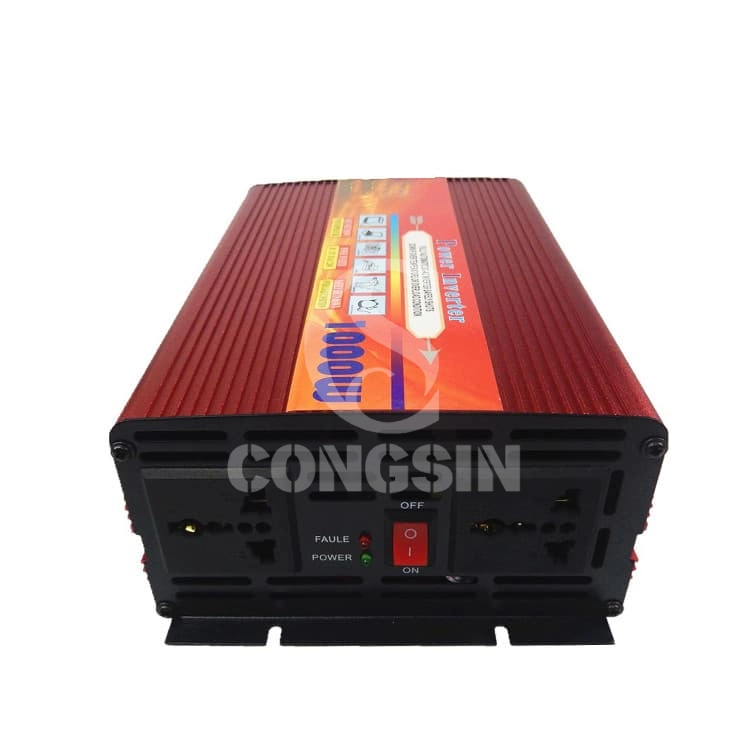
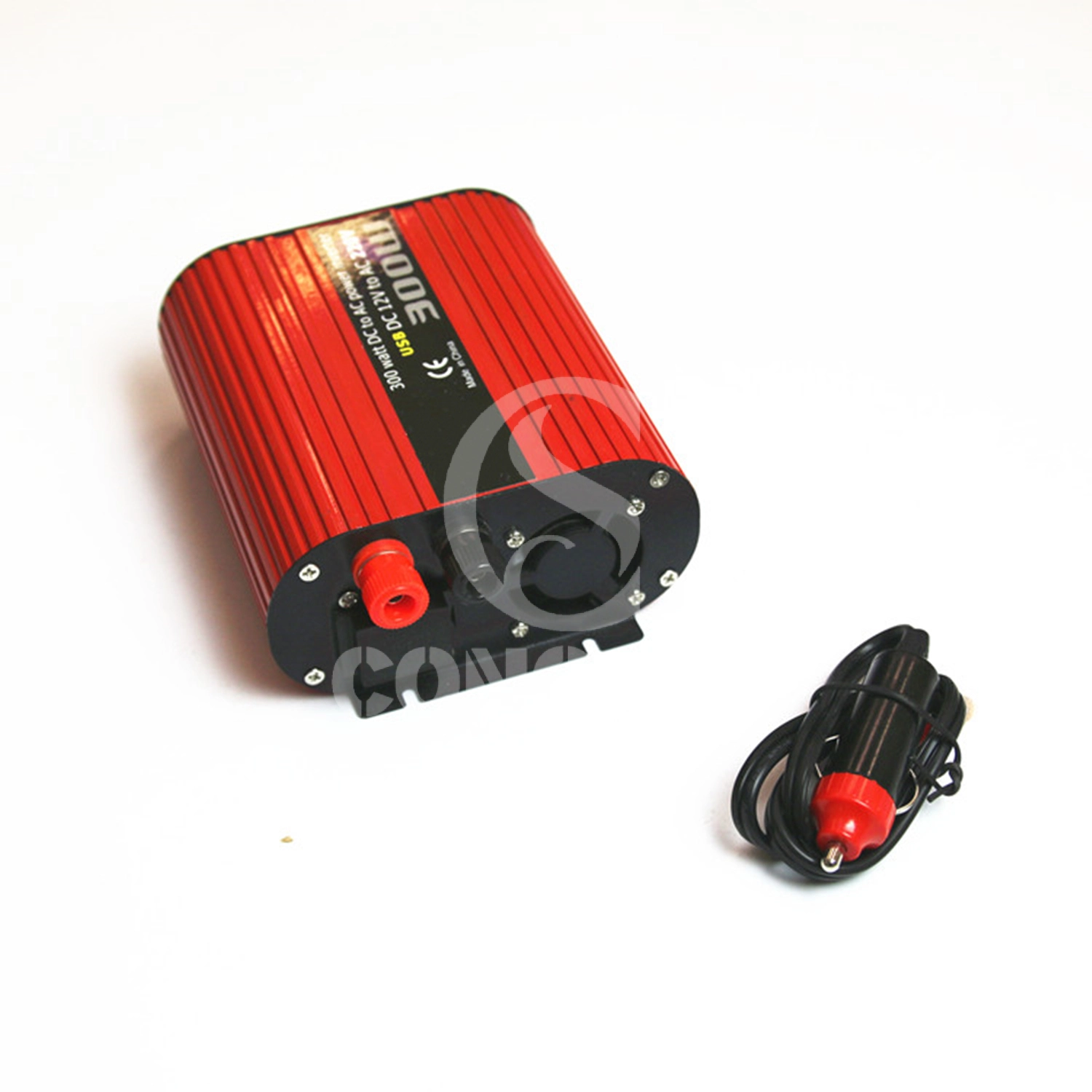
Congsin's Portable 150W Modified Sine Wave Inverter powers your journey! This versatile Car Power Inverter with USB acts as a reliable 12V to 220V converter, ensuring an essential off-grid power supply. With dual USB ports and a universal socket, enjoy convenient power on the go.
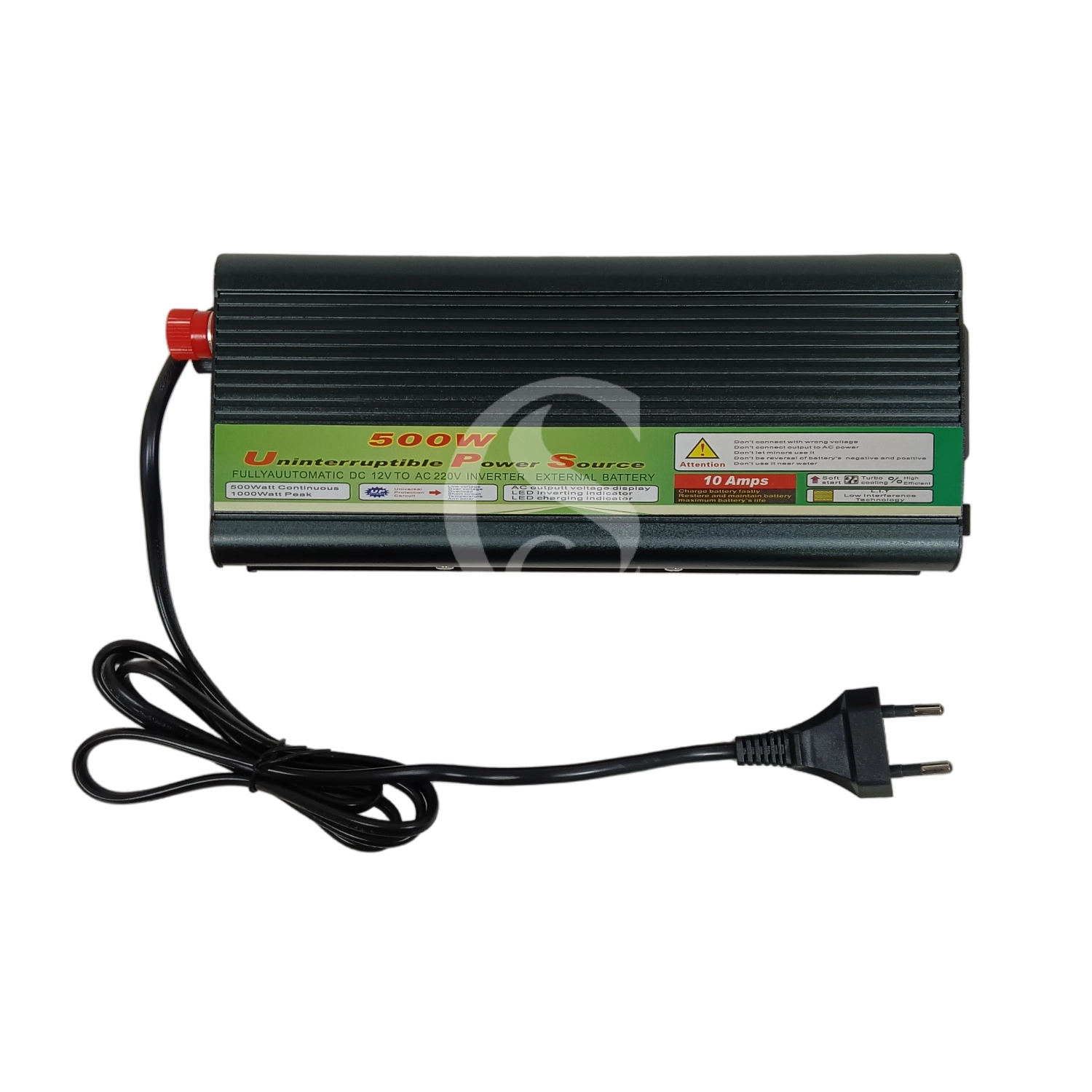
Congsin 500W 12V to 220V inverter delivers reliable off-grid power with its modified sine wave design. This portable 500W DC to AC power inverter efficiently converts 12V DC to 220V AC, ideal for outdoor and emergency use. Trust Congsin for stable, portable energy solutions.
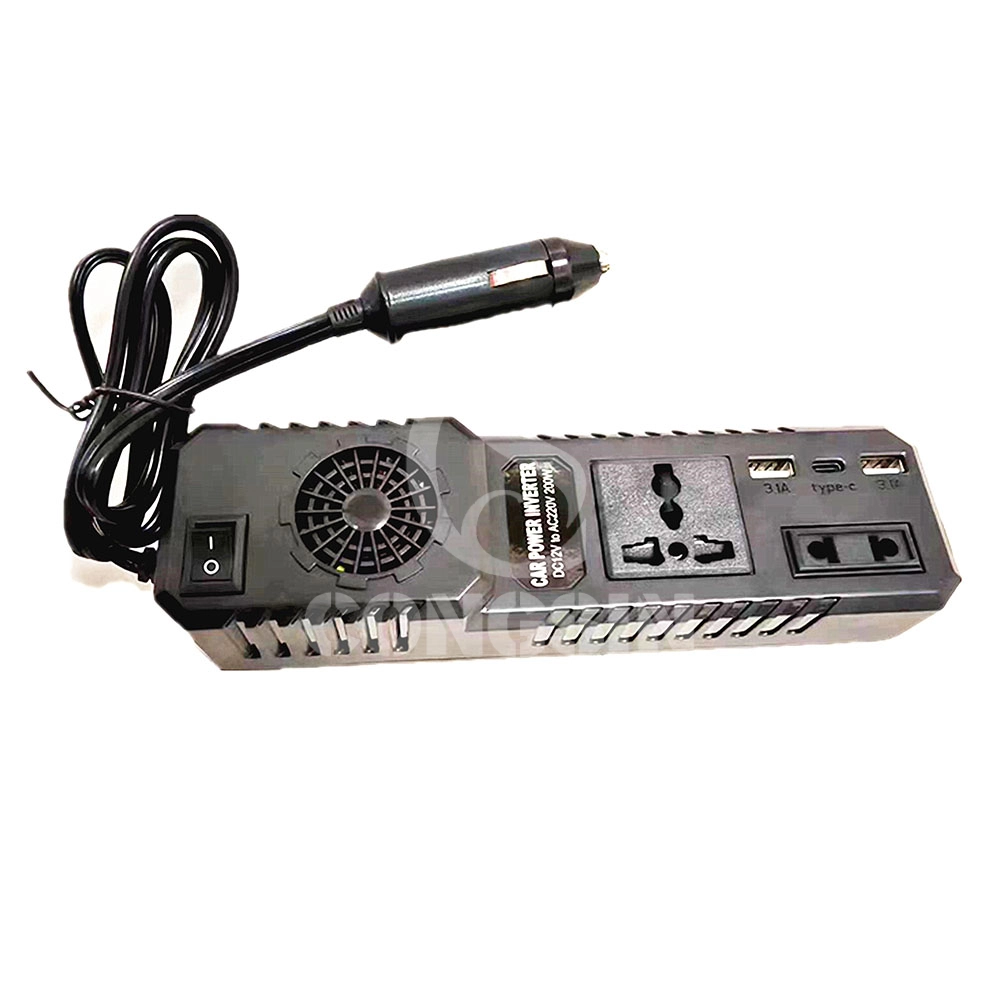
This 200W Modified Sine Wave Car Power Inverter is a compact and practical power conversion device designed for vehicle use. It supports dual input (DC12V/24V) and outputs AC220V, compatible with various electronic devices. Equipped with a Type-C port and dual 3.1A USB outputs, it can charge laptops, phones, cameras, drones, and other small electronics simultaneously—perfect for outdoor travel, emergency backup, and mobile work scenarios.
Get in Touch with Our Team
You can also communicate with us directly through our online contact form. Please fill in the following information, and our team will contact you as soon as possible after receiving your message.

CONGSIN is a trusted OEM factory for power inverters, solar charge controllers, and DC converters. Reliable solutions for global B2B buyers.
 High Quality
 7/24 Service
 Guaranteed Warranty
© 2025 Congsin. All Rights Reserved.
 WeChat
 Scan QR Code
sin cong
teaimei10
Whatsapp: +8618028086791
Scan QR Code