





Is a 2000W pure sine wave inverter worth it for home backup?
When considering a 2000W pure sine wave inverter for home backup, it's crucial to address specific concerns to ensure optimal performance and value. Below are six frequently asked questions by beginners, along with detailed answers to guide your decision-making process.
1. How does the efficiency of a 2000W pure sine wave inverter impact my energy consumption and costs?
The efficiency of an inverter determines how effectively it converts DC power from your batteries into AC power for your appliances. A higher efficiency means less energy is lost during conversion, leading to reduced battery drain and lower operational costs. For instance, a 2000W pure sine wave inverter with 90% efficiency would require approximately 2,174W of input power to deliver 2,000W of output. In contrast, a modified sine wave inverter with 75% efficiency would need about 2,667W of input for the same output, resulting in higher energy consumption and increased costs over time.
2. What are the advantages of using a pure sine wave inverter over a modified sine wave inverter for home backup?
Pure sine wave inverters produce a clean, stable output that closely resembles grid power, making them ideal for sensitive electronics like computers, medical equipment, and high-end audio systems. They reduce the risk of equipment damage, extend device lifespans, and minimize maintenance costs. In contrast, modified sine wave inverters can cause increased wear and tear on sensitive devices, leading to higher failure rates and potential repair expenses.
3. How do I determine the appropriate surge capacity for a 2000W pure sine wave inverter to handle appliance startup demands?
Appliances with motors, such as refrigerators, air conditioners, and power tools, often require additional power during startup, known as surge power. To ensure your inverter can handle these demands, select a model with a surge capacity that exceeds the combined startup wattage of your appliances. For example, if your refrigerator requires 2,000W to run and 3,000W to start, a 2000W inverter with a 4,000W surge capacity would be suitable. This ensures the inverter can supply the necessary power during startup without overloading.
4. What safety features should I look for in a 2000W pure sine wave inverter to protect my home and appliances?
Essential safety features in a 2000W pure sine wave inverter include:
Over-voltage and under-voltage protection: Prevents damage from voltage fluctuations.
Overload protection: Shuts down the inverter if the load exceeds its capacity.
Short circuit protection: Safeguards against electrical faults.
Over-temperature protection: Activates cooling mechanisms or shuts down the inverter to prevent overheating.
These features ensure safe operation and protect both the inverter and connected appliances from potential damage.
5. How does the build quality and durability of a 2000W pure sine wave inverter affect its performance and lifespan?
A well-constructed inverter with high-quality components ensures reliable performance and longevity. Durable inverters are designed to withstand various environmental conditions, reducing the likelihood of malfunctions and extending their operational life. Investing in a robust inverter can lead to long-term savings by minimizing maintenance costs and the need for replacements.
6. What are the cost implications of choosing a 2000W pure sine wave inverter for home backup, and is it worth the investment?
While pure sine wave inverters are generally more expensive than modified sine wave models, their benefits often justify the higher initial cost. They provide cleaner power, protect sensitive electronics, and can lead to energy savings due to higher efficiency. Additionally, the extended lifespan of appliances powered by pure sine wave inverters can offset the initial investment over time. Therefore, for homeowners seeking reliable and efficient backup power, a 2000W pure sine wave inverter is a worthwhile investment.
Conclusion
Selecting the right 2000W pure sine wave inverter for your home backup needs involves considering factors such as efficiency, surge capacity, safety features, build quality, and cost-effectiveness. By addressing these considerations, you can ensure a reliable and efficient power solution that protects your home and appliances.
For personalized recommendations and a detailed quote, please contact us at info@csinverter.com or visit our website at www.csinverter.com.


Pure Sine Wave Inverters
What is the difference between a pure sine wave inverter and a modified sine wave inverter?
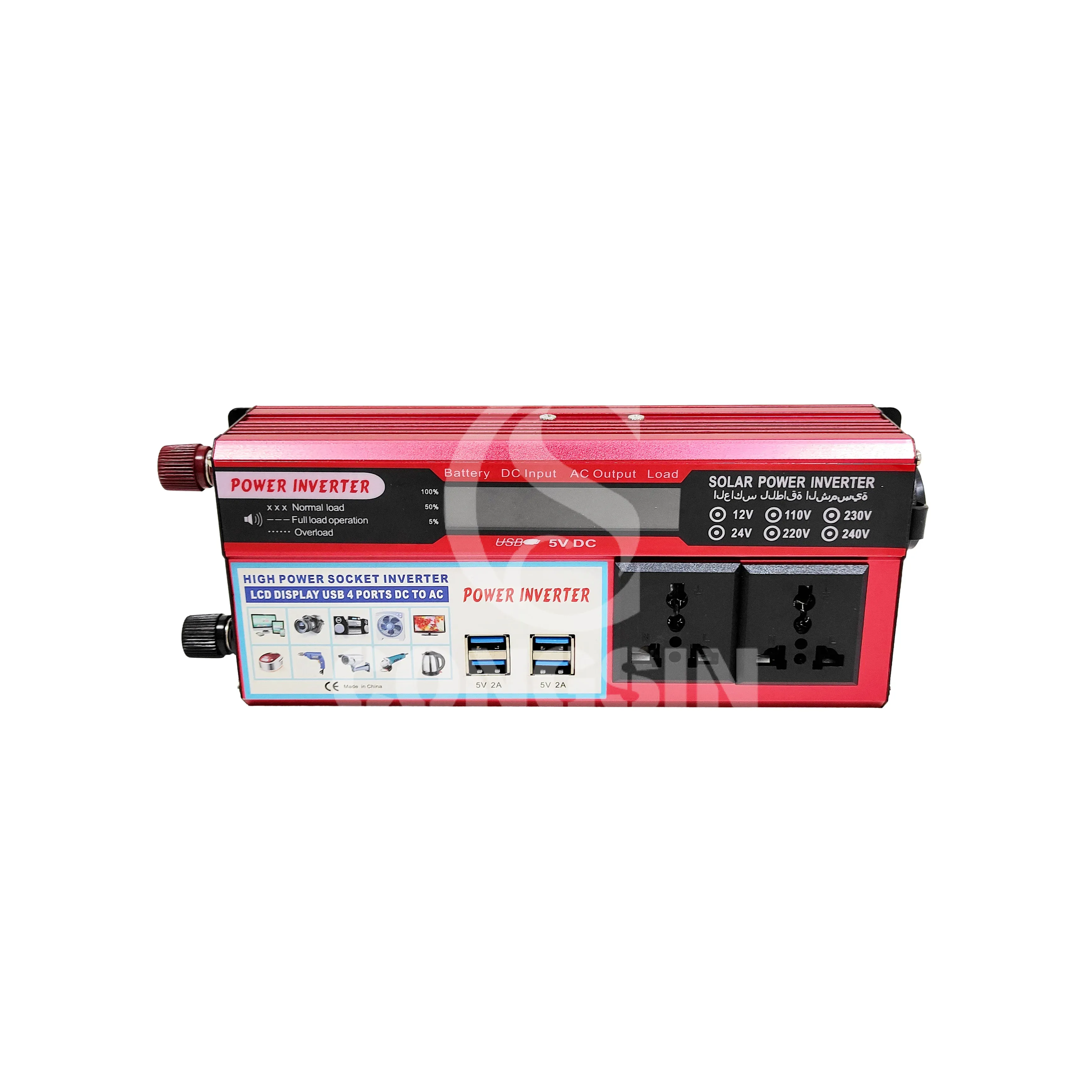
Pure sine wave inverter has an output waveform close to mains power with low distortion rate (<3%), which can be safely adapted to precision devices such as computers, medical instruments, and inverter home appliances; modified sine wave inverter has a notched waveform, which easily causes device heating, malfunction or damage, and is only suitable for simple devices such as bulbs and fans.
What appliances can this inverter support?
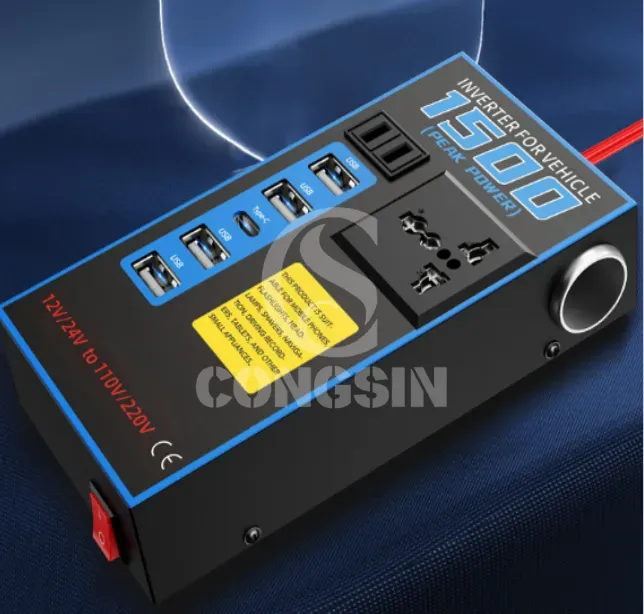
Rated 1500W, peak 3000W – supports most home appliances.
Can this inverter drive a 3P air conditioner and a refrigerator at the same time?
Yes. The rated power of a 3P air conditioner is about 2200W-2500W, and an ordinary double-door refrigerator is about 150W-300W, with a total power of about 2350W-2800W, which does not exceed the 3000W continuous power; and the peak 6000W can cope with the instantaneous startup impact of the air conditioner. When using, ensure the battery capacity is ≥200Ah (12V) to ensure battery life.
Modified Sine Wave Inverters
What devices can it power?
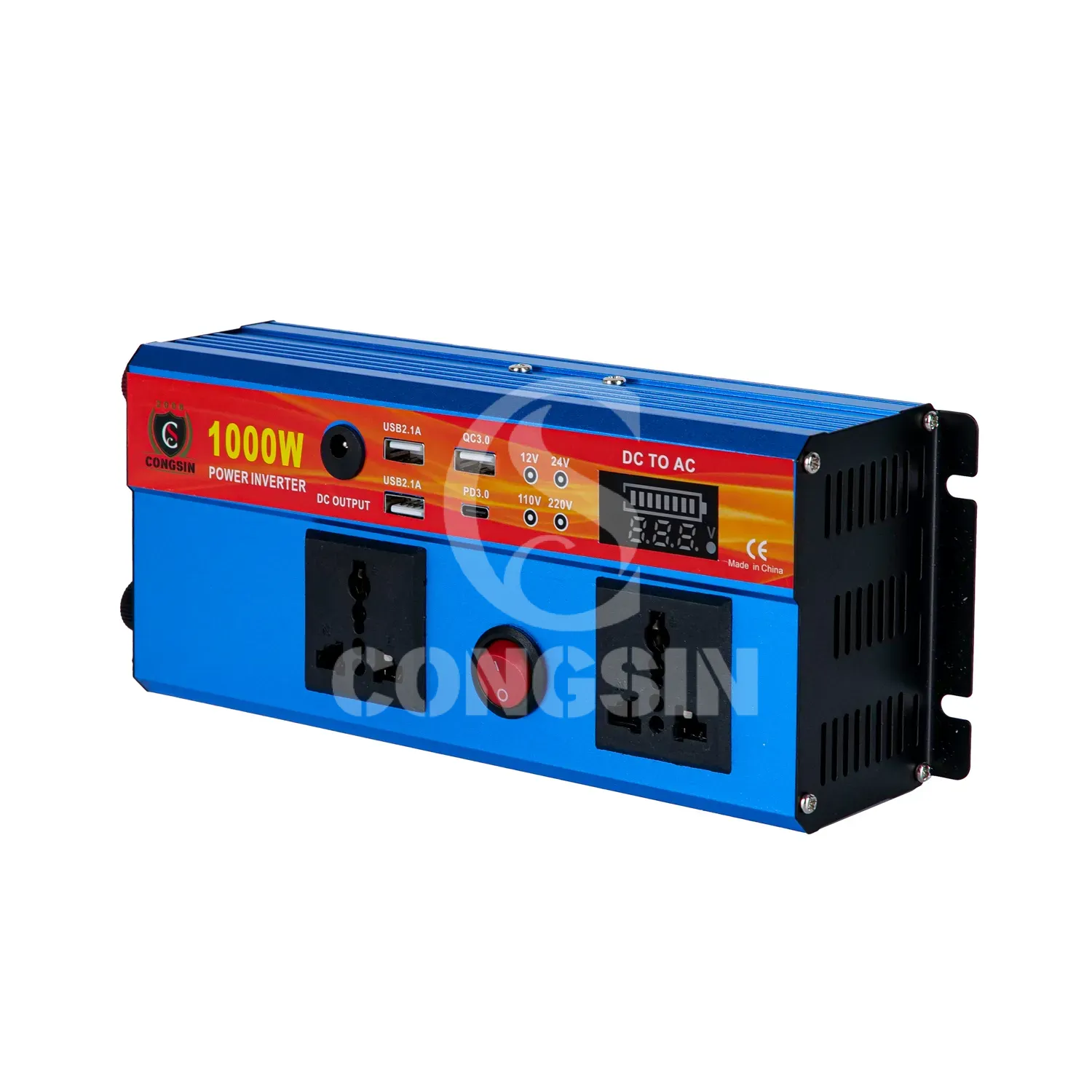
Suitable for fans, lights, TVs, laptops, and small electric tools.
Does it support inductive loads?
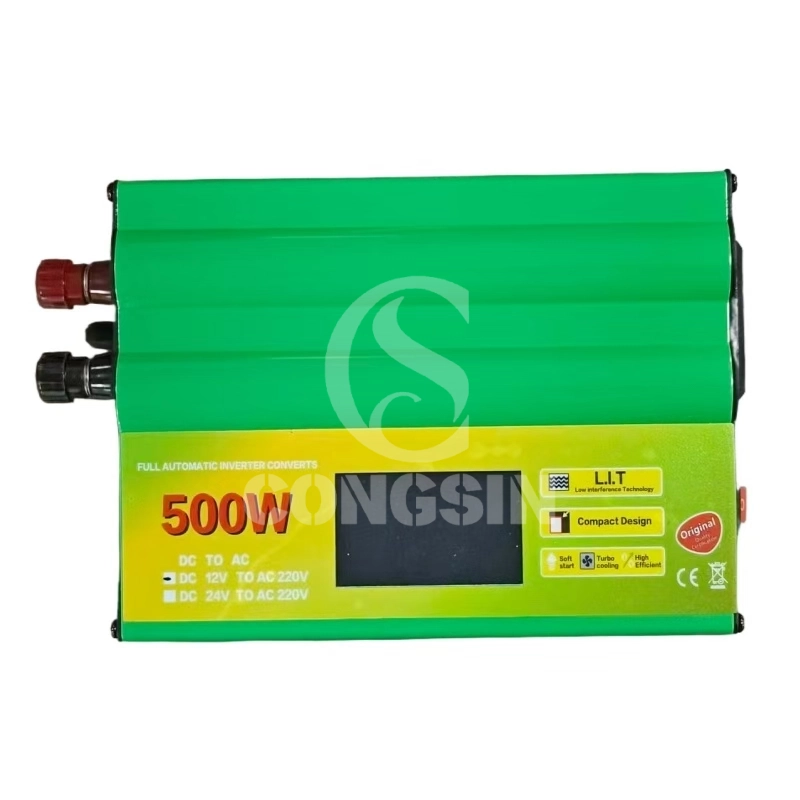
Modified sine wave inverters are suitable for resistive loads; for inductive loads, pure sine wave models are recommended.
Get in Touch with Our Team
You can also communicate with us directly through our online contact form. Please fill in the following information, and our team will contact you as soon as possible after receiving your message.

CONGSIN is a trusted OEM factory for power inverters, solar charge controllers, and DC converters. Reliable solutions for global B2B buyers.
 High Quality
 7/24 Service
 Guaranteed Warranty
© 2025 Congsin. All Rights Reserved.