





How Do Chinese Solar Inverters Compare on Efficiency and Cost?
When considering the adoption of solar energy solutions, understanding the nuances of Chinese solar inverters is crucial. These inverters have gained prominence due to their competitive pricing and technological advancements. Below are six specific questions frequently asked by beginners, along with comprehensive answers to guide informed purchasing decisions.
1. What are the key factors contributing to the lower cost of Chinese solar inverters compared to Western counterparts?
Chinese solar inverters are often more affordable due to several factors:
Manufacturing Scale: China's extensive manufacturing capabilities lead to economies of scale, reducing production costs.
Supply Chain Efficiency: Integrated supply chains and efficient logistics contribute to cost savings.
Labor Costs: Lower labor expenses in China further decrease production costs.
Material Sourcing: Access to inexpensive raw materials, such as coal-powered silicon, reduces component costs.
These factors collectively enable Chinese manufacturers to offer inverters at prices significantly lower than those from Europe or the U.S.
2. How do Chinese solar inverters' efficiency levels compare to those of European and American models?
Chinese solar inverters have made significant strides in efficiency, often matching or exceeding their Western counterparts:
Efficiency Ratings: Leading Chinese inverters boast efficiencies up to 98.8%, comparable to or higher than many European and American models.
Technological Advancements: Investments in research and development have led to improved performance and reliability.
This advancement ensures that Chinese inverters provide competitive performance in the global market.
3. What are the potential risks associated with purchasing Chinese solar inverters, and how can they be mitigated?
While Chinese inverters offer cost advantages, potential risks include:
Quality Variability: Inconsistent manufacturing standards can lead to reliability issues.
Limited Support: Some manufacturers may offer limited customer service or warranty coverage.
Certification Concerns: Ensuring compliance with local regulations and standards is essential.
Mitigation Strategies:
Due Diligence: Research manufacturers' reputations, certifications, and customer reviews.
Warranty Verification: Confirm warranty terms and conditions before purchase.
Regulatory Compliance: Ensure the inverter meets local grid requirements and safety standards.
By taking these precautions, buyers can minimize potential risks associated with Chinese solar inverters.
4. How do Chinese solar inverters' lifespans and warranty terms compare to those of Western models?
Chinese inverters typically offer lifespans ranging from 10 to 15 years, aligning with industry standards. Warranty terms vary by manufacturer but often range from 5 to 10 years. It's important to compare these terms with those of Western models to ensure they meet your expectations for long-term performance.
5. What are the top Chinese solar inverter brands, and how do they compare in terms of performance and reliability?
Several Chinese brands have established strong reputations in the solar inverter market:
Sungrow: Known for high efficiency and advanced features, Sungrow inverters are widely used in both residential and commercial applications.
GoodWe: Offers a range of inverters with competitive pricing and reliable performance, suitable for various system sizes.
Growatt: Provides cost-effective solutions with a focus on user-friendly interfaces and robust support.
Comparing these brands involves evaluating specific model features, efficiency ratings, warranty terms, and customer feedback to determine the best fit for your needs.
6. What are the key considerations when selecting a Chinese solar inverter for a residential installation?
When choosing a Chinese solar inverter for residential use, consider the following factors:
Compatibility: Ensure the inverter is compatible with your solar panel system and meets local grid requirements.
Efficiency: Higher efficiency inverters maximize energy conversion and can lead to better overall system performance.
Warranty and Support: Review warranty terms and assess the availability of customer support services.
Installation and Maintenance: Consider the ease of installation and the availability of maintenance services in your area.
By carefully evaluating these aspects, you can select an inverter that offers optimal performance and value for your residential solar energy system.
In conclusion, Chinese solar inverters present a compelling option for those seeking cost-effective and efficient solutions. By conducting thorough research and considering the factors outlined above, you can make an informed decision that aligns with your energy goals and budget.
For personalized assistance and a detailed quote, please contact us at info@csinverter.com or visit our website at www.csinverter.com.


Pure Sine Wave Inverters
What capacity battery is needed to meet long-term use?
It needs to be calculated according to the total power of the device, the formula is "Battery Capacity (Ah) = Total Device Power (W) × Usage Time (h) ÷ Input Voltage (12V)". For example, to drive a 1000W device for 5 hours, the required battery capacity = 1000×5÷12≈417Ah, it is recommended to use 2 200Ah batteries in parallel (total capacity 400Ah, actual usage about 4.8 hours).
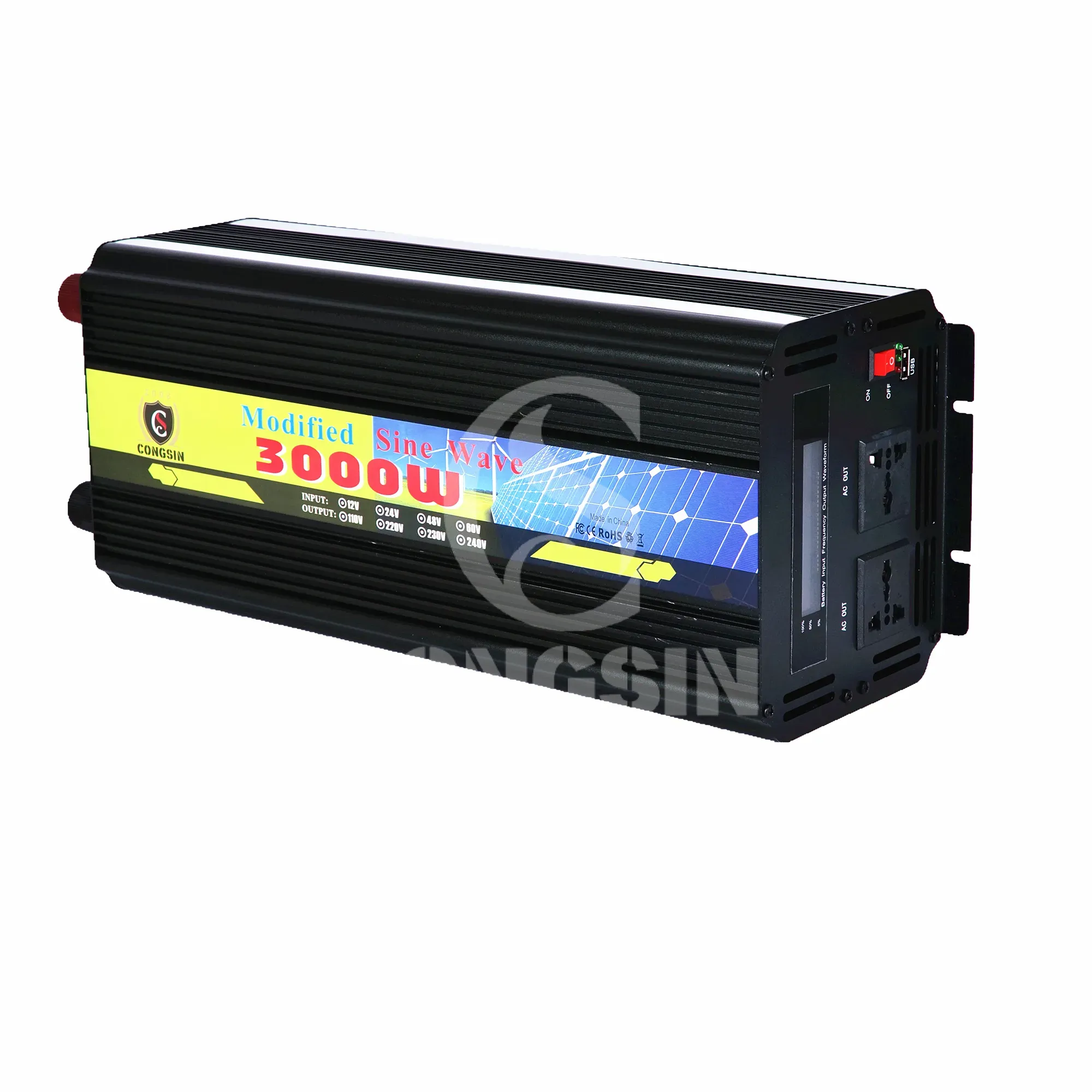
What is the difference between labeled 6000W and full power 3000W?
Labeled 6000W is peak power, which is only used to cope with the instantaneous high-power demand during device startup (such as air conditioner, motor startup); full power 3000W is continuous power, referring to the power that the device can stably output for a long time. When driving appliances daily, 3000W should be used as a reference to avoid total power overload.
Modified Sine Wave Inverters
Can this inverter power a laptop?
If the laptop power is within 150W and the input is AC220V, it can supply power normally.
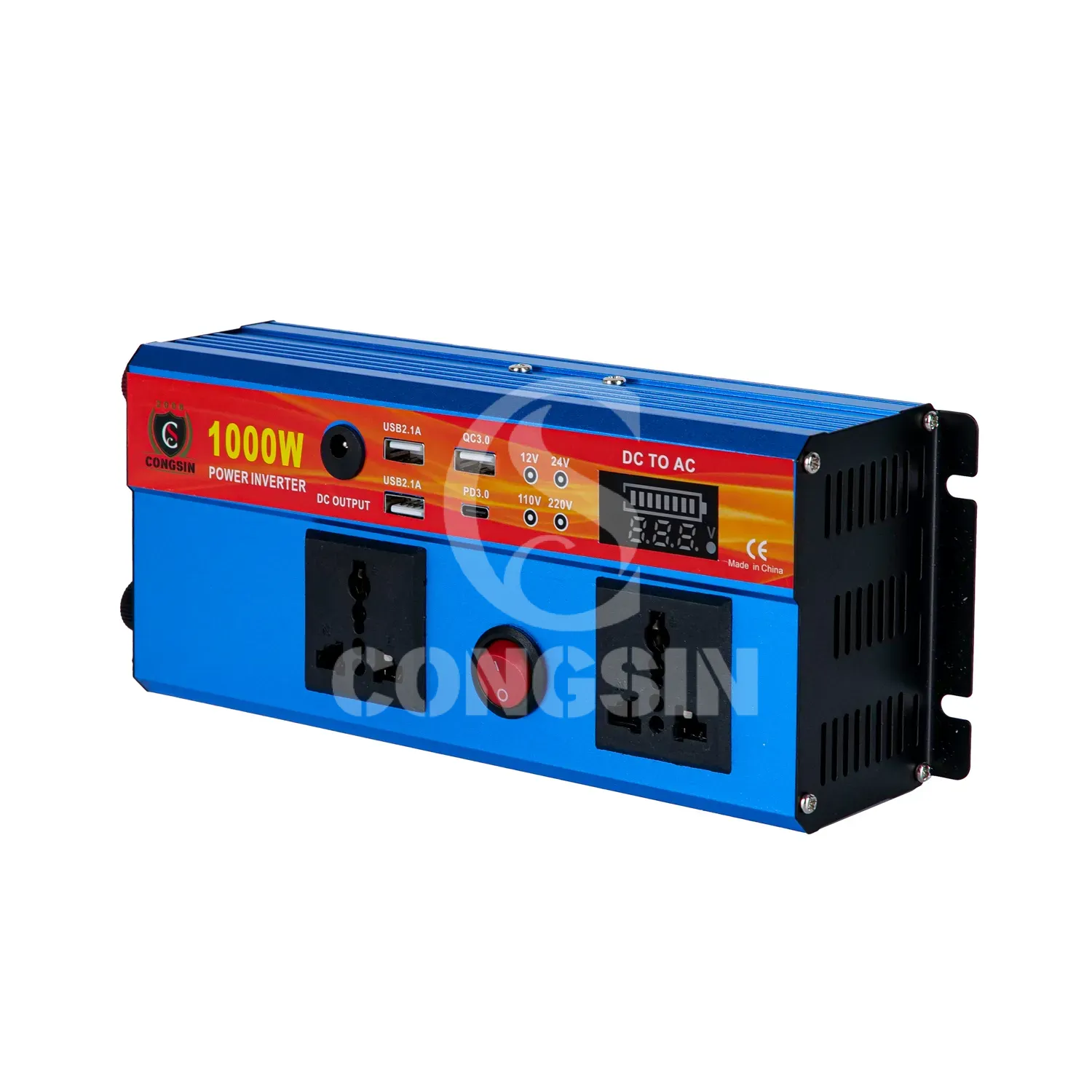
What is the function of the independent control switch?
The independent control switches for DC and AC can respectively control the on and off of DC and AC circuits, facilitating the separate management of power supply for different types of devices and improving power usage safety and flexibility.
How many devices can it power at the same time?
Dual universal sockets + two USB ports can power multiple devices (such as two home appliances + two mobile phones) at the same time, as long as the total power does not exceed 600W.
Get in Touch with Our Team
You can also communicate with us directly through our online contact form. Please fill in the following information, and our team will contact you as soon as possible after receiving your message.

CONGSIN is a trusted OEM factory for power inverters, solar charge controllers, and DC converters. Reliable solutions for global B2B buyers.
 High Quality
 7/24 Service
 Guaranteed Warranty
© 2025 Congsin. All Rights Reserved.