





Which bidirectional inverter models are best for commercial use?
- 1. What are bidirectional solar inverters, and how do they differ from traditional inverters?
- 2. How do bidirectional inverters contribute to energy cost savings in commercial settings?
- 3. What are the key features to consider when selecting a bidirectional solar inverter for commercial use?
- 4. How do bidirectional inverters enhance grid stability and support energy resilience?
- 5. What are the maintenance requirements and expected lifespan of bidirectional solar inverters in commercial applications?
- 6. Which bidirectional inverter models are best suited for large-scale commercial applications?
1. What are bidirectional solar inverters, and how do they differ from traditional inverters?
Bidirectional solar inverters are advanced devices that not only convert direct current (DC) from solar panels into alternating current (AC) for immediate use but also allow for the reverse process. This means they can convert AC from the grid into DC to charge batteries, enabling energy storage for later use. Unlike traditional inverters, which operate unidirectionally, bidirectional inverters facilitate both charging and discharging cycles, offering enhanced energy management capabilities. This functionality is particularly beneficial for commercial applications where energy efficiency and reliability are paramount.
2. How do bidirectional inverters contribute to energy cost savings in commercial settings?
In commercial settings, bidirectional inverters play a crucial role in reducing energy costs through several mechanisms:
Peak Shaving: By storing energy during off-peak hours when electricity rates are lower and discharging it during peak hours, businesses can significantly reduce their energy expenses.
Demand Response Integration: These inverters can participate in demand response programs, allowing businesses to adjust their energy consumption in response to grid signals, often resulting in financial incentives.
Enhanced Self-Consumption: By efficiently managing the energy produced by on-site solar panels and stored in batteries, bidirectional inverters increase the proportion of self-consumed energy, decreasing reliance on grid electricity and associated costs.
3. What are the key features to consider when selecting a bidirectional solar inverter for commercial use?
When selecting a bidirectional solar inverter for commercial applications, consider the following key features:
Efficiency Ratings: High efficiency ensures minimal energy loss during conversion. Look for inverters with efficiency ratings exceeding 98%.
Scalability: Choose inverters that can easily scale to accommodate future energy needs, allowing for system expansion without significant additional investment.
Grid Compliance: Ensure the inverter complies with local grid standards and regulations, including voltage and frequency requirements, to guarantee seamless integration.
Monitoring Capabilities: Advanced monitoring features enable real-time tracking of energy production, consumption, and storage, facilitating proactive maintenance and optimization.
4. How do bidirectional inverters enhance grid stability and support energy resilience?
Bidirectional inverters contribute to grid stability and energy resilience in several ways:
Voltage and Frequency Regulation: They can provide reactive power support, helping to stabilize grid voltage and frequency, which is essential for maintaining a reliable power supply.
Black Start Capability: In the event of a grid outage, bidirectional inverters can supply power to restart the grid, a process known as black start, enhancing energy resilience.
Energy Storage Integration: By integrating with energy storage systems, they allow for the accumulation of excess energy, which can be dispatched during peak demand periods, reducing strain on the grid.
5. What are the maintenance requirements and expected lifespan of bidirectional solar inverters in commercial applications?
Bidirectional solar inverters are designed for durability and minimal maintenance. Key considerations include:
Maintenance Requirements: Regular inspections and cleaning of components, such as fans and heat sinks, are recommended to ensure optimal performance. Monitoring systems can assist in identifying potential issues before they become critical.
Expected Lifespan: High-quality inverters typically have a lifespan of 10 to 15 years, with some models offering extended warranties up to 25 years, reflecting their durability and reliability.
6. Which bidirectional inverter models are best suited for large-scale commercial applications?
For large-scale commercial applications, consider the following bidirectional inverter models:
Sol-Ark 60K-3P-480V: This inverter offers a native 277/480V 3-phase output, simplifying installation and reducing complexity for large commercial and industrial buildings. It supports both AC and DC coupling, enabling seamless integration with existing solar PV systems and new arrays.
SolarEdge TerraMax™ 1500V Inverter (250kW - 330kW): Ideal for community solar projects, this inverter reduces the Levelized Cost of Energy (LCOE) through higher production and lower balance-of-system costs. Its modular design allows for easy scalability, accommodating growing energy needs.
ATESS PCS1200HV/1500HV: These high-voltage, high-power inverters are suitable for large-scale industrial and commercial energy storage and regional-level grid support projects. They can efficiently integrate solar power generation and energy storage systems, ensuring a reliable power supply for daily operations.
In conclusion, bidirectional solar inverters offer significant advantages for commercial energy management, including enhanced efficiency, cost savings, and grid stability. By carefully selecting an inverter that aligns with your specific operational requirements and future growth plans, you can optimize your energy strategy and contribute to a more sustainable energy future.
For a personalized quote or more information, please contact us at info@csinverter.com or visit our website at www.csinverter.com.


Distributor
What kind of support can I expect from Feifan after becoming a distributor?
You will receive ongoing sales support, product training, technical assistance, and marketing resources to ensure your success.
Modified Sine Wave Inverters
Can it drive a 3000W air conditioner?
Yes. Air conditioners have instantaneous power during startup (about 2-3 times the rated power), and this product has a peak power of 6000W, which can meet the startup and operation needs of a 3000W air conditioner; the battery capacity must be ≥150Ah to ensure continuous power supply.
What devices can it power?
Suitable for fans, lights, TVs, laptops, and small electric tools.
Is it a pure sine wave or a modified sine wave? What's the difference?
This is a modified sine wave inverter, suitable for most conventional home appliances and electronic devices; pure sine wave is suitable for precision devices with extremely high power requirements. This modified sine wave is more cost-effective at 2000W, meeting the needs of most scenarios.
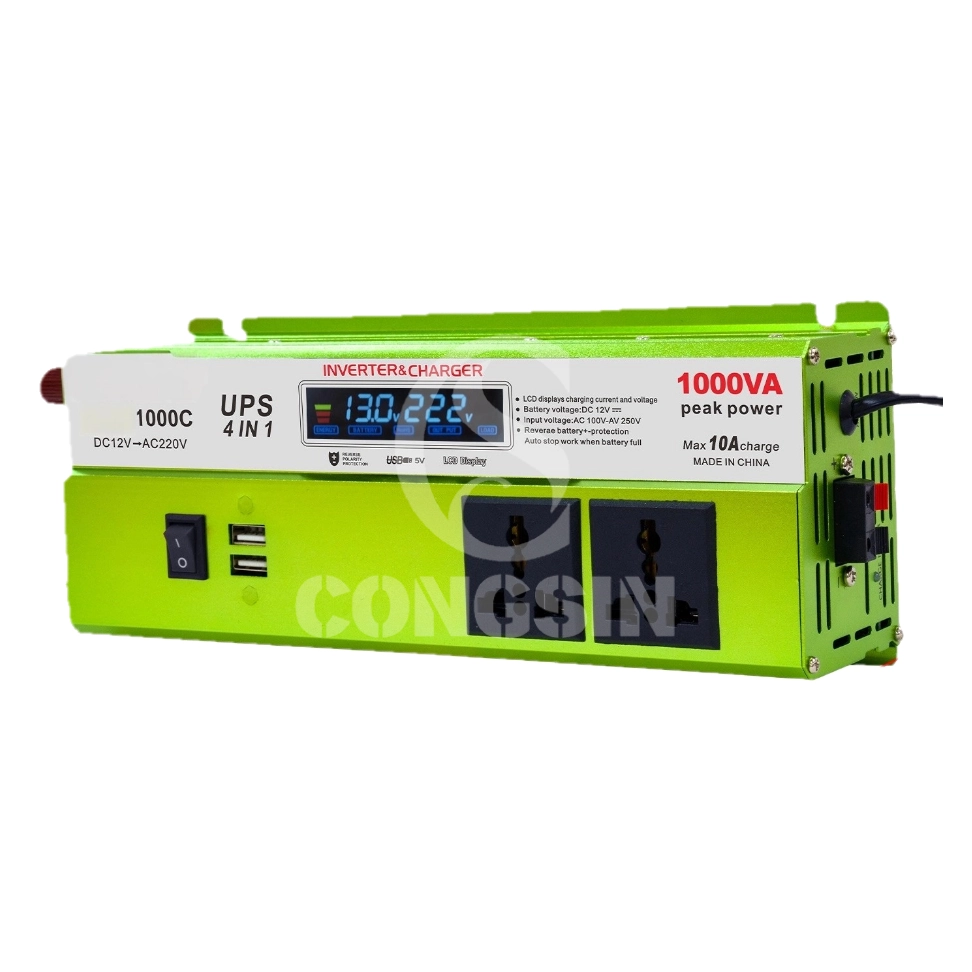
How does the UPS function of this inverter work?
When the external power supply is normal, the inverter powers the device while charging the battery; when the external power supply is interrupted, it automatically switches to battery power to ensure uninterrupted operation of the device.
Get in Touch with Our Team
You can also communicate with us directly through our online contact form. Please fill in the following information, and our team will contact you as soon as possible after receiving your message.

CONGSIN is a trusted OEM factory for power inverters, solar charge controllers, and DC converters. Reliable solutions for global B2B buyers.
 High Quality
 7/24 Service
 Guaranteed Warranty
© 2025 Congsin. All Rights Reserved.