





Which bidirectional inverter features ensure grid code compliance?
- 1. What are the primary features of bidirectional inverters that ensure grid code compliance?
- 2. How do bidirectional inverters maintain voltage and frequency regulation to comply with grid codes?
- 3. What is anti-islanding protection, and why is it vital for grid code compliance in bidirectional inverters?
- 4. How do bidirectional inverters control harmonic distortion to meet grid code requirements?
- 5. What advanced control functions do bidirectional inverters provide to support grid stability?
- 6. How do bidirectional inverters integrate with renewable energy sources to ensure grid code compliance?
1. What are the primary features of bidirectional inverters that ensure grid code compliance?
Bidirectional inverters are essential components in modern energy systems, enabling two-way energy flow between storage systems and the grid. To ensure seamless integration and compliance with grid codes, these inverters must possess several critical features:
Voltage and Frequency Regulation: Bidirectional inverters must maintain grid voltage and frequency within specified limits. This includes capabilities for Low Voltage Ride-Through (LVRT) and High Voltage Ride-Through (HVRT), allowing the inverter to remain connected during brief voltage sags or swells.
Power Factor Correction: Inverters should adjust their output to maintain a stable power factor, typically 0.9 or higher, to prevent issues like poor energy quality and unnecessary strain on the grid.
Anti-Islanding Protection: This safety feature ensures that the inverter detects a grid failure and automatically disconnects, preventing the system from energizing de-energized sections of the grid, which could pose risks to utility workers.
Harmonic Distortion Limits: Inverters must produce a clean AC sine wave with minimal harmonic distortion to prevent interference with other connected equipment. Standards like IEEE 1547 set specific limits for harmonic output.
Advanced Control Functions: Modern inverters are required to provide grid support functions, including voltage regulation, frequency support, and fault ride-through capabilities, transforming them from passive grid-connected devices into active grid-supporting assets.
2. How do bidirectional inverters maintain voltage and frequency regulation to comply with grid codes?
Bidirectional inverters play a crucial role in maintaining grid stability by regulating voltage and frequency. They achieve this through several mechanisms:
Voltage Ride-Through (LVRT/HVRT): Inverters are designed to remain connected and operational during brief grid voltage sags (Low Voltage Ride-Through) or swells (High Voltage Ride-Through). This capability ensures that minor disturbances do not lead to unnecessary disconnections, thereby supporting grid stability.
Frequency Response: Inverters can automatically adjust their power output in response to deviations in grid frequency. For instance, if the grid frequency drops, the system can inject power to help stabilize it, providing essential ancillary services that balance electricity supply and demand in real-time.
Reactive Power Control: Modern inverters are capable of managing reactive power to help regulate local grid voltage. By injecting or absorbing reactive power, they support voltage stability, especially in areas with high renewable energy penetration.
3. What is anti-islanding protection, and why is it vital for grid code compliance in bidirectional inverters?
Anti-islanding protection is a critical safety feature in bidirectional inverters that prevents the system from continuing to feed power into the grid during a power outage. This functionality is vital for several reasons:
Safety of Utility Workers: By detecting a grid failure and automatically disconnecting, the inverter ensures that utility workers are not exposed to live lines during maintenance or repair work.
Grid Stability: Preventing the inverter from supplying power during an outage helps maintain the integrity and stability of the grid, preventing potential damage or further disruptions.
Compliance with Standards: Many grid codes, such as IEEE 1547, mandate anti-islanding protection to ensure safe and reliable operation of distributed energy resources.
4. How do bidirectional inverters control harmonic distortion to meet grid code requirements?
Controlling harmonic distortion is essential for bidirectional inverters to ensure power quality and comply with grid codes. Inverters achieve this through:
Advanced Filtering Techniques: Inverters employ advanced filtering methods to minimize harmonic distortion, ensuring that the output waveform closely matches a pure sine wave.
Compliance with Standards: Inverters are designed to meet specific harmonic distortion limits set by standards like IEEE 1547, ensuring that the total harmonic distortion (THD) remains within acceptable levels to prevent interference with other equipment.
5. What advanced control functions do bidirectional inverters provide to support grid stability?
Bidirectional inverters are equipped with advanced control functions that enhance grid stability and support compliance with grid codes:
Voltage Regulation: Inverters can adjust their reactive power output to help regulate local voltage levels, supporting voltage stability in the grid.
Frequency Support: Inverters can provide frequency support by adjusting their active power output in response to frequency deviations, helping balance supply and demand in real-time.
Fault Ride-Through Capability: Inverters are designed to remain connected and operational during grid faults, such as voltage sags or swells, without disconnecting unnecessarily, thereby supporting grid stability during disturbances.
6. How do bidirectional inverters integrate with renewable energy sources to ensure grid code compliance?
Bidirectional inverters play a pivotal role in integrating renewable energy sources, such as solar and wind, into the grid while ensuring compliance with grid codes:
Energy Storage Integration: Inverters manage the bidirectional flow of energy between renewable sources, storage systems, and the grid, enabling efficient energy management and grid support.
Grid Support Functions: Inverters provide essential grid support functions, including voltage regulation, frequency support, and fault ride-through capabilities, facilitating the stable integration of renewable energy into the grid.
Compliance with Standards: Inverters are designed to meet specific grid code requirements, such as those outlined in IEEE 1547, ensuring safe and reliable operation of renewable energy systems connected to the grid.
In conclusion, bidirectional inverters are integral to modern energy systems, enabling efficient two-way energy flow and supporting grid stability. By ensuring features like voltage and frequency regulation, power factor correction, anti-islanding protection, harmonic distortion control, and advanced control functions, these inverters facilitate the seamless integration of renewable energy sources into the grid, ensuring compliance with grid codes and contributing to a sustainable energy future.
For a personalized quote or more information on bidirectional inverters, please contact us at info@csinverter.com or visit our website at www.csinverter.com.


Modified Sine Wave Inverters
Can I customize the color and logo?
Yes, OEM/ODM customization is supported.
Can it drive a 3000W air conditioner?
Yes. Air conditioners have instantaneous power during startup (about 2-3 times the rated power), and this product has a peak power of 6000W, which can meet the startup and operation needs of a 3000W air conditioner; the battery capacity must be ≥150Ah to ensure continuous power supply.
Which plug types are supported by the universal socket?
The universal socket is compatible with most national plug specifications, such as GB, US, EU, etc., and can meet the use of devices in different regions (some require adapters).
Pure Sine Wave Inverters
Does it include protection features?
Yes, it has sixfold safety protection for reliable performance.
Is the remote control standard?
It’s optional and available upon request.
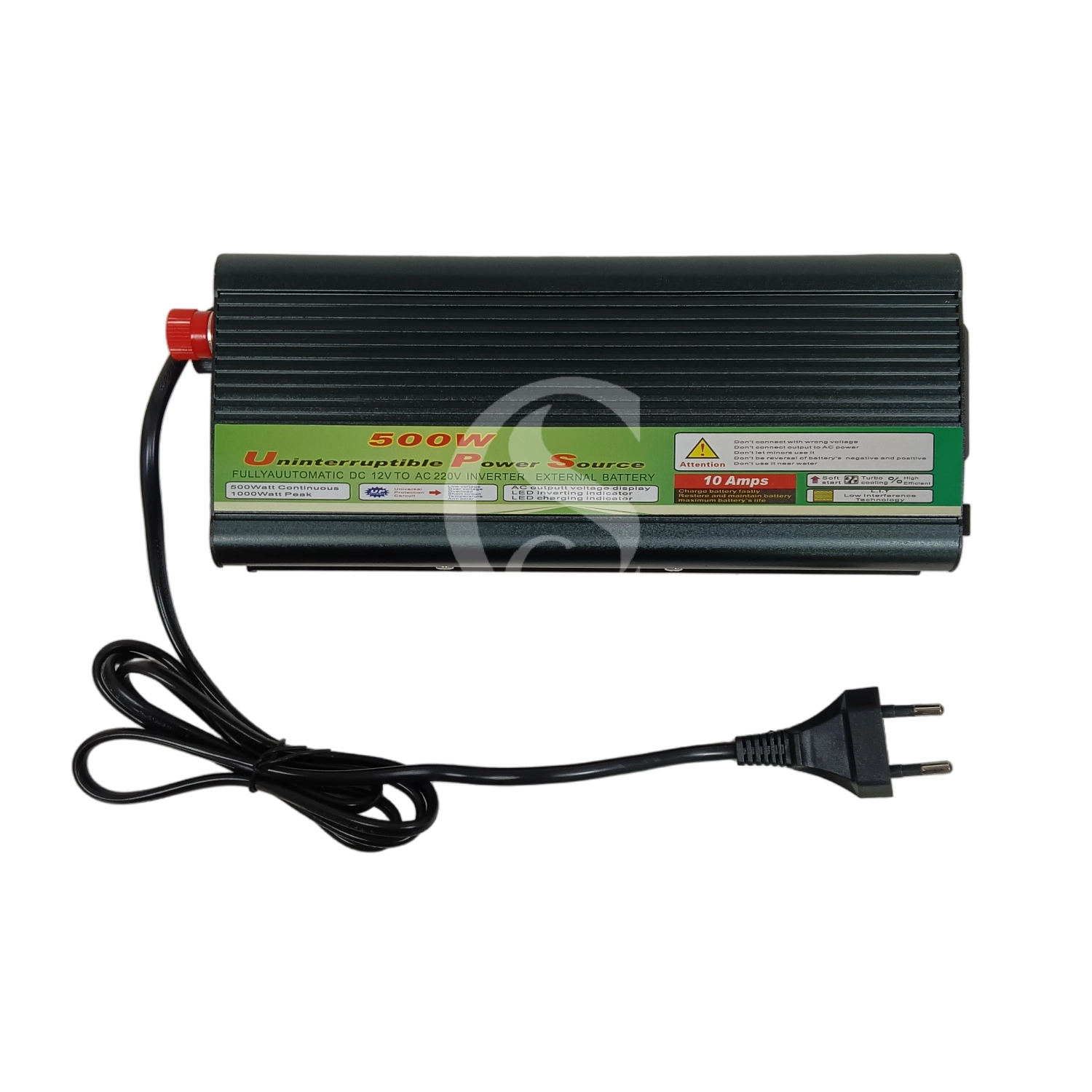
Congsin 500W 12V to 220V inverter delivers reliable off-grid power with its modified sine wave design. This portable 500W DC to AC power inverter efficiently converts 12V DC to 220V AC, ideal for outdoor and emergency use. Trust Congsin for stable, portable energy solutions.
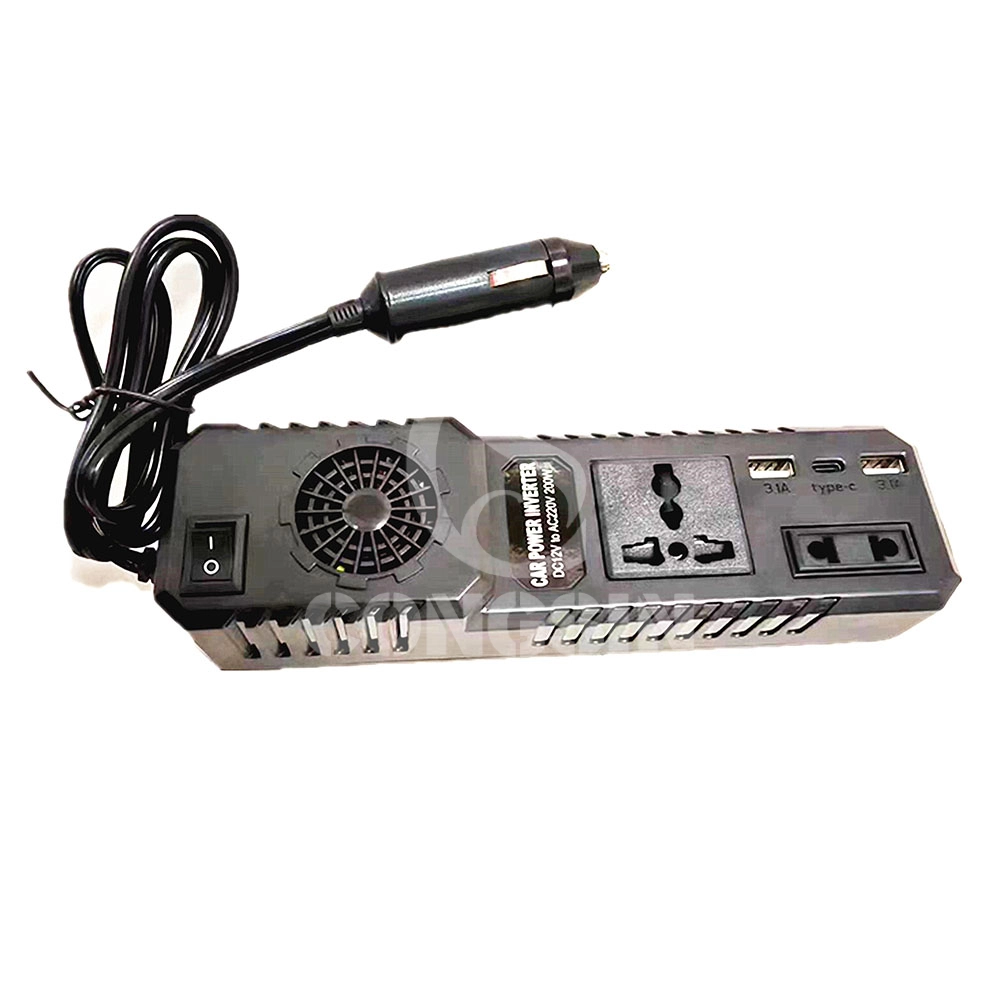
This 200W Modified Sine Wave Car Power Inverter is a compact and practical power conversion device designed for vehicle use. It supports dual input (DC12V/24V) and outputs AC220V, compatible with various electronic devices. Equipped with a Type-C port and dual 3.1A USB outputs, it can charge laptops, phones, cameras, drones, and other small electronics simultaneously—perfect for outdoor travel, emergency backup, and mobile work scenarios.
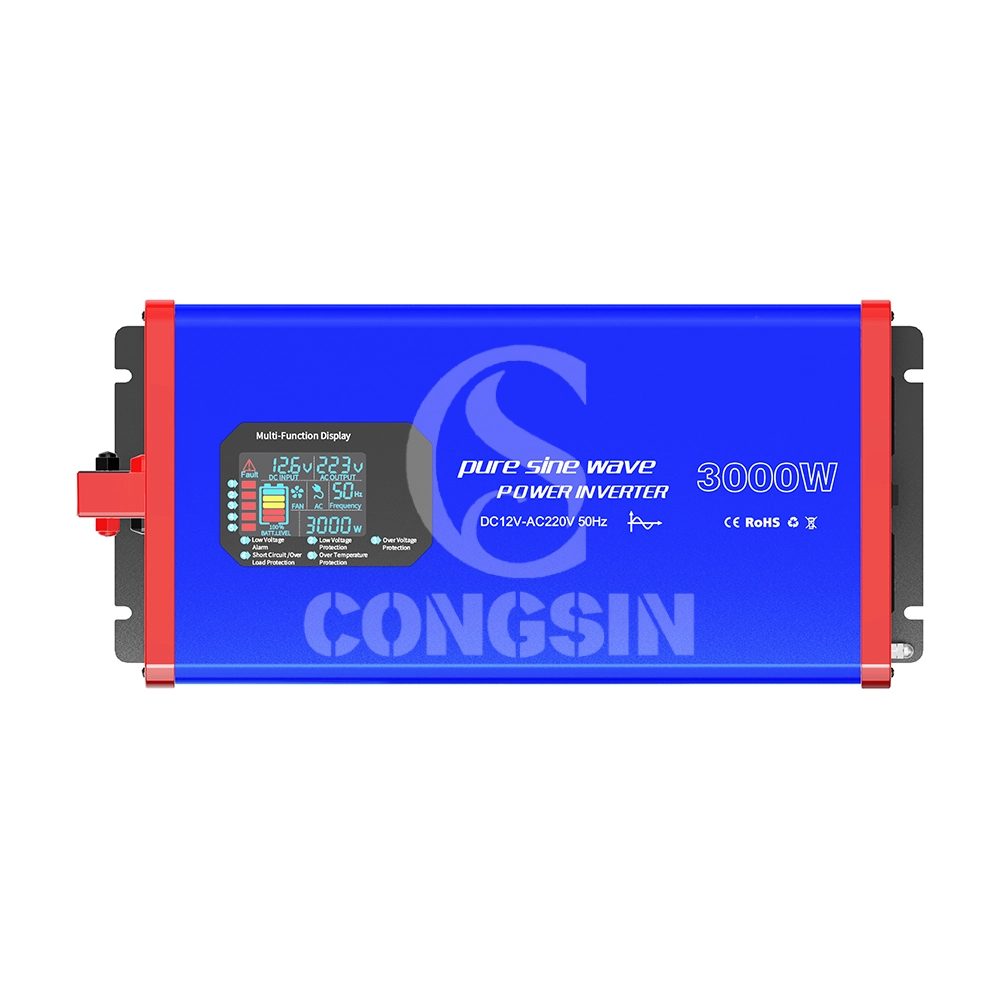
This 3000W full-power pure sine wave inverter (Model: CS3000PSW) adopts pure sine wave output technology (waveform distortion rate <2%), and the output power is highly consistent with mains power quality. It can safely drive high-power precision loads such as air conditioners, refrigerators, medical instruments, and small industrial equipment, avoiding equipment malfunctions or shortened service life caused by unstable waveforms. The device supports DC 12V input (compatible with 10.5V-14.8V wide voltage), continuously outputs 3000W full power, and has a peak power of 6000W, easily coping with the instantaneous startup impact of high-power devices; it is equipped with 4 AC universal sockets (max current 16A) + 2 USB 3.0 fast-charging ports (22.5W per port) to meet the simultaneous power supply needs of multiple devices. Built-in six-fold safety protection (overload, overvoltage, undervoltage, short circuit, overtemperature, reverse connection), combined with dual intelligent silent cooling fans (noise ≤45dB), it achieves the triple advantages of "high power + high safety + low noise," suitable for home emergency, outdoor engineering, vehicle-mounted power supply, small industrial scenarios and other fields.
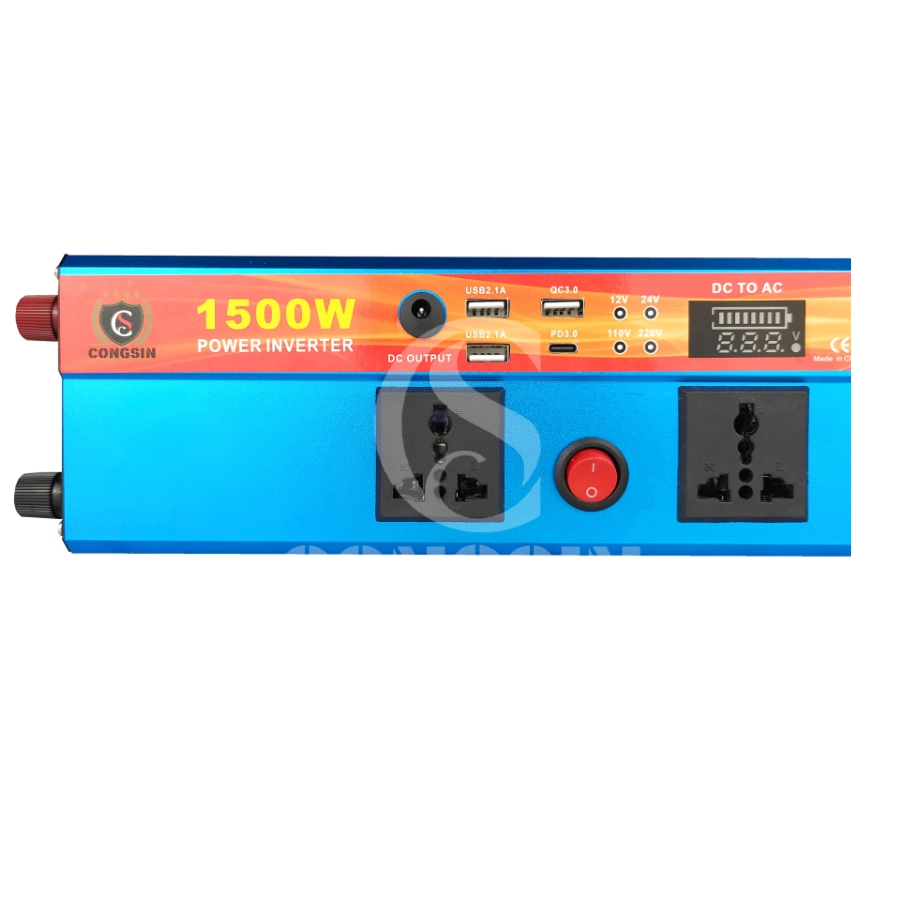
Our CS1000DDBC 1000W modified sine wave inverter is a professional power conversion device that converts DC 12V from batteries into AC 220V electricity. It is designed with user convenience in mind, featuring an LED display for real-time status monitoring, multiple charging ports (3 USB, 1 Type-C, 1 DC 12V) and two universal sockets to power a wide range of devices simultaneously. Its compact size (250×95×55mm) and lightweight design (NW: 0.84kg) make it easy to carry, ideal for outdoor activities, emergency home use, and on-the-go power needs.
Get in Touch with Our Team
You can also communicate with us directly through our online contact form. Please fill in the following information, and our team will contact you as soon as possible after receiving your message.

CONGSIN is a trusted OEM factory for power inverters, solar charge controllers, and DC converters. Reliable solutions for global B2B buyers.
 High Quality
 7/24 Service
 Guaranteed Warranty
© 2025 Congsin. All Rights Reserved.
 WeChat
 Scan QR Code
sin cong
teaimei10
Whatsapp: +8618028086791
Scan QR Code