




What certifications and tests prove bidirectional inverter reliability?
When considering the purchase of a bidirectional inverter, it's crucial to understand the certifications and tests that validate its reliability. This knowledge ensures that the inverter will perform effectively and safely in your specific application. Below are six specific questions frequently asked by beginners, along with in-depth answers to each.
1. What is the significance of UL 1741 certification for bidirectional inverters?
UL 1741 is a standard that sets requirements for inverters, converters, charge controllers, and interconnection system equipment intended for use in stand-alone or utility-interactive power systems. For bidirectional inverters, UL 1741 certification ensures that the device meets safety and performance standards necessary for grid connection. This certification is particularly important for inverters used in photovoltaic systems, as it confirms their ability to operate safely and efficiently within the electrical grid.
2. How does IEC 62109 certification impact the reliability of bidirectional inverters?
IEC 62109 is an international standard that specifies safety requirements for power converters used in photovoltaic systems. For bidirectional inverters, IEC 62109 certification ensures that the device is designed and constructed to operate safely under normal and fault conditions. This includes protection against electric shock, fire hazards, and other operational risks. Compliance with IEC 62109 is essential for ensuring the long-term reliability and safety of bidirectional inverters in various applications.
3. What role does burn-in testing play in validating bidirectional inverter performance?
Burn-in testing involves subjecting inverters to controlled electrical and thermal stress over extended periods to detect and eliminate latent defects and early-life failures. This process helps ensure that the inverter will perform consistently over its intended lifespan. By identifying potential issues before the product reaches customers, burn-in testing enhances the reliability and quality of bidirectional inverters.
4. How do thermal cycling tests assess the durability of bidirectional inverters?
Thermal cycling tests involve repeatedly exposing inverters to cycles of high and low temperatures to simulate the thermal stresses they will encounter during operation. These tests help identify potential issues such as solder joint fatigue, component degradation, and other reliability concerns. By assessing the inverter's performance under these conditions, manufacturers can ensure that the device will withstand the thermal variations present in real-world applications.
5. What is the importance of electromagnetic interference (EMI) testing for bidirectional inverters?
EMI testing evaluates the inverter's ability to operate without causing or being susceptible to electromagnetic interference. For bidirectional inverters, EMI testing ensures that the device will not disrupt other electronic equipment and will function correctly in environments with existing electromagnetic noise. Compliance with EMI standards is crucial for maintaining the reliability and performance of bidirectional inverters in various settings.
6. How does compliance with IEEE 1547 standards affect the integration of bidirectional inverters into the power grid?
IEEE 1547 is a standard that defines the requirements for interconnecting distributed resources with electric power systems. For bidirectional inverters, compliance with IEEE 1547 ensures that the device can safely and effectively integrate with the power grid, providing features such as voltage and frequency ride-through, anti-islanding protection, and power quality control. Adherence to this standard is essential for the reliable operation of bidirectional inverters in grid-connected applications.
Understanding these certifications and tests is vital when selecting a bidirectional inverter, as they provide assurance of the device's reliability, safety, and performance. By considering these factors, you can make an informed decision that aligns with your specific needs and ensures the long-term success of your investment.
For a personalized quote or more information, please contact us at info@csinverter.com or visit our website at www.csinverter.com.


Modified Sine Wave Inverters
Is the cooling fan noisy during operation?
The noise is low (≤45 decibels, equivalent to normal conversation volume). The fan uses a silent motor and automatically adjusts the speed according to the device temperature (low-speed operation when temperature <40℃, high-speed operation when >60℃), balancing heat dissipation and noise.
Can it be used with a car cigarette lighter socket?
Yes, it supports both battery clip and cigarette lighter connection.
Which regional plugs can be used with the universal socket?
The universal socket supports most national plug specifications, such as GB, US, EU, etc. (some require adapters), and can meet the use of devices in multiple regions.
Does the UPS function require additional mains connection?
Yes. The inverter needs to be connected to a home/office socket via the included mains cable, and the device will automatically detect the mains status; when the mains power is interrupted, it will switch to battery power immediately.
Pure Sine Wave Inverters
What capacity battery is needed to drive a 1000W electric kettle?
It is recommended to match with a 12V 100Ah or larger capacity battery. When a 1000W electric kettle is working, the power consumption per hour is about 83Ah (1000W÷12V≈83A), and a 100Ah battery can support continuous work for about 1 hour (actual battery life is affected by battery aging).
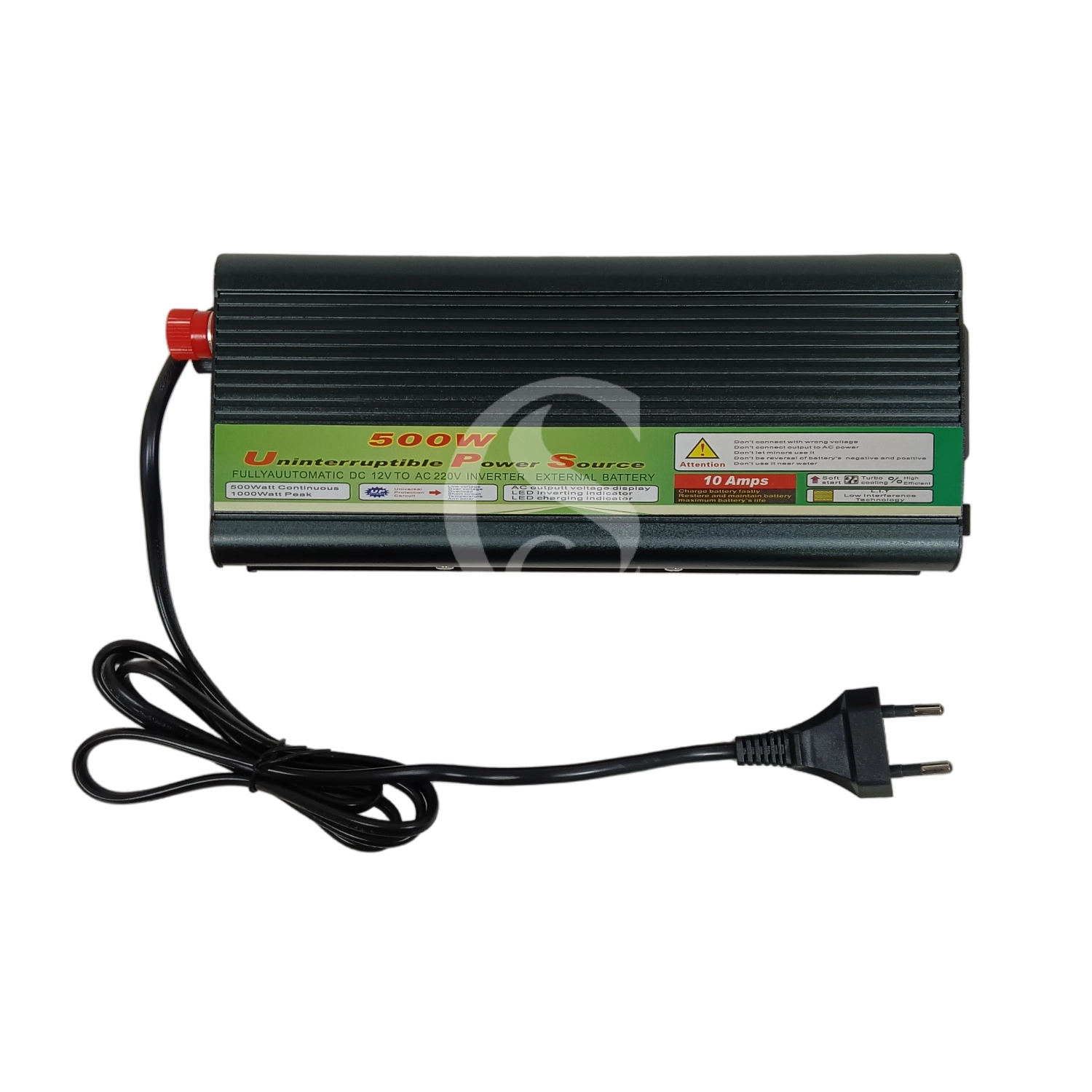
Congsin 500W 12V to 220V inverter delivers reliable off-grid power with its modified sine wave design. This portable 500W DC to AC power inverter efficiently converts 12V DC to 220V AC, ideal for outdoor and emergency use. Trust Congsin for stable, portable energy solutions.
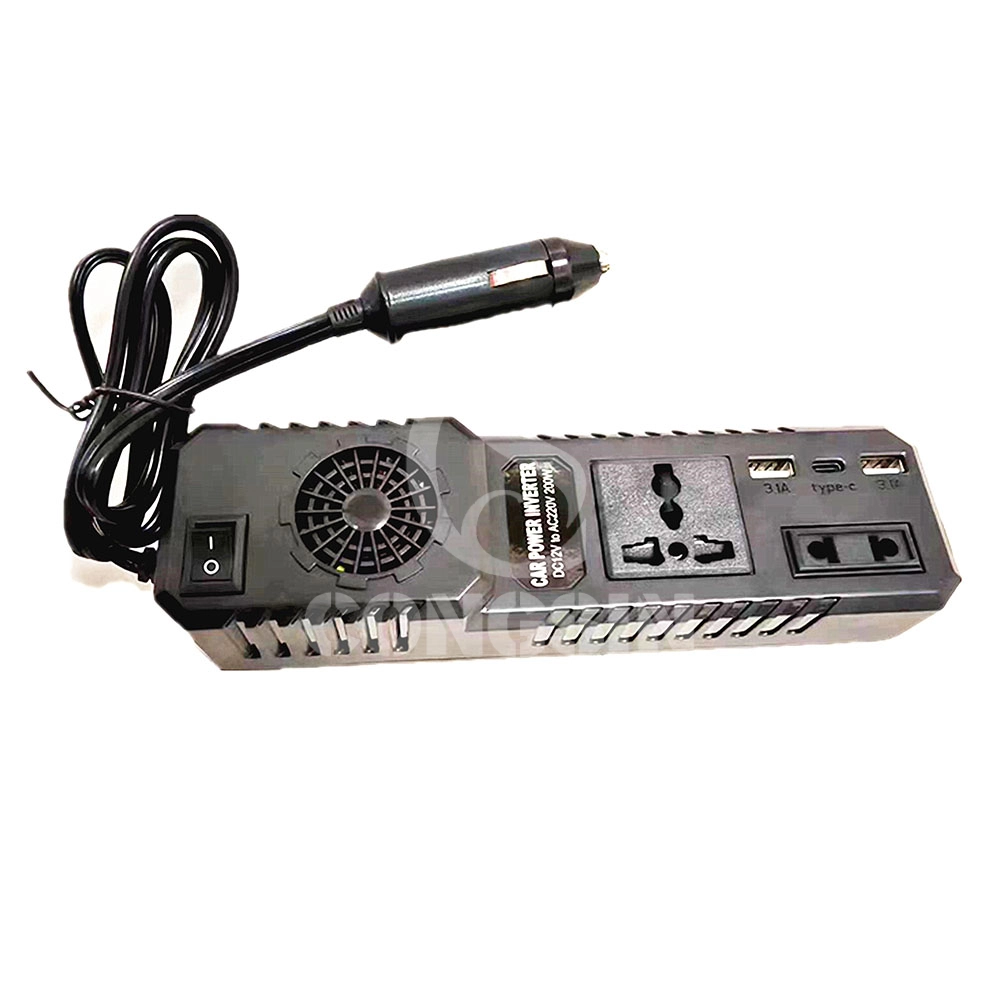
This 200W Modified Sine Wave Car Power Inverter is a compact and practical power conversion device designed for vehicle use. It supports dual input (DC12V/24V) and outputs AC220V, compatible with various electronic devices. Equipped with a Type-C port and dual 3.1A USB outputs, it can charge laptops, phones, cameras, drones, and other small electronics simultaneously—perfect for outdoor travel, emergency backup, and mobile work scenarios.
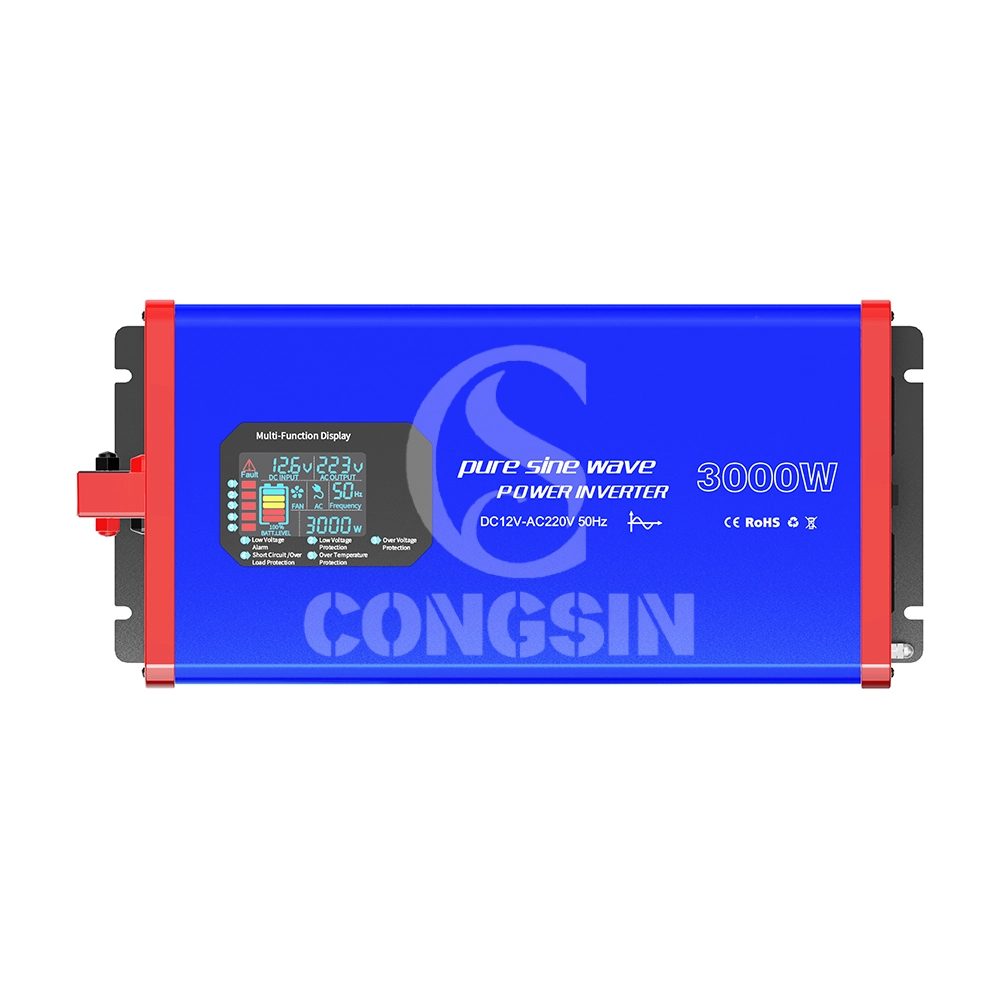
This 3000W full-power pure sine wave inverter (Model: CS3000PSW) adopts pure sine wave output technology (waveform distortion rate <2%), and the output power is highly consistent with mains power quality. It can safely drive high-power precision loads such as air conditioners, refrigerators, medical instruments, and small industrial equipment, avoiding equipment malfunctions or shortened service life caused by unstable waveforms. The device supports DC 12V input (compatible with 10.5V-14.8V wide voltage), continuously outputs 3000W full power, and has a peak power of 6000W, easily coping with the instantaneous startup impact of high-power devices; it is equipped with 4 AC universal sockets (max current 16A) + 2 USB 3.0 fast-charging ports (22.5W per port) to meet the simultaneous power supply needs of multiple devices. Built-in six-fold safety protection (overload, overvoltage, undervoltage, short circuit, overtemperature, reverse connection), combined with dual intelligent silent cooling fans (noise ≤45dB), it achieves the triple advantages of "high power + high safety + low noise," suitable for home emergency, outdoor engineering, vehicle-mounted power supply, small industrial scenarios and other fields.
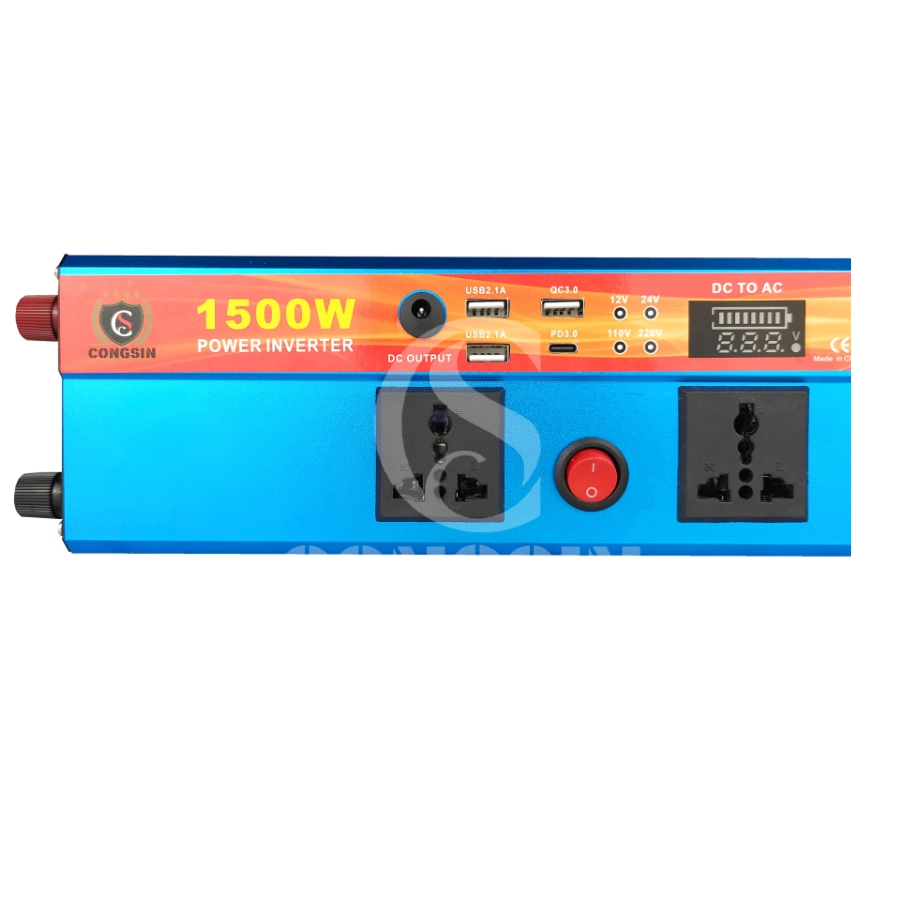
Our CS1000DDBC 1000W modified sine wave inverter is a professional power conversion device that converts DC 12V from batteries into AC 220V electricity. It is designed with user convenience in mind, featuring an LED display for real-time status monitoring, multiple charging ports (3 USB, 1 Type-C, 1 DC 12V) and two universal sockets to power a wide range of devices simultaneously. Its compact size (250×95×55mm) and lightweight design (NW: 0.84kg) make it easy to carry, ideal for outdoor activities, emergency home use, and on-the-go power needs.
Get in Touch with Our Team
You can also communicate with us directly through our online contact form. Please fill in the following information, and our team will contact you as soon as possible after receiving your message.

CONGSIN is a trusted OEM factory for power inverters, solar charge controllers, and DC converters. Reliable solutions for global B2B buyers.
 High Quality
 7/24 Service
 Guaranteed Warranty
© 2025 Congsin. All Rights Reserved.