





Are Bidirectional Battery Inverters Compatible with Your Batteries?
- 1. What are the key differences between bidirectional and unidirectional battery inverters?
- 2. How do bidirectional battery inverters enhance energy management in solar power systems?
- 3. What are the compatibility considerations when integrating bidirectional battery inverters with different battery types?
- 4. How can improper pairing of bidirectional inverters and batteries impact system performance?
- 5. What are the benefits of using a bidirectional battery inverter in a home energy storage system?
- 6. How do bidirectional battery inverters contribute to the sustainability of energy systems?
1. What are the key differences between bidirectional and unidirectional battery inverters?
Bidirectional battery inverters, also known as power conversion systems (PCS), can both charge and discharge batteries, converting direct current (DC) from batteries into alternating current (AC) for household use and vice versa. This two-way functionality allows for energy storage and retrieval, making them ideal for applications like solar energy systems and uninterruptible power supplies (UPS). In contrast, unidirectional inverters only convert DC to AC, lacking the capability to reverse the process. This distinction is crucial when designing energy storage systems, as bidirectional inverters offer greater flexibility and efficiency in managing energy flow.
2. How do bidirectional battery inverters enhance energy management in solar power systems?
In solar power systems, bidirectional battery inverters play a pivotal role in optimizing energy usage. They enable the storage of excess solar energy generated during peak sunlight hours, which can then be used during periods of low generation or high demand. This capability ensures a continuous power supply, reduces reliance on the grid, and maximizes the utilization of renewable energy. Additionally, bidirectional inverters can facilitate grid interaction, allowing for energy export during surplus production and import during shortages, thereby contributing to a more resilient and sustainable energy infrastructure.
3. What are the compatibility considerations when integrating bidirectional battery inverters with different battery types?
Compatibility between bidirectional battery inverters and various battery types is essential for system efficiency and longevity. Key considerations include:
Voltage Matching: Ensure that the battery's voltage aligns with the inverter's input requirements. For instance, a 48V battery should be paired with an inverter designed for 48V systems to prevent operational issues.
Communication Protocols: Inverters and batteries often communicate via specific protocols (e.g., CAN Bus, RS485) to manage charging and discharging processes. Mismatched protocols can lead to system inefficiencies or failures. It's imperative to verify that both components support the same communication standards.
Battery Chemistry Compatibility: Different battery chemistries (e.g., LiFePO₄, lead-acid) have unique charging and discharging characteristics. The inverter must be capable of handling these specific requirements to ensure optimal performance and battery health.
4. How can improper pairing of bidirectional inverters and batteries impact system performance?
Improper pairing of bidirectional inverters and batteries can lead to several issues:
Communication Failures: Incompatible communication protocols can result in the inverter failing to recognize the battery, leading to inaccurate state-of-charge readings and potential system shutdowns.
Reduced Efficiency: Mismatched voltage levels and charging algorithms can decrease energy conversion efficiency, causing energy losses and increased operational costs.
Safety Hazards: Incorrect pairing may lead to overcharging or overdischarging of batteries, posing safety risks such as thermal runaway or reduced battery lifespan.
To avoid these problems, it's crucial to consult compatibility charts provided by manufacturers and ensure that all components are designed to work together seamlessly.
5. What are the benefits of using a bidirectional battery inverter in a home energy storage system?
Incorporating a bidirectional battery inverter into a home energy storage system offers several advantages:
Energy Independence: By storing excess energy generated from renewable sources, homeowners can reduce reliance on the grid, leading to potential cost savings and increased energy security.
Grid Interaction: Bidirectional inverters facilitate both energy export and import, allowing homeowners to sell surplus energy back to the grid or draw power during peak demand periods, optimizing energy usage and financial returns.
System Flexibility: These inverters support various battery types and configurations, providing flexibility in system design and future scalability.
6. How do bidirectional battery inverters contribute to the sustainability of energy systems?
Bidirectional battery inverters play a significant role in promoting sustainability by:
Maximizing Renewable Energy Utilization: They enable efficient storage and use of renewable energy, reducing dependence on fossil fuels and decreasing greenhouse gas emissions.
Enhancing Grid Stability: By balancing energy supply and demand through energy storage, they contribute to a more stable and resilient power grid.
Supporting Energy Transition: Bidirectional inverters are integral to the integration of renewable energy sources into the existing energy infrastructure, facilitating the transition towards sustainable energy systems.
In conclusion, bidirectional battery inverters are essential components in modern energy storage solutions, offering enhanced energy management, system flexibility, and sustainability. Proper integration with compatible batteries ensures optimal performance and longevity, making them a valuable investment for both residential and commercial applications.
For personalized advice and a detailed quote tailored to your specific needs, please contact us at info@csinverter.com or visit our website at www.csinverter.com.


Modified Sine Wave Inverters
How to connect to the battery?
Use the included battery clips, connect the red clip to the positive pole of the battery and the black clip to the negative pole. Ensure good contact and no short-circuit risk when connecting.
Is it a pure sine wave or a modified sine wave? What's the difference?
This is a modified sine wave inverter, suitable for most conventional home appliances and electronic devices; pure sine wave is suitable for precision devices with extremely high power requirements. This modified sine wave is more cost-effective at 2000W, meeting the needs of most scenarios.
Is the cooling fan noisy during operation?
The noise is low (≤45 decibels, equivalent to normal conversation volume). The fan uses a silent motor and automatically adjusts the speed according to the device temperature (low-speed operation when temperature <40℃, high-speed operation when >60℃), balancing heat dissipation and noise.
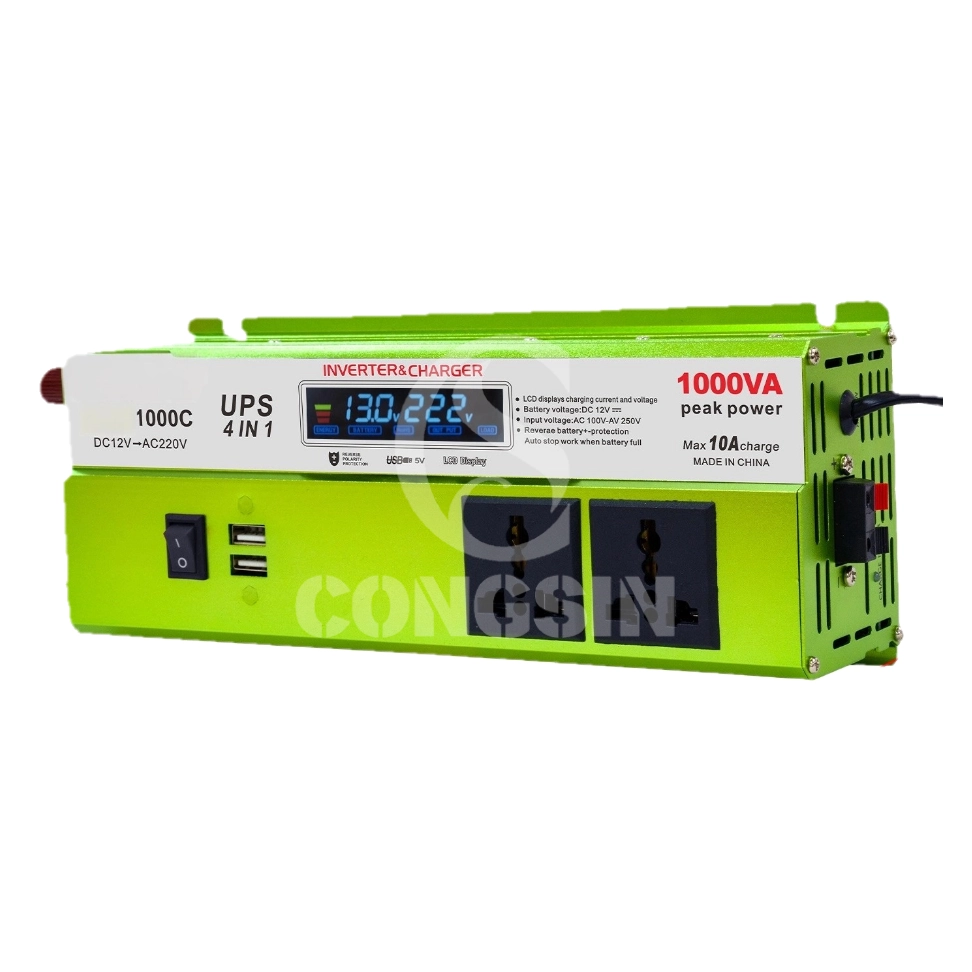
What is the benefit of the UPS function? A2:
It automatically switches to battery power when AC fails.
Pure Sine Wave Inverters
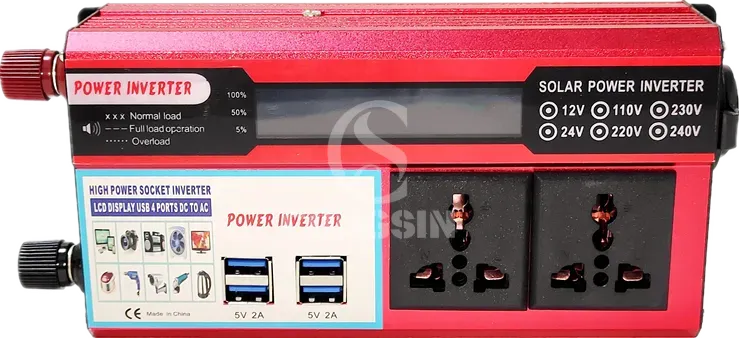
Can the 3 AC sockets drive high-power devices at the same time?
Yes, but it is necessary to ensure that the total power of the 3 devices does not exceed 2000W (continuous power). For example, it can drive 1 1000W electric oven + 1 500W microwave + 1 400W printer at the same time (total power 1900W), avoiding total power overload to trigger the protection mechanism.
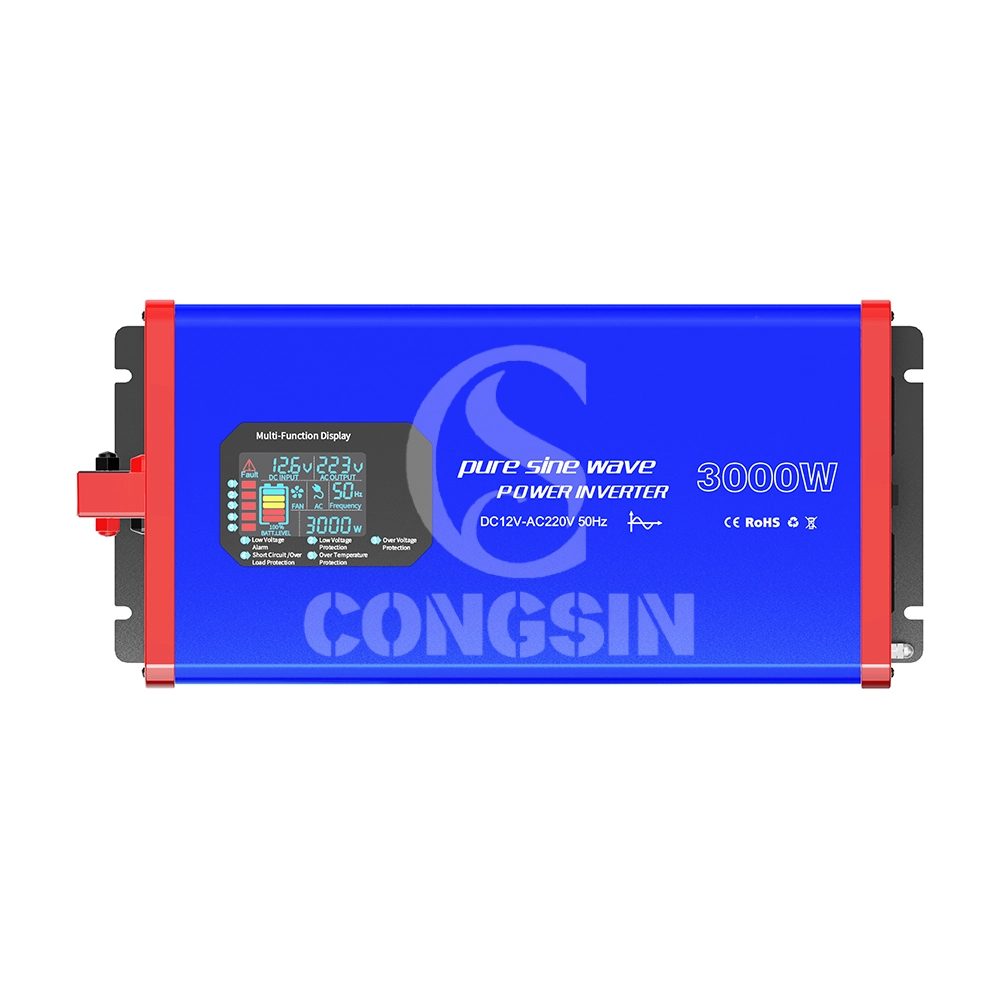
This 3000W full-power pure sine wave inverter (Model: CS3000PSW) adopts pure sine wave output technology (waveform distortion rate <2%), and the output power is highly consistent with mains power quality. It can safely drive high-power precision loads such as air conditioners, refrigerators, medical instruments, and small industrial equipment, avoiding equipment malfunctions or shortened service life caused by unstable waveforms. The device supports DC 12V input (compatible with 10.5V-14.8V wide voltage), continuously outputs 3000W full power, and has a peak power of 6000W, easily coping with the instantaneous startup impact of high-power devices; it is equipped with 4 AC universal sockets (max current 16A) + 2 USB 3.0 fast-charging ports (22.5W per port) to meet the simultaneous power supply needs of multiple devices. Built-in six-fold safety protection (overload, overvoltage, undervoltage, short circuit, overtemperature, reverse connection), combined with dual intelligent silent cooling fans (noise ≤45dB), it achieves the triple advantages of "high power + high safety + low noise," suitable for home emergency, outdoor engineering, vehicle-mounted power supply, small industrial scenarios and other fields.
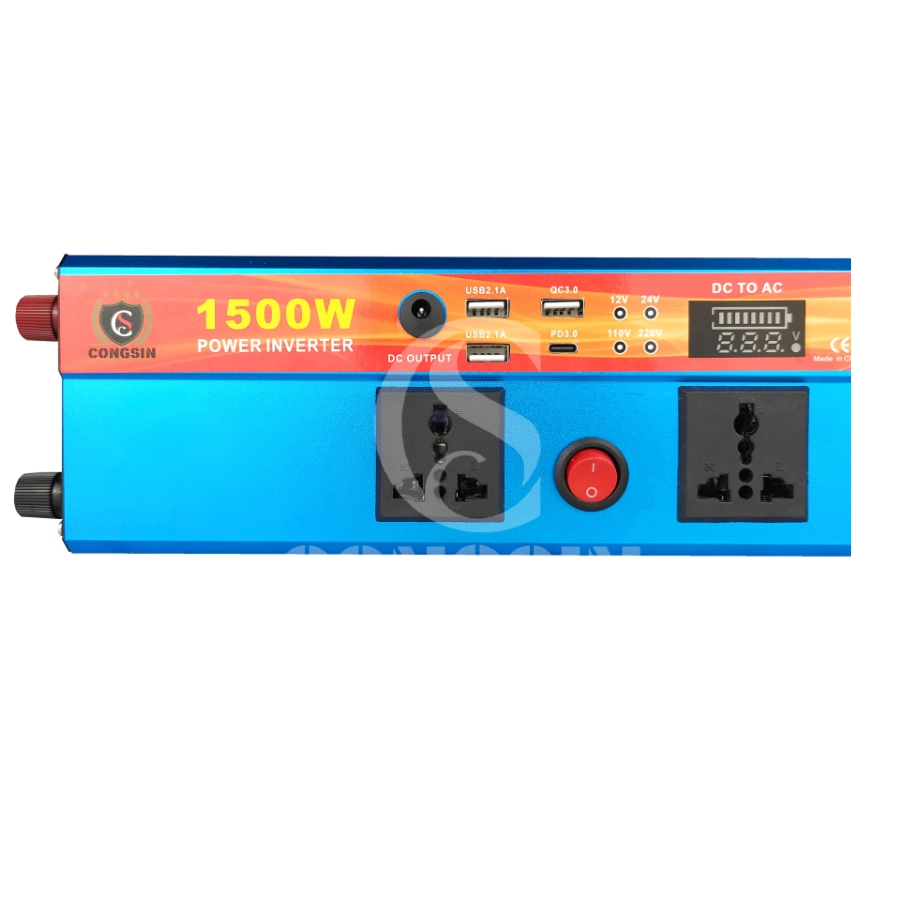
Our CS1000DDBC 1000W modified sine wave inverter is a professional power conversion device that converts DC 12V from batteries into AC 220V electricity. It is designed with user convenience in mind, featuring an LED display for real-time status monitoring, multiple charging ports (3 USB, 1 Type-C, 1 DC 12V) and two universal sockets to power a wide range of devices simultaneously. Its compact size (250×95×55mm) and lightweight design (NW: 0.84kg) make it easy to carry, ideal for outdoor activities, emergency home use, and on-the-go power needs.
Get in Touch with Our Team
You can also communicate with us directly through our online contact form. Please fill in the following information, and our team will contact you as soon as possible after receiving your message.

CONGSIN is a trusted OEM factory for power inverters, solar charge controllers, and DC converters. Reliable solutions for global B2B buyers.
 High Quality
 7/24 Service
 Guaranteed Warranty
© 2025 Congsin. All Rights Reserved.