





Can bidirectional battery inverters support grid-tied systems?
- 1. What are the primary functions of a bidirectional battery inverter in energy storage systems?
- 2. How do bidirectional battery inverters contribute to grid-tied energy systems?
- 3. What are the key technical specifications to consider when selecting a bidirectional battery inverter?
- 4. How do bidirectional battery inverters integrate with renewable energy sources?
- 5. What are the common challenges associated with bidirectional battery inverters in grid-tied systems?
- 6. How can I ensure the optimal performance and longevity of my bidirectional battery inverter?
1. What are the primary functions of a bidirectional battery inverter in energy storage systems?
A bidirectional battery inverter serves as a pivotal component in energy storage systems, facilitating the conversion between direct current (DC) and alternating current (AC) in both directions. This functionality enables the storage of excess energy generated from renewable sources, such as solar panels, by converting AC to DC for battery charging. Conversely, it allows for the discharge of stored DC energy back into the AC grid or to power AC loads, ensuring a seamless energy flow and enhancing system efficiency.
2. How do bidirectional battery inverters contribute to grid-tied energy systems?
In grid-tied configurations, bidirectional battery inverters play a crucial role by managing the bidirectional flow of electricity between the energy storage system and the utility grid. They ensure that the energy fed into the grid matches the grid's voltage, frequency, and phase, maintaining synchronization and power quality. Additionally, these inverters provide essential grid support functions, such as voltage regulation and frequency control, thereby enhancing the stability and reliability of the power grid.
3. What are the key technical specifications to consider when selecting a bidirectional battery inverter?
When choosing a bidirectional battery inverter, it's imperative to evaluate several technical specifications to ensure compatibility and optimal performance:
- Power Rating: Assess the inverter's power capacity to match the energy demands of your system, considering both continuous and peak power requirements.
- Voltage Compatibility: Ensure the inverter supports the voltage levels of your battery bank and is compatible with the grid voltage.
- Efficiency: Higher efficiency reduces energy losses during conversion, leading to better overall system performance.
- Grid Compliance: Verify that the inverter meets local grid codes and standards, including anti-islanding protection and power factor correction.
- Scalability: Consider the inverter's ability to scale with future energy needs, allowing for system expansion without significant additional investment.
4. How do bidirectional battery inverters integrate with renewable energy sources?
Bidirectional battery inverters are integral to renewable energy systems, particularly those utilizing solar panels. They manage the conversion of DC electricity generated by solar panels into AC electricity suitable for grid injection or powering AC loads. Additionally, they handle the reverse process, converting AC from the grid into DC to charge batteries, thereby facilitating energy storage. This bidirectional capability ensures efficient energy management, maximizes the utilization of renewable energy, and supports grid stability.
5. What are the common challenges associated with bidirectional battery inverters in grid-tied systems?
While bidirectional battery inverters offer numerous benefits, they also present certain challenges:
- Complexity in Installation: Proper installation requires adherence to local electrical codes and standards, which can be complex and may necessitate professional assistance.
- Cost Considerations: High-quality inverters can be a significant investment, and the total cost may include additional components such as communication interfaces and monitoring systems.
- Maintenance Requirements: Regular maintenance is essential to ensure optimal performance and longevity, which may involve periodic inspections and firmware updates.
- Grid Compatibility Issues: In regions with unstable grid conditions, ensuring that the inverter can handle voltage fluctuations and provide necessary grid support functions is crucial.
6. How can I ensure the optimal performance and longevity of my bidirectional battery inverter?
To maximize the performance and lifespan of your bidirectional battery inverter:
- Regular Monitoring: Utilize monitoring systems to track performance metrics and identify potential issues promptly.
- Firmware Updates: Keep the inverter's firmware up to date to benefit from the latest features and improvements.
- Environmental Considerations: Install the inverter in a location with adequate ventilation and protection from extreme temperatures and humidity.
- Professional Maintenance: Schedule periodic inspections and maintenance by qualified technicians to ensure all components are functioning correctly.
Understanding these aspects will empower you to make informed decisions when selecting and maintaining a bidirectional battery inverter, ensuring it meets your energy storage and grid integration needs effectively.
For personalized advice and a detailed quote tailored to your specific requirements, please contact us at info@csinverter.com or visit our website at www.csinverter.com.


Products
Can I customize the logo?
Yes, OEM/ODM service is available.
Modified Sine Wave Inverters
What power range of devices can it supply?
It supports devices within 360W in UPS mode and within 500W in regular mode. Ensure the device power does not exceed the corresponding limit.
How to connect the battery with the battery clip?
Connect the positive and negative poles of the battery clip to the positive and negative poles of the battery respectively, and ensure a firm connection.
Which country’s voltage standards does it support?
It defaults to AC 220V output, suitable for regions with 220V voltage standards such as China and Europe; it can also be customized to output AC 110V, suitable for regions with 110V voltage standards such as the United States and Japan.
Pure Sine Wave Inverters
Can this inverter drive a 3P air conditioner and a refrigerator at the same time?
Yes. The rated power of a 3P air conditioner is about 2200W-2500W, and an ordinary double-door refrigerator is about 150W-300W, with a total power of about 2350W-2800W, which does not exceed the 3000W continuous power; and the peak 6000W can cope with the instantaneous startup impact of the air conditioner. When using, ensure the battery capacity is ≥200Ah (12V) to ensure battery life.
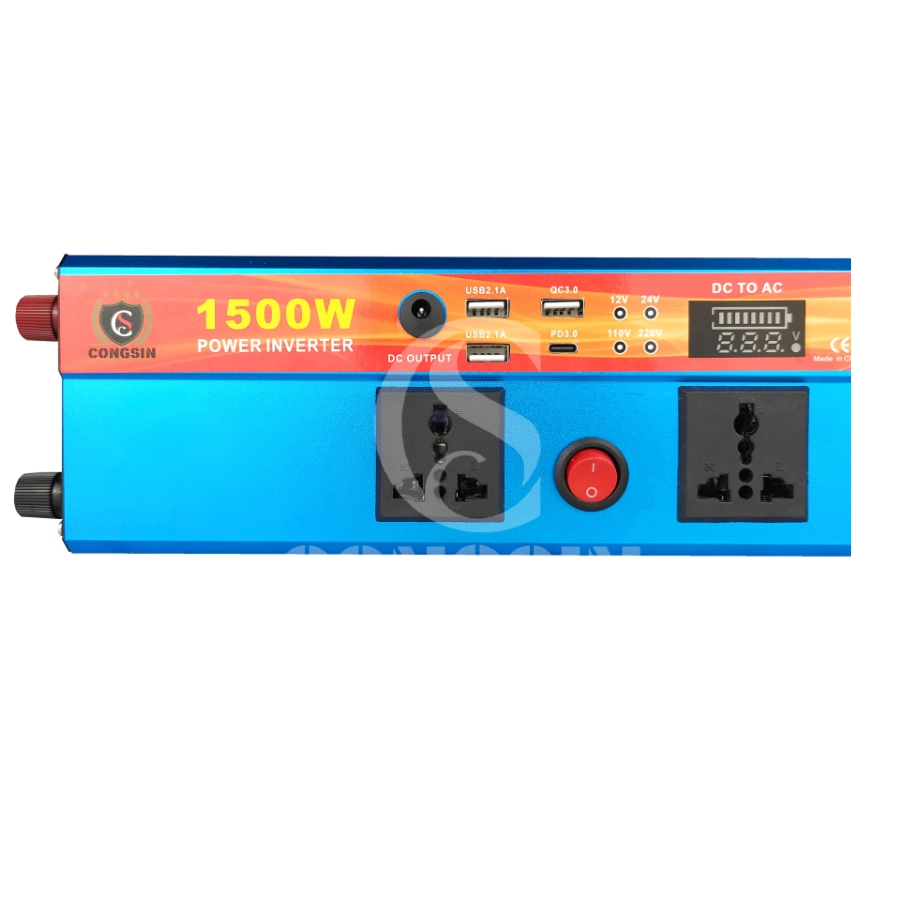
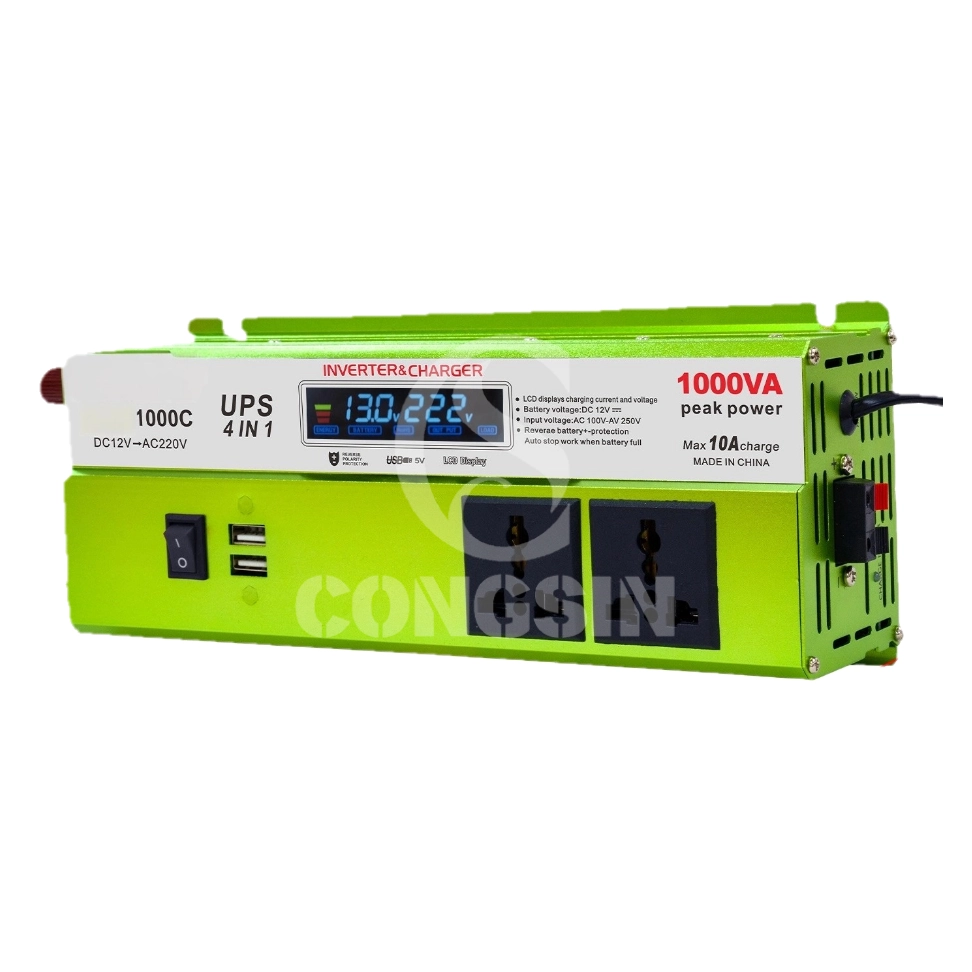
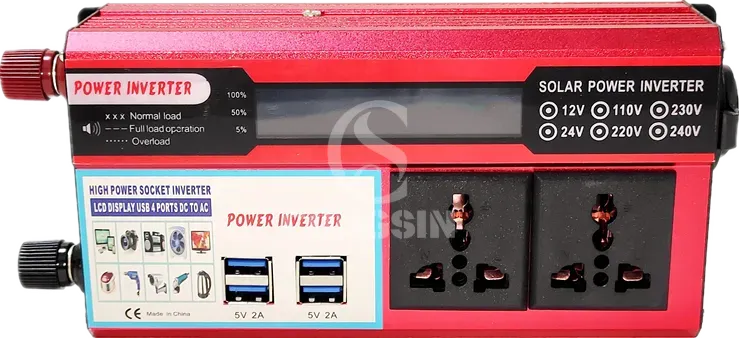
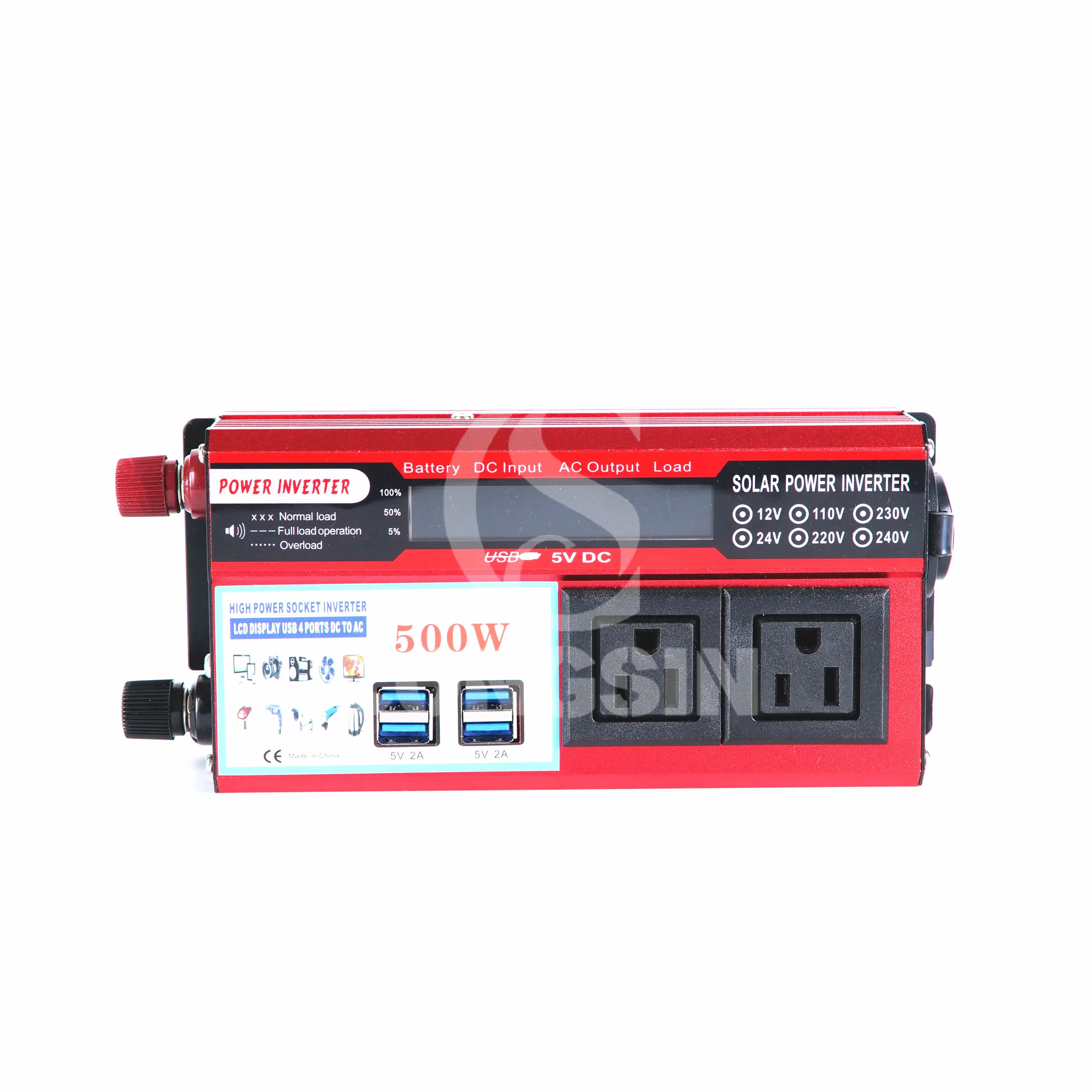
Our CS1000DDBC 1000W modified sine wave inverter is a professional power conversion device that converts DC 12V from batteries into AC 220V electricity. It is designed with user convenience in mind, featuring an LED display for real-time status monitoring, multiple charging ports (3 USB, 1 Type-C, 1 DC 12V) and two universal sockets to power a wide range of devices simultaneously. Its compact size (250×95×55mm) and lightweight design (NW: 0.84kg) make it easy to carry, ideal for outdoor activities, emergency home use, and on-the-go power needs.
Get in Touch with Our Team
You can also communicate with us directly through our online contact form. Please fill in the following information, and our team will contact you as soon as possible after receiving your message.

CONGSIN is a trusted OEM factory for power inverters, solar charge controllers, and DC converters. Reliable solutions for global B2B buyers.
 High Quality
 7/24 Service
 Guaranteed Warranty
© 2025 Congsin. All Rights Reserved.