





How to size a bidirectional battery inverter for commercial use?
- 1. How do I accurately determine the required capacity for a bidirectional battery inverter in my commercial facility?
- 2. What are the common pitfalls to avoid when sizing a bidirectional battery inverter for commercial applications?
- 3. How does the Depth of Discharge (DoD) affect the performance and lifespan of a bidirectional battery inverter system?
- 4. What are the key factors to consider when selecting a bidirectional battery inverter for commercial use?
- 5. How can I ensure compatibility between my bidirectional battery inverter and existing energy storage systems?
- 6. What are the maintenance requirements for a bidirectional battery inverter in a commercial setting?
1. How do I accurately determine the required capacity for a bidirectional battery inverter in my commercial facility?
To accurately determine the required capacity for a bidirectional battery inverter in your commercial facility, follow these steps:
Assess Total Load Requirements: Calculate the total wattage of all equipment that will be powered by the inverter. This includes lighting, HVAC systems, machinery, and any other essential devices.
Identify Peak Demand: Determine the maximum power demand that occurs when all equipment operates simultaneously. This peak demand is crucial for sizing the inverter to handle short-term surges without overloading.
Consider Depth of Discharge (DoD): Select a battery system with an appropriate DoD to ensure optimal performance and longevity. Over-discharging can reduce battery life, while under-discharging may lead to underutilization of the system.
Account for Inverter Efficiency: Inverters are not 100% efficient; some energy is lost during the conversion process. Choose an inverter with high efficiency to minimize energy losses and ensure reliable operation.
Plan for Future Expansion: Anticipate potential increases in energy demand due to business growth. Opt for a scalable inverter solution that can accommodate future needs without requiring a complete system overhaul.
By meticulously evaluating these factors, you can select a bidirectional battery inverter that meets your current and future energy requirements, ensuring uninterrupted power supply and cost-effectiveness.
2. What are the common pitfalls to avoid when sizing a bidirectional battery inverter for commercial applications?
When sizing a bidirectional battery inverter for commercial applications, it's essential to avoid the following common pitfalls:
Underestimating Energy Needs: Failing to accurately assess the total energy consumption can result in an undersized inverter, leading to frequent overloads and potential system failures.
Ignoring Peak Load Management: Not accounting for peak load periods can lead to inadequate power supply during critical times, affecting business operations and productivity.
Overlooking Depth of Discharge (DoD) Considerations: Misunderstanding or ignoring the DoD can lead to overuse or underuse of the battery, impacting its lifespan and efficiency.
Neglecting Future Expansion Needs: Failing to plan for future energy demands can result in a system that quickly becomes inadequate as the business grows, necessitating costly upgrades.
Inadequate Inverter Sizing: Choosing an inverter that is too small can lead to inefficiencies and a lack of backup power during critical times, while an oversized inverter can result in unnecessary costs and reduced efficiency.
By being aware of these pitfalls and proactively addressing them, you can ensure a more efficient and cost-effective energy storage solution for your commercial facility.
3. How does the Depth of Discharge (DoD) affect the performance and lifespan of a bidirectional battery inverter system?
The Depth of Discharge (DoD) significantly influences both the performance and lifespan of a bidirectional battery inverter system:
Performance Impact: A higher DoD means more of the battery's capacity is utilized before recharging, providing more usable energy during outages or peak demand periods. However, consistently deep discharges can lead to voltage drops under load, potentially causing inverter shutdowns.
Lifespan Considerations: Regularly discharging a battery to a high DoD can accelerate degradation, reducing the number of charge-discharge cycles the battery can undergo before its capacity diminishes. To maximize battery life, it's advisable to operate within a recommended DoD range, typically around 80% for many commercial batteries.
Balancing the DoD is crucial; while a higher DoD offers more immediate power, it can shorten the battery's overall lifespan. Therefore, understanding and managing the DoD is essential for optimizing both performance and longevity of your energy storage system.
4. What are the key factors to consider when selecting a bidirectional battery inverter for commercial use?
When selecting a bidirectional battery inverter for commercial use, consider the following key factors:
Power Rating: Ensure the inverter's power rating aligns with your facility's peak and continuous power demands to prevent overloads and ensure reliable operation.
Efficiency: Choose an inverter with high conversion efficiency to minimize energy losses during the DC to AC conversion process, enhancing overall system performance.
Scalability: Opt for an inverter that allows for easy expansion to accommodate future increases in energy demand as your business grows.
Grid Compliance: Verify that the inverter meets local grid codes and standards, including voltage regulation and power factor requirements, to ensure seamless integration with the utility grid.
Reliability and Warranty: Select an inverter from a reputable manufacturer that offers robust warranties and has a track record of reliability in commercial applications.
By carefully evaluating these factors, you can select a bidirectional battery inverter that not only meets your current energy needs but also supports future growth and ensures long-term operational efficiency.
5. How can I ensure compatibility between my bidirectional battery inverter and existing energy storage systems?
Ensuring compatibility between your bidirectional battery inverter and existing energy storage systems involves:
Voltage Matching: Confirm that the inverter's input voltage range is compatible with your battery bank's voltage to prevent operational issues and potential damage.
Communication Protocols: Verify that the inverter supports the same communication protocols as your battery management system (BMS) to facilitate seamless monitoring and control.
Charge/Discharge Rates: Ensure that the inverter can handle the battery's charge and discharge rates without causing overheating or reducing battery life.
Manufacturer Specifications: Consult both the inverter and battery manufacturers' guidelines to confirm compatibility and optimal performance.
By meticulously checking these aspects, you can achieve a harmonious integration between your inverter and energy storage system, leading to enhanced efficiency and reliability.
6. What are the maintenance requirements for a bidirectional battery inverter in a commercial setting?
Maintaining a bidirectional battery inverter in a commercial setting involves:
Regular Inspections: Periodically check for signs of wear, corrosion, or damage to components to address issues before they lead to system failures.
Firmware Updates: Keep the inverter's firmware up to date to ensure access to the latest features, performance improvements, and security patches.
Cleaning: Ensure that the inverter's cooling vents and fans are free from dust and debris to maintain optimal airflow and prevent overheating.
Performance Monitoring: Utilize monitoring systems to track the inverter's performance metrics, allowing for early detection of anomalies or inefficiencies.
Professional Servicing: Schedule regular maintenance with qualified technicians to perform in-depth diagnostics and servicing, ensuring the system operates at peak efficiency.
By adhering to these maintenance practices, you can extend the lifespan of your bidirectional battery inverter and ensure consistent, reliable power supply for your commercial operations.
In conclusion, selecting and sizing a bidirectional battery inverter for commercial use requires careful consideration of your facility's energy demands, future growth, and system compatibility. By avoiding common pitfalls and focusing on key factors such as power rating, efficiency, scalability, and maintenance, you can implement an energy storage solution that enhances operational efficiency and supports your business's long-term success.
For a personalized consultation and quote tailored to your specific needs, please contact us at info@csinverter.com or visit our website at www.csinverter.com.


Modified Sine Wave Inverters
What is the function of the independent control switch?
The independent control switches for DC and AC can respectively control the on and off of DC and AC circuits, facilitating the separate management of power supply for different types of devices and improving power usage safety and flexibility.
Is it compatible with both 12V and 24V vehicles?
Yes, it supports DC12V/24V dual input.
How to connect the battery with the battery clip?
Connect the positive and negative poles of the battery clip to the positive and negative poles of the battery respectively, and ensure a firm connection.
Pure Sine Wave Inverters
Can it run inductive loads like fridges or tools?
Yes, pure sine wave output supports all load types.
Products
Can I customize the logo?
Yes, OEM/ODM service is available.
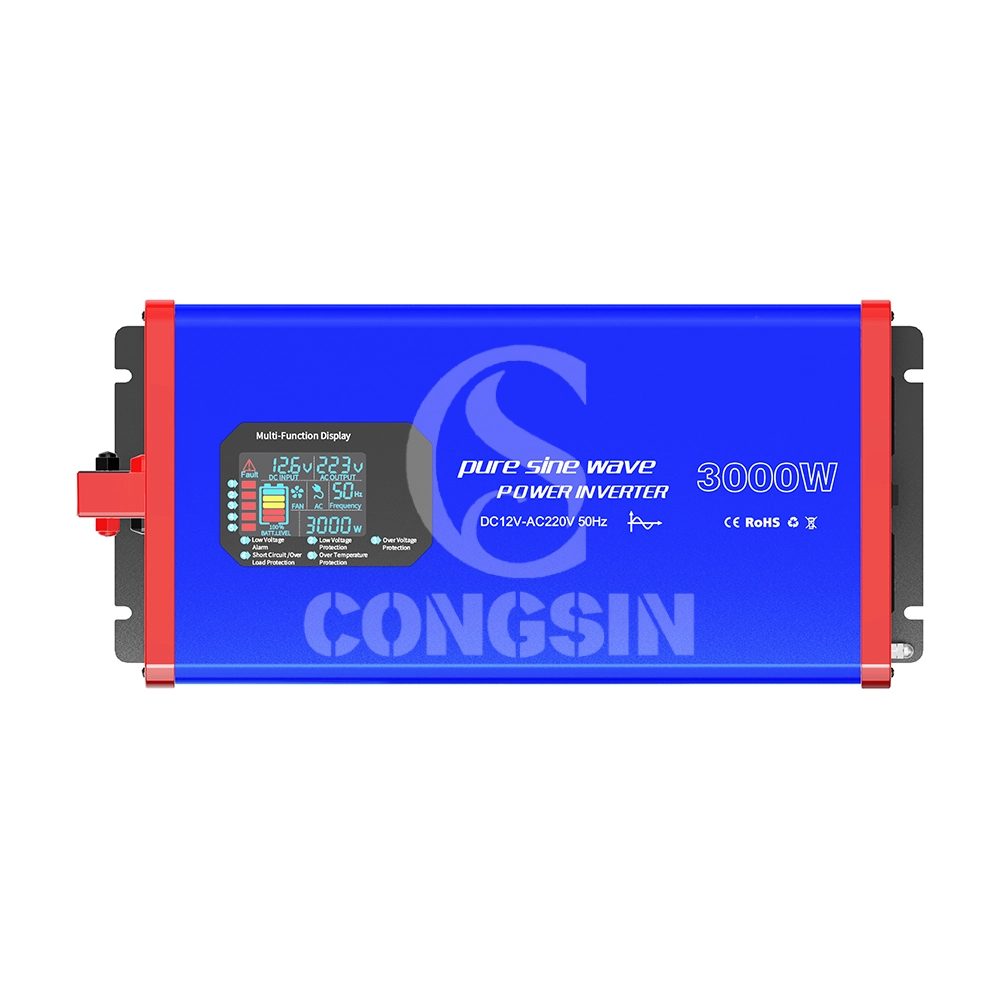
This 3000W full-power pure sine wave inverter (Model: CS3000PSW) adopts pure sine wave output technology (waveform distortion rate <2%), and the output power is highly consistent with mains power quality. It can safely drive high-power precision loads such as air conditioners, refrigerators, medical instruments, and small industrial equipment, avoiding equipment malfunctions or shortened service life caused by unstable waveforms. The device supports DC 12V input (compatible with 10.5V-14.8V wide voltage), continuously outputs 3000W full power, and has a peak power of 6000W, easily coping with the instantaneous startup impact of high-power devices; it is equipped with 4 AC universal sockets (max current 16A) + 2 USB 3.0 fast-charging ports (22.5W per port) to meet the simultaneous power supply needs of multiple devices. Built-in six-fold safety protection (overload, overvoltage, undervoltage, short circuit, overtemperature, reverse connection), combined with dual intelligent silent cooling fans (noise ≤45dB), it achieves the triple advantages of "high power + high safety + low noise," suitable for home emergency, outdoor engineering, vehicle-mounted power supply, small industrial scenarios and other fields.
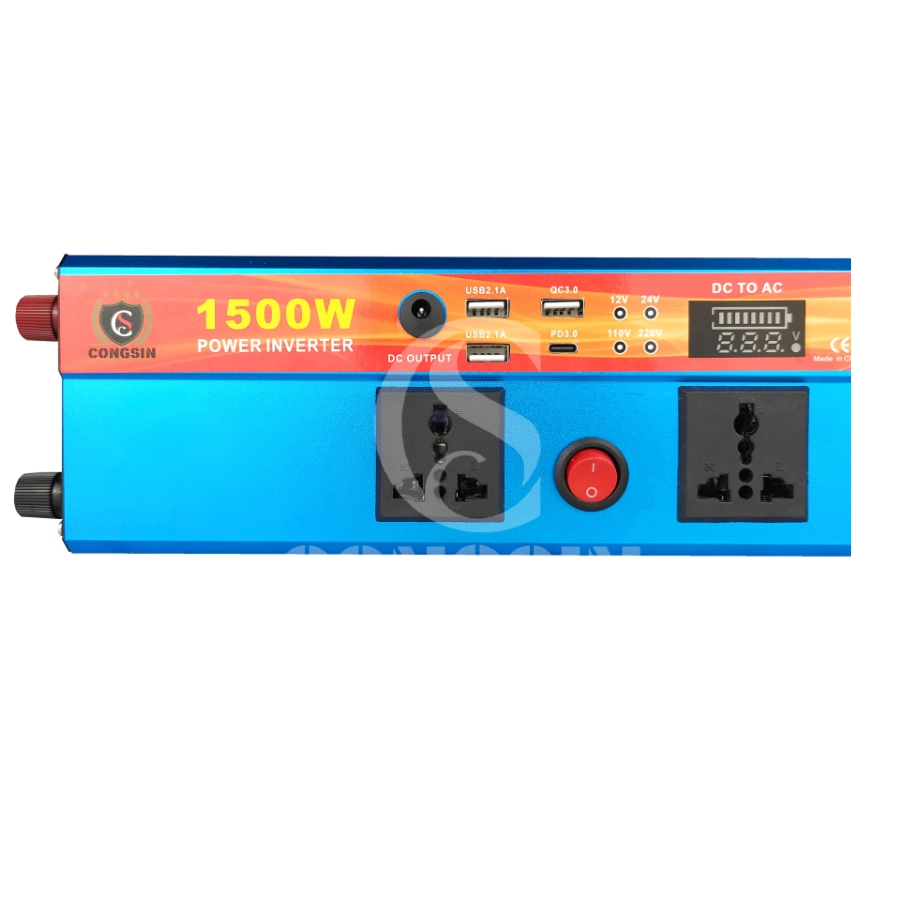
Our CS1000DDBC 1000W modified sine wave inverter is a professional power conversion device that converts DC 12V from batteries into AC 220V electricity. It is designed with user convenience in mind, featuring an LED display for real-time status monitoring, multiple charging ports (3 USB, 1 Type-C, 1 DC 12V) and two universal sockets to power a wide range of devices simultaneously. Its compact size (250×95×55mm) and lightweight design (NW: 0.84kg) make it easy to carry, ideal for outdoor activities, emergency home use, and on-the-go power needs.
Get in Touch with Our Team
You can also communicate with us directly through our online contact form. Please fill in the following information, and our team will contact you as soon as possible after receiving your message.

CONGSIN is a trusted OEM factory for power inverters, solar charge controllers, and DC converters. Reliable solutions for global B2B buyers.
 High Quality
 7/24 Service
 Guaranteed Warranty
© 2025 Congsin. All Rights Reserved.