





Why Choose a High-Efficiency Bidirectional Battery Inverter?
- 1. What are the primary causes of bidirectional battery inverter failures, and how can they be prevented?
- 2. How can I enhance the efficiency of my bidirectional battery inverter?
- 3. What are the most common issues with bidirectional battery inverters, and how can they be resolved?
- 4. How do bidirectional battery inverters contribute to energy efficiency and cost savings?
- 5. What are the key considerations when selecting a bidirectional battery inverter for my energy system?
- 6. How can I troubleshoot and maintain my bidirectional battery inverter to ensure optimal performance?
1. What are the primary causes of bidirectional battery inverter failures, and how can they be prevented?
Bidirectional battery inverters are essential components in energy storage systems, facilitating two-way energy flow between batteries and the grid or load. However, several factors can lead to their failure:
Undersized Inverter for Peak Loads: Selecting an inverter based solely on average power consumption without accounting for peak load demands can result in overloading, leading to system shutdowns and reduced lifespan. To prevent this, calculate the peak load and add a safety margin of at least 20–30%.
Battery Voltage or Capacity Mismatch: Using batteries with incorrect voltage or mixing different capacities can cause frequent inverter alarms, reduced battery lifespan, and potential shutdowns. Ensure that the inverter voltage requirements match the battery specifications and avoid mixing old and new batteries.
Incorrect MPPT Voltage Configuration: Errors in Maximum Power Point Tracking (MPPT) voltage settings can damage the inverter's MPPT function, leading to startup failures or permanent input stage damage. Always calculate the open-circuit voltage at the lowest temperature and adhere to the inverter's MPPT voltage range.
Poor Ventilation and Overheating: Installing the inverter in sealed or poorly ventilated areas can lead to overheating, reducing efficiency and lifespan. Install the inverter in well-ventilated areas, respect manufacturer clearance requirements, and avoid direct sunlight exposure.
Improper Grounding and Protection: Inadequate grounding and protection can lead to electrical faults and potential damage. Ensure proper grounding and protection measures are in place during installation.
2. How can I enhance the efficiency of my bidirectional battery inverter?
Enhancing the efficiency of a bidirectional battery inverter involves several strategies:
Utilize Advanced Power Devices: Incorporating Silicon Carbide (SiC) MOSFETs in the inverter design can significantly improve efficiency. SiC devices offer higher switching speeds and lower conduction losses compared to traditional silicon devices, leading to better overall performance.
Optimize System Configuration: Ensure that the inverter is correctly sized for your energy needs, considering both average and peak loads. Proper configuration of the inverter's settings, such as voltage and current limits, is crucial for optimal performance.
Regular Maintenance: Perform routine inspections and maintenance to identify and address issues like loose connections, corrosion, or component wear, which can degrade efficiency over time.
3. What are the most common issues with bidirectional battery inverters, and how can they be resolved?
Common issues with bidirectional battery inverters include:
Inverter Not Turning On: This can be due to disconnected batteries, blown internal fuses, poor wiring, or low battery voltage. Solutions involve checking battery connections, inspecting and replacing fuses, ensuring wiring integrity, and confirming adequate battery charge.
Frequent Overloading: Overloading occurs when the inverter is running too many appliances, or the appliance wattage exceeds the inverter's capacity. To resolve this, audit the connected devices and upgrade to a heavy-duty inverter that fits your load.
Battery Charging Issues: Charging faults can arise from mismatched charging parameters, leading to undercharging or overcharging. Ensure that charging settings align with the battery manufacturer's recommendations and that the charging system is functioning correctly.
4. How do bidirectional battery inverters contribute to energy efficiency and cost savings?
Bidirectional battery inverters enhance energy efficiency and cost savings by:
Enabling Energy Storage and Utilization: They allow excess energy generated from renewable sources to be stored and used during peak demand times, reducing reliance on grid power and lowering electricity bills.
Facilitating Grid Interaction: In grid-tied systems, they enable energy exchange between the home and the grid, allowing homeowners to sell excess energy back to the grid, further offsetting costs.
Improving System Reliability: By managing energy flow efficiently, they ensure a stable power supply, reducing the likelihood of outages and associated costs.
5. What are the key considerations when selecting a bidirectional battery inverter for my energy system?
When selecting a bidirectional battery inverter, consider the following:
Compatibility: Ensure the inverter is compatible with your battery type and energy storage system.
Capacity and Sizing: Choose an inverter with sufficient capacity to handle both average and peak loads, with an added safety margin.
Efficiency Ratings: Look for inverters with high efficiency to maximize energy utilization and minimize losses.
Features and Functionality: Consider additional features such as grid interaction capabilities, monitoring systems, and smart controls that can enhance system performance.
6. How can I troubleshoot and maintain my bidirectional battery inverter to ensure optimal performance?
To troubleshoot and maintain your bidirectional battery inverter:
Regular Inspections: Periodically check for loose connections, corrosion, and signs of wear.
Monitor Performance: Use monitoring tools to track system performance and identify issues promptly.
Follow Manufacturer Guidelines: Adhere to maintenance schedules and procedures outlined by the manufacturer.
Seek Professional Assistance: For complex issues, consult with qualified technicians to ensure safe and effective resolution.
In conclusion, understanding the common challenges associated with bidirectional battery inverters and implementing proactive measures can significantly enhance their efficiency and reliability. By selecting the right inverter, ensuring proper installation, and conducting regular maintenance, you can optimize your energy system's performance and achieve substantial cost savings. For personalized advice and a detailed quote, please contact us at info@csinverter.com or visit our website at www.csinverter.com.


Modified Sine Wave Inverters
Is it normal for the inverter to heat up when working?
It is normal for it to generate some heat when working. If the temperature is too high (e.g., hot to the touch), please stop using it and check if the load is overloaded.
Can this inverter support both 12V and 24V inputs
Yes, it can work with different voltage systems via selectable input terminals.
Products
Can I customize the logo?
Yes, OEM/ODM service is available.
Pure Sine Wave Inverters
What is the difference between a pure sine wave inverter and a modified sine wave inverter?
Pure sine wave inverter has an output waveform close to mains power with low distortion rate (<3%), which can be safely adapted to precision devices such as computers, medical instruments, and inverter home appliances; modified sine wave inverter has a notched waveform, which easily causes device heating, malfunction or damage, and is only suitable for simple devices such as bulbs and fans.
What is the difference between labeled 6000W and full power 3000W?
Labeled 6000W is peak power, which is only used to cope with the instantaneous high-power demand during device startup (such as air conditioner, motor startup); full power 3000W is continuous power, referring to the power that the device can stably output for a long time. When driving appliances daily, 3000W should be used as a reference to avoid total power overload.
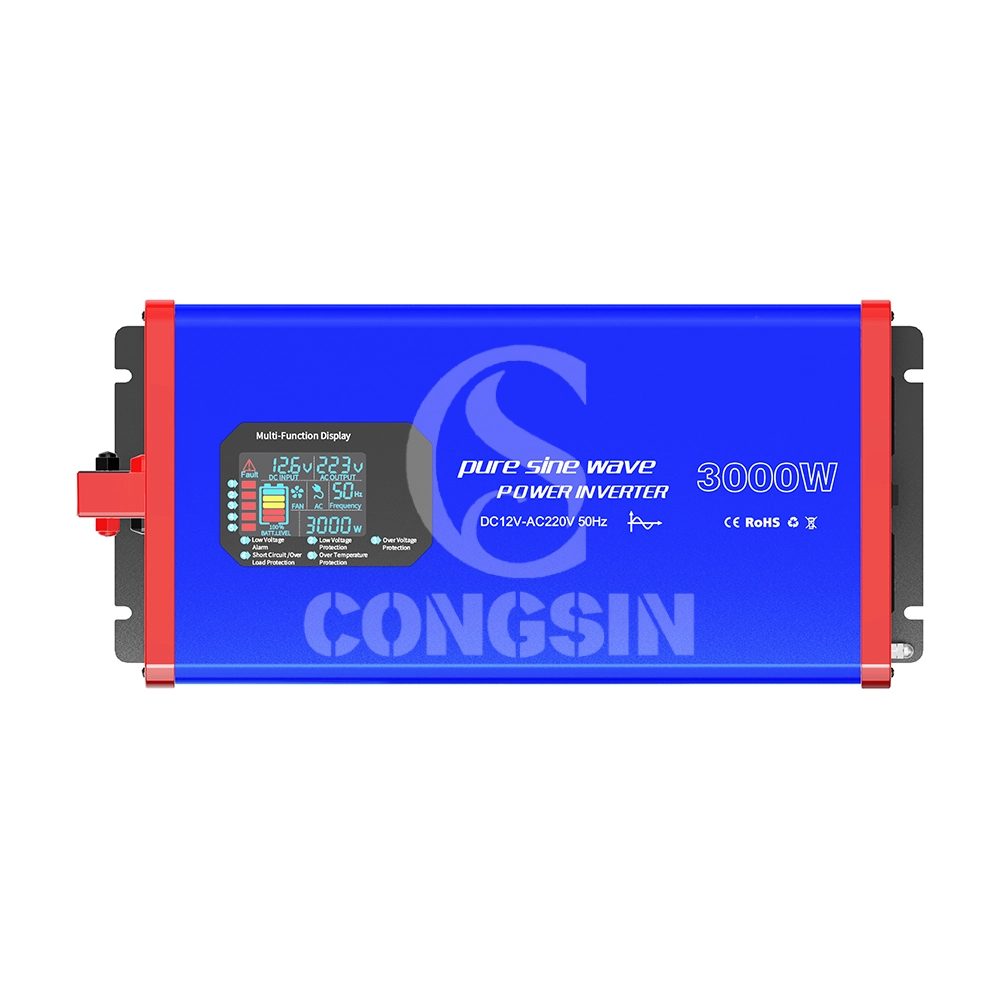
This 3000W full-power pure sine wave inverter (Model: CS3000PSW) adopts pure sine wave output technology (waveform distortion rate <2%), and the output power is highly consistent with mains power quality. It can safely drive high-power precision loads such as air conditioners, refrigerators, medical instruments, and small industrial equipment, avoiding equipment malfunctions or shortened service life caused by unstable waveforms. The device supports DC 12V input (compatible with 10.5V-14.8V wide voltage), continuously outputs 3000W full power, and has a peak power of 6000W, easily coping with the instantaneous startup impact of high-power devices; it is equipped with 4 AC universal sockets (max current 16A) + 2 USB 3.0 fast-charging ports (22.5W per port) to meet the simultaneous power supply needs of multiple devices. Built-in six-fold safety protection (overload, overvoltage, undervoltage, short circuit, overtemperature, reverse connection), combined with dual intelligent silent cooling fans (noise ≤45dB), it achieves the triple advantages of "high power + high safety + low noise," suitable for home emergency, outdoor engineering, vehicle-mounted power supply, small industrial scenarios and other fields.
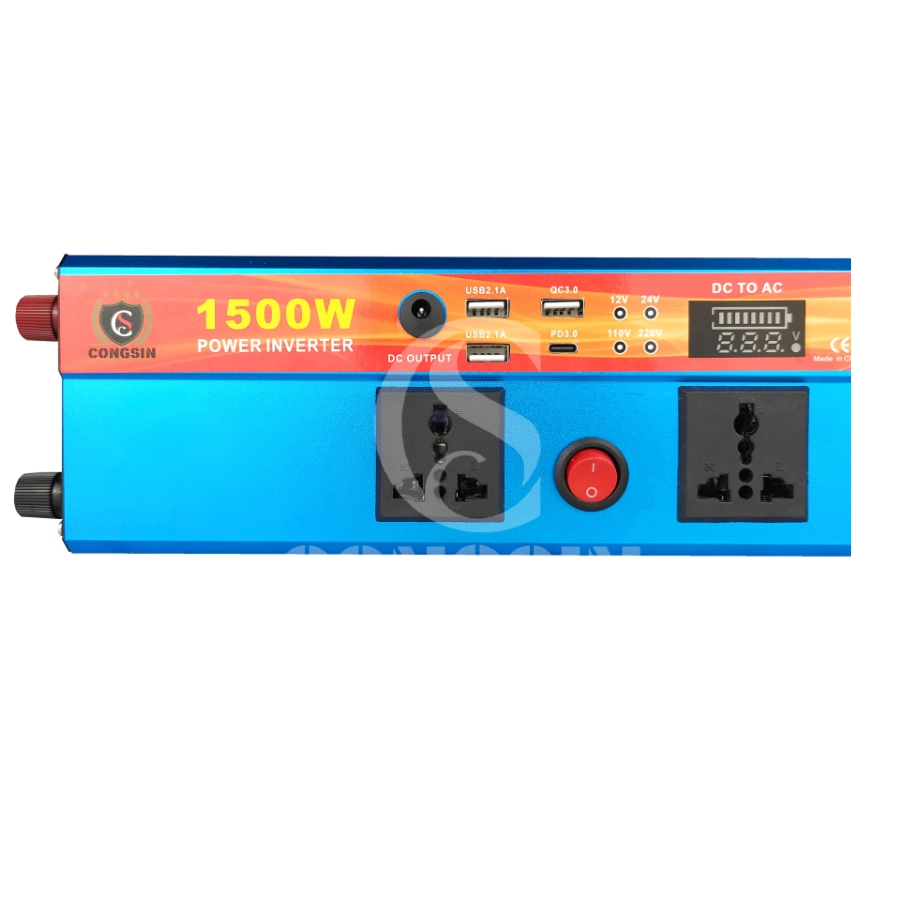
Our CS1000DDBC 1000W modified sine wave inverter is a professional power conversion device that converts DC 12V from batteries into AC 220V electricity. It is designed with user convenience in mind, featuring an LED display for real-time status monitoring, multiple charging ports (3 USB, 1 Type-C, 1 DC 12V) and two universal sockets to power a wide range of devices simultaneously. Its compact size (250×95×55mm) and lightweight design (NW: 0.84kg) make it easy to carry, ideal for outdoor activities, emergency home use, and on-the-go power needs.
Get in Touch with Our Team
You can also communicate with us directly through our online contact form. Please fill in the following information, and our team will contact you as soon as possible after receiving your message.

CONGSIN is a trusted OEM factory for power inverters, solar charge controllers, and DC converters. Reliable solutions for global B2B buyers.
 High Quality
 7/24 Service
 Guaranteed Warranty
© 2025 Congsin. All Rights Reserved.