



Best Solar Inverter for Home: How to Choose the Right Type and Size for Your House
- Introduction
- What is the best type of solar inverter for home use?
- How do I choose the right size solar inverter for my house?
- Is a hybrid inverter better than a standard solar inverter?
- What are the key factors to consider when buying a residential solar inverter?
- What is the difference between string inverters, microinverters, and power optimizers?
- How much does a high-quality solar inverter cost?
- What are the most reliable solar inverter brands on the market?
- Why might I need a solar inverter with battery backup capabilities?
- Conclusion
- Call to Action
Introduction
When investing in renewable energy, selecting the best type of solar inverter for home use is a critical decision. While solar panels are responsible for capturing sunlight, the inverter is the true brain of your setup. It manages the essential process of solar power conversion, transforming the unusable direct current (DC) into the alternating current (AC) that powers your household appliances. Because no two roofs or energy goals are identical, there is no single best type of inverter for everyone.
What is the best type of solar inverter for home use?
For homeowners with simple, unshaded, and south-facing roofs, a traditional string inverter often proves to be the most cost-effective and reliable choice. This established technology connects all of your panels in a single series, funneling the power to one central unit. While it lacks panel-level optimization, its simplicity makes it easy to maintain and highly affordable.
Conversely, if your roof features multiple angles, chimneys, or experiences partial shading from nearby trees throughout the day, microinverters are generally considered the superior option. Because these smaller units are mounted on the back of every individual solar panel, they process the electricity independently. This means that if one panel is shaded and drops in performance, the rest of the solar energy system remains completely unaffected.
Finally, for those looking to achieve ultimate energy independence, hybrid inverters are rapidly becoming the gold standard. These versatile units operate as both a standard grid-tied inverter and a battery manager. If you plan to store excess power for nighttime use or grid outages, selecting a hybrid unit from the start will save you the hassle of retrofitting your system with additional equipment later on.
How do I choose the right size solar inverter for my house?
Choosing the right size for your photovoltaic inverter is just as important as selecting the right type. The size of your inverter must properly align with the DC rating of your solar panel array. If you install an inverter that is too small, it will bottleneck your energy production. If it is too large, it will operate inefficiently and cost you unnecessary money upfront.
As a general rule of thumb, solar installers match the maximum AC output of the inverter closely to the total wattage of the solar panels. However, it is standard industry practice to slightly oversize the solar array compared to the inverter's capacity. According to the U.S. Energy Information Administration, the standard inverter loading ratio for individual systems is typically between 1.13 and 1.30. This means a 6-kilowatt (kW) solar array is often perfectly paired with a 5kW inverter.
This oversizing strategy accounts for the fact that solar panels rarely produce their absolute maximum laboratory-rated output in real-world conditions due to heat, dust, and imperfect sun angles. By having a slightly smaller inverter, the system reaches its peak operating efficiency earlier in the morning and maintains it later into the afternoon.
The downside of an undersized inverter is a phenomenon known as clipping. During peak sunlight hours on a perfectly clear day, the panels might generate more DC power than the inverter can process, causing the excess energy to be lost. However, professional installers calculate these metrics to ensure that the gains from early and late-day efficiency heavily outweigh the minor midday clipping losses.
Is a hybrid inverter better than a standard solar inverter?
Determining whether a hybrid inverter is better than a standard grid-tied inverter largely depends on your long-term energy strategy. A standard inverter is designed to do one job extremely well: convert solar power into usable AC electricity and send any excess back to the utility grid. For homeowners looking for the fastest return on investment without the need for battery storage, standard inverters are more than sufficient.
However, standard inverters have a significant limitation regarding energy storage. If you ever decide to add a battery to a system with a standard string inverter, you will typically need to install a separate, dedicated battery inverter. This AC-coupled setup can be less efficient and more expensive than planning for storage from the beginning.
A hybrid inverter, on the other hand, combines a traditional DC to AC converter and a battery inverter into a single, streamlined unit. It intelligently routes DC power directly from the solar panels into your battery bank for storage, or converts it to AC to power your house. This DC-coupled architecture is highly efficient because it minimizes the number of times the power must be converted back and forth.
Ultimately, a hybrid inverter is the better choice if you have any intention of adding energy storage to your home, either now or in the future. While they carry a higher upfront cost than standard models, they provide unparalleled flexibility, future-proofing your solar investment against rising grid costs and power instability.
What are the key factors to consider when buying a residential solar inverter?
When evaluating your options, the first metric to verify is the inverter's peak efficiency rating. A high-quality residential inverter should boast an efficiency rating between 96% and 99%. This percentage represents how much of the raw DC power generated by your panels is successfully converted into usable AC power, with the remaining fraction lost as heat.
Warranties and reliability are equally paramount. Solar panels routinely come with 25-year warranties, but central string inverters typically feature standard warranties of 10 to 15 years, meaning they will likely need replacement once during the life of your system. Microinverters and power optimizers, however, often match the 25-year warranty of the panels, offering greater long-term peace of mind.
Another critical factor is the software and monitoring capabilities that accompany the hardware. The best modern inverters offer robust, user-friendly smartphone applications that allow you to track your energy production, consumption, and system health in real-time. Granular, panel-level monitoring is especially valuable for detecting physical issues with specific solar modules.
Finally, you must consider the environmental ratings and physical footprint of the unit. If your inverter will be mounted outside, it needs a rugged NEMA-rated enclosure to withstand rain, extreme temperatures, and dust. Furthermore, you should assess the unit's expandability, ensuring it can handle a few extra panels if your household's energy demands grow in the coming years.
What is the difference between string inverters, microinverters, and power optimizers?
Understanding the three dominant inverter technologies is key to designing an optimal solar array. A traditional string inverter works by wiring a group of solar panels together in a series, or string. All the DC electricity flows to a single central inverter mounted on the side of your house. While cost-effective, the major drawback is that if one panel is shaded or dirty, the performance of the entire string drops to match that weakest link.
Microinverters take a fundamentally different approach. Instead of one large box, miniature inverters are installed directly beneath each solar panel on the roof. They perform the DC to AC conversion right at the source. Because each panel operates completely independently, shading on one corner of your roof will not compromise the energy production of the unshaded panels.
Power optimizers represent a middle-ground, hybrid solution. Like microinverters, optimizer units are attached to each individual panel to condition and maximize the DC electricity output independently. However, instead of converting the power to AC on the roof, they send the optimized DC power down to a centralized string inverter.
Essentially, power optimizers provide the panel-level performance benefits and monitoring of a microinverter system, but often at a slightly lower price point. Both microinverters and power optimizers fall under the category of Module-Level Power Electronics (MLPE) and are heavily favored in modern residential installations to maximize overall system yield.
How much does a high-quality solar inverter cost?
Budgeting for your solar installation requires understanding how the equipment costs break down. Broad industry averages and data aligned with the National Renewable Energy Laboratory indicate that a solar inverter typically makes up about 10% of the total cost of your solar energy system.
Standard string inverters are the most budget-friendly option on the market. For a typical residential-sized system, a high-quality central string inverter will generally cost between $1,000 and $2,000. Because there is only one unit to manufacture and install, both the equipment and labor costs are kept to a minimum.
Microinverters, due to their distributed nature, require a larger upfront investment. You can expect to pay between $150 and $250 per microinverter unit. For a 20-panel system, this brings the total inverter cost to roughly $3,000 to $5,000. While more expensive initially, they often generate more power over their lifetime, accelerating the ultimate return on investment.
Hybrid inverters fall into the premium pricing tier because they house advanced internal charge controllers for battery management. A high-capacity hybrid inverter typically ranges from $2,000 to $4,500. Though this is a higher initial capital expenditure, it is drastically cheaper than buying a standard string inverter today and a separate battery inverter tomorrow.
What are the most reliable solar inverter brands on the market?
The U.S. solar market is dominated by a handful of tier-one manufacturers that have proven their reliability over decades of field performance. Enphase Energy is widely regarded as the undisputed leader in microinverter technology. Their IQ series is heavily praised by installers for its robust build quality, seamless battery integration, and exceptional 25-year warranty.
In the realm of power optimizers, SolarEdge is the preeminent brand. Their innovative architecture pairing panel-level optimizers with a highly efficient centralized inverter has made them a top choice for complex residential roofs. Their advanced monitoring portal is also considered one of the most intuitive and detailed platforms available to homeowners.
For those seeking traditional string inverters, Germany-based SMA Solar Technology (famous for its Sunny Boy line) and Austria's Fronius are industry stalwarts. Both brands are legendary for their durability, with units that consistently outlast their initial warranty periods. They remain excellent choices for budget-conscious consumers with unshaded roof spaces.
Finally, when looking at hybrid and off-grid capabilities, brands like Sol-Ark, Tesla, and Generac are highly sought after. Sol-Ark, in particular, has gained massive popularity for its powerhouse hybrid inverters that can seamlessly manage massive solar arrays, heavy home loads, and multiple battery banks simultaneously.
Why might I need a solar inverter with battery backup capabilities?
One of the biggest misconceptions about solar energy is that panels will automatically keep your lights on during a blackout. In reality, as mandated by safety standards recognized by the Department of Energy, standard grid-tied inverters must automatically shut down during a power outage to protect utility workers.
To maintain power during a blackout, you absolutely need a solar inverter with battery backup capabilities, specifically, a hybrid unit capable of islanding. Islanding technology safely disconnects your home from the broader utility grid, allowing your panels to continuously charge your batteries and power your home's critical circuits in complete isolation.
Beyond emergency blackouts, battery backup capabilities are incredibly valuable for dodging expensive Time-of-Use (TOU) utility rates. Many power companies charge premium rates for electricity during the late afternoon and evening. A smart hybrid inverter can store your free solar energy during the morning and automatically discharge the battery during peak pricing hours, saving you a substantial amount of money.
Finally, having backup capabilities is the ultimate step toward true energy independence. As extreme weather events become more frequent and grid infrastructure ages, relying solely on the utility company is becoming a gamble. Investing in a battery-ready inverter ensures that your home remains a safe, powered sanctuary regardless of what happens to the external grid.
Conclusion
The solar inverter is the unsung hero of your renewable energy setup. By carefully evaluating your roof's characteristics, your household's energy consumption, and your future storage needs, you can select a system that maximizes your financial return and ensures long-term safety.
Whether you opt for a simple string setup, advanced microinverters, or a robust hybrid unit, investing in high-quality equipment is always the smartest choice. Always work with a certified solar installer to model your specific energy needs and ensure your chosen inverter performs flawlessly for decades to come.
Call to Action
Contact our team of solar experts today to schedule a personalized consultation and find the perfect inverter for your home's energy needs.


Modified Sine Wave Inverters
What capacity battery can be used with it?
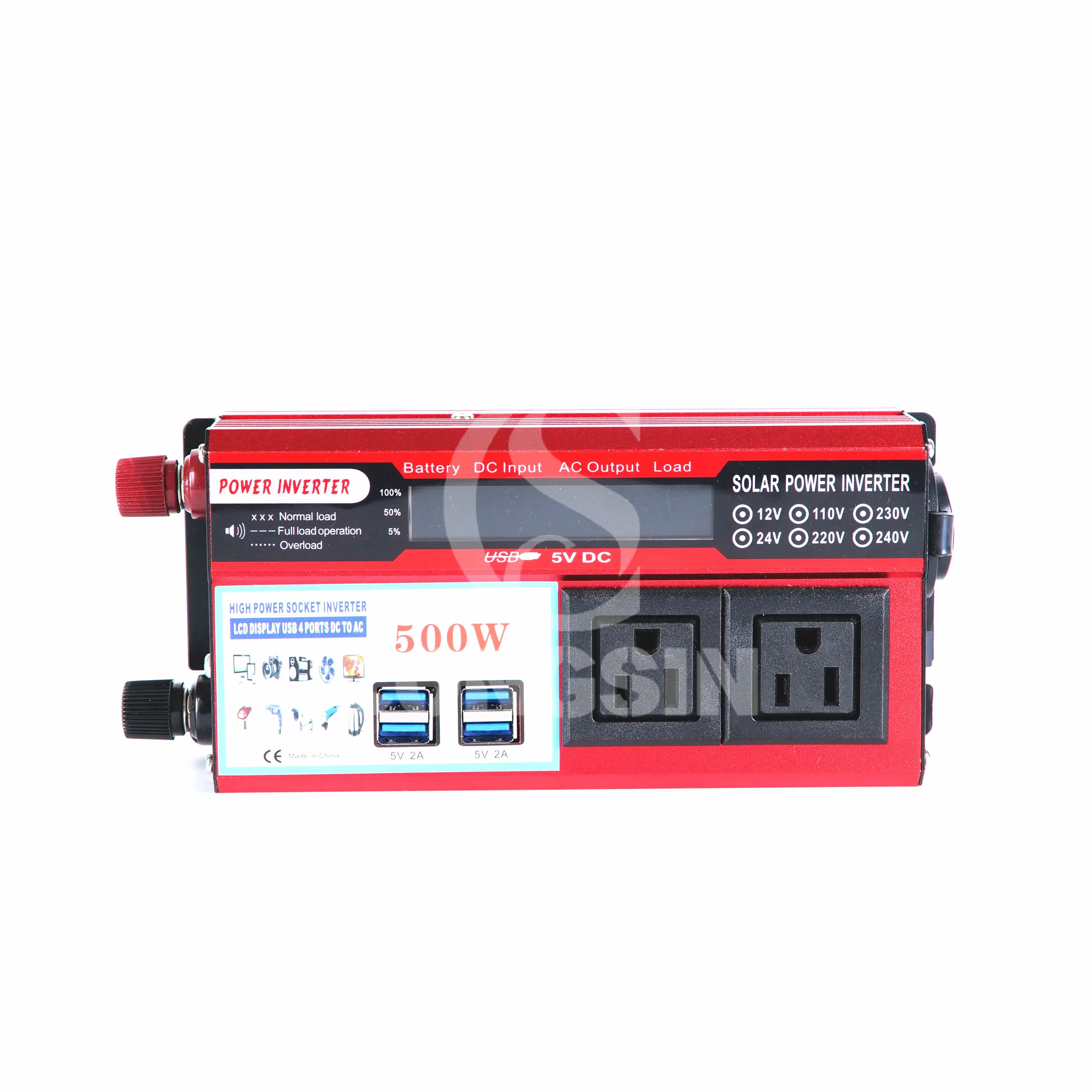
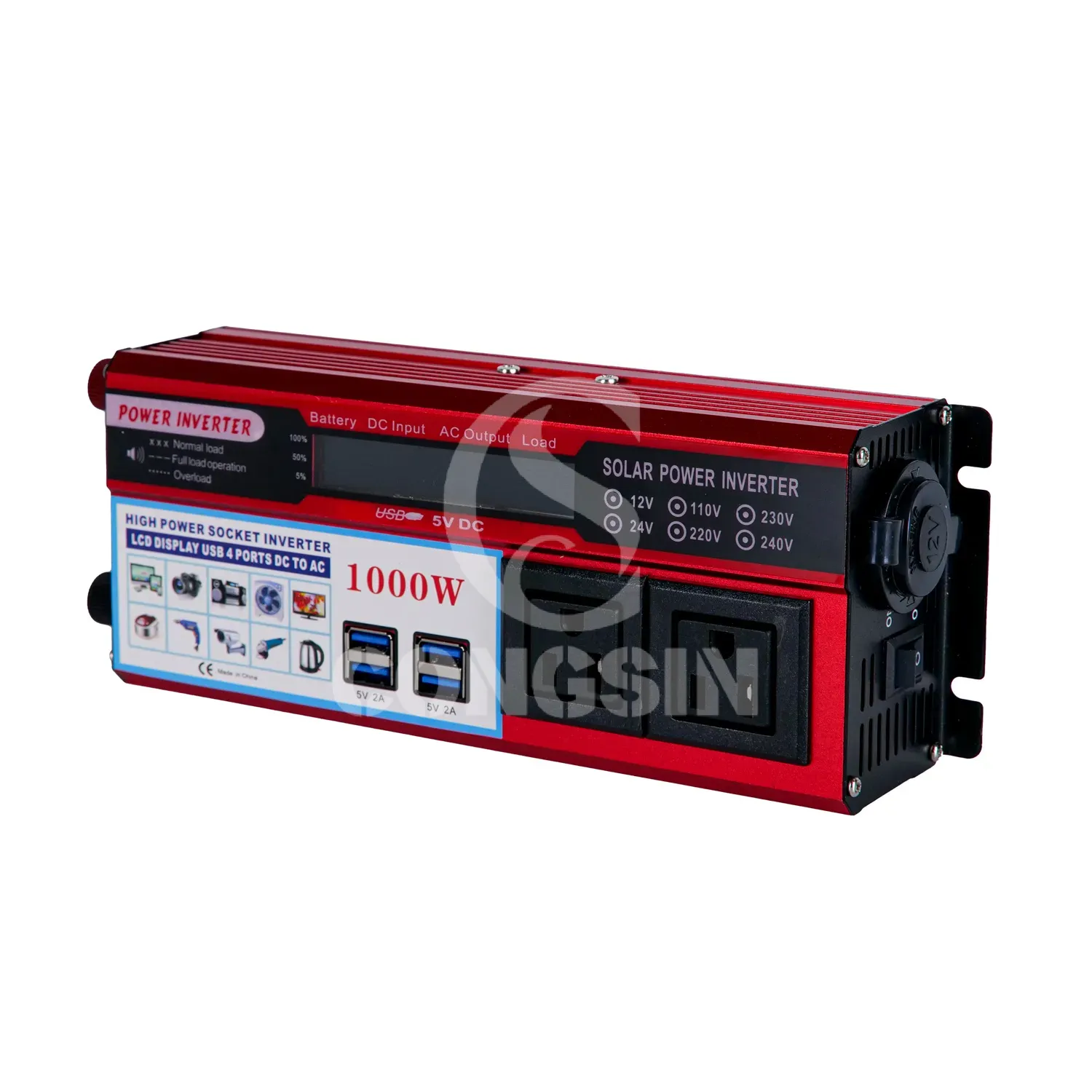
It is recommended to use a 12V 100Ah-200Ah lead-acid battery or lithium battery; the larger the battery capacity, the longer the UPS power supply time (e.g., a 100Ah battery can support a 100W device to work continuously for about 10 hours).
Can this inverter support both 12V and 24V inputs
Yes, it can work with different voltage systems via selectable input terminals.
Is it compatible with both 12V and 24V vehicles?
Yes, it supports DC12V/24V dual input.
Products
Can this inverter run a refrigerator or power tools?
Recommended load ≤80% of rated power. For inductive loads, use a pure sine wave model.
Pure Sine Wave Inverters
What is the reason for the inverter automatically shutting down during operation?
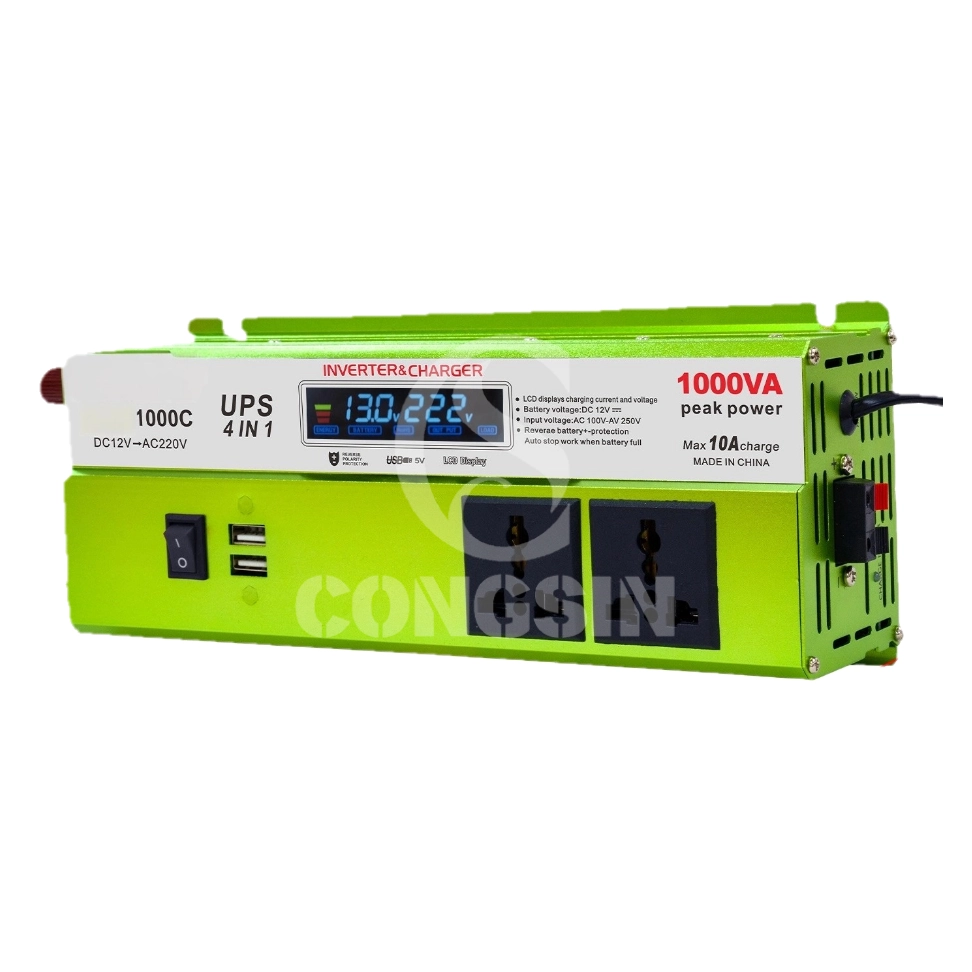
It is likely that the protection mechanism is triggered: 1. Load overload (total power of connected devices exceeds 1000W); 2. Abnormal input voltage (battery voltage <10.8V or >14.5V); 3. Device overtemperature (excessively high ambient temperature or cooling fan failure). It is recommended to disconnect some loads, check the battery voltage or clean the heat dissipation port before trying again.
Get in Touch with Our Team
You can also communicate with us directly through our online contact form. Please fill in the following information, and our team will contact you as soon as possible after receiving your message.

CONGSIN is a trusted OEM factory for power inverters, solar charge controllers, and DC converters. Reliable solutions for global B2B buyers.
 High Quality
 7/24 Service
 Guaranteed Warranty
© 2025 Congsin. All Rights Reserved.