





Can a 2000-watt modified sine wave inverter run home appliances?
A 2000-watt modified sine wave inverter is a versatile device that converts 12V DC power from batteries into 115V AC power, suitable for various household appliances. However, understanding its limitations and compatibility is crucial for safe and efficient operation.
1. What appliances can a 2000-watt modified sine wave inverter reliably power?
A 2000-watt modified sine wave inverter can handle a range of household appliances, including:
Refrigerators: Typically consume between 500–800W during operation, with startup surges up to 1500–2000W.
Microwave Ovens: Generally require 800–1500W, making them compatible with a 2000W inverter.
Televisions and Entertainment Systems: Usually consume 100–400W, well within the inverter's capacity.
Coffee Makers: Typically use 600–1000W, suitable for operation with a 2000W inverter.
Fans, Lights, and Chargers: Each consumes under 200W, allowing multiple devices to run simultaneously without exceeding the inverter's capacity.
It's essential to check the specific wattage requirements of each appliance to ensure compatibility.
2. Can a 2000-watt modified sine wave inverter run sensitive electronic devices?
Modified sine wave inverters produce a waveform that is less smooth than pure sine wave inverters, which can affect the performance of sensitive electronics. Devices such as computers, audio equipment, and medical devices may experience interference or reduced efficiency when powered by a modified sine wave inverter. For optimal performance and to prevent potential damage, it's advisable to use a pure sine wave inverter for these sensitive devices.
3. What are the limitations of using a 2000-watt modified sine wave inverter for home appliances?
While a 2000-watt modified sine wave inverter can power many household appliances, certain limitations include:
Startup Surges: Some appliances, like refrigerators and air conditioners, have high startup surge requirements that can exceed the inverter's capacity.
Continuous Load: Running multiple high-wattage devices simultaneously can quickly approach or exceed the inverter's continuous power rating, leading to overheating or shutdown.
Efficiency Losses: Modified sine wave inverters are generally less efficient than pure sine wave inverters, leading to higher energy consumption and potential heat generation.
It's crucial to calculate the total wattage of all devices to be powered and consider their startup surge requirements to ensure the inverter can handle the load without issues.
4. How does the quality of a 2000-watt modified sine wave inverter affect appliance performance?
The quality of the inverter plays a significant role in appliance performance:
Voltage Stability: High-quality inverters provide stable voltage output, reducing the risk of damage to appliances.
Harmonic Distortion: Lower-quality inverters may produce higher levels of harmonic distortion, leading to inefficiencies and potential interference with electronic devices.
Safety Features: Reputable inverters include built-in protections such as overload, over-temperature, and short circuit safeguards, enhancing safety during operation.
Investing in a high-quality inverter ensures reliable performance and longevity of both the inverter and the connected appliances.
5. What safety precautions should be taken when using a 2000-watt modified sine wave inverter with home appliances?
To ensure safe operation:
Proper Ventilation: Ensure the inverter is placed in a well-ventilated area to prevent overheating.
Avoid Overloading: Regularly monitor the total wattage of connected devices to prevent exceeding the inverter's capacity.
Use Appropriate Cables: Utilize cables rated for the inverter's output to prevent overheating and potential fire hazards.
Regular Maintenance: Periodically inspect the inverter for signs of wear, damage, or dust accumulation, and clean as necessary.
Adhering to these precautions helps maintain safe and efficient operation of the inverter and connected appliances.
6. How does a 2000-watt modified sine wave inverter compare to a pure sine wave inverter for home use?
While both inverters serve the purpose of converting DC to AC power, they differ in waveform quality and application suitability:
Waveform Quality: Pure sine wave inverters produce a smooth, consistent waveform identical to grid power, making them suitable for all appliances, including sensitive electronics.
Efficiency: Pure sine wave inverters are generally more efficient, leading to less energy loss and heat generation.
Cost: Pure sine wave inverters are typically more expensive than modified sine wave inverters.
For powering sensitive electronics and ensuring optimal appliance performance, a pure sine wave inverter is recommended.
In conclusion, a 2000-watt modified sine wave inverter can effectively power many household appliances, provided their combined wattage and startup surge requirements do not exceed the inverter's capacity. Understanding the specific needs of your devices and the limitations of the inverter is essential for safe and efficient operation.
For personalized advice and to explore suitable inverter options for your needs, please contact us at info@csinverter.com or visit our website at www.csinverter.com.


Modified Sine Wave Inverters
How does reverse protection work?
When the positive and negative poles of the battery are reversed, the inverter will automatically cut off the circuit to avoid device damage and ensure power usage safety.
What devices can be powered by the cigarette lighter port?
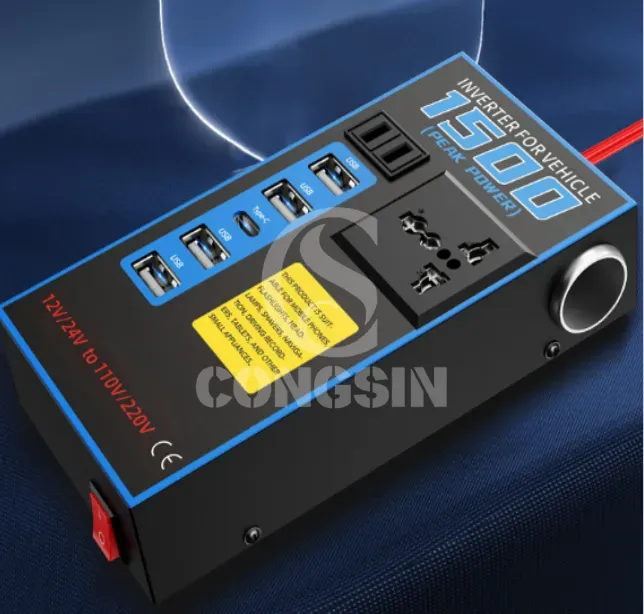
The cigarette lighter port can be used for car air pumps, car refrigerators, car vacuum cleaners and other conventional cigarette lighter powered devices, as long as the power does not exceed 300W.
Is customization available?
OEM/ODM support for logo, color, and packaging design.
Pure Sine Wave Inverters
What is the difference between labeled 6000W and full power 3000W?
Labeled 6000W is peak power, which is only used to cope with the instantaneous high-power demand during device startup (such as air conditioner, motor startup); full power 3000W is continuous power, referring to the power that the device can stably output for a long time. When driving appliances daily, 3000W should be used as a reference to avoid total power overload.
Products
Can it be connected to a battery long-term?
Yes, ensure good ventilation to avoid overheating.
Get in Touch with Our Team
You can also communicate with us directly through our online contact form. Please fill in the following information, and our team will contact you as soon as possible after receiving your message.

CONGSIN is a trusted OEM factory for power inverters, solar charge controllers, and DC converters. Reliable solutions for global B2B buyers.
 High Quality
 7/24 Service
 Guaranteed Warranty
© 2025 Congsin. All Rights Reserved.