





What Appliances Can a 2000-Watt Modified Inverter Power?
- 1. What is a 2000-Watt Modified Sine Wave Inverter, and how does it differ from a pure sine wave inverter?
- 2. What appliances can a 2000-watt modified sine wave inverter power simultaneously without overloading?
- 3. Are there any appliances that should not be powered by a 2000-watt modified sine wave inverter?
- 4. How does the efficiency of a 2000-watt modified sine wave inverter impact energy consumption?
- 5. What safety features should I look for in a 2000-watt modified sine wave inverter?
- 6. How do I determine the appropriate battery size to pair with a 2000-watt modified sine wave inverter?
1. What is a 2000-Watt Modified Sine Wave Inverter, and how does it differ from a pure sine wave inverter?
A 2000-watt modified sine wave inverter is a device that converts 12V DC (direct current) from a battery into 115V AC (alternating current) power, suitable for operating various household and recreational appliances. Unlike pure sine wave inverters, which produce a smooth, consistent waveform identical to grid power, modified sine wave inverters generate a stepped waveform that approximates a sine wave. This difference can affect the performance of certain sensitive electronic devices, potentially leading to inefficiencies or malfunctions. However, for many standard appliances, a modified sine wave inverter provides adequate power.
2. What appliances can a 2000-watt modified sine wave inverter power simultaneously without overloading?
A 2000-watt modified sine wave inverter can simultaneously power several household appliances, provided their combined wattage does not exceed the inverter's continuous power rating. Typical appliances include:
Refrigerators: Energy-efficient models typically consume between 100-800W during operation, with startup surges up to 1200-1500W.
Microwave Ovens: Generally range from 800-1500W, suitable for short-duration use.
Coffee Makers: Most models consume between 1000-1500W.
Televisions and Sound Systems: Typically between 50-300W.
Laptops and Desktop Computers: Approximately 50-300W.
Wi-Fi Routers: Around 5-20W.
It's essential to calculate the total wattage of all devices to ensure it remains within the inverter's capacity.
3. Are there any appliances that should not be powered by a 2000-watt modified sine wave inverter?
Certain appliances are not suitable for operation with a 2000-watt modified sine wave inverter due to their high power demands or sensitivity to waveform quality:
Electric Ovens: Typically consume between 1500-3000W, exceeding the inverter's capacity.
Water Heaters: Range from 3000-4500W, unsuitable for this inverter.
Large Air Conditioners: Require 1200-2000W, which may be too high for continuous operation.
Inductive Loads with High Surge Requirements: Devices like large pumps or compressors may have startup surges that exceed the inverter's surge capacity.
4. How does the efficiency of a 2000-watt modified sine wave inverter impact energy consumption?
The efficiency of a 2000-watt modified sine wave inverter determines how effectively it converts DC power from the battery into usable AC power. Higher efficiency means less energy is lost as heat, resulting in longer battery life and reduced energy consumption. For instance, an inverter with 90% efficiency will convert 90% of the DC power into AC, with only 10% lost as heat. It's crucial to select an inverter with high efficiency to maximize the performance of your off-grid or backup power system.
5. What safety features should I look for in a 2000-watt modified sine wave inverter?
When selecting a 2000-watt modified sine wave inverter, consider the following safety features to protect both the inverter and connected devices:
Overload Protection: Prevents damage by shutting down the inverter when the load exceeds its capacity.
Over-temperature Protection: Activates when the inverter reaches unsafe operating temperatures, preventing overheating.
Low and High Voltage Protection: Safeguards against battery voltage fluctuations that could harm the inverter.
Short Circuit Protection: Detects and responds to short circuits to prevent damage.
Reverse Polarity Protection: Ensures the inverter operates correctly even if the battery connections are reversed.
6. How do I determine the appropriate battery size to pair with a 2000-watt modified sine wave inverter?
Selecting the right battery size is crucial for the optimal performance of your 2000-watt modified sine wave inverter. Consider the following steps:
Calculate Total Watt-Hours Needed: Determine the total wattage of all devices you plan to run and estimate the number of hours they will operate.
Account for Inverter Efficiency: Factor in the inverter's efficiency to estimate the actual DC power required.
Consider Battery Voltage: Choose a battery voltage (12V, 24V, or 48V) that matches the inverter's input requirements and offers the desired runtime.
Select Battery Capacity: Based on the total DC power required and desired runtime, select a battery with sufficient amp-hour (Ah) capacity.
Include a Safety Margin: Opt for a battery with a higher capacity than the minimum requirement to account for unforeseen power needs and to prolong battery life.
In conclusion, a 2000-watt modified sine wave inverter offers a versatile solution for powering various household and recreational appliances. By understanding its capabilities, limitations, and the importance of matching it with an appropriate battery system, you can ensure reliable and efficient off-grid or backup power. For personalized recommendations and a quote tailored to your specific needs, please contact us at info@csinverter.com or visit our website at www.csinverter.com.


Modified Sine Wave Inverters
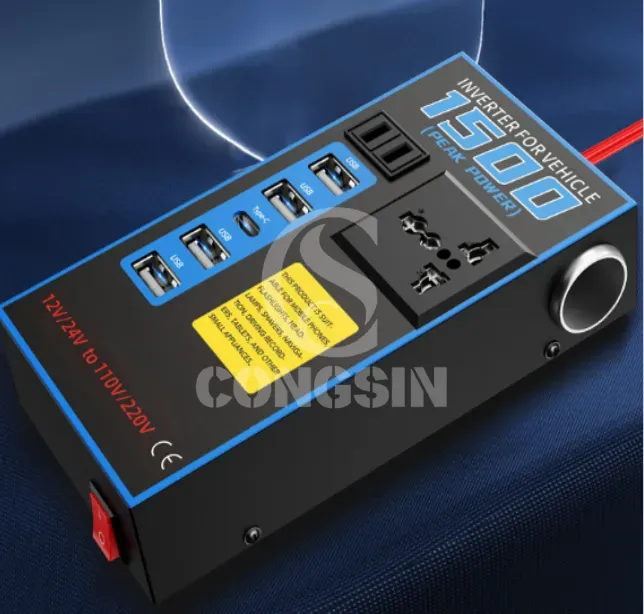
Can it be used with a car cigarette lighter socket?
Yes, it supports both battery clip and cigarette lighter connection.
Can other input voltages be customized?
Yes, the regular is DC12V, and DC24V, etc. can be customized. Please consult customer service for details.
Can 4 USB ports charge 4 mobile phones at the same time?
Yes, the total current of 6.8A can support simultaneous fast charging of multiple devices, and the charging efficiency is guaranteed.
Can the peak 720W supply power continuously?
The peak power is the instantaneous maximum power, and the continuous power supply is 360W. Ensure that the device power does not exceed the rated value when using.
Pure Sine Wave Inverters
What capacity battery is needed to meet long-term use?
It needs to be calculated according to the total power of the device, the formula is "Battery Capacity (Ah) = Total Device Power (W) × Usage Time (h) ÷ Input Voltage (12V)". For example, to drive a 1000W device for 5 hours, the required battery capacity = 1000×5÷12≈417Ah, it is recommended to use 2 200Ah batteries in parallel (total capacity 400Ah, actual usage about 4.8 hours).
Get in Touch with Our Team
You can also communicate with us directly through our online contact form. Please fill in the following information, and our team will contact you as soon as possible after receiving your message.

CONGSIN is a trusted OEM factory for power inverters, solar charge controllers, and DC converters. Reliable solutions for global B2B buyers.
 High Quality
 7/24 Service
 Guaranteed Warranty
© 2025 Congsin. All Rights Reserved.