





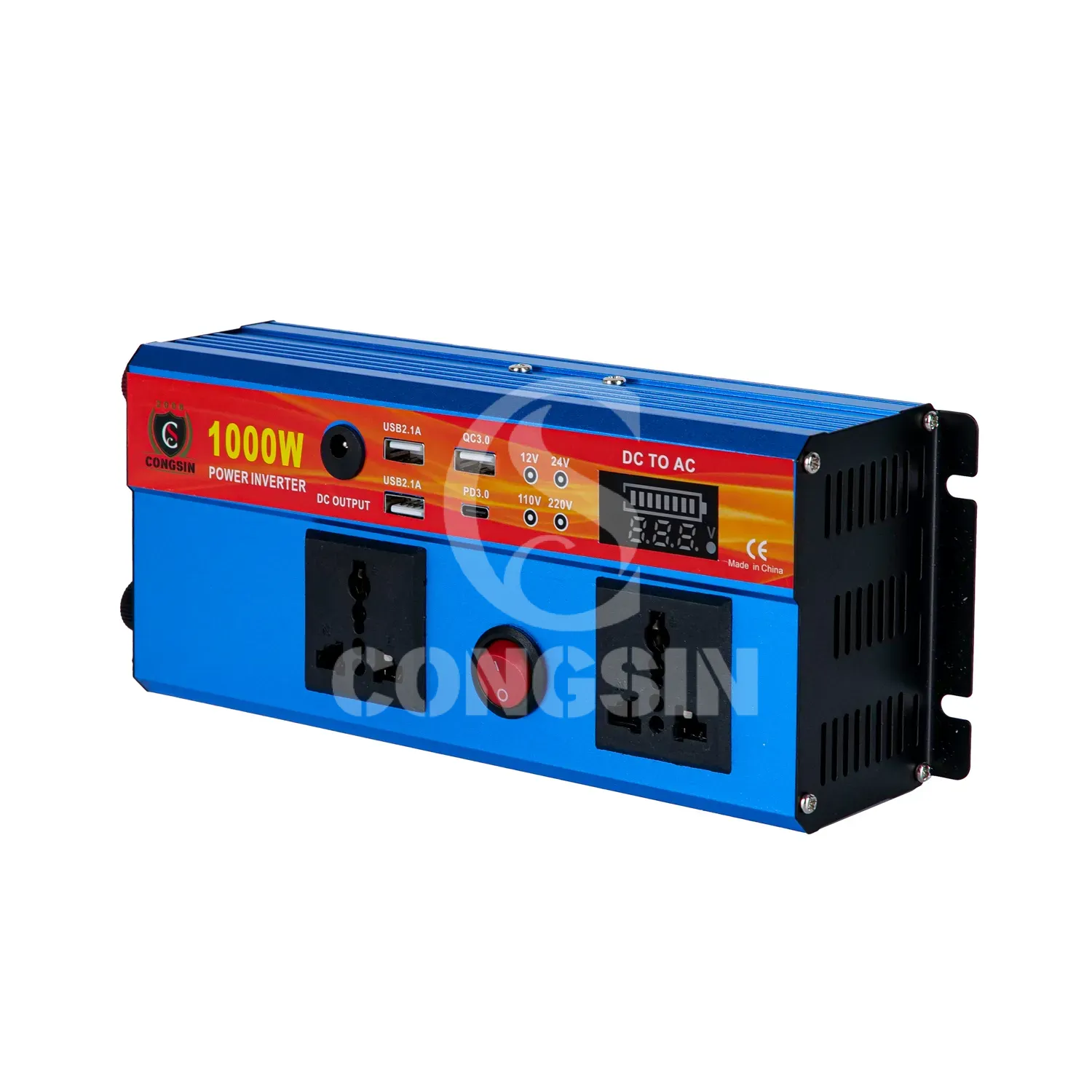
How efficient is a 1000-watt car inverter for long road trips?
- 1. How does the efficiency of a 1000-watt car inverter impact its performance during extended road trips?
- 2. What factors influence the runtime of a 1000-watt car inverter when powering various devices?
- 3. How can I determine the appropriate battery size to support a 1000-watt car inverter during extended use?
- 4. What are the potential risks of overloading a 1000-watt car inverter during long road trips?
- 5. How does ambient temperature affect the performance and efficiency of a 1000-watt car inverter during extended use?
- 6. What maintenance practices can extend the lifespan and reliability of a 1000-watt car inverter during long road trips?
1. How does the efficiency of a 1000-watt car inverter impact its performance during extended road trips?
The efficiency of a 1000-watt car inverter plays a crucial role in determining how effectively it converts your vehicle's DC power into usable AC power for your devices. Inverters typically operate at efficiencies ranging from 85% to 95%. This means that for every 1000 watts of power drawn from your car's battery, only 850 to 950 watts are effectively used to power your devices, with the remainder lost as heat.
For instance, if your inverter operates at 90% efficiency, it will draw approximately 1111 watts from your car's electrical system to provide 1000 watts of usable power. This efficiency loss can lead to faster battery depletion, especially during prolonged use. Therefore, selecting an inverter with higher efficiency is advisable to maximize battery life and ensure reliable power supply during long road trips.
2. What factors influence the runtime of a 1000-watt car inverter when powering various devices?
The runtime of a 1000-watt car inverter is influenced by several key factors:
Battery Capacity and Health: The size and condition of your vehicle's battery significantly affect how long the inverter can operate. For example, a 12V 100Ah battery can theoretically power a 1000W inverter for about 1.2 hours under ideal conditions. However, actual runtime may vary due to factors like battery age and health.
Type of Devices Powered: Different devices consume varying amounts of power. High-power appliances like microwave ovens or electric kettles will drain the battery more quickly than low-power devices such as LED lights or laptops.
Ambient Temperature: Extreme temperatures can impact both battery performance and inverter efficiency. Cold temperatures can reduce battery capacity, leading to shorter runtimes.
To optimize runtime, it's recommended to use a large-capacity battery, control the load by limiting the number of devices connected simultaneously, and maintain battery health through regular charging and avoiding deep discharges.
3. How can I determine the appropriate battery size to support a 1000-watt car inverter during extended use?
Selecting the right battery size is essential for supporting a 1000-watt car inverter during extended use. Here's how to determine the appropriate battery capacity:
Calculate Total Power Consumption: Add up the wattage of all devices you intend to power. For example, if you're running a 500W device, the total power consumption is 500W.
Account for Inverter Efficiency: Since inverters are not 100% efficient, divide the total power consumption by the inverter's efficiency (expressed as a decimal). For instance, with a 90% efficient inverter: 500W / 0.9 = 555.56W.
Determine Required Battery Capacity: Multiply the adjusted power consumption by the desired runtime in hours. For example, to run the 555.56W load for 2 hours: 555.56W × 2 hours = 1111.12Wh.
Convert to Amp-Hours: Divide the total watt-hours by the battery voltage (e.g., 12V): 1111.12Wh / 12V = 92.59Ah.
Therefore, a 12V battery with a capacity of at least 93Ah would be suitable for this setup. It's advisable to choose a battery with a higher capacity to account for inefficiencies and to prevent deep discharges, which can shorten battery life.
4. What are the potential risks of overloading a 1000-watt car inverter during long road trips?
Overloading a 1000-watt car inverter can lead to several issues:
Overheating: Continuous operation beyond the inverter's rated capacity can cause it to overheat, potentially triggering automatic shutdowns or damaging internal components.
Reduced Battery Life: Drawing more power than the battery can supply can lead to deep discharges, which can significantly shorten the battery's lifespan.
Device Damage: Sensitive electronic devices may malfunction or get damaged if the inverter cannot provide a stable power supply due to overloading.
To prevent these risks, it's crucial to monitor the total wattage of devices connected to the inverter and ensure it does not exceed the inverter's rated capacity. Additionally, using an inverter with a surge capacity higher than its continuous rating can accommodate brief power spikes from devices like refrigerators or power tools.
5. How does ambient temperature affect the performance and efficiency of a 1000-watt car inverter during extended use?
Ambient temperature has a significant impact on both the performance and efficiency of a 1000-watt car inverter:
Cold Temperatures: Low temperatures can reduce battery capacity, leading to shorter runtimes. Inverters may also experience decreased efficiency in cold conditions.
High Temperatures: Excessive heat can cause inverters to overheat, potentially triggering thermal shutdowns or reducing their operational lifespan. High temperatures can also degrade battery performance.
To mitigate these effects, it's advisable to operate the inverter within the manufacturer's recommended temperature range and ensure proper ventilation to dissipate heat. In extremely cold or hot environments, consider using thermal insulation or heating solutions to maintain optimal operating conditions.
6. What maintenance practices can extend the lifespan and reliability of a 1000-watt car inverter during long road trips?
To ensure the longevity and reliability of a 1000-watt car inverter during extended use, consider the following maintenance practices:
Regular Cleaning: Dust and debris can accumulate on the inverter's vents and cooling fans, obstructing airflow and causing overheating. Periodically clean these components to maintain efficient cooling.
Check Battery Health: Regularly inspect your vehicle's battery for signs of wear or damage. Replace the battery if it shows signs of reduced capacity or other issues.
Monitor Inverter Performance: Pay attention to any warning lights, error codes, or unusual noises from the inverter, as these may indicate potential problems that require attention.
Ensure Proper Ventilation: Always operate the inverter in a well-ventilated area to prevent overheating. Avoid placing it in enclosed spaces or areas with limited airflow.
By adhering to these maintenance practices, you can enhance the performance and extend the service life of your 1000-watt car inverter, ensuring reliable power supply during your long road trips.
In conclusion, understanding the efficiency, battery requirements, and operational considerations of a 1000-watt car inverter is essential for ensuring a reliable power supply during extended road trips. By selecting a high-efficiency inverter, appropriately sizing your battery, and adhering to proper maintenance practices, you can enjoy uninterrupted power for your devices throughout your journey.
For personalized recommendations and to obtain a quote tailored to your specific needs, please contact us at info@csinverter.com or visit our website at www.csinverter.com.


Modified Sine Wave Inverters
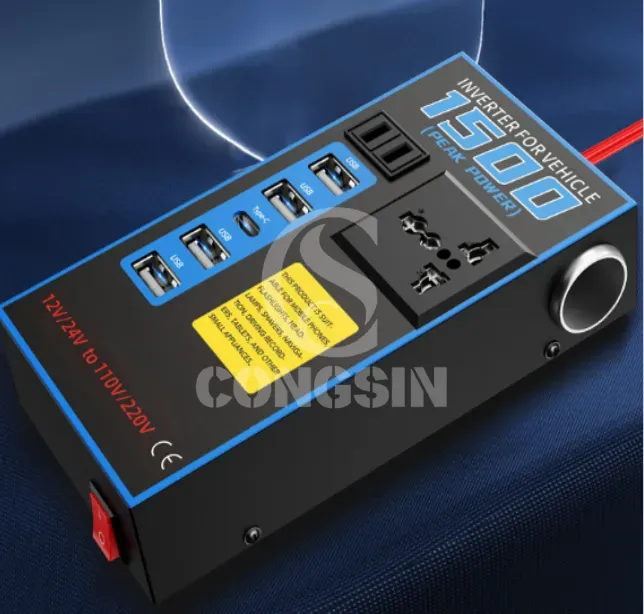
Is it compatible with both 12V and 24V vehicles?
Yes, it supports DC12V/24V dual input.
Can it be used with a car cigarette lighter socket?
Yes, it supports both battery clip and cigarette lighter connection.
How does reverse protection work?
When the positive and negative poles of the battery are reversed, the inverter will automatically cut off the circuit to avoid device damage and ensure power usage safety.
Distributor
What kind of support can I expect from Feifan after becoming a distributor?
You will receive ongoing sales support, product training, technical assistance, and marketing resources to ensure your success.
Pure Sine Wave Inverters
What is the reason for the inverter automatically shutting down during operation?
It is likely that the protection mechanism is triggered: 1. Load overload (total power of connected devices exceeds 1000W); 2. Abnormal input voltage (battery voltage <10.8V or >14.5V); 3. Device overtemperature (excessively high ambient temperature or cooling fan failure). It is recommended to disconnect some loads, check the battery voltage or clean the heat dissipation port before trying again.
Get in Touch with Our Team
You can also communicate with us directly through our online contact form. Please fill in the following information, and our team will contact you as soon as possible after receiving your message.

CONGSIN is a trusted OEM factory for power inverters, solar charge controllers, and DC converters. Reliable solutions for global B2B buyers.
 High Quality
 7/24 Service
 Guaranteed Warranty
© 2025 Congsin. All Rights Reserved.