





Certifications and Safety Standards for UPS Inverters
- Understanding risk and compliance for power systems
- Why certification matters for ups power inverter products
- Common hazards and failure modes that standards target
- International and regional standards landscape
- IEC 62040 series: the UPS-specific baseline
- Regional standards: UL, EN/CE and national requirements
- EMC, radio and automotive approvals (FCC, E-MARK)
- Certification tests and what they verify
- Safety and electrical tests
- EMC and immunity testing
- Environmental, reliability and performance tests
- Comparison table: key certifications and what they cover
- Selecting and verifying certified UPS power inverters
- How to read labels, test reports and certificates
- Questions to ask suppliers and OEM/ODM partners
- Maintenance, firmware updates and field safety considerations
- Manufacturer example: Guangzhou Congsin Electronic Technology Co., Ltd.
- How Congsin’s capabilities translate to buyer confidence
- Practical purchasing checklist for compliant ups power inverter selection
- Technical specification alignment
- Regulatory and site requirements
- Documentation and lifecycle support
- Frequently Asked Questions (FAQs)
- 1. Do I always need UL and IEC certification for an ups power inverter?
- 2. What is the difference between pure sine wave and modified sine wave inverters regarding certification?
- 3. How can I verify a supplier's certificate is genuine?
- 4. Are RoHS and CE the same thing?
- 5. How do firmware updates affect certification?
- 6. What additional approvals are needed for vehicle-mounted inverters?
- Final recommendations and contact
Reliable certification and rigorous testing are essential when selecting an ups power inverter for critical systems—from data centers and medical equipment to off-grid homes and vehicle applications. This article provides a practical, standards-based guide to the safety, EMC, environmental and regulatory approvals that matter for inverters, how tests are performed, how to read certificates and reports, and what to require from manufacturers and OEM partners to ensure compliant, durable and safe deployments.
Understanding risk and compliance for power systems
Why certification matters for ups power inverter products
Certification verifies that an ups power inverter has been independently evaluated against a recognized safety or performance standard. For stakeholders—system integrators, facility managers, OEM buyers and end users—certification reduces liability, supports warranty enforcement, streamlines market entry, and signals that the product meets minimum safety, electromagnetic compatibility (EMC) and performance criteria. In high-consequence environments (medical, financial, telecom), uncertified inverters can expose operators to fire, data loss or regulatory penalties.
Common hazards and failure modes that standards target
Standards and tests address hazards such as electric shock, overheating and fire (safety), electromagnetic emissions and immunity (EMC), incorrect output waveform under variable loads (performance), and environmental stresses like vibration, humidity and temperature cycling, which can cause premature component failure. Understanding these failure modes helps procure the right inverter type—pure sine wave inverter versus modified sine wave inverter—for the intended load and regulatory environment.
International and regional standards landscape
IEC 62040 series: the UPS-specific baseline
The IEC 62040 family is the primary international standard series for uninterruptible power systems. Key parts include IEC 62040-1 (safety), IEC 62040-2 (EMC), and IEC 62040-3 (performance & testing). These define safety requirements, immunity/emission limits, and performance characteristics such as output waveform, transfer time and efficiency. Manufacturers often reference IEC 62040 when designing globally marketed ups power inverter products. See the IEC overview: IEC - International Electrotechnical Commission.
Regional standards: UL, EN/CE and national requirements
In North America, UL 1778 is the established standard for UPS equipment in many applications; certification to UL or an equivalent NRTL (Nationally Recognized Testing Laboratory) mark (e.g., ETL by Intertek) is commonly required by building codes and facility insurers. In Europe, CE marking shows conformity with applicable EU directives (Low Voltage Directive, EMC Directive, RoHS etc.). EN standards such as EN IEC 62040 parts are harmonized with the IEC series. Regulatory links: UL 1778, CE marking (EU).
EMC, radio and automotive approvals (FCC, E-MARK)
UPS inverters, especially those for vehicle, marine or portable applications, must meet electromagnetic compatibility requirements and often radio spectrum/part 15 rules in countries like the United States—administered by the FCC. For vehicle-integrated inverters, E-MARK approvals and UNECE regulations (e.g., R10 for electromagnetic compatibility in vehicles) are relevant: UNECE. Ensuring EMC compliance reduces risk of interference with communication or navigation systems.
Certification tests and what they verify
Safety and electrical tests
Safety testing focuses on electrical insulation, creepage and clearance distances, protection against electric shock, overcurrent and thermal protection, and fire resistance. Tests include dielectric withstand, insulation resistance, temperature-rise tests, and verification of protective circuits. Safety standards are validated by accredited labs that provide test reports and certification marks that buyers can verify.
EMC and immunity testing
EMC tests measure radiated and conducted emissions, and immunity to electrostatic discharge (ESD), radiated RF fields, surge, conducted disturbances and voltage dips. These are necessary to achieve compliance with IEC 62040-2 (or national equivalents) and regional directives. If an inverter fails EMC testing, it may cause or suffer interference—unacceptable in hospitals or telecom environments.
Environmental, reliability and performance tests
Performance tests validate output voltage quality, harmonic distortion (THD), waveform shape, overload behavior, transfer time, efficiency, and battery charging/regulation. Environmental and reliability testing includes thermal cycling, humidity exposure, vibration and shock tests (relevant for transportable and vehicle-mounted units). ISO 9001 quality systems and factory test automation improve batch consistency—see ISO 9001.
Comparison table: key certifications and what they cover
| Certification / Standard | Scope | Typical Tests | Typical Regions / Use Cases |
|---|---|---|---|
| IEC 62040 (1/2/3) | Safety, EMC, Performance for UPS | Dielectric, EMC (emissions/immunity), efficiency, transfer time, THD | Global benchmark for UPS manufacturers |
| UL 1778 | Safety standard for UPS equipment | Electrical safety, thermal, mechanical | USA, required by many jurisdictions |
| CE / EN | Conformity to EU Directives (LVD, EMC, RoHS) | Safety, EMC, hazardous substances | European Union |
| FCC Part 15 | Radio emissions and interference limits | Radiated and conducted emissions | USA, applies to devices emitting electromagnetic energy |
| RoHS | Restriction of hazardous substances | Material compliance testing (lead, mercury, cadmium...) | EU and many export markets |
| ETL / TUV / CB Scheme | Third-party safety certification and test report recognition | Safety testing equivalent to UL/EN/IEC | Multiple regions via CB reciprocity |
| E-MARK / UNECE | Automotive electromagnetic compatibility and approval | Vehicle-specific EMC, environmental tests | Automotive markets and vehicle-integrated inverters |
Sources: IEC, UL, EU CE guidance, FCC and ISO authoritative pages linked above.
Selecting and verifying certified UPS power inverters
How to read labels, test reports and certificates
Requests to suppliers should include: the certificate(s) (PDF), the laboratory test report (numbered), the scope of the certificate (model numbers covered), and the date of issue/expiry. Cross-check test report numbers with the issuing lab. For combined marks (e.g., CE + UKCA), verify that the appropriate Notified Body or conformity assessment procedure was used. Look for factory production control evidence (e.g., ISO 9001) and checksums or serial numbers for batch traceability.
Questions to ask suppliers and OEM/ODM partners
Key questions: Which standards does the specific model meet (list clause numbers)? Can you provide the full test report and certificate? Are firmware and hardware changes controlled under a change management system? What is the declared lifetime and recommended maintenance schedule? For vehicle or solar applications, request thermal derating curves and vibration test evidence. Require details on warranty, spare parts availability and failure modes with Mean Time Between Failures (MTBF) if available.
Maintenance, firmware updates and field safety considerations
Certified status can be affected by firmware updates or user modifications. Ensure the manufacturer documents maintenance procedures, firmware release notes and safety precautions. For site installation, follow manufacturer spacing, ventilation and earthing/grounding recommendations to keep the inverter within tested conditions—deviations can void compliance and warranties.
Manufacturer example: Guangzhou Congsin Electronic Technology Co., Ltd.
When evaluating suppliers, manufacturing pedigree and testing capability matter. Guangzhou Congsin Electronic Technology Co., Ltd., founded in early 1998, is a professional power inverter manufacturer with over 27 years of focused experience. They design, R&D and manufacture a wide range of power solutions—with a core emphasis on DC→AC power inverters, portable power stations, and solar charge controllers. Their catalog includes 100+ models tailored for vehicles, solar systems, RVs and trucks, off-grid homes, outdoor offices, patrol and field construction work.
Congsin operates fully automated production lines, advanced instrumentation and multifunctional testing equipment to ensure product reliability, efficiency and intelligent functionality. Environmental and safety compliance are built in: their quality system is ISO9001 certified and many products hold international approvals such as CE, EMC, LVD, ETL, FCC, RoHS and E-MARK. Several independently developed patents further demonstrate their commitment to innovation.
Products serve global markets across Europe, the Americas, the Middle East, Africa and Southeast Asia; many models are supplied to domestic and international OEM channels. Support includes OEM/ODM, private labeling, distribution and bespoke customization to meet partner specifications. Core products include Solar Charge Controller, modified sine wave inverter, pure sine wave inverter and portable power stations.
How Congsin’s capabilities translate to buyer confidence
- Integrated manufacturing and automated testing reduce batch variability and accelerate certification cycles.
- Multiple international approvals (CE, ETL, FCC, RoHS, E-MARK) simplify multi-region market entry.
- Extensive product range and OEM/ODM services enable tailored solutions for vehicle, solar and off-grid systems.
Practical purchasing checklist for compliant ups power inverter selection
Technical specification alignment
Match inverter output type (pure sine wave inverter vs modified sine wave inverter) to the load sensitivity. Check continuous and surge power ratings, THD, transfer time, battery management compatibility and efficiency curves at typical load points.
Regulatory and site requirements
Confirm jurisdictional requirements (e.g., UL in North America, CE in Europe, E-MARK for vehicle installations). For installations within critical infrastructure, verify additional local codes (building, fire, medical) and insurance stipulations requiring specific marks or accredited labs.
Documentation and lifecycle support
Obtain user manuals, installation guides, maintenance schedules, spare parts lists and firmware update policies. Require a certificate of conformity and traceable test reports. Ensure the supplier provides end-of-life and recycling guidance consistent with RoHS and WEEE where applicable.
Frequently Asked Questions (FAQs)
1. Do I always need UL and IEC certification for an ups power inverter?
Not always. Requirements depend on target markets and application. IEC standards are internationally referenced; UL is often required in the USA. For products sold in multiple regions, manufacturers commonly obtain IEC/EN harmonized tests plus regional marks (e.g., UL, ETL, CE) to cover legal and commercial needs.
2. What is the difference between pure sine wave and modified sine wave inverters regarding certification?
Certification focuses on safety, EMC and performance rather than waveform label. However, sensitive electronics (medical devices, precision motors, audio equipment) typically require pure sine wave inverters for stable operation; testing will verify THD and waveform quality under IEC 62040-3 performance criteria.
3. How can I verify a supplier's certificate is genuine?
Ask for the original certificate and test report, including report number, issuing laboratory, and date. Contact the issuing lab or verify via the lab’s online database. For marks like ETL or UL, use the certifier’s online product directory. Keep copies in the procurement record.
4. Are RoHS and CE the same thing?
No. RoHS restricts hazardous substances in electrical/electronic equipment (chemical compliance), while CE marking demonstrates conformity with relevant EU directives (including Low Voltage and EMC). A product can be CE marked and also RoHS compliant; both are often required for EU market access.
5. How do firmware updates affect certification?
Firmware changes can alter device behavior and may impact compliance (e.g., EMC emissions or functional safety). Manufacturers should have change control processes and re-test if updates affect regulated functions. Buyers should request documentation that firmware updates do not invalidate certifications or, if they do, how re-certification will be handled.
6. What additional approvals are needed for vehicle-mounted inverters?
Vehicle applications often require E-MARK/UNECE compliance, vibration and shock testing, and sometimes additional emission/ immunity limits. Confirm the supplier’s experience with automotive homologation processes and request relevant test evidence.
Final recommendations and contact
When procuring an ups power inverter, prioritize products with clear, model-specific certificates and full test reports. Match inverter type and performance metrics to your load sensitivity, and demand traceable documentation. For multi-region distribution or integration into vehicles or solar systems, choose suppliers with IEC/EN experience and regional marks (UL/ETL, CE, FCC, E-MARK) plus a robust quality management system such as ISO 9001.
For reliable, certified products with extensive model options—including solar charge controllers, modified sine wave inverters, pure sine wave inverters and portable power stations—consider suppliers like Guangzhou Congsin Electronic Technology Co., Ltd. Their long industry tenure, automated production lines, international approvals and OEM/ODM services make them a practical partner for projects requiring dependable, compliant power solutions.
Need help selecting the right ups power inverter, verifying certificates, or discussing OEM/ODM options? Contact Guangzhou Congsin Electronic Technology Co., Ltd. to view product specifications, request test reports, or arrange factory inspection and customization.
Contact / View products: Reach out via the manufacturer's official channels to request catalogs, certificates and sample units for testing before purchase.
How High Frequency Inverters Improve Power Density and Efficiency
Top 10 2000W Pure Sine Wave Inverters for RVs and Campers
Modified Sine Wave Inverter Buyer Guide for OEMs
How to Choose High-Efficiency Vehicle Power Inverters
Modified Sine Wave Inverters
Does it only support DC12V input voltage?
The regular model has DC12V input, and other input voltages such as DC24V can be customized. Please consult customer service for details.
What is the difference between modified sine wave and pure sine wave?
Modified sine wave is suitable for most ordinary home appliances and electronic devices; pure sine wave is suitable for devices with extremely high power requirements (such as precision instruments). This modified sine wave is more cost-effective and meets the needs of most daily scenarios.
How to connect the battery with the battery clip?
Connect the positive and negative poles of the battery clip to the positive and negative poles of the battery respectively, and ensure a firm connection.
Can I customize the color and logo?
Yes, OEM/ODM customization is supported.
Pure Sine Wave Inverters
What happens if the positive and negative poles are reversed when connecting the battery?
The device features built-in reverse polarity protection. If the positive and negative terminals are connected incorrectly, the circuit will automatically disconnect to prevent damage to the equipment. Simply adjust the battery clip connections (red clip to positive terminal, black clip to negative terminal), then restore power to resume normal operation.
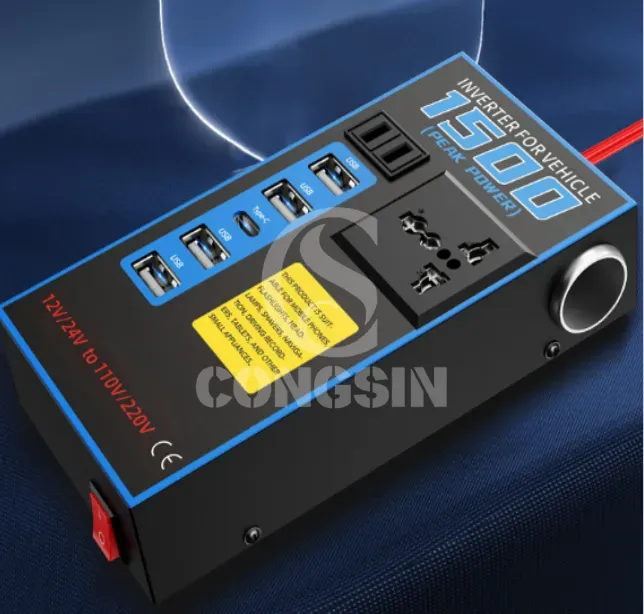
Congsin 1500W Inverter for Vehicle DC 12V/24V to AC 110V/220V with Universal socket Modified Sine Wave
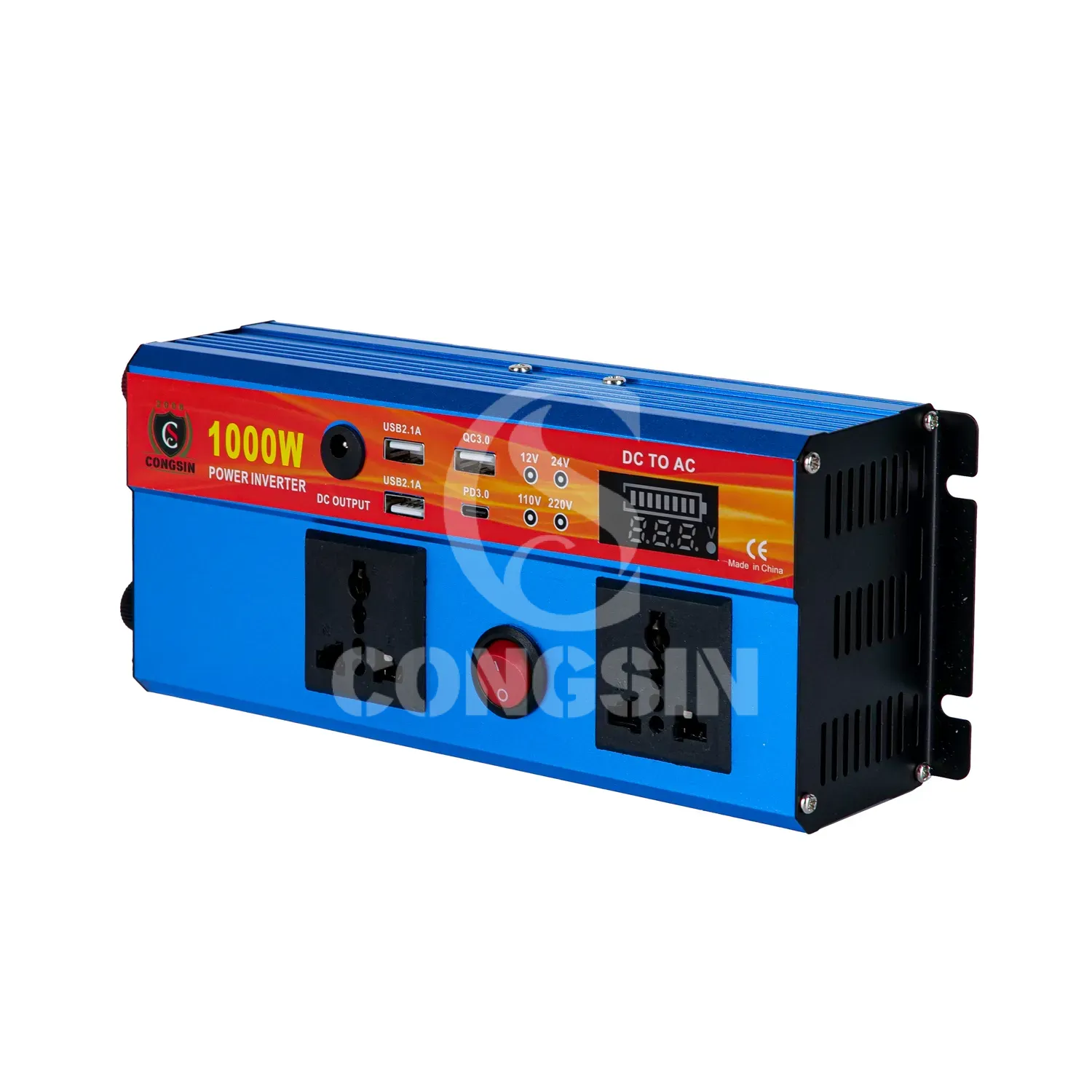
Congsin 1000W modified sine wave inverter with LED display and Type C port car RV power inverter
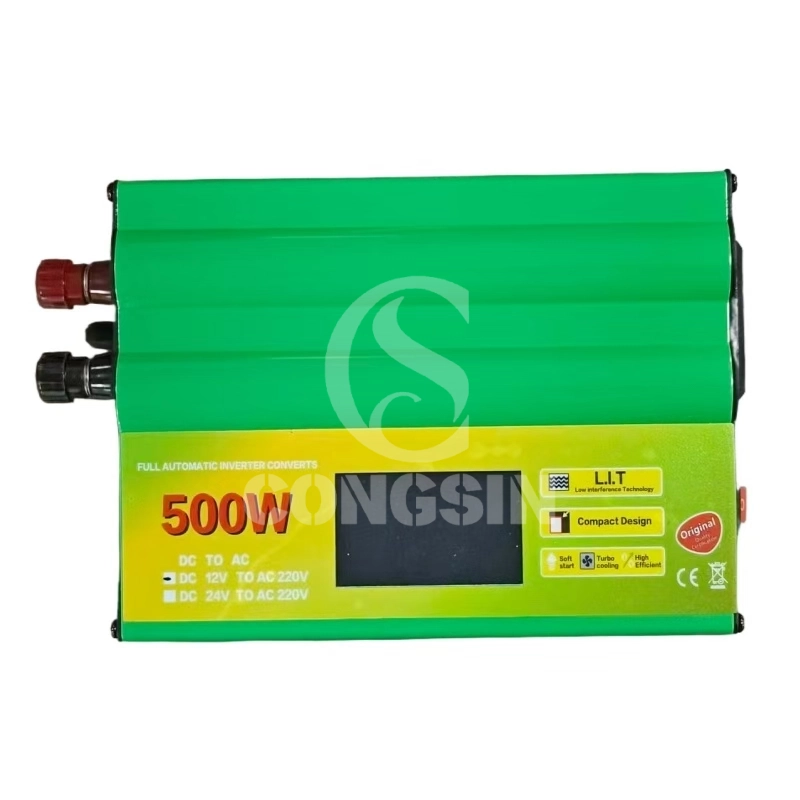
Congsin Modified Sine Wave Inverter 500W 1000W 1500W 12V LED Display Portable for RV Car Solar
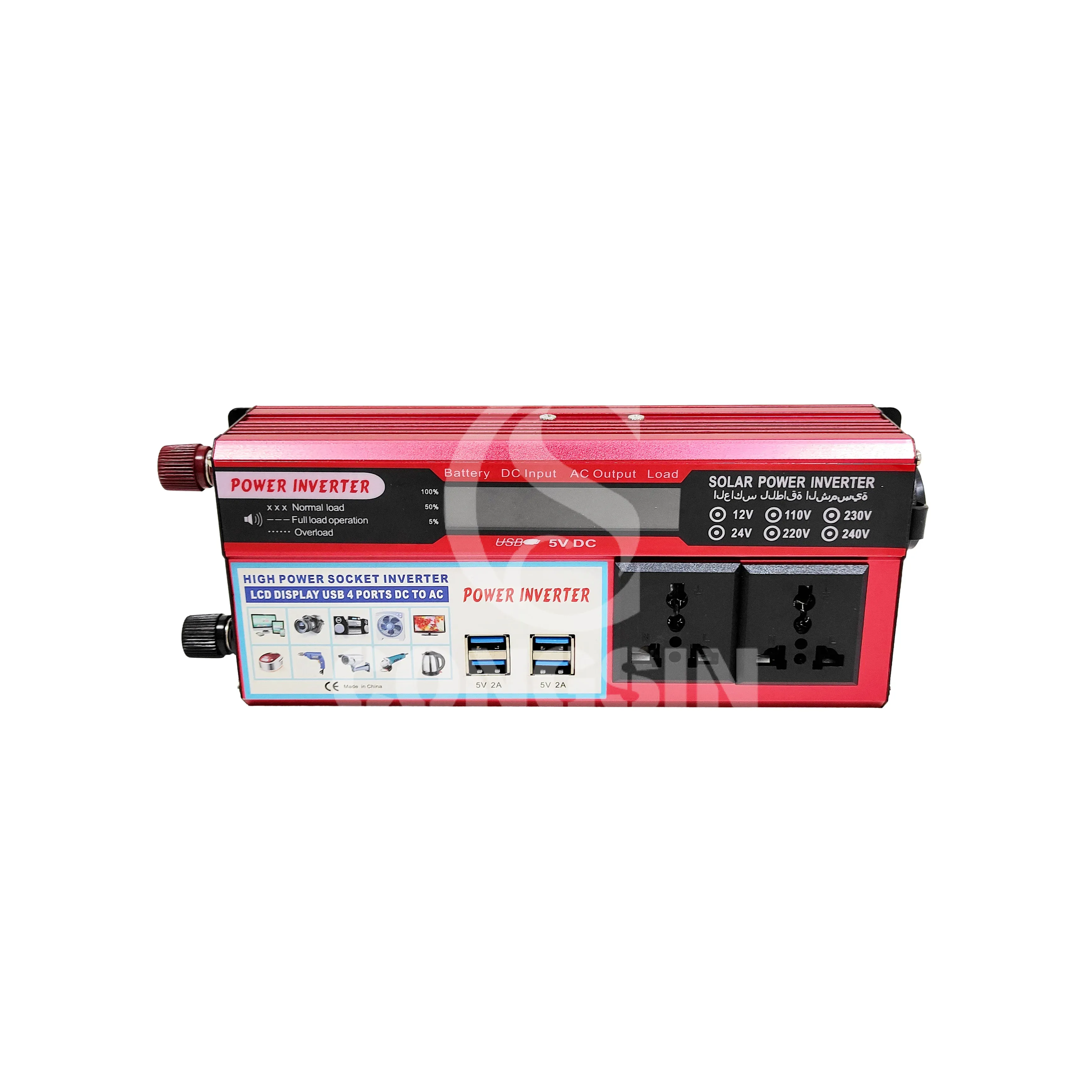
Congsin 1500W modified sine wave inverter with LCD display and USB ports for RV car boat home use

CONGSIN is a trusted OEM factory for power inverters, solar charge controllers, and DC converters. Reliable solutions for global B2B buyers.
 High Quality
 7/24 Service
 Guaranteed Warranty
© 2025 Congsin. All Rights Reserved.