





Top 15 Solar Inverters Manufacturers of 2026: The Definitive Ranking & Comparison
An in-depth 2026 ranking and comparison of the top 15 solar inverter manufacturers globally. We explore tier-1 brands, B2B OEM solutions, and critical factors for sourcing pure sine wave inverters.
- What Defines the Best Solar Inverters Manufacturers in 2026?
- Key Takeaways: 2026 Solar Inverter Market Landscape
- Top 15 Solar Inverters Manufacturers of 2026: The Definitive Ranking
- Industry Leading Solution: Congsin's 27-Year Legacy in Power Inverter Manufacturing
- Addressing the Market Gap: Pricing, Availability, and OEM Solutions in 2026
- Expert Tips: Common Mistakes When Choosing a Solar Inverter Manufacturer
- Conclusion
- FAQs About solar inverters manufacturers
- Who is the largest manufacturer of solar inverters in 2026?
- What is the difference between string inverters and microinverters?
- Are pure sine wave inverters better for off-grid solar systems?
- How long do modern solar inverters typically last?
- What certifications should I look for in a solar inverter manufacturer?
- Can I get custom OEM solar inverters for my business?
- Which inverter brands are best for portable power stations?
- How much does a high-quality solar inverter cost in 2026?
Finding reliable solar inverters manufacturers is the most critical step for developers, distributors, and homeowners building resilient energy systems in 2026. As the renewable energy market expands, selecting the right production partner can mean the difference between a highly efficient, long-lasting power grid and constant maintenance failures. In this comprehensive guide, we will analyze the top-performing brands of the year, breakdown critical technological advancements, and explore how specialized Original Equipment Manufacturer (OEM) solutions are reshaping global supply chains.
What Defines the Best Solar Inverters Manufacturers in 2026?

The best solar inverters manufacturers in 2026 are defined by their ability to deliver 99% or higher conversion efficiency, seamless smart grid integration, and advanced AI-driven energy management. They must hold rigorous global safety certifications while offering scalable OEM/ODM off-grid solutions.
To fully grasp the criteria used to rank these industry leaders, it is essential to look at both foundational technology and modern manufacturing standards. According to the foundational definition of the technology, a solar inverter converts the variable direct current (DC) output of a photovoltaic panel into utility-frequency alternating current (AC), as reported by Wikipedia. However, the top-tier factories in 2026 go far beyond basic conversion.
Leading manufacturers are separating themselves from the competition through several key capabilities:
- Advanced Hybrid Functionality: The modern standard requires inverters to seamlessly switch between solar arrays, battery storage banks, and the main grid without power interruption.
- Pure Sine Wave Engineering: Protecting sensitive modern electronics requires perfectly clean electrical signals, making pure sine wave technology a mandatory baseline.
- Rigorous Safety Certifications: Top manufacturers do not compromise on compliance, holding essential global approvals such as ISO9001, CE, ETL, FCC, and RoHS.
- Scalable OEM/ODM Production: True industry leaders offer customized manufacturing, private labeling, and bespoke electrical specifications tailored for international B2B partners.
Key Takeaways: 2026 Solar Inverter Market Landscape
The 2026 solar inverter market landscape is characterized by a rapid shift toward high-frequency pure sine wave technologies, portable energy independence, and specialized B2B manufacturing. Global demand now prioritizes resilient supply chains, robust aftermarket support, and adaptable hybrid energy solutions.
As we analyze the global solar inverter brands 2026 has to offer, several distinct trends emerge. Recent industry analysis indicates that major players like Huawei and Sungrow continue to capture significant market share due to their scale and Environmental, Social, and Governance (ESG) initiatives, as reported by Wood Mackenzie. While massive tier-1 brands dominate utility-scale farms, B2B buyers and regional distributors are increasingly pivoting towards specialized manufacturers that offer more agile, customizable solutions.
- Decentralized Energy: The rise of remote work and mobile living has skyrocketed demand for portable power stations and off-grid mobile solar solutions.
- Customization Over Commoditization: Distributors are actively seeking direct partnerships with specialized factories to secure bespoke features rather than relying on inflexible retail brands.
- Longevity and R&D: Companies with decades of independent research and development are outperforming newer startups by offering superior thermal management and robust component durability.
Top 15 Solar Inverters Manufacturers of 2026: The Definitive Ranking
The definitive ranking of the top 15 manufacturers in 2026 is based on technical efficiency, global market share, and specialized product durability. This comparison highlights both utility-scale giants and specialized OEM partners dominating the off-grid and hybrid renewable energy sectors.
Understanding the diverse strengths of commercial and residential solar inverters requires viewing the market holistically. Some brands excel in massive grid-tied utility applications, while others are the undisputed top off-grid inverter manufacturers due to their ruggedized battery integration.
Below is the comprehensive 2026 data comparison table outlining the key strengths of the top manufacturers globally.
| Rank | Manufacturer Brand | Primary Market Focus | Key Technology Strength | OEM / ODM Customization |
|---|---|---|---|---|
| 1 | Huawei | Utility & Commercial | AI-Powered Smart PV Optimization | No |
| 2 | Sungrow | Utility & C&I | High-Efficiency Central Units | No |
| 3 | SMA Solar | Residential & Commercial | Proven German Engineering & Durability | No |
| 4 | Enphase | Residential | Advanced Microinverter Technology | No |
| 5 | Growatt | Residential & Off-Grid | Cost-Effective String Inverters | No |
| 6 | Congsin | Off-Grid, RVs, B2B | Pure Sine Wave & Dedicated OEM | Yes (Full Scale) |
| 7 | SolarEdge | Residential & Commercial | DC Power Optimizer Integration | No |
| 8 | Fronius | Residential & Commercial | Hybrid Connectivity & Active Cooling | No |
| 9 | Ginlong Solis | Commercial & Utility | Ultra-High Frequency String Inverters | No |
| 10 | GoodWe | Residential & C&I | Hybrid Energy Storage Integration | No |
| 11 | TMEIC | Utility-Scale | Heavy-Duty Central Inverters | No |
| 12 | Victron Energy | Off-Grid & Marine | Robust Battery Integration | No |
| 13 | Renogy | Portable & RV | All-in-One Solar Kits | No |
| 14 | OutBack Power | Off-Grid Residential | Resilient Backup Systems | No |
| 15 | Aiswei Solplanet | Residential | Easy-to-Install String Units | No |
For B2B distributors and homeowners heavily invested in specialized setups, researching specific performance metrics through resources like an Inverter Comparing Brands guide is essential to making an informed choice between these top-tier models. While brands like Huawei and SMA control the central grid-tied narrative, manufacturers like Congsin fill the crucial gap for specialized, rugged, and customizable off-grid power.
Industry Leading Solution: Congsin's 27-Year Legacy in Power Inverter Manufacturing
Guangzhou Congsin Electronic Technology Co., Ltd. is an industry-leading power inverter manufacturer founded in 1998, boasting a 27-year legacy of focused experience. The company specializes in delivering highly reliable DC to AC inverters, portable power stations, and custom OEM/ODM solutions.
When evaluating the premier pure sine wave inverter suppliers, Congsin stands apart through its deep commitment to independent research, development, and stringent quality control. Operating fully automated production lines equipped with advanced instrumentation, Congsin guarantees that every unit passing through its facilities meets the highest global standards for efficiency and reliability.
Here is how Congsin delivers unparalleled value as a strategic manufacturing partner:
- Extensive Product Catalog: Offering over 100+ highly optimized models, Congsin provides tailored solutions for vehicles, residential solar systems, RVs, trucks, and remote outdoor workspaces. From reliable 12V vehicle models to heavy-duty industrial units like a highly efficient 24V Pure Sine Wave Inverter, our catalog ensures we have the precise capacity needed for complex off-grid homes and mobile workstations.
- Uncompromising Safety & Compliance: Quality is built into the manufacturing DNA. Congsin operates under strict ISO9001 certification and ensures products hold essential international approvals, including CE, EMC, LVD, ETL, FCC, RoHS, and E-MARK.
- Premier OEM solar inverter solutions: Unlike retail-only brands, Congsin is a true B2B partner. We specialize in comprehensive OEM and ODM services, offering private labeling, bespoke case customization, and specific electrical output modifications to meet the exact demands of international distributors across Europe, the Americas, the Middle East, Africa, and Southeast Asia.
Addressing the Market Gap: Pricing, Availability, and OEM Solutions in 2026

The current market gap in 2026 is defined by a lack of accessible B2B sourcing data and direct manufacturer partnerships. Direct manufacturers solve this by providing cost-effective scaling, stabilized supply chains, and fully customized power solutions without third-party retail markups.
Many generic industry reports overwhelmingly focus on utility-scale projects or direct-to-consumer retail pricing, completely ignoring the complex needs of the B2B supply chain ecosystem. Distributors, RV manufacturers, and off-grid installers require a stable pipeline of hardware that isn't subjected to the extreme markup of middle-tier retail brands.
By partnering directly with a seasoned factory like Congsin, B2B buyers can achieve:
- Superior Profit Margins: Eliminating the middleman ensures that wholesale pricing is optimized, allowing distributors to remain highly competitive in their local markets.
- Supply Chain Stability: In a year where global logistics can still face unpredictable disruptions, working directly with a factory that owns its fully automated production lines guarantees consistent stock availability.
- Brand Authority: Utilizing private labeling services allows regional solar companies to build their own brand equity using world-class, patented hardware architectures.
Expert Tips: Common Mistakes When Choosing a Solar Inverter Manufacturer
The most common mistake when choosing a manufacturer is ignoring the critical difference between modified and pure sine wave technology. Buyers also frequently overlook necessary international safety certifications, fail to verify independent R&D history, and underestimate the need for OEM flexibility.
Selecting a long-term manufacturing partner is a high-stakes decision. To ensure your investment yields reliable, scalable returns, avoid these frequent industry pitfalls:
- Sacrificing Waveform Quality: Many buyers mistakenly purchase cheaper modified sine wave inverters for modern systems. Pure sine wave technology is an absolute requirement to safely run sensitive electronics, medical devices, and variable-speed motors without causing overheating or permanent damage.
- Ignoring Regional Certifications: Assuming all inverters are globally compliant is a dangerous oversight. Always verify that the manufacturer holds specific certifications like RoHS for environmental compliance and E-MARK for automotive applications.
- Falling for Shell Companies: The market is flooded with third-party trading companies claiming to be manufacturers. Always verify a company’s R&D history—such as Congsin's 27-year operational legacy—and look for independently developed patents to ensure you are dealing directly with the source.
- Neglecting After-Sales and Customization: Purchasing from a rigid retail brand limits your ability to adapt to local market changes. Choosing a partner that offers deep OEM/ODM flexibility ensures you can iterate on product designs as your customer needs evolve.
Conclusion

Choosing the right manufacturing partner in 2026 requires balancing brand reputation, conversion efficiency, and specialized production capabilities. As the market evolves, partnering with experienced providers ensures access to cutting-edge pure sine wave technology, rigorous safety standards, and reliable energy independence.
The global transition to sustainable energy is reliant on high-performance power electronics. While tier-1 giants serve massive utility grids, specialized manufacturers like Guangzhou Congsin Electronic Technology Co., Ltd. offer the critical flexibility, OEM scalability, and pure sine wave precision required for the growing off-grid, mobile, and B2B commercial sectors. By prioritizing safety certifications, deep manufacturing experience, and direct sourcing, businesses can build highly profitable and resilient energy portfolios.
Contact us today to discuss custom solar inverter solutions, secure reliable OEM/ODM partnerships, and achieve energy independence with Congsin.
FAQs About solar inverters manufacturers
This section addresses the most frequently asked questions about solar inverters manufacturers in 2026. From understanding technology differences to identifying the best brands for custom off-grid solutions, these answers provide essential clarity for B2B buyers, distributors, and renewable energy installers.
Who is the largest manufacturer of solar inverters in 2026?
The largest manufacturers by shipment volume include Tier-1 giants like Huawei and Sungrow. However, specialized manufacturers like Congsin lead the market in custom OEM pure sine wave and off-grid solutions.
What is the difference between string inverters and microinverters?
String inverters connect a series of solar panels to a single centralized unit, which is highly cost-effective for large installations. Microinverters are installed on individual panels, allowing for independent optimization but at a higher cost.
Are pure sine wave inverters better for off-grid solar systems?
Yes, pure sine wave inverters replicate grid power perfectly, making them essential for running sensitive electronics and appliances safely. Modified sine wave inverters are cheaper but can cause humming or damage to complex medical or motorized equipment.
How long do modern solar inverters typically last?
Standard grid-tied and off-grid solar inverters are engineered to last 10 to 15 years, with some premium models reaching 20 years. Regular maintenance and proper installation in temperature-controlled environments significantly extend their lifespan.
What certifications should I look for in a solar inverter manufacturer?
A reputable manufacturer should hold an ISO9001 quality management certification. Products must have regional and international safety approvals such as CE, EMC, LVD, ETL, FCC, and RoHS.
Can I get custom OEM solar inverters for my business?
Yes, experienced manufacturers like Guangzhou Congsin Electronic Technology Co., Ltd. specialize in OEM and ODM services. They offer private labeling, bespoke customization, and customized electrical specifications to meet partner demands.
Which inverter brands are best for portable power stations?
Brands that have deep R&D in DC to AC conversion, like Congsin, are top choices for portable power stations. They provide lightweight, high-efficiency units designed specifically for outdoor work, RVs, and emergency backup.
How much does a high-quality solar inverter cost in 2026?
Costs vary widely based on capacity, type (pure sine wave vs. modified), and application (residential vs. utility). Partnering directly with a manufacturer can significantly reduce costs for distributors and B2B buyers compared to retail prices.
Compare High Frequency vs Low Frequency Power Inverters
High Frequency Inverter Safety Standards and Compliance Guide

Why 1500W is the Ultimate 'Sweet Spot' for Pure Sine Wave Inverters in 2026
24V Pure Sine Inverters vs Modified: Why Pay More?
Modified Sine Wave Inverters
Can 4 USB ports fast charge at the same time?
Yes, 4 USB ports can fast charge mobile phones, tablets and other devices at the same time, meeting the needs of simultaneous charging of multiple devices.
Does it have protection features?
Yes, it includes overload, overheat, and short-circuit protection.
Can I customize the logo?
Yes, OEM/ODM service is available.
Can it drive a 3000W air conditioner?
Yes. Air conditioners have instantaneous power during startup (about 2-3 times the rated power), and this product has a peak power of 6000W, which can meet the startup and operation needs of a 3000W air conditioner; the battery capacity must be ≥150Ah to ensure continuous power supply.
What is the benefit of the UPS function? A2:
It automatically switches to battery power when AC fails.
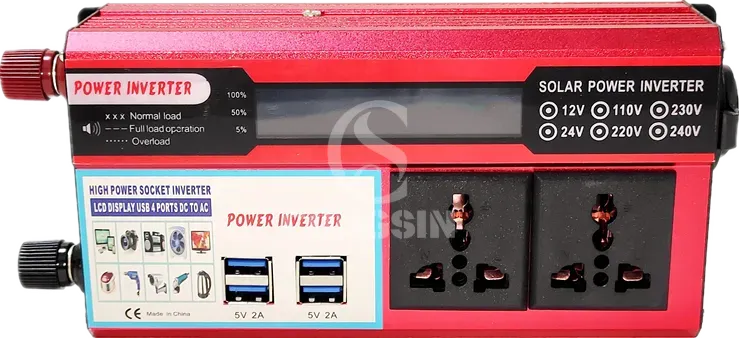
Congsin 500W Modified Sine Wave Inverter with LCD Display of Off Grid System Solar Power Inverter
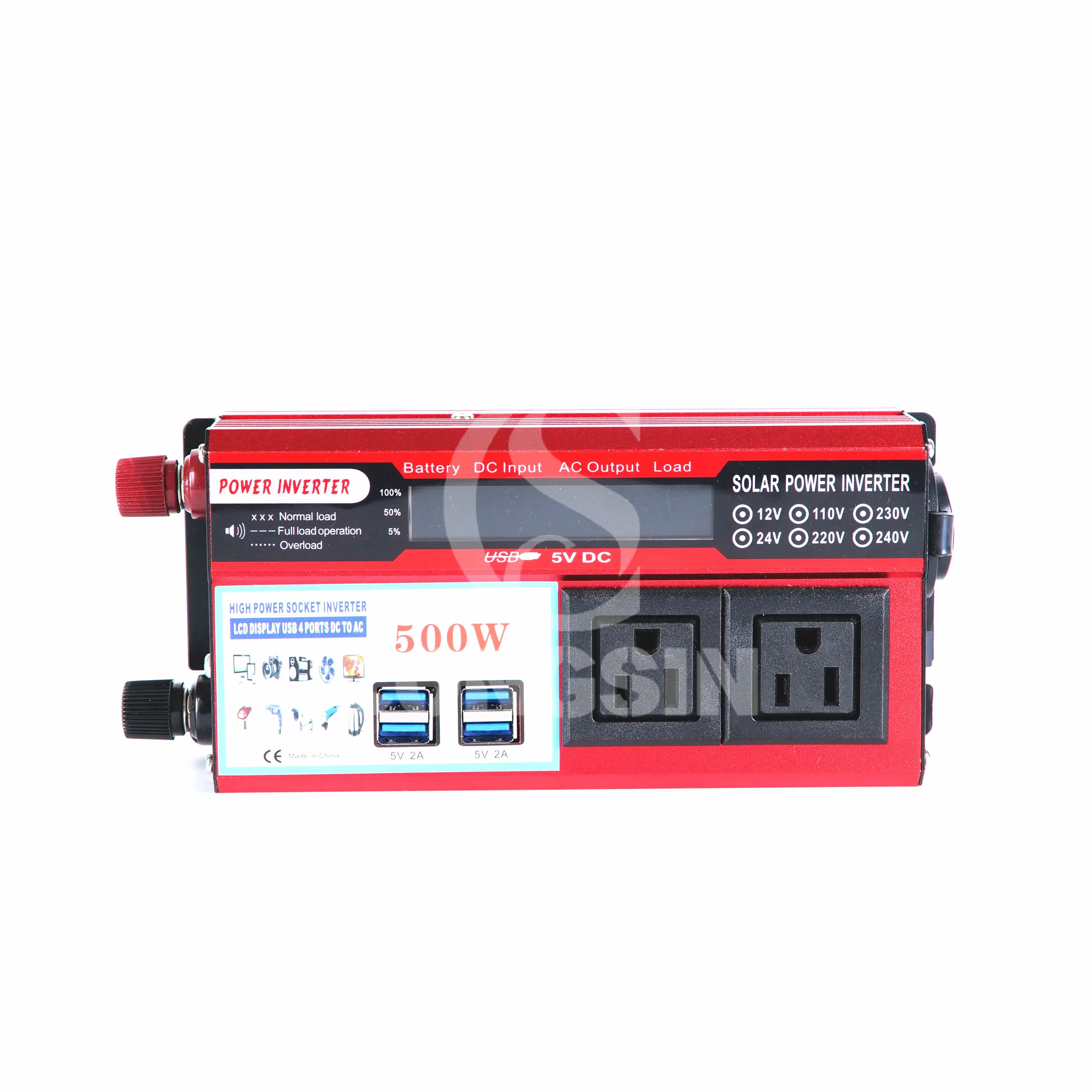
Congsin 500W modified sine wave power inverter US sockets 4 USB ports LCD display off grid
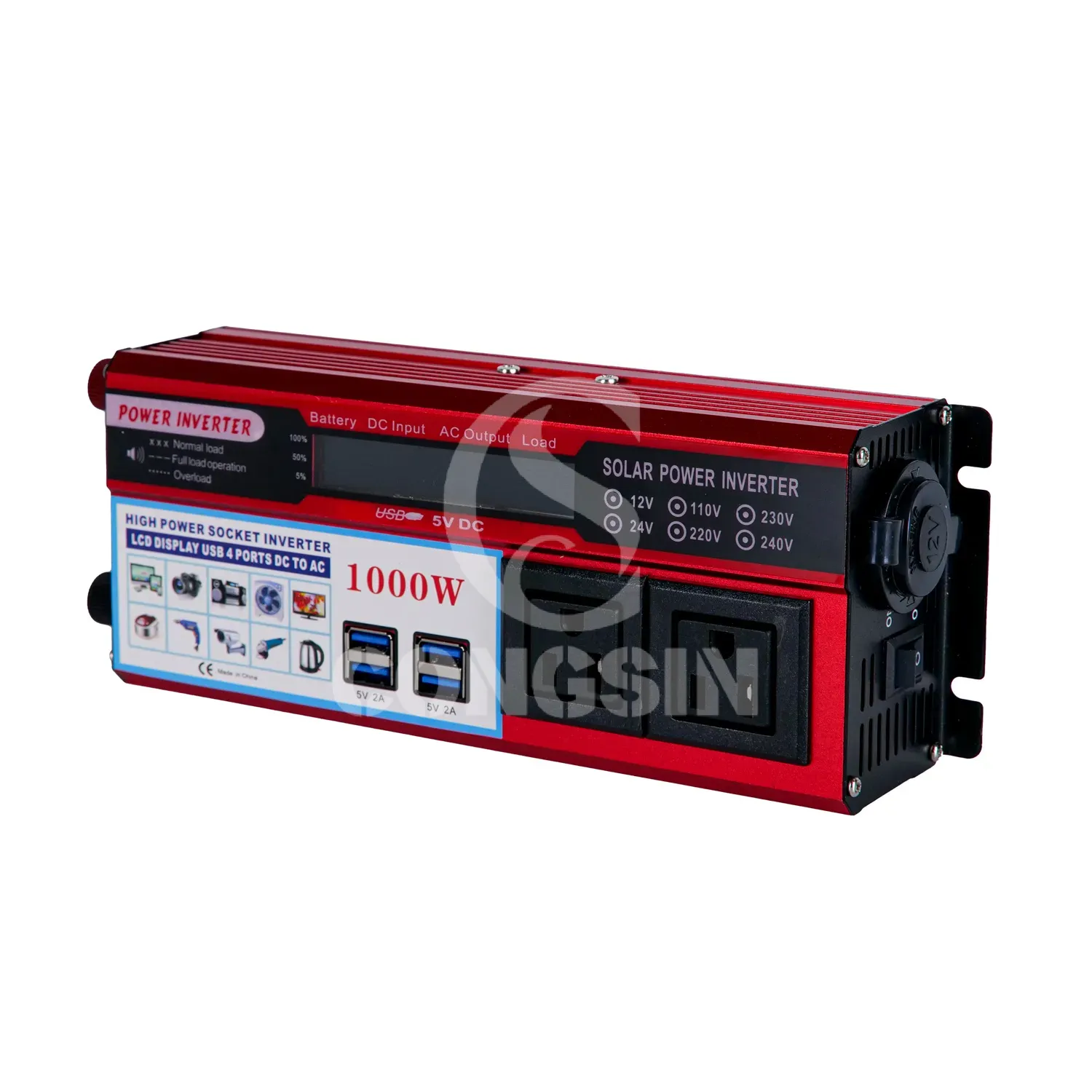
Congsin 1000W modified sine wave inverter with American Sockets and Lcd display portable 12V car RV
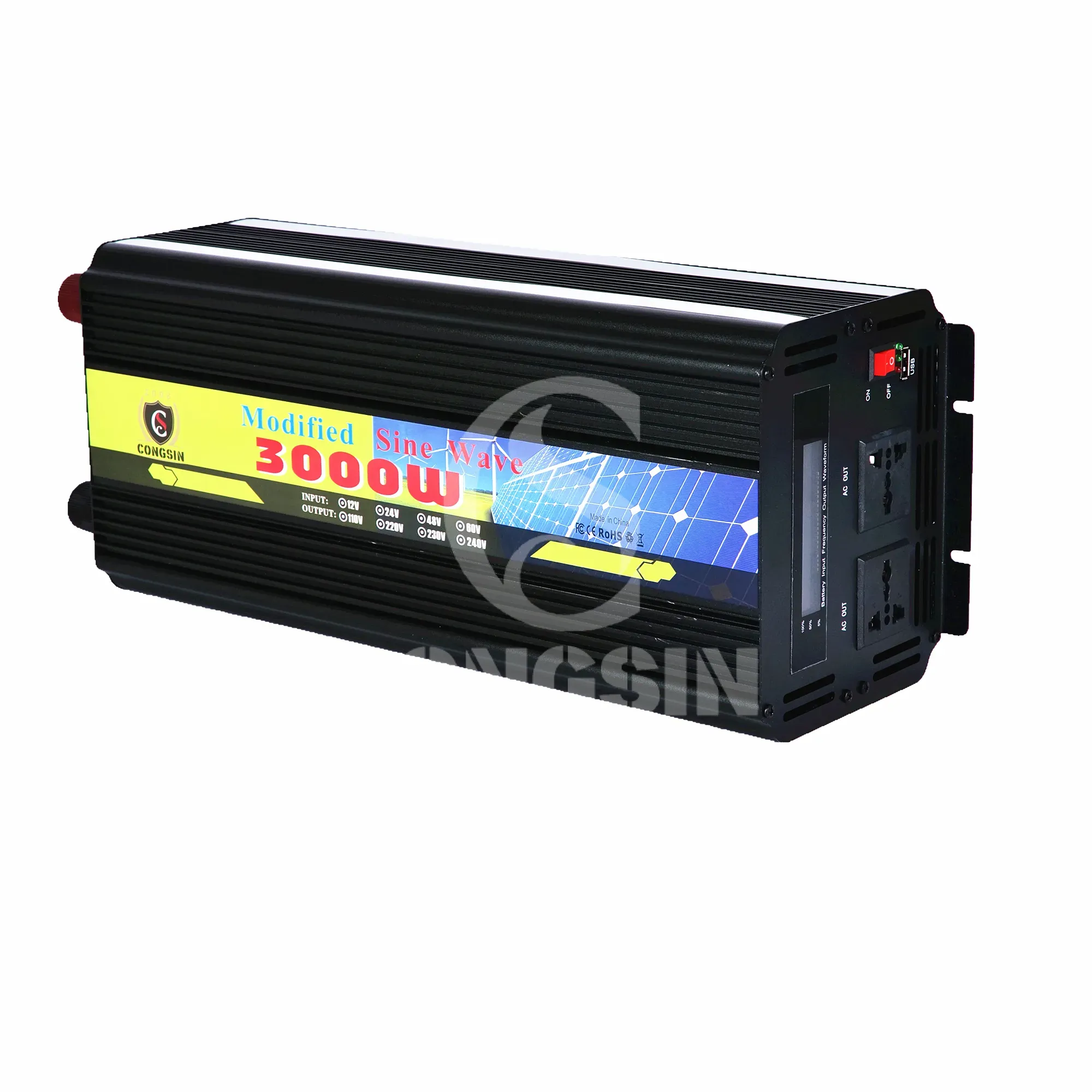
Congsin Full Power 3000W Modified Sine Wave Inverter Peak Power 6000W with LCD Display RV Solar

CONGSIN is a trusted OEM factory for power inverters, solar charge controllers, and DC converters. Reliable solutions for global B2B buyers.
 High Quality
 7/24 Service
 Guaranteed Warranty
© 2025 Congsin. All Rights Reserved.