





Top 5 portable power station Company List and Products Compared
- Top 5 Portable Power Station Companies and Products Compared
- Why readers search for “portable power station” and what this article delivers
- 1) EcoFlow — fast charging, high-output portable power stations
- Advantages — performance and recharge speed
- Disadvantages — price and weight
- Technical highlights
- Best applications
- 2) Jackery — consumer-focused, lightweight, easy-to-use power stations
- Advantages — simplicity and portability
- Disadvantages — limited heavy-load capability and expandability
- Technical highlights
- Best applications
- 3) Goal Zero — rugged, portable power for outdoor and professional use
- Advantages — durability and ecosystem
- Disadvantages — price and weight relative to capacity
- Technical highlights
- Best applications
- 4) Bluetti — large-capacity and LiFePO4 options for long life and home backup
- Advantages — capacity and battery chemistry
- Disadvantages — size, price, and complexity
- Technical highlights
- Best applications
- 5) Guangzhou Congsin Electronic Technology Co., Ltd. (Congsin) — OEM/ODM expertise and tailored solutions
- Advantages — manufacturing experience, certification and customization
- Disadvantages — brand visibility for end consumers
- Technical highlights
- Best applications
- Comparison Table — Top 5 Companies and Product Focus
- How to choose the right portable power station for your needs
- Conclusion — which brand should you pick?
- Frequently Asked Questions
- References and sources
Top 5 Portable Power Station Companies and Products Compared
When researching a portable power station, buyers usually want dependable performance, clear technical specs, real-world application guidance (camping, home backup, solar off-grid), and a value comparison across brands. This guide compares five market-leading companies — EcoFlow, Jackery, Goal Zero, Bluetti and Guangzhou Congsin — presenting their flagship portable power offerings, technical highlights, pros/cons, and best-use scenarios to help you make an informed purchase.
Why readers search for “portable power station” and what this article delivers
breakdown: most users search this topic to compare brands and models, understand capacity/inverter trade-offs, check solar or AC charging options, and select a product for specific needs (RV, emergency backup, jobsite tools, or car camping). This article answers those needs by: 1) presenting each company’s portable power strengths and typical product focus; 2) listing technical points buyers must compare; 3) showing pros/cons and application scenarios; and 4) summarizing differences in an easy reference table before the conclusion.
1) EcoFlow — fast charging, high-output portable power stations
EcoFlow is widely known for innovation in fast-charging portable power stations and modular expandability. Their product line targets users needing rapid recharge, high continuous AC output, and solar integration for off-grid and emergency use.
Advantages — performance and recharge speed
EcoFlow’s strengths include industry-leading AC inverter outputs in consumer-grade units, rapid multi-channel charging (AC + car + solar simultaneously), and systems designed for expansion with extra batteries for longer runtimes. These features suit users needing heavy loads (power tools, induction cooktops, CPAP devices).
Disadvantages — price and weight
High-performance models tend to be pricier and heavier than basic models, so EcoFlow is sometimes less ideal for ultra-light backpacking. Advanced functionality can also be overkill for casual campers who only need small phone or laptop charging.
Technical highlights
Key technical aspects buyers should note: high continuous inverter ratings (enabling power tools and some appliances), often large battery capacities for whole-home backup segments, multiple AC and DC outputs, solar MPPT input for fast solar charging, and smart app monitoring. Many EcoFlow units emphasize fast AC-to-full recharge times using powerful built-in chargers.
Best applications
EcoFlow models are well suited for emergency home backup, vanlife/RV users, outdoor professionals, and those who require fast recharge between uses (e.g., road trips or work sites).
2) Jackery — consumer-focused, lightweight, easy-to-use power stations
Jackery targets mainstream consumers with an emphasis on user-friendly design, portability, and reliable off-grid charging for outdoor recreation. Their Explorer series is widely recognized among campers and light-duty users.
Advantages — simplicity and portability
Jackery products are known for straightforward operation, compact form factors, and competitive pricing in the entry-to-mid-level market. Good build quality and strong brand recognition in the outdoor gear segment make Jackery a common default choice for camping and small appliance use.
Disadvantages — limited heavy-load capability and expandability
Compared with high-output models from other brands, Jackery’s lineup leans toward lower continuous inverter ratings and fewer expansion options. Users who need to run powerful appliances or parallel multiple batteries may find limitations.
Technical highlights
Typical Jackery units provide pure-sine AC output in the consumer range, multiple USB and AC outlets, and solar input via their SolarSaga panels. The company focuses on an intuitive charge/discharge experience rather than advanced modular expandability.
Best applications
Jackery is ideal for campers, weekenders, photographers, and users wanting a lightweight emergency kit to power laptops, small refrigerators, lights, and charge phones.
3) Goal Zero — rugged, portable power for outdoor and professional use
Goal Zero has a long history in portable power and solar products and is often chosen for rugged outdoor use, expeditions, and mission-critical scenarios. Their product family links portable power stations to a broad solar accessory ecosystem.
Advantages — durability and ecosystem
Goal Zero emphasizes robust build quality, user serviceability in some models, and compatibility with many solar charging accessories. The brand is trusted by many outdoor professionals and NGOs for field deployments.
Disadvantages — price and weight relative to capacity
Goal Zero units can be on the higher end of price and weight per Wh compared with some competitors. Their focus on ruggedness and reliability results in trade-offs vs the lightest consumer models.
Technical highlights
Goal Zero designs focus on stable pure-sine outputs, multiple charge paths, and thoughtful accessory interfaces (e.g., integrated solar connectors, accessory wall mounts). Many models are optimized for repeated cycling and field conditions.
Best applications
Good for extended camping, film/photo crews, humanitarian teams, scientific field work, and anyone who prioritizes durability and a large selection of compatible solar panels and accessories.
4) Bluetti — large-capacity and LiFePO4 options for long life and home backup
Bluetti is known for offering high-capacity units and LiFePO4 battery chemistry in several models — delivering longer cycle life and improved thermal safety. Their systems often target home backup and heavier off-grid use.
Advantages — capacity and battery chemistry
Bluetti’s appeal centers on offering substantial battery capacities and LiFePO4 options (longer cycle life, better thermal stability). This makes their units attractive for multi-day off-grid stays and frequent cycling as a home backup source.
Disadvantages — size, price, and complexity
Bluetti systems with large capacities are bulkier and more expensive. Some models offer many features that casual users may not need, and initial setup for modular systems can be more complex than plug-and-play units.
Technical highlights
Technical points to watch: LiFePO4 vs NMC battery types, high inverter continuous wattage for appliance loads, modular battery expansion on certain Bluetti platforms, integrated battery management systems (BMS), and multi-input charging (AC + solar + car).
Best applications
Home backup, off-grid cabins, vanlife requiring long cycle life, and professional uses that need reliable multi-day power with many cycles over years.
5) Guangzhou Congsin Electronic Technology Co., Ltd. (Congsin) — OEM/ODM expertise and tailored solutions
Guangzhou Congsin (Congsin) is a manufacturer with over 27 years of experience in power inverters and related systems. They focus on DC→AC inverters, portable power stations and solar charge controllers, supplying OEM/ODM and customized products to global markets. Their strengths are manufacturing scale, certifications and the ability to customize products for industrial and channel partners.
Advantages — manufacturing experience, certification and customization
Congsin operates fully automated production lines, advanced testing equipment, and maintains an ISO9001 quality system with many international certifications (CE, EMC, LVD, ETL, FCC, RoHS, E-MARK). For resellers, OEMs and distributors seeking private labeling or tailored feature sets (different battery chemistries, inverter profiles, connector options), Congsin’s factory capability is a strong advantage.
Disadvantages — brand visibility for end consumers
As a manufacturer-oriented company, Congsin may be less visible to end consumers compared with direct-to-consumer brands that focus on retail marketing. Buyers focused on finished-brand after-sales or retail warranty experiences should confirm channel support from distributors or OEM brands using Congsin products.
Technical highlights
Congsin’s technical strengths are in DC→AC inverter design, integrated solar charge controllers, multi-output systems and bespoke designs to meet target markets (vehicle, RV, off-grid home, patrol/field construction). Their portfolio spans 100+ models servicing different use cases and compliance standards for international markets.
Best applications
OEM partners, distributors, fleet operators, and commercial users needing custom configurations (vehicle-specific installs, ruggedized field units, or specialized output sockets) benefit most from Congsin’s capabilities.
Comparison Table — Top 5 Companies and Product Focus
| Company | Flagship/Product Focus | Battery Chemistry & Typical Capacity Range | Inverter Output Range | Key Strengths | Best For |
|---|---|---|---|---|---|
| EcoFlow | High-output, fast-charge expandable stations | Li-ion / larger modules; mid to high (600 Wh – multi-kWh) | 500 W – 3,600 W (consumer/prosumer range) | Very fast recharge, modular expansion, high continuous power | Home backup, RV, power tools, road trips |
| Jackery | Explorer series: portable, lightweight units | Li-ion; entry to mid (250 Wh – ~1,000 Wh) | 200 W – 1,000 W | User-friendly, lightweight, good value | Camping, photography, small-device charging |
| Goal Zero | Rugged portable stations with broad solar ecosystem | Li-ion; mid to high (several hundred Wh – >1,000 Wh) | 300 W – 2,000 W | Durability, accessory ecosystem, field reliability | Expeditions, NGOs, film crews, prolonged outdoor use |
| Bluetti | Large-capacity units; LiFePO4 options for longevity | LiFePO4 & Li-ion; mid to multi-kWh | 1,000 W – 3,000+ W | High capacity, long cycle life (LiFePO4), modularity | Home backup, off-grid cabins, frequent-cycling uses |
| Guangzhou Congsin (Congsin) | OEM/ODM portable stations, inverters and solar controllers | Flexible: supports Li-ion / LiFePO4 per customer spec; wide range | Customized per project (consumer to commercial ranges) | Manufacturing scale, certifications, customization | OEM partners, distributors, tailored commercial solutions |
How to choose the right portable power station for your needs
Compare these buyer-focused factors when evaluating products:
- Capacity (Wh): Match runtime to the load — calculate appliance wattage × hours required.
- Inverter continuous and surge watts: Ensure the inverter supports startup surges for motors, pumps, or tools.
- Battery chemistry: LiFePO4 offers longer cycle life and thermal stability; NMC/Li-ion can offer higher energy density and lower weight.
- Charge inputs and speed: Multi-path charging and fast AC recharge shorten downtime between uses.
- Solar compatibility: MPPT inputs and maximum solar wattage determine how fast sun power can recharge the station.
- Port variety: Check AC outlets, pure-sine output, DC ports, USB-C PD for modern devices.
- Weight and form-factor: Consider transportability for camping vs fixed home backup units.
- Service and warranty: Confirm after-sales support, especially for OEM-sourced units.
Conclusion — which brand should you pick?
Your best choice depends on intended use. For lightweight camping and ease-of-use, Jackery often provides the simplest and most affordable options. If you need fast recharge and high continuous output (heavy tools, longer RV trips), EcoFlow is a strong choice. Bluetti stands out when long cycle life and high-capacity LiFePO4 systems are priorities for home backup. Goal Zero is a proven option where ruggedness and ecosystem compatibility matter. For OEM, customized or distributor-focused projects, Guangzhou Congsin (Congsin) offers manufacturing depth, certifications and customization services to bring tailored portable power station solutions to market.
Use the comparison table above to narrow your needs by capacity, inverter power and intended application. Then check the exact specifications, certifications and local support policies before purchase.
Frequently Asked Questions
What size portable power station do I need for camping or vanlife?
A practical approach is to list devices you’ll run, add their wattages, and multiply by estimated hours. For phone/laptop charging, lights and a small fridge, many campers find units in the 500–1,000 Wh range adequate. For multi-day vanlife with heavier loads, consider 1,000–3,600 Wh systems or expandable solutions.
Is LiFePO4 better than Li-ion for portable power stations?
LiFePO4 batteries typically offer longer cycle life and improved thermal stability, making them suitable for frequent cycling and prolonged use. Li-ion (NMC) cells can be lighter and more energy-dense, so they may yield lower weight-per-Wh units. Choose based on expected usage cycles, weight constraints, and cost.
Can portable power stations be charged by solar panels full-time?
Yes — many modern portable power stations include MPPT solar charge controllers and support solar charging as a primary method. Solar recharge times depend on the station’s input limit, available sunlight, and panel wattage. For reliable full-day recharge, ensure the solar input capability (W) matches the battery capacity.
Are portable power stations safe to use indoors?
Most consumer portable power stations use sealed batteries (Li-ion or LiFePO4) and produce no direct emissions, making them safe for indoor use compared with gasoline generators. Always follow manufacturer guidelines for ventilation, charging, and avoiding overloading the inverter.
How should I maintain my portable power station for long life?
Store the unit at moderate state-of-charge (often 40–60% if storing long-term), avoid exposure to extreme temperatures, cycle the battery periodically per manufacturer guidance, and use recommended chargers and permitted solar panels to keep the battery management systems operating correctly.
References and sources
- EcoFlow product pages and technical specifications — EcoFlow.com; accessed June 2024. (Example: EcoFlow Delta / Delta Pro product pages). https://www.ecoflow.com/ (accessed June 2024)
- Jackery Explorer series product pages — Jackery.com; accessed June 2024. https://www.jackery.com/ (accessed June 2024)
- Goal Zero Yeti and product documentation — GoalZero.com; accessed June 2024. https://www.goalzero.com/ (accessed June 2024)
- Bluetti product specifications and LiFePO4 model descriptions — Bluetti.com; accessed June 2024. https://www.bluettipower.com/ (accessed June 2024)
- Guangzhou Congsin Electronic Technology Co., Ltd. company profile and manufacturing capabilities — company-supplied profile (user-provided); accessed December 2025.
- General buyer guidance on portable power stations and battery chemistry from industry reviews and buyer guides — various tech review sites, product manuals and manufacturer FAQs; aggregated access June 2024.
Note: For exact model specifications (Wh, continuous/surge watts, solar input limits, weight), always consult the manufacturer product page or official datasheet for the model you plan to buy — specs vary by model and firmware revision.
High Frequency Inverter Safety Standards and Compliance Guide
2000W Modified Sine Wave Inverter: Buyer’s Complete Guide
Improving Efficiency: Batteries and Pure Sine Wave Inverters
Battery Compatibility: Best Batteries for Off-Grid Inverters
Modified Sine Wave Inverters
What is the difference between modified sine wave and pure sine wave?
Modified sine wave is suitable for most ordinary home appliances and electronic devices; pure sine wave is suitable for devices with extremely high power requirements (such as precision instruments). This modified sine wave is more cost-effective and meets the needs of most daily scenarios.
Can it be used in electric vehicles?
Most electric vehicles have a high-voltage system, and this inverter inputs DC 12V. It is not recommended to use it directly. If you need to use it, please confirm whether the vehicle power output matches first.
Products
Can I customize the logo?
Yes, OEM/ODM service is available.
Distributor
How long does it take to become an authorized distributor?
The process typically takes 2-4 weeks, depending on the discussion and agreement finalization.
What kind of distributors are you looking for?
We seek distributors with experience in the amusement or entertainment equipment industry and a strong local market presence.
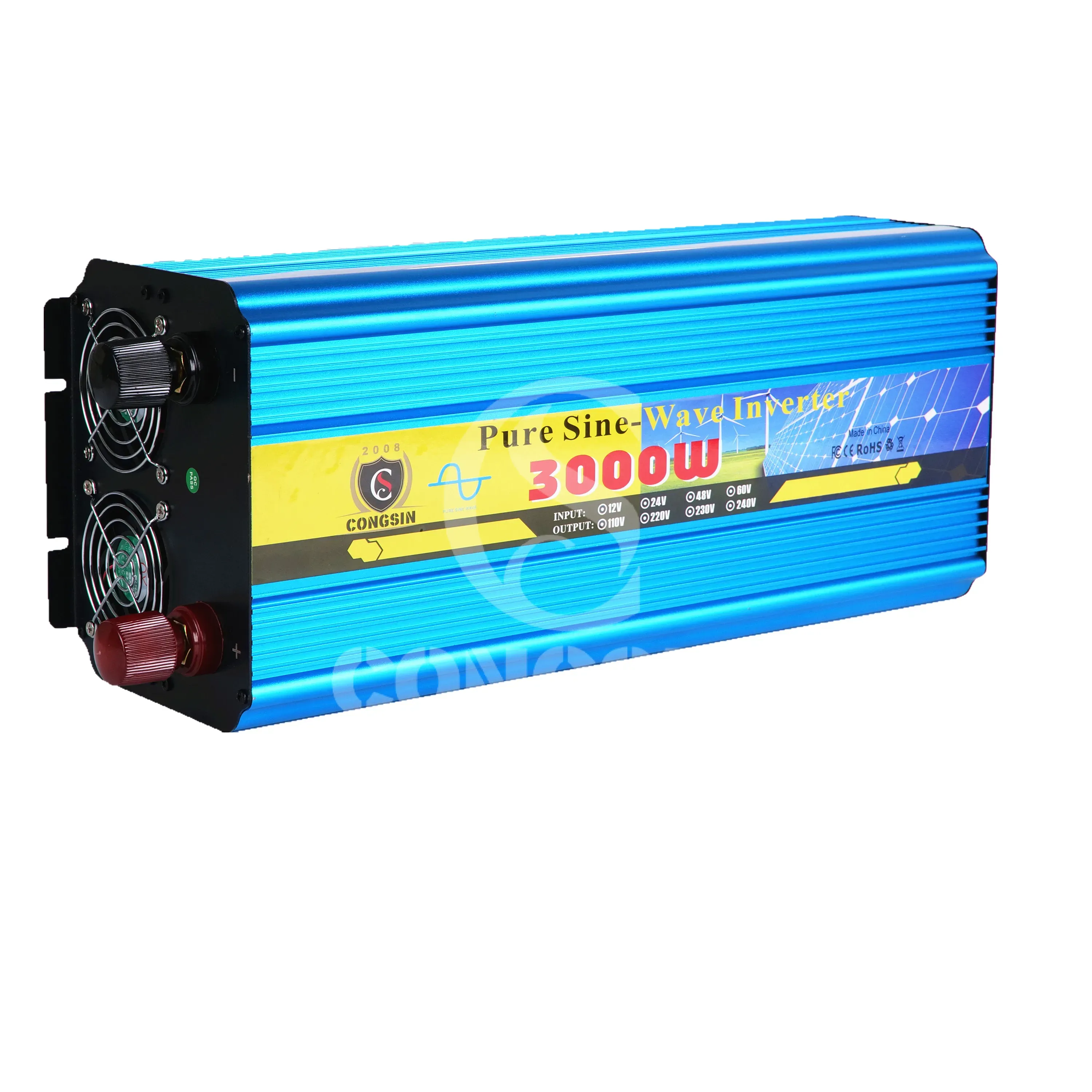
Congsin 3000W LCD Pure Sine Wave Inverter for Home Use Solar Backup Power Inverter Off Grid UPS
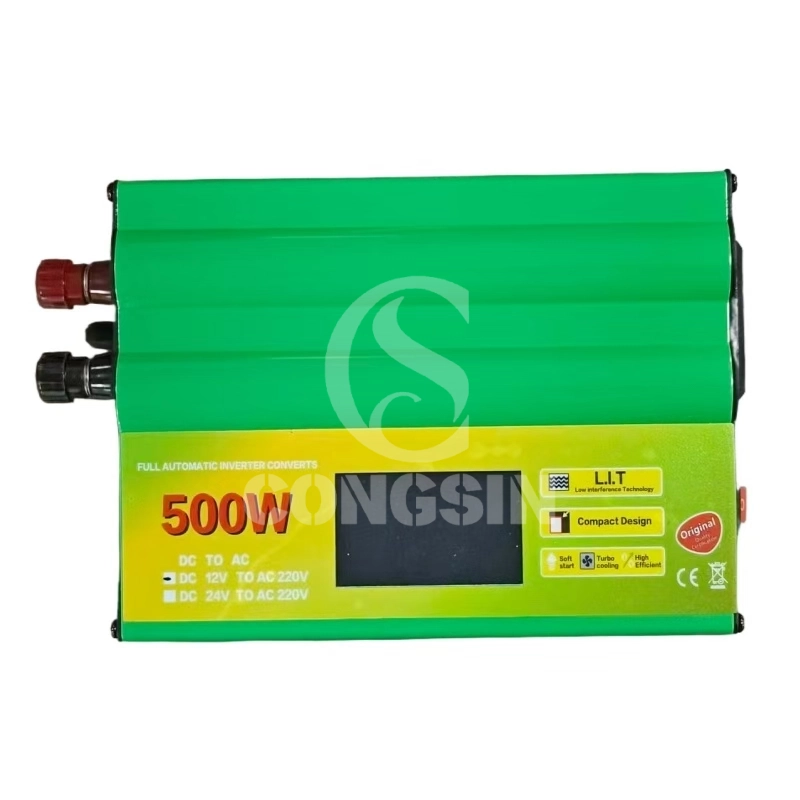
Congsin Modified Sine Wave Inverter 500W 1000W 1500W 12V LED Display Portable for RV Car Solar
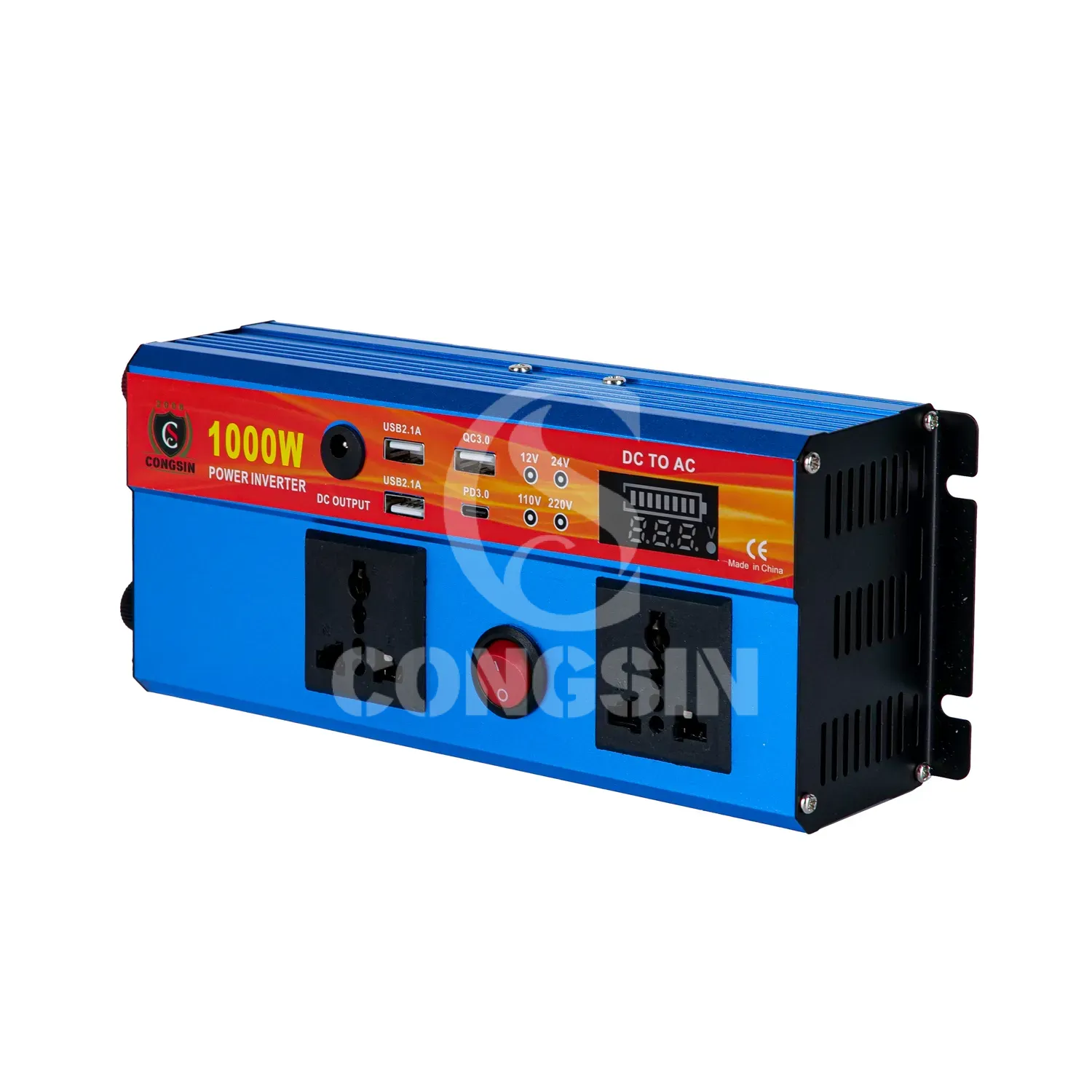
Congsin 1000W modified sine wave inverter with LED display and Type C port car RV power inverter
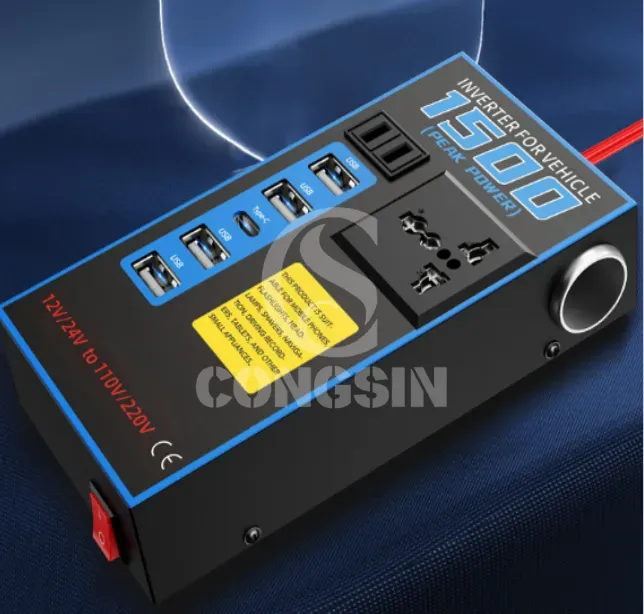
Congsin 1500W Inverter for Vehicle DC 12V/24V to AC 110V/220V with Universal socket Modified Sine Wave

CONGSIN is a trusted OEM factory for power inverters, solar charge controllers, and DC converters. Reliable solutions for global B2B buyers.
 High Quality
 7/24 Service
 Guaranteed Warranty
© 2025 Congsin. All Rights Reserved.