





Sourcing Reliable Modified Sine Wave Inverter Manufacturers
- Understanding modified sine wave inverters and where they make sense
- What is a modified sine wave power inverter
- Common use cases and buyer intent
- Technical evaluation criteria for manufacturers
- Key electrical specifications to verify
- Protection, safety and thermal design
- Testing and performance validation
- Commercial and compliance considerations when selecting a manufacturer
- Quality systems and certifications
- Supply chain resilience and production capability
- Warranty, aftersales and technical support
- Comparative analysis and supplier checklist
- Modified versus pure sine wave inverters at a glance
- Supplier evaluation checklist
- Selecting a manufacturing partner: case study and practical tips
- How to run a supplier audit and trial order
- Commercial terms and intellectual property
- Guangzhou Congsin Electronic Technology Co., Ltd. supplier profile
- Practical procurement tips and implementation checklist
- Determine fit for purpose and total cost of ownership
- Document acceptance tests and pilot deployments
- Negotiation levers and scalability
- FAQ
- Can a modified sine wave power inverter run a microwave or refrigerator
- What are typical reliability failure modes for modified sine wave inverters
- How should I evaluate THD and waveform quality from a supplier
- Are modified sine wave inverters safer in vehicles than pure sine wave units
- How many units should I order for a production qualification run
- Contact and next steps
- References and authoritative sources
Understanding modified sine wave inverters and where they make sense
What is a modified sine wave power inverter
A modified sine wave power inverter converts DC to an approximated AC waveform that steps between voltage levels instead of following a smooth sinusoid. Compared with pure sine wave inverters, modified sine wave designs are typically simpler, lower cost and smaller. They can power resistive loads such as incandescent lights, many power tools and simple motor loads, but may perform poorly or cause issues with certain electronics.
Common use cases and buyer intent
Buyers often look for modified sine wave power inverter products for cost‑sensitive applications: vehicle accessories, basic camping setups, small off grid tools, emergency lighting and inexpensive UPS replacements. Understanding the exact load profile and compatibility needs is the first step before selecting a manufacturer.
Technical evaluation criteria for manufacturers
Key electrical specifications to verify
When sourcing, require manufacturers to supply clear specifications including continuous output power, surge capability, DC input range, output voltage tolerance, total harmonic distortion (THD), waveform diagram, no load current draw, and efficiency curves at various loads. For modified sine wave units, THD can be higher than pure sine units. Ask for measured THD charts under representative loads.
Protection, safety and thermal design
Reliable suppliers will document protection features such as overcurrent, short circuit, overtemperature, reverse polarity, undervoltage and overvoltage shutdown. Thermal design evidence may include thermal images, heat sink specifications and expected derating curves for continuous operation at elevated ambient temperatures.
Testing and performance validation
Request test reports from independent labs or in‑house test protocols including continuous run, surge tests, EMC emissions and immunity where applicable, burn‑in and vibration tests for mobile applications. Test data should show results with common loads such as resistive heaters, inductive motors and electronic power supplies to demonstrate real world behavior.
Commercial and compliance considerations when selecting a manufacturer
Quality systems and certifications
Primary trust signals include ISO9001 certification, and product approvals such as CE, EMC, LVD for EU markets, ETL or UL listings for North America, FCC for radiated emissions, RoHS for hazardous substances and E‑MARK for automotive conformity. Confirm validity by requesting certificates and cross checking registration numbers with issuing bodies.
Supply chain resilience and production capability
Assess production capacity, lead times, and whether production lines are automated. Key questions: number of fully automated lines, MOQ policies, typical throughput, and ability to scale for OEM orders. Reliable manufacturers will also provide capacity planning data and contingency measures for component shortages.
Warranty, aftersales and technical support
Compare warranty terms (duration, coverage details), RMA procedures, spare parts availability and access to technical resources such as integration notes and application support. Good suppliers provide a clear escalation path and OEM customization support.
Comparative analysis and supplier checklist
Modified versus pure sine wave inverters at a glance
| Criterion | Modified sine wave | Pure sine wave |
|---|---|---|
| Typical cost | Lower | Higher |
| Compatibility with electronics | Good for resistive loads; potential issues with sensitive electronics, audio, some SMPS and motor speed control | High compatibility for all AC electronics including sensitive equipment |
| Efficiency | Moderate | Often higher, especially under light loads |
| Output waveform quality (THD) | Higher THD | Lower THD |
| Typical applications | Basic power tools, lights, simple off grid setups, vehicles | Medical, telecom, audio/visual, sensitive instruments, full home backup |
Supplier evaluation checklist
Use this checklist with suppliers. Ask for documented evidence for each item.
- Electrical datasheets and measured THD/efficiency curves
- Independent or in‑house test reports (burn‑in, surge, EMC)
- Certifications: ISO9001, CE, EMC, LVD, ETL/UL, FCC, RoHS, E‑MARK where relevant
- Production capacity, automation level and lead time commitments
- Warranty policy and RMA workflow
- References from existing OEM customers or distributors
- Component sourcing transparency and lifecycle management
Selecting a manufacturing partner: case study and practical tips
How to run a supplier audit and trial order
Plan a two‑stage engagement. Stage 1: audit documentation remotely then onsite audit if feasible. Key focus areas are quality control, test equipment, calibration records, assembly lines and ESD controls. Stage 2: place a small trial order with defined acceptance tests and KPIs including failure rate thresholds, measurement of no load draw, surge performance and thermal stability under continuous load.
Commercial terms and intellectual property
Negotiate clear terms on IP ownership for custom designs, non disclosure, tooling investment, turnaround time for engineering changes and penalties for missed delivery. For OEM and private label customers, confirm silkscreen, housing branding, packaging and user manual language support.
Guangzhou Congsin Electronic Technology Co., Ltd. supplier profile
Guangzhou Congsin Electronic Technology Co., Ltd., founded in early 1998, is a professional power inverter manufacturer with over 27 years of focused experience. The company designs, R&D and manufactures a wide range of power solutions with a core emphasis on DC to AC power inverters, portable power stations and solar charge controllers. Their catalog includes more than 100 models tailored for vehicles, solar systems, RVs and trucks, off grid homes, outdoor offices, patrol and field construction work.
Operational strengths include fully automated production lines, advanced instrumentation and multifunctional testing equipment to ensure product reliability, efficiency and intelligent functionality. Environmental and safety compliance are built into the quality system which is ISO9001 certified and many products hold international approvals such as CE, EMC, LVD, ETL, FCC, RoHS and E-MARK. Several independently developed patents further demonstrate a commitment to innovation.
Congsin products serve global markets across Europe, the Americas, the Middle East, Africa and Southeast Asia with supply to domestic and international OEM channels. Support options include OEM/ODM, private labeling, distribution and bespoke customization to meet partner specifications. Core product strengths include Solar Charge Controller, modified sine wave inverter, pure sine wave inverter and portable power stations.
Why consider Congsin as a manufacturing partner when sourcing modified sine wave power inverter products
- Long operating history and focused sector experience since 1998
- Comprehensive model range suitable for vehicle and off grid markets
- Automated production and formal quality management reduce variability and enable scale
- Multiple international approvals and patent portfolio support market access and product differentiation
- OEM/ODM flexibility for private labeled or customized product lines
Practical procurement tips and implementation checklist
Determine fit for purpose and total cost of ownership
Evaluate upfront unit cost against expected lifetime, efficiency losses, failure rates, warranty costs and support availability. For many commercial projects, a lower price modified sine wave inverter can be cost effective for simple loads, but be careful where incompatibility will create higher lifecycle costs or returns.
Document acceptance tests and pilot deployments
Before volume ordering, define pass/fail criteria, perform pilot installations in representative environments, and verify that units meet electrical and thermal expectations. Include audio tests where noise is a concern and functional tests with target appliances.
Negotiation levers and scalability
For long term partnerships, negotiate volume discounts, component obsolescence mitigation plans, progressive quality audits and joint roadmap planning for new features or variants.
FAQ
Can a modified sine wave power inverter run a microwave or refrigerator
It depends. Resistive heating in a microwave is usually tolerable, but many microwaves and modern refrigerators use electronic control boards that prefer pure sine wave. Large compressor motors may run hotter or noisier on modified sine wave inverters and could shorten equipment life. Always check appliance manufacturer guidance or run tests under real load.
What are typical reliability failure modes for modified sine wave inverters
Common issues include overheating due to inadequate thermal design, blown MOSFETs from repeated surge events, EMI causing interference with nearby electronics, and failure of electrolytic capacitors under high ripple currents. Sourcing suppliers that provide thermal testing, surge testing and high quality components reduces these risks.
How should I evaluate THD and waveform quality from a supplier
Ask for measured THD across a range of loads and waveform screenshots captured with a calibrated oscilloscope under representative loads. Request lab reports or in house test logs and verify equipment calibration certificates.
Are modified sine wave inverters safer in vehicles than pure sine wave units
Safety depends on design and compliance more than waveform type. Automotive applications require protection against transients, vibration and wide input ranges. Both waveform types can be safe if the unit meets automotive standards, has proper protections, and is tested for automotive environments.
How many units should I order for a production qualification run
A typical approach is an initial pilot batch of 50 to 200 units depending on product complexity, followed by extended field trials. For highly regulated applications, larger sample sizes and third party tests may be required.
Contact and next steps
If you need help assessing suppliers, reviewing specifications or arranging supplier audits, contact us for expert support. To view product ranges including modified sine wave inverters, pure sine wave inverters, solar charge controllers and portable power stations from Guangzhou Congsin Electronic Technology Co., Ltd., visit their product catalog or request a quotation and technical datasheets. For procurement assistance and custom OEM/ODM inquiries, reach out to sales and technical teams to begin a pilot order and factory evaluation.
References and authoritative sources
- Inverter (electrical), Wikipedia, https://en.wikipedia.org/wiki/Inverter_(electrical) accessed 2026-01-12
- Office of Energy Efficiency and Renewable Energy, U.S. Department of Energy, Guidance on inverters and power electronics, https://www.energy.gov/eere/solar/articles/solar-inverters accessed 2026-01-12
- Battery University, Inverter Basics, https://batteryuniversity.com/article/bu-808-inverters accessed 2026-01-12
- Explain That Stuff, What is a modified sine wave inverter, https://www.explainthatstuff.com/howinverterswork. accessed 2026-01-12
- ISO 9001 overview, International Organization for Standardization, https://www.iso.org/iso-9001-quality-management. accessed 2026-01-12
- CE marking guidance, European Commission, https://ec.europa.eu/growth/single-market/ce-marking_en accessed 2026-01-12
Buyer's Guide: Choosing a Reliable UPS Power Inverter
Maximizing Efficiency of Your 2000W Modified Sine Wave Inverter
Maintenance Checklist for High Frequency Power Inverter Installations
Best Pure Sine Wave Car Inverters for RVs and Campers
Modified Sine Wave Inverters
Can I customize the color and logo?
Yes, OEM/ODM customization is supported.
Which regional plugs are supported by the universal socket?
The universal socket is compatible with most national plug specifications, such as GB, US, EU, etc. (some require adapters), and can meet the use of devices in different regions.
Does it only support DC12V input voltage?
The regular model has DC12V input, and other input voltages such as DC24V can be customized. Please consult customer service for details.
How to connect to the battery?
Use the included battery clips, connect the red clip to the positive pole of the battery and the black clip to the negative pole. Ensure good contact and no short-circuit risk when connecting.
Is it normal for the inverter to heat up when working?
It is normal for it to generate some heat when working. If the temperature is too high (e.g., hot to the touch), please stop using it and check if the load is overloaded.
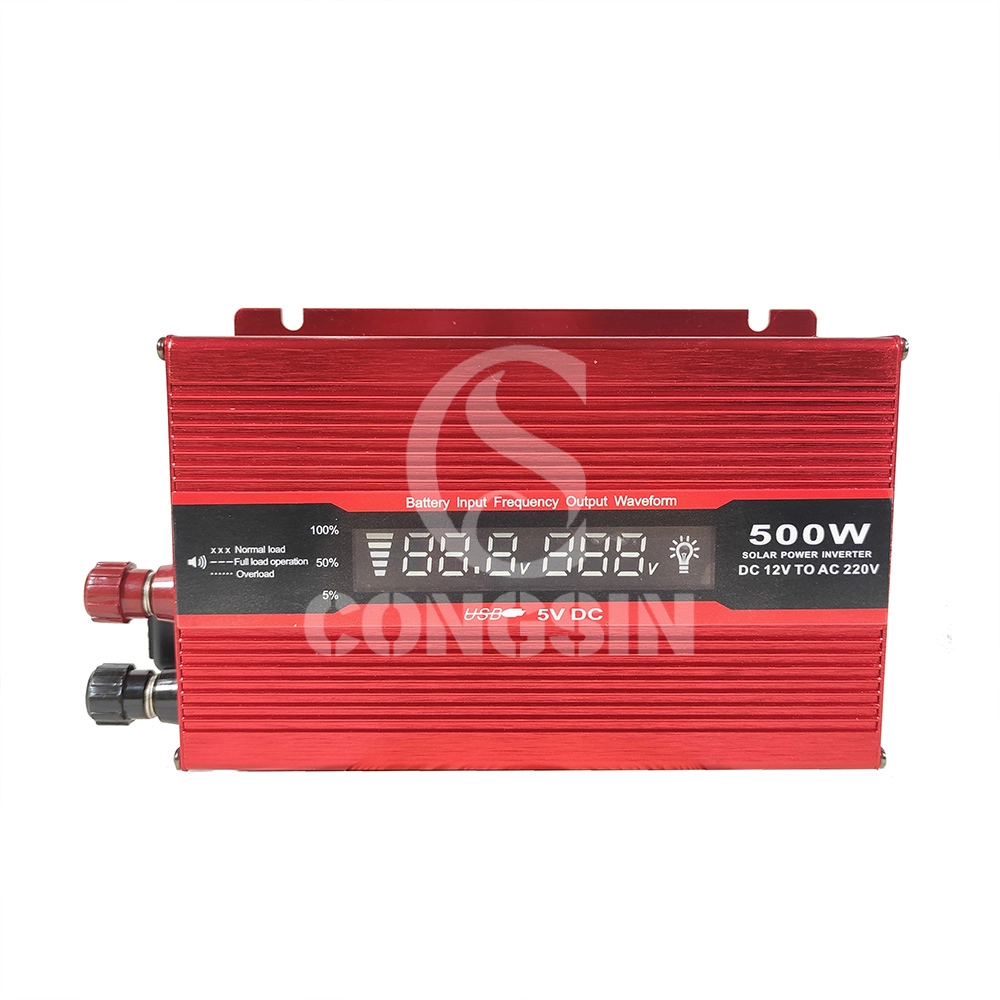
500W Modified Sine Wave Inverter (Rated 360W Peak 720W) DC12V to AC220V Inverter with LED Display Universal Socket
This 500W modified sine wave inverter has a rated power of 360W and a peak power of 720W, with DC12V input and AC220V output. Equipped with 1 USB port, universal socket, LED display, external fuse design, and battery clip, it has an exquisite appearance and stable performance. It can provide reliable AC power conversion for mobile phones, small home appliances, electronic devices, etc. in scenarios such as vehicle, outdoor, and home emergency, meeting the power needs of various devices.
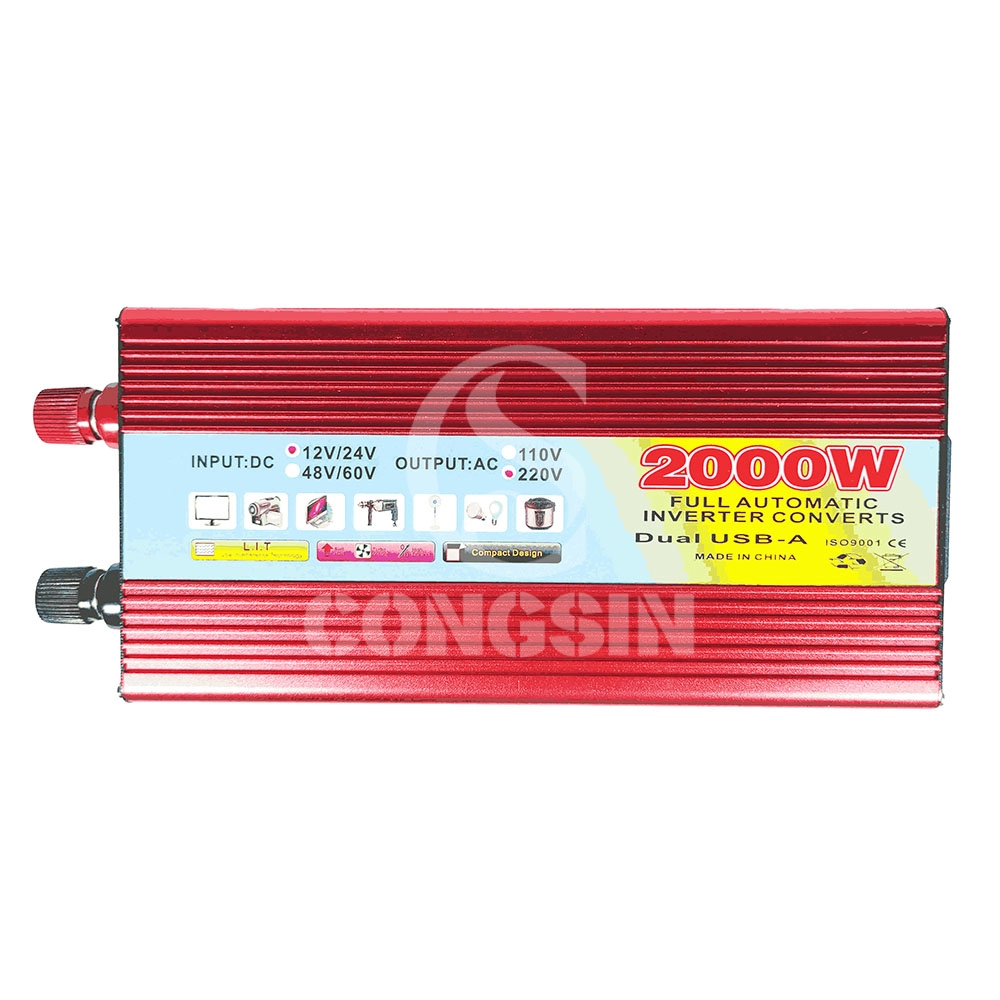
2000W Dual Input Modified Sine Wave Power Inverter (12V/24V or 48V/60V)
This 2000W modified sine wave inverter features a dual-input voltage design (12V/24V or 48V/60V), making it compatible with various DC systems. Compact, efficient, and versatile, it delivers a stable AC 220V output for home, vehicle, and solar power applications.
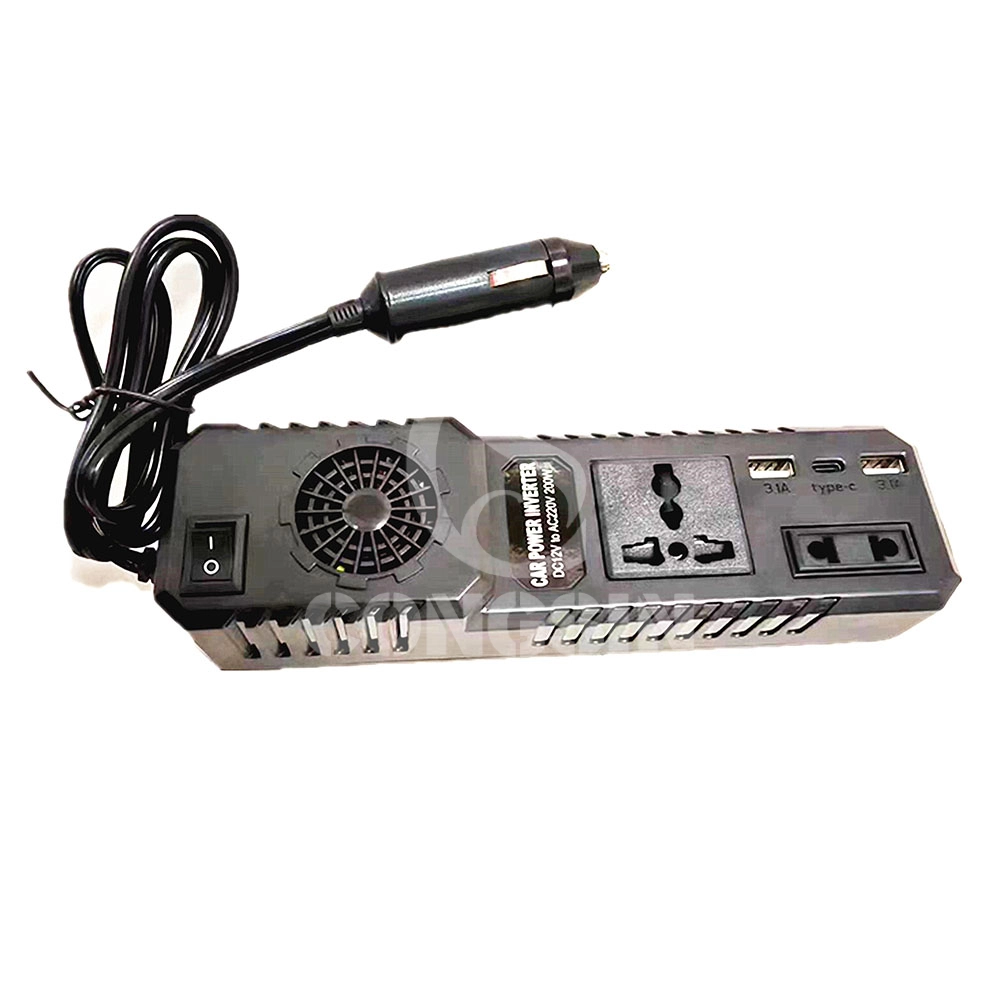
200W Modified Sine Wave Car Power Inverter, Dual Input DC12V/24V to AC220V with Type-C & Dual USB Ports
This 200W Modified Sine Wave Car Power Inverter is a compact and practical power conversion device designed for vehicle use. It supports dual input (DC12V/24V) and outputs AC220V, compatible with various electronic devices. Equipped with a Type-C port and dual 3.1A USB outputs, it can charge laptops, phones, cameras, drones, and other small electronics simultaneously—perfect for outdoor travel, emergency backup, and mobile work scenarios.
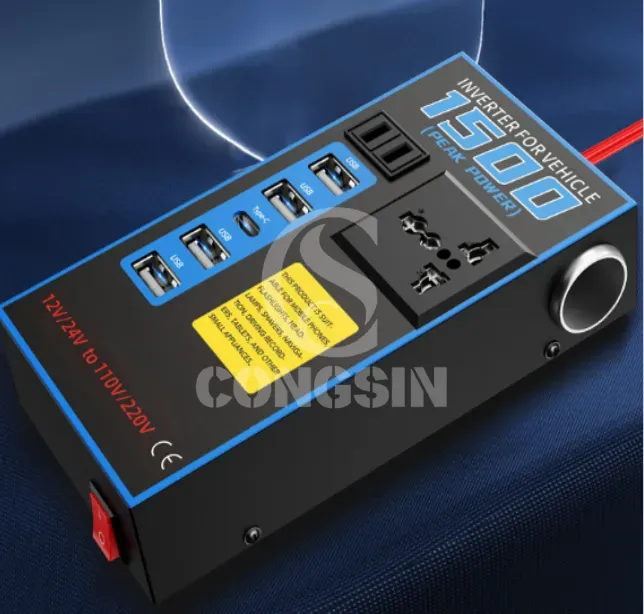
Congsin 1500W Inverter for Vehicle DC 12V/24V to AC 110V/220V with Universal socket Modified Sine Wave

CONGSIN is a trusted OEM factory for power inverters, solar charge controllers, and DC converters. Reliable solutions for global B2B buyers.
 High Quality
 7/24 Service
 Guaranteed Warranty
© 2025 Congsin. All Rights Reserved.