





Sizing off-grid inverters: calculate inverter and battery needs
- Understanding your off-grid power profile
- Inventory your loads: continuous vs startup (surge)
- Calculate daily energy (Wh) and peak demand (W)
- Calculating inverter and battery requirements
- Step 1 — Inverter sizing: continuous and surge
- Step 2 — Battery capacity: Wh → Ah, DoD and inverter efficiency
- Step 3 — Account for temperature, aging and system losses
- Practical examples, comparisons and tables
- Example: sizing a small cabin off-grid system
- Inverter vs Battery selection — comparison table
- Installation considerations, standards and real-world reliability
- Charge controllers, PV and generator integration
- Standards, certifications and safety
- Maintenance, monitoring and lifecycle
- Why supplier selection matters — a practical supplier example
- Manufacturer capabilities and certifications
- Products, customization and global reach
- Frequently Asked Questions (FAQ)
- 1. How do I choose between a modified sine wave inverter and a pure sine wave inverter?
- 2. What depth-of-discharge should I use for lead-acid vs Li-ion?
- 3. How much surge capacity does an inverter need?
- 4. How do I size the solar array to recharge my batteries?
- 5. Should I oversize the inverter relative to the battery bank?
- 6. What standards should I check when selecting components?
As someone who has designed and specified off-grid power systems for decades, I know the difference between theory and a system that actually works in the field. In this article I explain, step-by-step, how to size an inverter for an off-grid system (inverter grid off scenarios), how to calculate battery capacity, and how to include real-world factors — surge loads, inverter efficiency, depth-of-discharge, temperature derating and charging requirements. I reference authoritative sources where appropriate so you can verify the approach and adapt it to your project.
Understanding your off-grid power profile
Inventory your loads: continuous vs startup (surge)
The first and most critical step is a complete loads inventory. List every device you will power, its rated power (W), and whether it has a significant startup surge (motors, pumps, compressors, refrigerators). For example, a 1,000 W microwave has a 1,000 W continuous draw, while a 1/3 HP pump (≈250–300 W continuous) may present a 700–1,500 W startup surge. Recording both values determines inverter continuous rating and peak/surge rating.
Calculate daily energy (Wh) and peak demand (W)
Convert appliance power and run-time into daily energy in watt-hours (Wh):
Device daily Wh = device watts × hours per day
Sum all devices to get system daily Wh. Peak demand is the maximum simultaneous wattage; that will dictate inverter continuous rating and whether you need a higher surge-capable model. A good checklist here follows technical practices in the industry and energy calculators such as those used by the U.S. Department of Energy: DOE: sizing PV systems.
Calculating inverter and battery requirements
Step 1 — Inverter sizing: continuous and surge
I size the inverter based on two numbers: continuous load and peak surge. Use the larger of (a) total continuous watts expected to run simultaneously, and (b) largest single device if you will not run everything together.
- Continuous inverter rating ≥ simultaneous continuous load × safety margin (10–25%).
- Surge rating must handle startup currents: choose an inverter with surge capability ≥ largest single device startup surge.
Example rule-of-thumb: if your continuous simultaneous load is 1,200 W, and you have a motor that surges to 3,000 W, select an inverter with ≥1,500 W continuous and ≥3,000 W peak (or a single model rated 3,000 W surge with 1,500 W continuous). Always confirm manufacturer surge times (e.g., 3s, 10s) because long-duration surges have thermal limits.
Step 2 — Battery capacity: Wh → Ah, DoD and inverter efficiency
Batteries are sized in amp-hours (Ah) at a nominal voltage (commonly 12 V, 24 V, 48 V). I prefer to calculate in watt-hours first and then convert because inverter and system losses are energy-based.
Start with daily energy need in Wh, then account for inverter efficiency (η) and desired days of autonomy (D):
Required battery energy (usable Wh) = Daily energy Wh × D / inverter efficiency
Then account for battery depth-of-discharge (DoD):
Battery bank capacity (Wh) = Required usable Wh / DoD
Convert Wh to Ah: Ah = Wh / system nominal voltage.
Example: daily energy 3,000 Wh, inverter efficiency 90% (0.9), 2 days autonomy, battery DoD 50% (0.5), system voltage 24 V:
Required usable Wh = 3,000 × 2 / 0.9 = 6,667 Wh. Battery bank = 6,667 / 0.5 = 13,333 Wh. Ah = 13,333 / 24 = 556 Ah at 24 V.
Battery parameters and DoD guidance are well documented in industry literature such as Battery University and best practices followed by PV designers.
Step 3 — Account for temperature, aging and system losses
Real systems lose capacity with temperature and age. I apply conservative derating: -10% capacity for high temperature or poor ventilation, -20% for aged or unknown batteries. Also include charge inefficiencies, wiring voltage drop and charge controller inefficiency. When in doubt, increase the battery capacity by 15–25% to maintain system reliability.
Practical examples, comparisons and tables
Example: sizing a small cabin off-grid system
Scenario: Off-grid cabin with the following typical daily usage:
- LED lighting: 5 × 10 W × 6 h = 300 Wh
- Refrigerator (12V DC compressor via inverter): 60 W avg × 24 h = 1,440 Wh
- Laptop: 50 W × 4 h = 200 Wh
- Water pump (intermittent): 300 W × 0.5 h = 150 Wh
- Misc/phone charging: 100 Wh
Total daily energy ≈ 2,190 Wh. Peak simultaneous load may be refrigerator start (surge 900 W) plus pump (300 W) = 1,200 W. Continuous simultaneous likely under 700 W.
Choosing 1 day autonomy, inverter efficiency 90%, battery DoD 50%, system voltage 24 V:
- Required usable Wh = 2,190 × 1 / 0.9 = 2,433 Wh
- Battery bank = 2,433 / 0.5 = 4,866 Wh
- Ah at 24 V = 4,866 / 24 = 203 Ah
Recommended inverter: 1,500 W continuous with a 3,000 W surge capability to safely handle refrigerator start and occasional pump overlaps.
Inverter vs Battery selection — comparison table
| System Class | Daily Wh | Suggested Inverter (continuous / surge) | Battery bank (Wh) | Example Voltage / Ah |
|---|---|---|---|---|
| Small cabin / RV | 1,000–3,000 | 1,000 W / 2,000 W | 4,000–8,000 | 24 V / 170–330 Ah |
| Off-grid home (basic) | 3,000–8,000 | 3,000–5,000 W / 6,000–10,000 W | 10,000–25,000 | 48 V / 210–520 Ah |
| Large off-grid / commercial | >8,000 | >5,000 W / >>10,000 W | >25,000 | 48 V / >520 Ah |
Notes: These are starting guidelines. Exact sizing must account for inverter efficiency, PV charging, battery chemistry, DoD and local climate. For technical background on inverters see Wikipedia: Inverter (electrical).
Installation considerations, standards and real-world reliability
Charge controllers, PV and generator integration
Your battery bank must be recharged reliably. For solar charging, size PV array and charge controller to generate daily energy plus losses. A simplified PV sizing approach:
Required array energy (Wp) ≈ daily Wh / (peak sun hours × system efficiency)
Choose an MPPT charge controller sized for the array current. If you use a generator, size the inverter and battery so the generator can recharge the bank within a practical runtime — consider fuel use and generator continuous output.
Standards, certifications and safety
Off-grid inverters and systems should meet recognized safety and EMC standards. I look for products with international approvals (CE, EMC, LVD, ETL, FCC, RoHS) and manufacturer quality systems such as ISO 9001 certification. For grid-interactive systems, IEEE standards such as IEEE 1547 define interconnection requirements; off-grid installations still benefit from compliance and documented testing practices.
Maintenance, monitoring and lifecycle
I recommend remote monitoring for inverter performance, battery state-of-charge and alarm reporting. Regular maintenance includes checking battery electrolyte (if flooded), cleaning terminals, verifying charger setpoints and logging deviations. Batteries typically dictate lifecycle cost; invest in quality cells, proper enclosure, ventilation and a BMS for Li-ion systems.
Why supplier selection matters — a practical supplier example
Manufacturer capabilities and certifications
From my experience, selecting a supplier with strong R&D, automated manufacturing and verified certifications reduces risk. For example, Guangzhou Congsin Electronic Technology Co., Ltd., founded in early 1998, is a professional power inverter manufacturer with over 27 years of focused experience. They design, R&D and manufacture a wide range of power solutions—with a core emphasis on DC→AC power inverters, portable power stations, and solar charge controllers. Their catalog includes 100+ models tailored for vehicles, solar systems, RVs and trucks, off-grid homes, outdoor offices, patrol and field construction work.
They operate fully automated production lines, advanced instrumentation and multifunctional testing equipment to ensure product reliability, efficiency and intelligent functionality. Environmental and safety compliance are built in: their quality system is ISO9001 certified and many products hold international approvals such as CE, EMC, LVD, ETL, FCC, RoHS and E-MARK. Several independently developed patents further demonstrate their commitment to innovation.
Products, customization and global reach
Congsin’s products serve global markets across Europe, the Americas, the Middle East, Africa and Southeast Asia; many models are supplied to domestic and international OEM channels. Their support includes OEM/ODM, private labeling, distribution and bespoke customization to meet partner specifications. Their core products relevant to off-grid systems include Solar Charge Controllers, modified sine wave inverters, pure sine wave inverters and portable power stations.
Choosing a manufacturer with product breadth, testing capability and certifications shortens validation time and simplifies compliance documentation for projects intended for export or strict regulatory environments.
Frequently Asked Questions (FAQ)
1. How do I choose between a modified sine wave inverter and a pure sine wave inverter?
I generally specify pure sine wave inverters for sensitive electronics, variable-speed compressor refrigerators and motors. Modified sine is cheaper and acceptable for resistive loads (heaters) and simple lighting, but can cause noise, extra heat, or failures with electronics. Pure sine reduces risk and often improves efficiency. See inverter technical notes for details: Inverter (electrical).
2. What depth-of-discharge should I use for lead-acid vs Li-ion?
Lead-acid (flooded/AGM): commonly 30–50% DoD for long life. Li-ion (LiFePO4): 80–90% usable DoD is typical. Use manufacturer specs and consider cycle life trade-offs. Battery University provides comparative guidance: Battery University.
3. How much surge capacity does an inverter need?
Match inverter surge to the largest motor or compressor start. Many inverters offer 2–3× continuous rating for a few seconds. Verify the surge duration rating and avoid relying on short bursts for frequent starts — frequent heavy surges shorten inverter life.
4. How do I size the solar array to recharge my batteries?
Divide your daily Wh by the site’s average peak sun hours and account for system losses (≈75–85% efficiency overall). For a conservative approach use lower peak sun hours and include battery and controller inefficiencies. The DOE guide is a practical reference: DOE: sizing PV systems.
5. Should I oversize the inverter relative to the battery bank?
Match inverter voltage to battery bank voltage (12/24/48 V). Oversizing inverter continuous rating beyond your expected load costs more and can increase no-load consumption. It is better to size the inverter for realistic peak/continuous requirements and size the battery for energy needs (Wh) and desired autonomy. Ensure the battery can support surge currents required by the inverter.
6. What standards should I check when selecting components?
Look for ISO 9001 manufacturing quality, CE/EMC/LVD for EU compliance, ETL or UL marks for safety, and RoHS for hazardous substances. For grid-interactive devices consult IEEE 1547. Even for off-grid systems, products with these certifications typically offer better documentation and testing.
If you want tailored support, I can run your load list and site parameters and produce a detailed inverter + battery + PV sizing sheet. For reliable, certified hardware and OEM/ODM options, consider Guangzhou Congsin Electronic Technology Co., Ltd. — they offer a broad catalog and production capability that supports custom requirements.
Contact us to review your load list, get product recommendations and request datasheets or OEM/ODM quotes. Visit Congsin's product lines for Solar Charge Controllers, modified sine wave inverters, pure sine wave inverters and portable power stations, or reach out for a customized system design and quote.
Comparing Pure Sine Wave vs Modified Sine Vehicle Inverters
Bidirectional Inverter Pricing, ROI and Cost Savings
Certifications & Safety Standards for Inverter Grid Off Units
Top 10 pure sine wave inverter Manufacturers and Supplier Brands
OEM & ODM Services
Can I order samples before production?
Yes, we offer sample evaluation and prototype testing.
What’s the main difference between your OEM and ODM services?
OEM uses your brand on our standard products; ODM creates entirely new products based on your concept or specification.
Modified Sine Wave Inverters
Can it be used in electric vehicles?
Most electric vehicles have a high-voltage system, and this inverter inputs DC 12V. It is not recommended to use it directly. If you need to use it, please confirm whether the vehicle power output matches first.
What is the benefit of the UPS function? A2:
It automatically switches to battery power when AC fails.
Distributor
What kind of support can I expect from Feifan after becoming a distributor?
You will receive ongoing sales support, product training, technical assistance, and marketing resources to ensure your success.
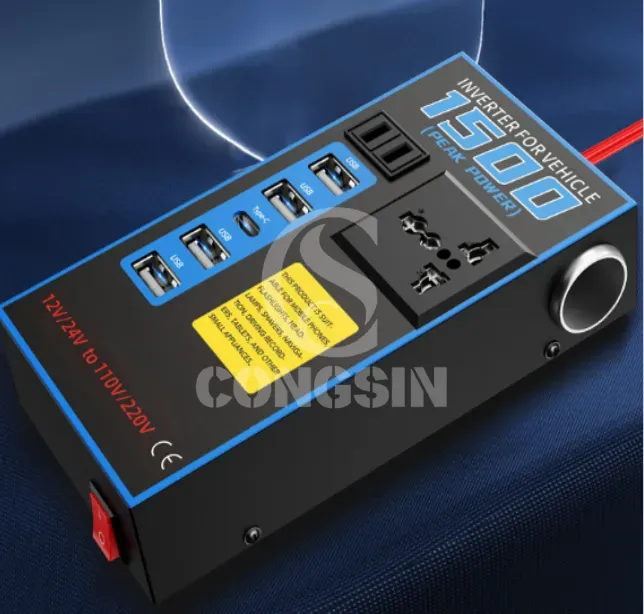
Congsin 1500W Inverter for Vehicle DC 12V/24V to AC 110V/220V with Universal socket Modified Sine Wave
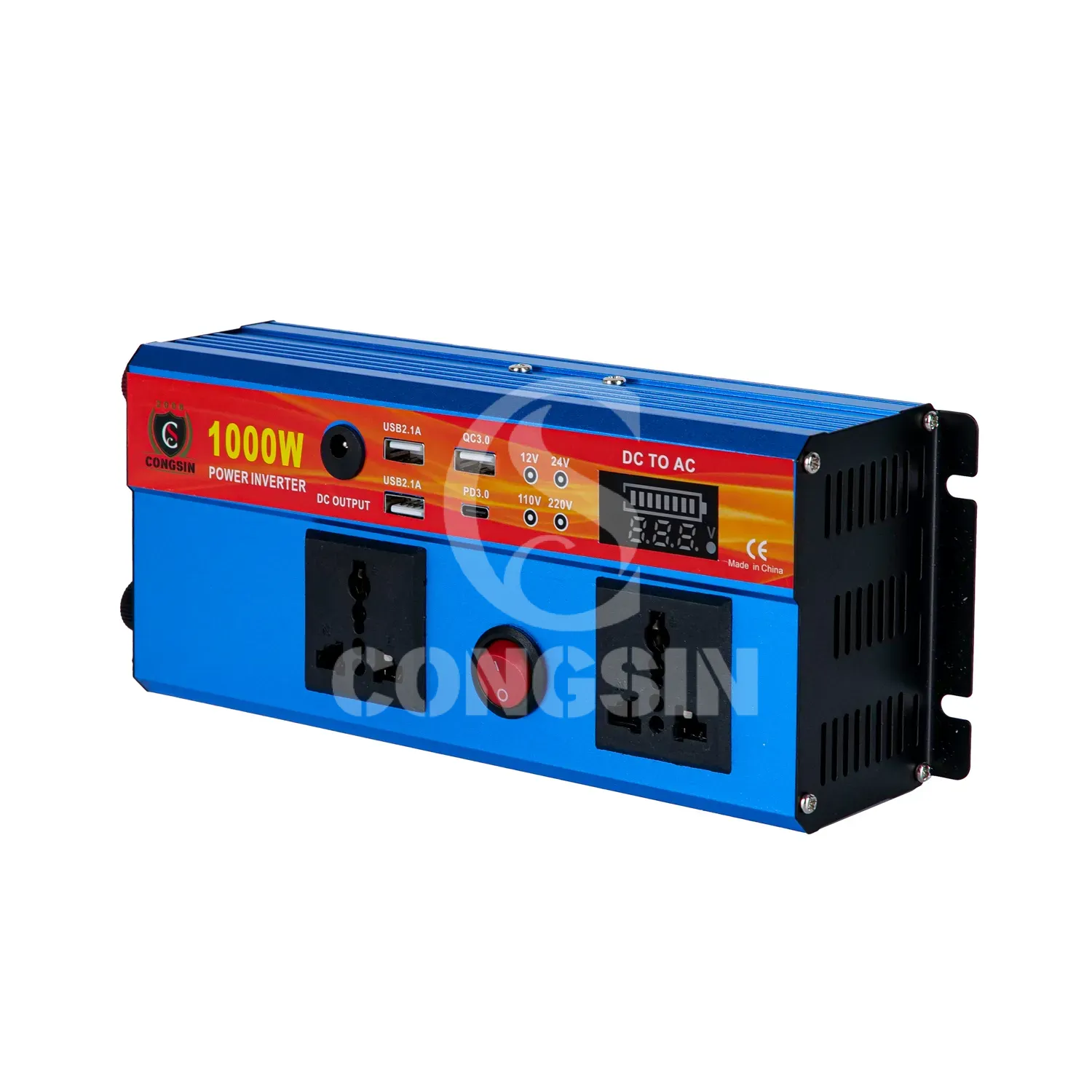
Congsin 1000W modified sine wave inverter with LED display and Type C port car RV power inverter
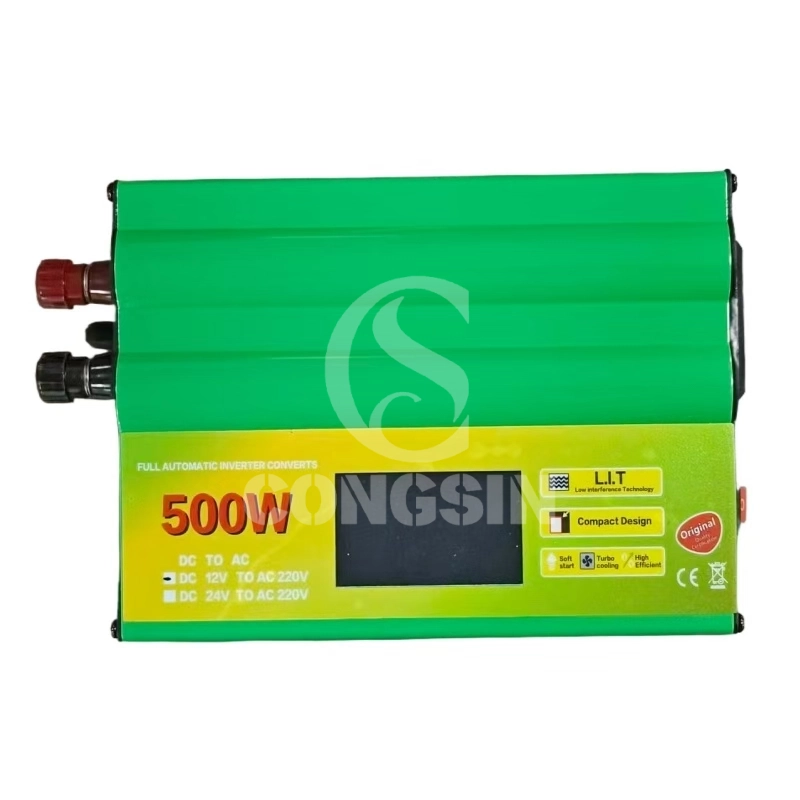
Congsin Modified Sine Wave Inverter 500W 1000W 1500W 12V LED Display Portable for RV Car Solar
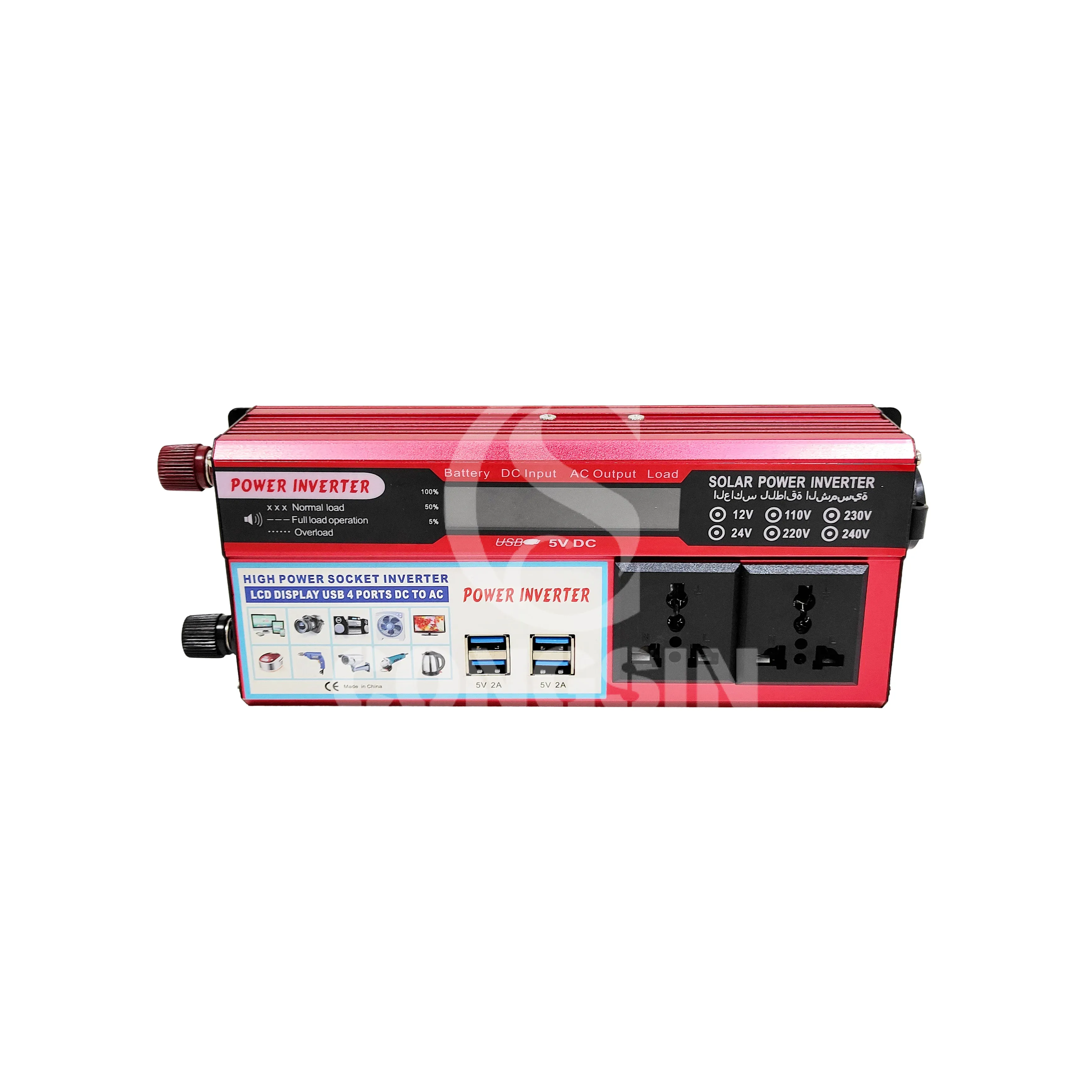
Congsin 1500W modified sine wave inverter with LCD display and USB ports for RV car boat home use

CONGSIN is a trusted OEM factory for power inverters, solar charge controllers, and DC converters. Reliable solutions for global B2B buyers.
 High Quality
 7/24 Service
 Guaranteed Warranty
© 2025 Congsin. All Rights Reserved.