





Safety and Certification Standards for Car Inverters
- Why vehicle power quality matters
- Common vehicle power challenges
- Impacts on devices and safety
- Key safety standards for car inverters
- Electrical safety (LVD, UL, IEC)
- EMC and EMI (CE, FCC, E-MARK)
- Certifications and testing processes
- Type testing vs routine/production testing
- What lab tests to expect
- How standards map to real-world buyer needs
- Certification comparison
- Interpreting lab reports and certificates
- Choosing a safe car power inverter: practical checklist
- Spec checklist for buyers and integrators
- Installation and user-safety guidance
- Manufacturer competence and what to expect from suppliers
- What reputable manufacturers should provide
- Case: Guangzhou Congsin Electronic Technology Co., Ltd.
- FAQ
- 1. Do I need CE or UL to use a power inverter in my car?
- 2. What is the difference between modified sine wave and pure sine wave inverters regarding safety?
- 3. How can I verify a certification claim from a supplier?
- 4. Are automotive transients covered by common inverter tests?
- 5. What ongoing checks should fleet owners perform on installed inverters?
- Contact and next steps
Power inverter car systems convert a vehicle's DC battery power to AC to run household electronics, tools and medical devices. Ensuring those inverters meet established safety and certification standards is critical for protecting users, vehicles and connected equipment while enabling regulatory compliance for sale and use in different markets. This article breaks down the most relevant standards, explains testing and certification processes, offers a practical selection checklist, and highlights what to expect from reputable manufacturers and suppliers.
Why vehicle power quality matters
Common vehicle power challenges
Automotive electrical environments are harsh: high transient voltages on the 12/24 V bus, alternator spikes, load dumps, wide temperature swings, vibration and conducted and radiated electromagnetic interference (EMI). A car power inverter must tolerate these stresses without producing excessive harmonic distortion, toggling faults, or becoming a fire/electric shock hazard. For mobile medical devices, communication gear or laptop chargers, consistent waveform and reliable over/under-voltage protection are essential.
Impacts on devices and safety
Poorly designed or uncertified inverters can produce unstable voltages, high total harmonic distortion (THD), or insufficient protection against short circuits and overheating. Consequences include premature failure of connected electronics, increased fire risk, interference with vehicle electronics (e.g., CAN bus, engine control), and safety risks to occupants. Certification and independent testing reduce these risks by verifying that a product meets minimum safety and electromagnetic compatibility (EMC) criteria before deployment.
Key safety standards for car inverters
Electrical safety (LVD, UL, IEC)
Products that convert DC to AC are subject to electrical-safety requirements addressing insulation, grounding, creepage/clearance, overload protection, and thermal behavior. In different markets these requirements are enforced under different frameworks:
- Low Voltage Directive (LVD) / CE marking in the EU ensures basic electrical safety and requires conformity assessment under relevant harmonized standards—often used alongside EMC and RoHS requirements (CE marking).
- UL standards in North America are commonly used for independent safety certification. For inverters and power conversion equipment, UL 1741 covers inverters, converters and controllers used with distributed energy resources—while vehicle/portable-specific standards or RV standards such as UL 458 may be relevant depending on application; consult the UL catalogue for precise scopes (UL).
- IEC standards (e.g., IEC 62109 series for power converters and inverters safety requirements) are often referenced for product design and testing in global markets; they address electrical shock, energy, and thermal hazards (IEC 62109).
EMC and EMI (CE, FCC, E-MARK)
Electromagnetic compatibility is critical for car inverters to avoid disrupting vehicle electronics and radios. Key regulatory marks:
- EU EMC Directive and CE marking verify emissions and immunity limits; manufacturers typically test against harmonized standards for conducted and radiated emissions and immunity (EMC).
- In the U.S., FCC rules (Part 15) govern electromagnetic emissions from unintentional radiators and may apply to inverters that could radiate in regulated bands (FCC).
- E-MARK or ECE vehicle approvals address electromagnetic compatibility and safety for devices intended to be installed in vehicles governed by UNECE regulations—important for aftermarket devices sold for European vehicles (E-Mark).
Certifications and testing processes
Type testing vs routine/production testing
Type testing (also called product or qualification testing) is performed on prototypes or samples by independent labs to verify that the design meets the relevant standards (safety, EMC, environmental). Routine tests are performed during production to ensure ongoing compliance—these may include visual inspections, dielectric strength (hi-pot) tests, and random sample functional tests. Reputable manufacturers maintain a documented quality system (e.g., ISO 9001) to control both design and production processes (ISO 9001).
What lab tests to expect
Typical tests for car inverters include:
- Dielectric/insulation resistance and earth continuity
- Thermal / over-temperature tests and thermal-shutdown verification
- Overload and short-circuit protection tests
- Input transient tests (load dump, voltage spikes; standards such as ISO 7637 relate to automotive transients)
- Vibration and shock testing to simulate vehicle conditions (SAE J1455 or equivalent environmental tests)
- EMC tests: conducted and radiated emissions, immunity to ESD, radiated RF, conducted disturbances
How standards map to real-world buyer needs
Certification comparison
The following table summarizes common certifications and what they mean for car inverter buyers.
| Standard / Mark | Region | Primary Scope | Why it matters for car inverters |
|---|---|---|---|
| CE (LVD, EMC) | EU | Electrical safety, EMC, RoHS compliance | Required to sell in EU; implies compliance with safety and EMC directives (details). |
| UL (e.g., UL 1741 / UL 458) | North America | Product safety standards for electrical equipment | Independent safety verification; often required by installers/insurance for RVs and commercial use (UL). |
| FCC Part 15 | USA | Radio emissions | Helps ensure the inverter won't create harmful radio interference (FCC). |
| E-MARK / UNECE | Europe (vehicle regs) | Vehicle component compliance, EMC | Necessary for components intended for in-vehicle installation in many countries (E-Mark). |
| RoHS | EU and others | Restriction of hazardous substances | Limits use of lead, mercury and other hazardous materials in electronics (RoHS). |
Interpreting lab reports and certificates
When evaluating manufacturer claims, request copies of test reports (not just stickers). Valid reports should show the tested sample model number, test laboratory name and accreditation (e.g., ISO/IEC 17025), dates, and the specific standards and clauses tested. Beware of generic certificates or reports that list a family of products without clear sample identification.
Choosing a safe car power inverter: practical checklist
Spec checklist for buyers and integrators
Before purchasing or installing a power inverter for vehicle use, verify:
- Intended application: is it for intermittent camping use, continuous off-grid cabin power, medical equipment, or vehicle-installed systems? The use-case affects required certifications and environmental ratings.
- Certifications: CE (with references to harmonized standards), relevant UL listing, FCC if sold in the U.S., E-MARK if vehicle-integrated for EU markets, and RoHS for materials restrictions.
- Thermal, overload and short-circuit protection details and automatic recovery behavior.
- EMI/EMS performance numbers and immunity test results if the inverter will be installed near critical vehicle electronics.
- Manufacturer quality system evidence (e.g., ISO 9001) and independent lab accreditation used for testing.
Installation and user-safety guidance
Even certified inverters can become unsafe if improperly installed. Key installation controls include correct cable sizing and routing, proper inline fusing or circuit breakers at the battery, secure mounting to avoid vibration damage, adequate ventilation to prevent overheating, and adherence to manufacturer wiring diagrams. For permanent vehicle installations, ensure the inverter does not interfere with vehicle safety systems; when in doubt, use an installer familiar with automotive electrical systems.
Manufacturer competence and what to expect from suppliers
What reputable manufacturers should provide
A credible inverter manufacturer will provide detailed spec sheets, independent test reports, traceable certificate references, and clear instructions for installation and use. They should support OEM/ODM customization if you need tailored solutions for fleet or vehicle manufacturers and maintain traceability across production batches.
Case: Guangzhou Congsin Electronic Technology Co., Ltd.
Guangzhou Congsin Electronic Technology Co., Ltd., founded in early 1998, is a professional power inverter manufacturer with over 27 years of focused experience. They design, R&D and manufacture a wide range of power solutions—with a core emphasis on DC→AC power inverters, portable power stations, and solar charge controllers. Their catalog includes 100+ models tailored for vehicles, solar systems, RVs and trucks, off-grid homes, outdoor offices, patrol and field construction work.
Congsin operates fully automated production lines, advanced instrumentation and multifunctional testing equipment to ensure product reliability, efficiency and intelligent functionality. Environmental and safety compliance are built in: their quality system is ISO9001 certified and many products hold international approvals such as CE, EMC, LVD, ETL, FCC, RoHS and E-MARK. Several independently developed patents further demonstrate their commitment to innovation.
Congsin’s products serve global markets across Europe, the Americas, the Middle East, Africa and Southeast Asia; many models are supplied to domestic and international OEM channels. Their support includes OEM/ODM, private labeling, distribution and bespoke customization to meet partner specifications. Congsin’s core product strengths—Solar Charge Controller, modified sine wave inverter, pure sine wave inverter, and portable power stations—are designed for energy independence and reliable mobile power.
For buyers seeking a partner with demonstrated testing capability, diverse models for vehicle integration, and international approvals, Congsin presents a viable option. When evaluating suppliers, compare their test reports, production quality systems and responsiveness on custom requirements.
FAQ
1. Do I need CE or UL to use a power inverter in my car?
CE is required to place products on the EU market and demonstrates compliance with electrical safety and EMC directives. UL certification is commonly expected in North America for safety assurance. Legally you may not need both for private use, but for sale, installation in commercial vehicles, or fleet procurement, the relevant regional certification is often required or strongly recommended.
2. What is the difference between modified sine wave and pure sine wave inverters regarding safety?
Pure sine wave inverters produce cleaner AC similar to the grid, reducing the risk of overheating or malfunction in sensitive electronics such as medical devices and variable-frequency motors. Modified sine wave units may be acceptable for resistive loads (lights, simple chargers) but can cause abnormal behavior in electronic power supplies, increased EMI, and potential damage to sensitive devices.
3. How can I verify a certification claim from a supplier?
Ask for the full test report and certificate with model numbers and dates. Verify the issuing laboratory's accreditation (ISO/IEC 17025), and check the certificate number or mark against the certifying body's online database if available. Request details on what clauses were tested and any limitations or conditions.
4. Are automotive transients covered by common inverter tests?
Good manufacturers test for automotive transients (e.g., load dump, reverse polarity, ISO 7637 pulses) and perform vibration/temperature testing. Verify test scope in report; some consumer inverters lack robust automotive transient testing and are intended only for light duty use.
5. What ongoing checks should fleet owners perform on installed inverters?
Periodically inspect wiring and mounting for corrosion or loosened connections, verify ventilation paths are clear, check for abnormal heating during operation, and ensure firmware (if applicable) is up to date. Keep maintenance logs and replace units showing signs of thermal stress or repeated faults.
Contact and next steps
If you're evaluating power inverter car models for fleet, RV or off-grid projects, request full test reports and installation guidance from suppliers. For reliable, certified solutions with OEM/ODM support and international approvals, contact Guangzhou Congsin Electronic Technology Co., Ltd. to discuss specific requirements, request sample test reports, or view product catalogs for pure sine wave inverters, modified sine wave inverters, solar charge controllers and portable power stations.
Contact Congsin for product details, OEM/ODM cooperation or to request certification documents and test reports.
Portable Pure Sine Wave Inverters for Emergency Power Backup
Top 5 pure sine wave inverter Company List and Products Compared
Top 10 Car Battery Inverters for Road Trips and Camping
Top 5 vehicle power inverter Company List and Products Compared
Modified Sine Wave Inverters
Do you support OEM branding?
Yes, we offer logo, packaging, and label customization.
How does the UPS function of this inverter work?
When the external power supply is normal, the inverter powers the device while charging the battery; when the external power supply is interrupted, it automatically switches to battery power to ensure uninterrupted operation of the device.
How to connect the battery with the battery clip?
Connect the positive and negative poles of the battery clip to the positive and negative poles of the battery respectively, and ensure a firm connection.
What devices can be powered by the cigarette lighter port?
The cigarette lighter port can be used for car air pumps, car refrigerators, car vacuum cleaners and other conventional cigarette lighter powered devices, as long as the power does not exceed 300W.
Distributor
How long does it take to become an authorized distributor?
The process typically takes 2-4 weeks, depending on the discussion and agreement finalization.
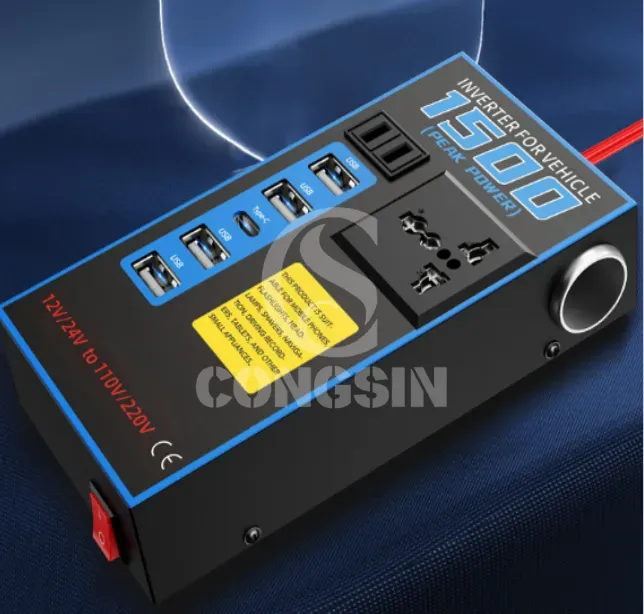
Congsin 1500W Inverter for Vehicle DC 12V/24V to AC 110V/220V with Universal socket Modified Sine Wave
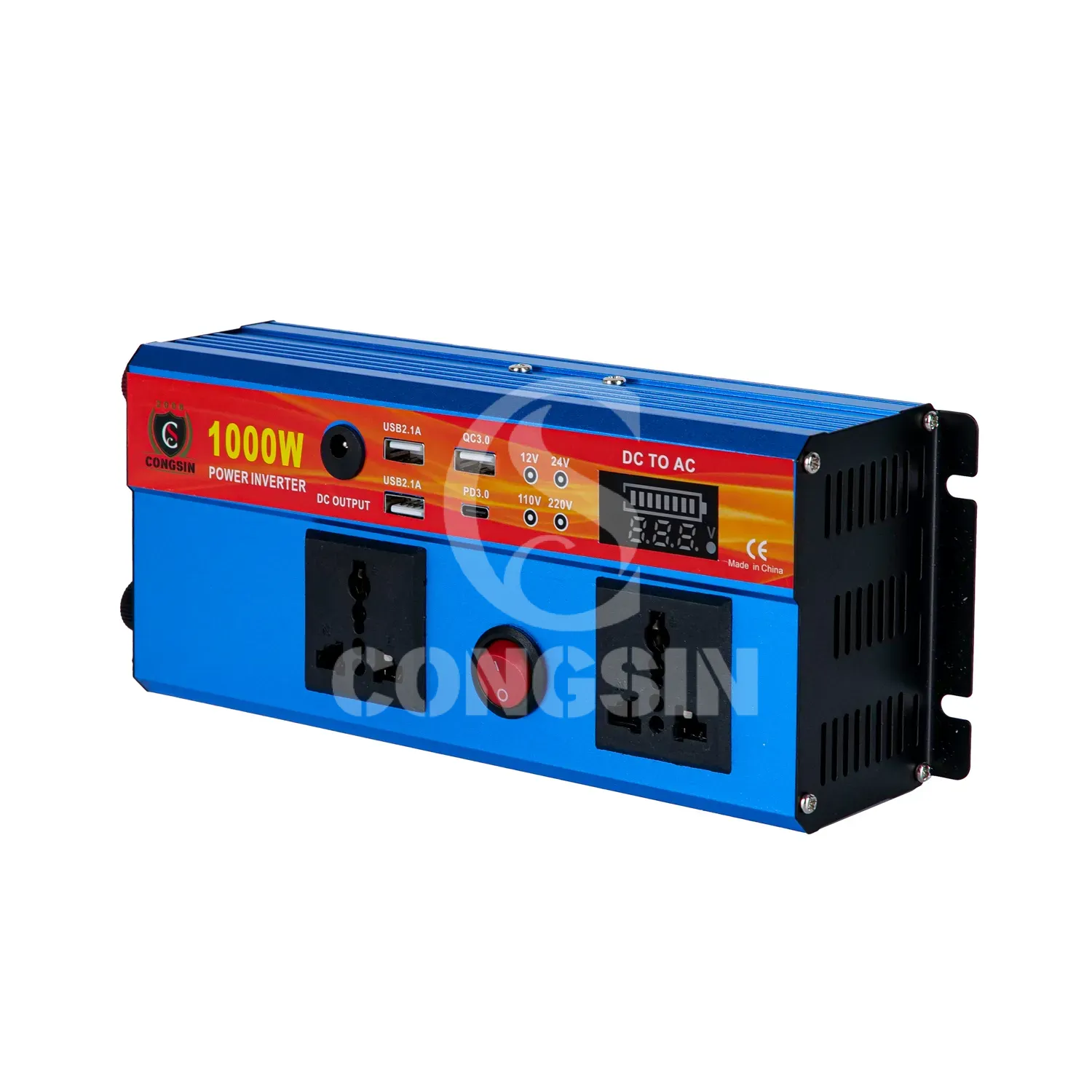
Congsin 1000W modified sine wave inverter with LED display and Type C port car RV power inverter
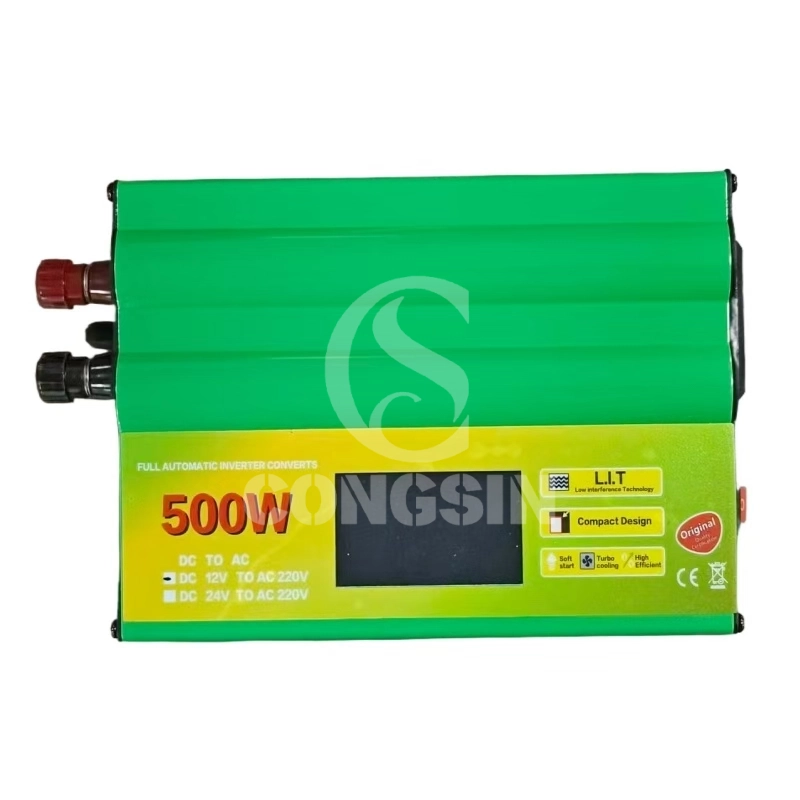
Congsin Modified Sine Wave Inverter 500W 1000W 1500W 12V LED Display Portable for RV Car Solar
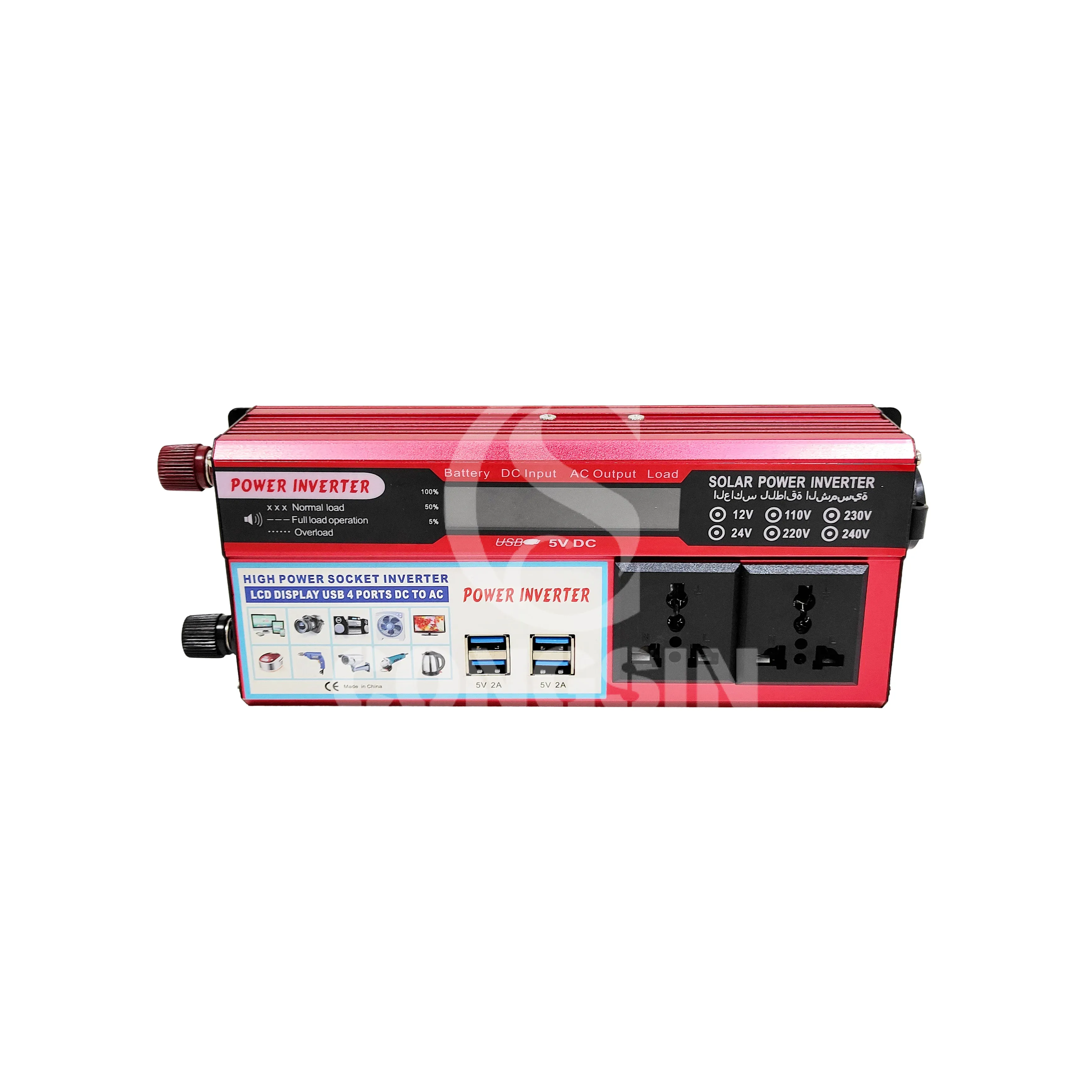
Congsin 1500W modified sine wave inverter with LCD display and USB ports for RV car boat home use

CONGSIN is a trusted OEM factory for power inverters, solar charge controllers, and DC converters. Reliable solutions for global B2B buyers.
 High Quality
 7/24 Service
 Guaranteed Warranty
© 2025 Congsin. All Rights Reserved.