





Pure Sine Wave vs Modified: Which Inverter Should You Buy
- Understanding inverter fundamentals and why waveform matters
- What an inverter does (quick technical primer)
- Pure sine wave vs modified sine wave — the technical distinction
- How I evaluate 'good' inverters
- Performance, compatibility and real-world impacts
- Device compatibility: where modified fails
- Efficiency and heat
- Electromagnetic interference (EMI) and harmonic distortion
- Cost, lifecycle and when to choose each type
- Upfront cost vs total cost of ownership
- Use cases where modified sine wave may suffice
- Sizing and peak power considerations
- Standards, safety and measurable metrics
- Certifications and why they matter
- Key measurable specifications to compare
- Reference standards and technical literature
- Side-by-side comparison: pure sine vs modified sine
- Data sources and testing notes
- Buying checklist: selecting a good pure sine wave inverter
- Essential selection steps I recommend
- Installation, cooling and environment
- Warranty and service
- Manufacturer spotlight — Guangzhou Congsin Electronic Technology Co., Ltd.
- Practical recommendations and final verdict
- Rule-of-thumb guidance
- Example scenarios
- Where to go from here
- Frequently Asked Questions (FAQ)
- 1. Is a pure sine wave inverter always necessary?
- 2. How much more efficient is a pure sine wave inverter?
- 3. Can a modified sine wave inverter damage appliances?
- 4. What should I look for in an inverter specification sheet?
- 5. How do I size an inverter for an off-grid solar system?
- Contact & next steps
When you're researching which inverter to buy, search engines and local buyers increasingly demand clear, authoritative, and location-aware answers. In this article I provide a concise, evidence-backed comparison of pure sine wave and modified sine wave inverters, focusing on performance, cost, compatibility, and safety — and I show when a good pure sine wave inverter is worth the extra investment. My goal is to help homeowners, RV owners, solar integrators and field engineers make a confident purchase decision backed by standards and real-world use.
Understanding inverter fundamentals and why waveform matters
What an inverter does (quick technical primer)
I always start with the role of the inverter: it converts DC power (from batteries or solar panels) into AC power used by household and portable equipment. That conversion can produce different output waveforms. The waveform shape is not cosmetic — it determines how smoothly appliances run, how much heat and electromagnetic interference (EMI) they generate, and whether certain devices will operate at all. For more background on inverters and their electrical behavior see Inverter (electrical) — Wikipedia.
Pure sine wave vs modified sine wave — the technical distinction
A pure sine wave inverter produces a smooth, continuous sinusoidal AC output similar to grid power. A modified sine wave inverter synthesizes a stepped/approximated waveform (often a square-like or multi-step signal) to approximate a sine wave. The difference may seem academic, but the resulting harmonic content, voltage transitions and crest factor vary significantly between the two and directly impact device compatibility and efficiency. For a primer on waveform shapes, see Sine wave — Wikipedia.
How I evaluate 'good' inverters
When I evaluate a good pure sine wave inverter, I look for: low total harmonic distortion (THD), stable voltage regulation under load, high peak and continuous power ratings, safety certifications (CE, ETL, FCC, RoHS, E-MARK), thermal management, efficiency curves across loads, and reliable warranty and factory testing. These attributes are evidence-based and measurable, and they separate commodity units from industrially robust designs.
Performance, compatibility and real-world impacts
Device compatibility: where modified fails
Some loads are undemanding and tolerate modified waveforms: incandescent bulbs, resistive heaters, many power tools and simple motors. However, electronics with switching power supplies, variable-speed motors, digital clocks, and medical or sensitive equipment can suffer malfunction, noise, or inefficiency on modified waveforms. I regularly see audio equipment hum, medical devices produce incorrect readings, and microwaves refuse to heat efficiently on modified waveforms. If you need reliable operation with sensitive electronics, a good pure sine wave inverter is usually necessary.
Efficiency and heat
Pure sine wave inverters tend to be more efficient at converting DC to AC across a broad range of loads, especially modern designs with advanced MOSFET or IGBT H-bridge topologies and high switching frequencies. Modified sine wave inverters can produce additional switching losses in devices' internal power supplies, increasing heat and reducing overall system efficiency. Measured efficiencies for quality pure sine designs commonly reach 90–96% at typical loads; lower-tier modified units may be 80–90% effective under similar conditions.
Electromagnetic interference (EMI) and harmonic distortion
Pure sine wave outputs have lower total harmonic distortion (THD), usually <3–5% for a good unit, which reduces EMI and stress on equipment. Modified sine wave inverters have higher harmonic content, which can cause radio/communication interference and additional heating in transformers and motors. Standards bodies and grid-interconnection rules increasingly reference harmonic limits; see, for example, IEEE Standard 1547 on Distributed Energy Resources interconnection.
Cost, lifecycle and when to choose each type
Upfront cost vs total cost of ownership
Modified sine wave inverters are typically cheaper up front. But I advise clients to evaluate the total cost of ownership: downtime, damaged equipment, increased maintenance from hotter-running devices, and the likelihood of needing a replacement inverter later. For many residential and professional applications, the additional upfront cost of a good pure sine wave inverter pays back quickly through broader compatibility and longer equipment life.
Use cases where modified sine wave may suffice
For budget-conscious users running simple resistive loads (space heaters, incandescent lighting), or occasional power tools and basic camping setups, a high-quality modified inverter can be acceptable. But I recommend a pure sine wave inverter for off-grid homes, sensitive medical or lab equipment, audio/visual systems, modern refrigerators with electronic controls, and most consumer electronics.
Sizing and peak power considerations
When selecting an inverter, consider continuous power and surge (peak) power. Motors, compressors and pumps have starting surges 2–4x their running current. A good pure sine wave inverter will provide clean surge handling without distortion or false trips; cheap modified units often fail under surge or deliver unstable voltage. Match inverter continuous and peak ratings to the expected combined loads and account for future expansion.
Standards, safety and measurable metrics
Certifications and why they matter
Certifications such as ISO9001 (quality management), CE, EMC and LVD, ETL and FCC reflect manufacturing process control and compliance with safety and electromagnetic standards. You can verify ISO9001 information at the ISO site: ISO 9001 quality management — ISO. Devices supplied for automotive or European markets may also have E-MARK approvals. I never recommend buying an inverter without verifiable certifications and test reports.
Key measurable specifications to compare
When comparing models, insist on datasheet numbers for:
- Continuous and surge power (W)
- Output voltage regulation (±% under load)
- Total harmonic distortion (THD %)
- Efficiency at multiple loads (25%, 50%, 75%, 100%)
- No-load/standby current draw
- Thermal limits and cooling strategy (fanless vs active)
- Protection features (overload, short, thermal, low-battery, reverse polarity)
Reference standards and technical literature
For technical grounding, I refer to IEEE and IEC standards about interconnection and electromagnetic compatibility. The IEEE 1547 standard (interconnection) and IEC/EN standards on EMC and safety are relevant when integrating inverters with grid or critical systems. You can consult the IEEE reference at IEEE Std 1547 as a baseline.
Side-by-side comparison: pure sine vs modified sine
| Attribute | Pure Sine Wave | Modified Sine Wave |
|---|---|---|
| Waveform | Smooth sinusoidal (low THD <3–5% for good units) | Stepped/square-like (higher harmonic content) |
| Compatibility | High — sensitive electronics, motors, medical, audio | Limited — good for resistive loads and simple tools |
| Efficiency | High (typically 90–96% for quality models) | Variable (often lower under realistic loads) |
| Cost | Higher upfront cost | Lower upfront cost |
| Heat & EMI | Lower heat/stress in powered devices | Higher EMI and heating in some devices |
| Use cases | Homes, RVs with electronics, solar systems, off-grid | Basic camping, simple lighting, heaters, power tools |
Data sources and testing notes
The comparative claims above are consistent with industry testing and manufacturer datasheets. If you need independent test data for specific models, look for third-party lab reports and regulatory certification documentation from recognized labs (TUV, Intertek/ETL, UL). Manufacturer efficiency and THD figures should be reproducible in a laboratory environment with standardized loads.
Buying checklist: selecting a good pure sine wave inverter
Essential selection steps I recommend
- Inventory all devices you plan to power and note startup and continuous wattages.
- Choose continuous inverter rating ≥ 125% of total continuous load to provide margin.
- Ensure surge rating covers the highest single-starting load (2–4x motor start current).
- Verify THD and efficiency figures on the datasheet; prefer THD <5% and efficiency >90% at typical loads.
- Confirm certifications (CE, EMC, LVD, ETL/UL, FCC) and manufacturing quality (ISO9001).
- Look for protection features and smart functionality (auto-transfer, remote monitoring, battery management).
Installation, cooling and environment
Consider installation location and ambient temperature. Some pure sine inverters use convection cooling and are quiet; others need fans and may derate power at higher temperatures. For vehicle or enclosed installations, ensure adequate ventilation and follow battery safety guidelines. For grid-tied or hybrid systems, obey local interconnection rules referenced in standards like IEEE 1547.
Warranty and service
Manufacturer warranty length (2–5 years) and accessible service/support are important. I assess the responsiveness of technical support and the availability of firmware updates or replacement parts. A good pure sine wave inverter manufacturer will publish test reports and have clear OEM/ODM support options if you require customization.
Manufacturer spotlight — Guangzhou Congsin Electronic Technology Co., Ltd.
In my role as a consultant I work with and evaluate many suppliers. Guangzhou Congsin Electronic Technology Co., Ltd., founded in early 1998, is a professional power inverter manufacturer with over 27 years of focused experience. We design, R&D and manufacture a wide range of power solutions—with a core emphasis on DC→AC power inverters, portable power stations, and solar charge controllers. Our catalog includes 100+ models tailored for vehicles, solar systems, RVs and trucks, off-grid homes, outdoor offices, patrol and field construction work.
Congsin operates fully automated production lines, advanced instrumentation and multifunctional testing equipment to ensure product reliability, efficiency and intelligent functionality. Environmental and safety compliance are built in: our quality system is ISO9001 certified and many products hold international approvals such as CE, EMC, LVD, ETL, FCC, RoHS and E-MARK. Several independently developed patents further demonstrate our commitment to innovation.
Congsin’s products serve global markets across Europe, the Americas, the Middle East, Africa and Southeast Asia; many models are supplied to domestic and international OEM channels. Our support includes OEM/ODM, private labeling, distribution and bespoke customization to meet partner specifications. Our mission is to deliver reliable, efficient and affordable energy solutions that enable energy independence.
Key product lines include Solar Charge Controller, modified sine wave inverter, pure sine wave inverter, and portable power stations. That breadth combined with automated production, certification coverage and patent-backed design capabilities gives Congsin a competitive edge when you are comparing suppliers for a good pure sine wave inverter or a tailored off-grid solution.
Practical recommendations and final verdict
Rule-of-thumb guidance
Based on decades of field experience, here are concise recommendations I give clients:
- If you power sensitive electronics, audio/video gear, medical devices, or modern appliances, buy a good pure sine wave inverter.
- For strictly resistive loads and occasional use where budget is the primary constraint, a quality modified sine wave inverter can be acceptable.
- Always size for continuous and surge loads, verify certifications, and choose units with documented efficiency and THD figures.
Example scenarios
Household backup + refrigerator + Wi‑Fi: pure sine wave. RV with TV, laptop and induction fridge: pure sine wave. Portable camping heater or incandescent lamps only: modified may suffice.
Where to go from here
If you want help choosing a model, provide an equipment list (appliance names, continuous and start watts) and I can recommend a short list of compatible pure sine wave inverters and sizing options, including options from Guangzhou Congsin Electronic Technology Co., Ltd. for OEM/ODM or direct-supply needs.
Frequently Asked Questions (FAQ)
1. Is a pure sine wave inverter always necessary?
Not always. If you only run simple resistive loads like incandescent bulbs or heaters, a modified sine wave inverter may work. But for most modern electronics, motors with electronic controls, and sensitive equipment, I strongly recommend a good pure sine wave inverter to avoid problems and protect your devices.
2. How much more efficient is a pure sine wave inverter?
Efficiency varies by model. Quality pure sine inverters commonly achieve 90–96% efficiency at typical loads. Modified units often have lower real-world efficiency, and devices powered by modified waveforms may operate less efficiently, increasing system losses. Check manufacturer efficiency curves for precise comparisons.
3. Can a modified sine wave inverter damage appliances?
In many cases no immediate catastrophic damage occurs, but long-term use can increase heating, shorten lifespan, cause motors to run noisier or hotter, and cause interference with sensitive electronics. For appliances with microprocessor controls, TVs, and audio equipment, damage or malfunction is possible.
4. What should I look for in an inverter specification sheet?
Look for continuous and surge power ratings, THD %, efficiency at multiple loads, voltage regulation, no-load current draw, protection features (overload, short circuit, thermal), cooling method, certifications (CE, ETL, FCC, RoHS), and warranty terms.
5. How do I size an inverter for an off-grid solar system?
List all appliances and their continuous and starting wattages. Sum continuous wattages, then select an inverter with continuous rating ≥125% of that sum. Ensure the inverter’s surge capacity covers the largest starting load. Include battery capacity and inverter efficiency when sizing the battery bank and solar array. If you want, send your load list and I’ll help calculate sizing details.
Contact & next steps
If you’re ready to choose a good pure sine wave inverter or want a tailored recommendation, contact our sales and technical team to discuss your load list and environment. You can view product specifications, request OEM/ODM options, or ask for test reports and certifications. For direct inquiries about Guangzhou Congsin Electronic Technology Co., Ltd. products and customization, please reach out to their sales representatives or visit the company product pages for Solar Charge Controller, modified sine wave inverter, pure sine wave inverter and portable power stations.
Want personalized assistance? Share your equipment list and installation context, and I will recommend specific inverter models, sizing strategy and wiring/installation best practices.
Top Benefits of Pure Sine Wave Inverters for Electronics
MPPT vs PWM: Which Solar Charge Controller to Buy
240V Car Inverter Buying Guide: Choose the Right Model
2000W Modified Sine Wave Inverter: Buyer’s Complete Guide
Distributor
Do you provide marketing and sales materials?
Yes, we provide a range of marketing resources, including brochures, digital content, and product training.
OEM & ODM Services
What’s the main difference between your OEM and ODM services?
OEM uses your brand on our standard products; ODM creates entirely new products based on your concept or specification.
Modified Sine Wave Inverters
What is the function of the independent control switch?
The independent control switches for DC and AC can respectively control the on and off of DC and AC circuits, facilitating the separate management of power supply for different types of devices and improving power usage safety and flexibility.
Is customization available?
OEM/ODM support for logo, color, and packaging design.
Can 4 USB ports charge 4 mobile phones at the same time?
Yes, the total current of 6.8A can support simultaneous fast charging of multiple devices, and the charging efficiency is guaranteed.
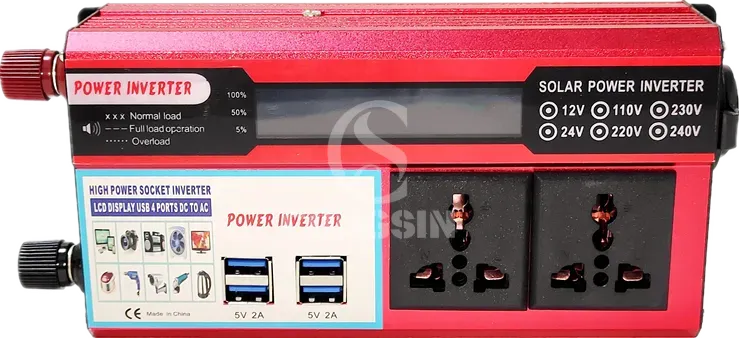
Congsin 500W Modified Sine Wave Inverter with LCD Display of Off Grid System Solar Power Inverter
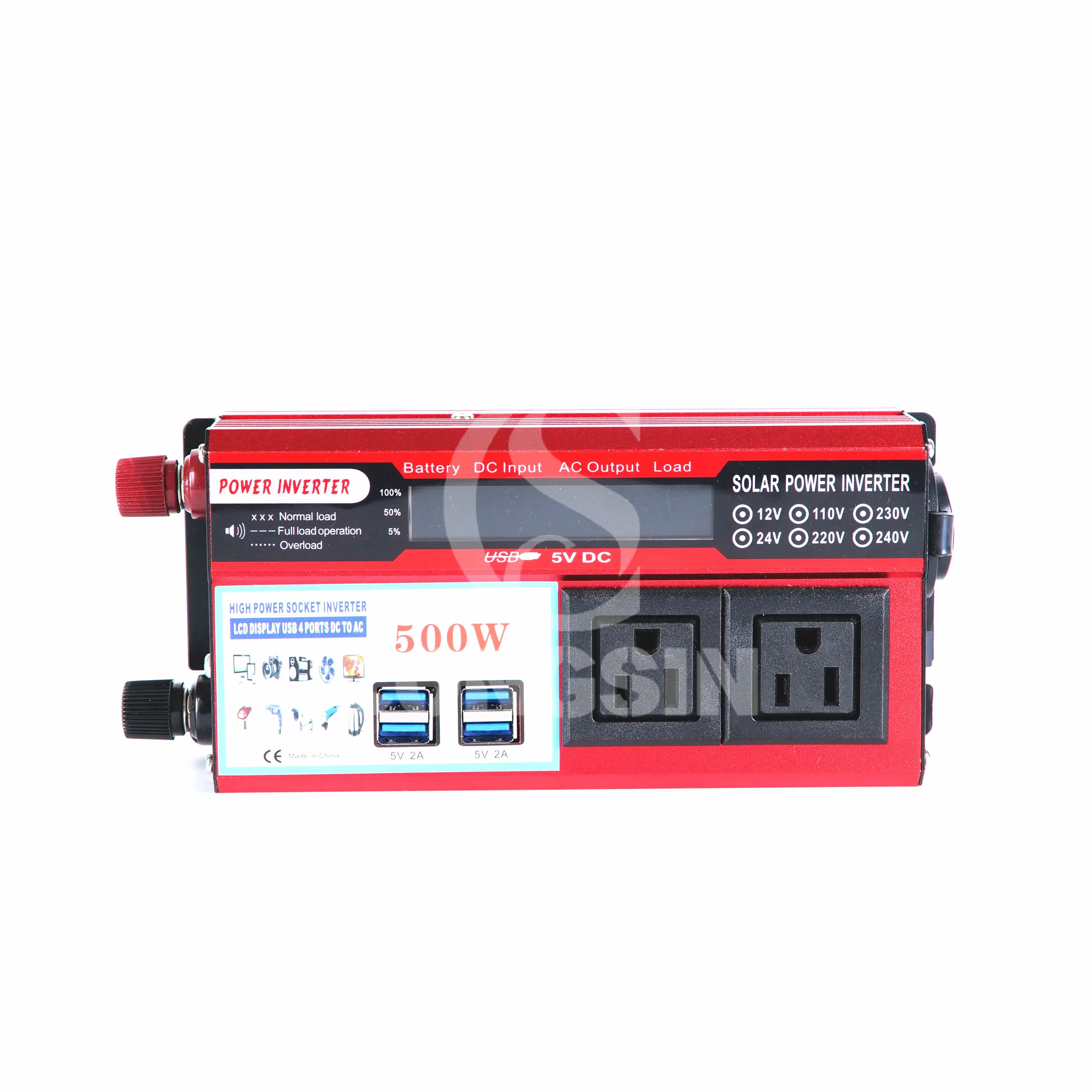
Congsin 500W modified sine wave power inverter US sockets 4 USB ports LCD display off grid
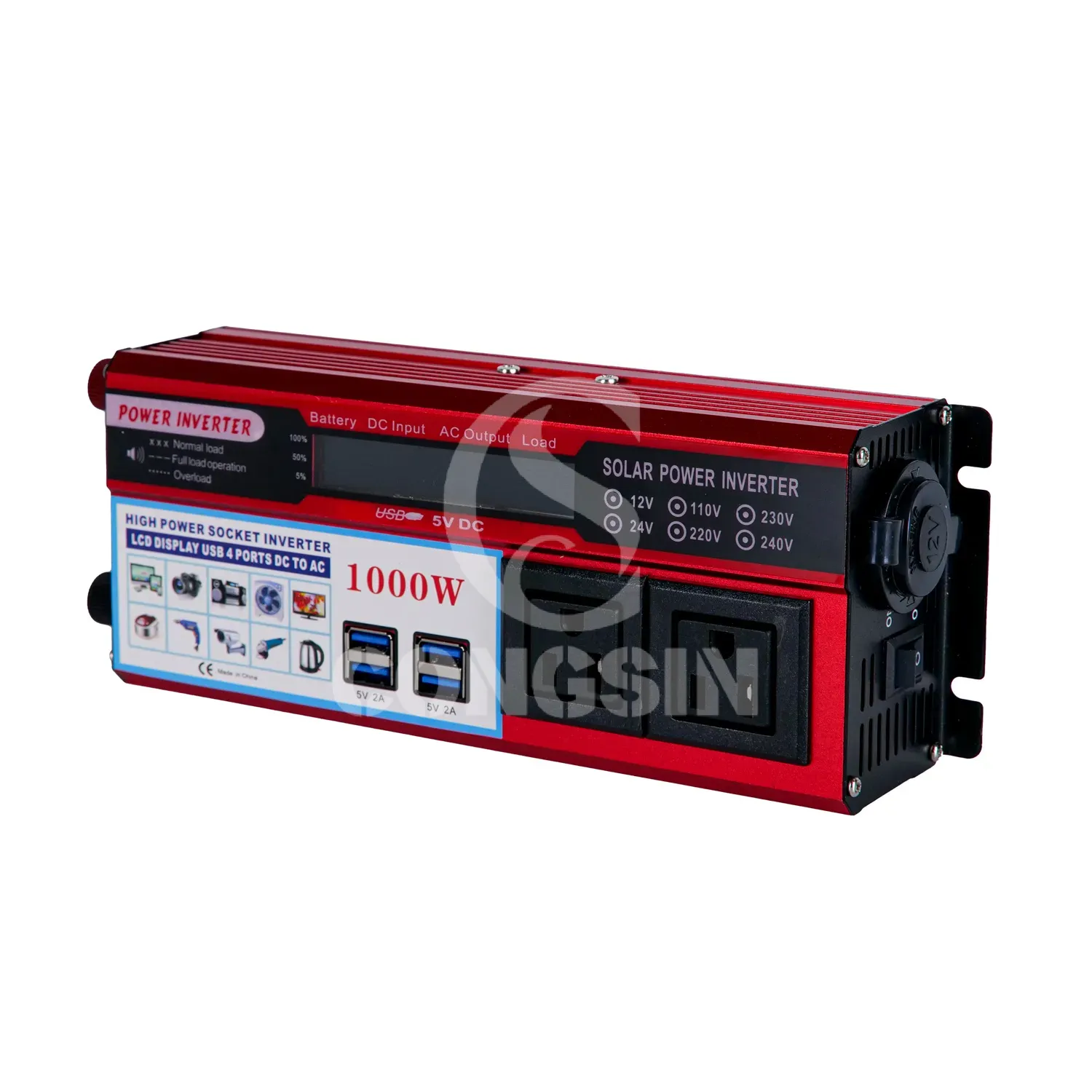
Congsin 1000W modified sine wave inverter with American Sockets and Lcd display portable 12V car RV
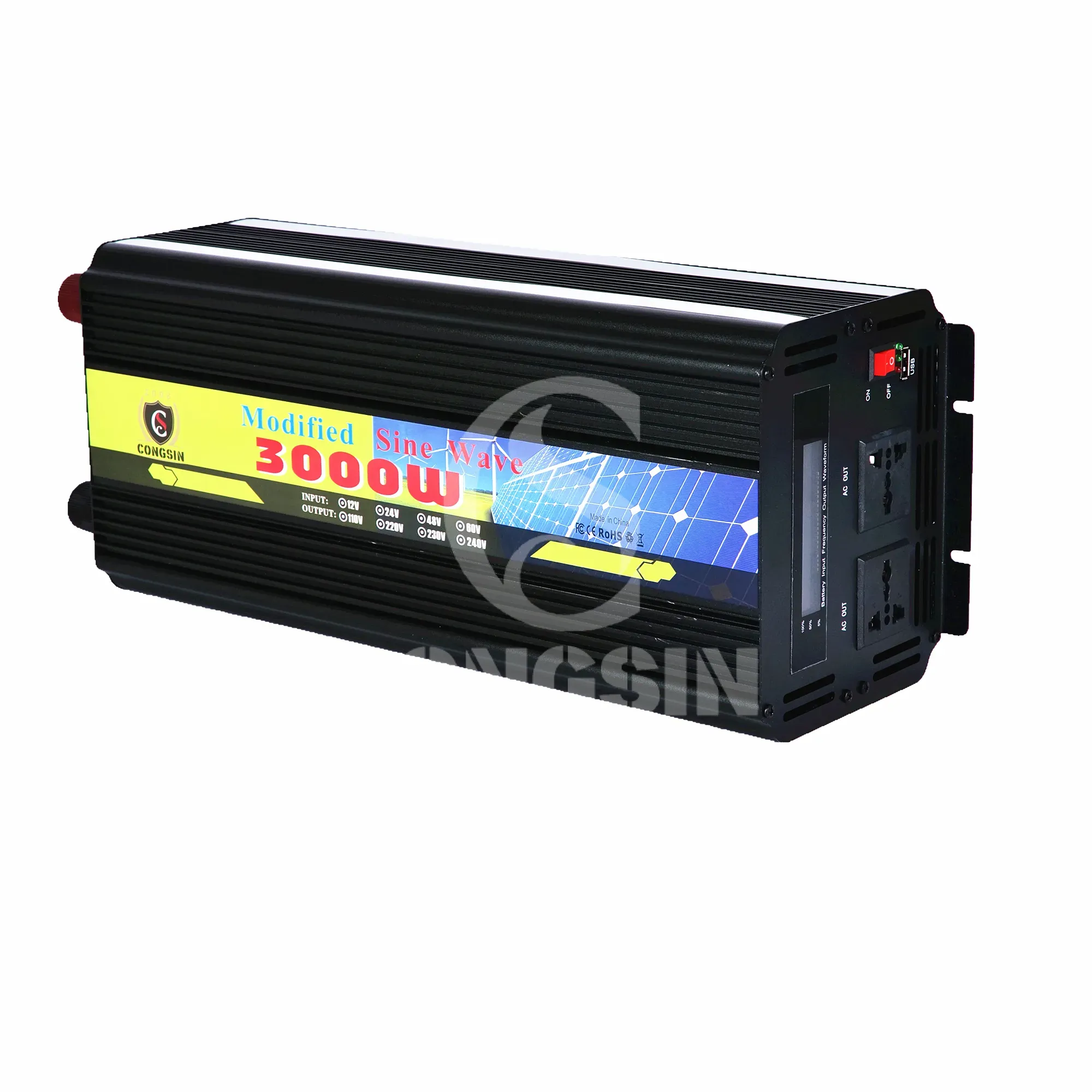
Congsin Full Power 3000W Modified Sine Wave Inverter Peak Power 6000W with LCD Display RV Solar

CONGSIN is a trusted OEM factory for power inverters, solar charge controllers, and DC converters. Reliable solutions for global B2B buyers.
 High Quality
 7/24 Service
 Guaranteed Warranty
© 2025 Congsin. All Rights Reserved.