





The Ultimate 2026 Guide to Pure Sine Wave Car Inverters: Protect Your Electronics on the Road
- What is a Pure Sine Wave Car Inverter?
- Key Takeaways: Quick Summary of 2026 Vehicle Power
- Pure Sine Wave vs. Modified Sine Wave: The Technical Difference
- Why Modern Electronics Demand Pure Sine Wave in 2026
- How to Size and Choose the Right Inverter for Your Vehicle
- Expert Tips and Common Installation Mistakes
- Industry-Leading Solutions for Your Mobile Setup
- Conclusion
- Can I run a laptop on a modified sine wave inverter?
- What size pure sine wave inverter do I need for my car?
- Will a pure sine wave inverter drain my car battery?
- How do I hardwire an inverter to my car battery safely?
- Are pure sine wave inverters worth the extra cost?
- Can I plug a pure sine wave inverter into a cigarette lighter?
- What is the difference between a 300W and 1000W inverter?
- How long will my car battery last with an inverter running?
Welcome to the definitive era of mobile power and off-grid freedom. As remote work capabilities, advanced mobile photography, and off-grid living continue to surge in popularity across the globe, your vehicle is no longer just a mode of transportation—it has evolved into a fully functional mobile workstation and an indispensable basecamp. However, integrating standard household appliances into a vehicle's electrical system presents unique challenges. Plugging a high-end $3,000 laptop, specialized photography equipment, or a life-saving medical device into a cheap, unregulated power source is a recipe for catastrophic hardware failure. That is exactly where a 12V to 110V pure sine wave inverter becomes your most critical piece of equipment. In this comprehensive, expert-driven guide, we will break down exactly how these sophisticated devices work, explore why modern sensitive electronics absolutely demand them, and provide step-by-step instructions on how to properly size and safely install the perfect unit for your specific needs. Whether you are outfitting a rugged RV for cross-country travel, setting up a mobile office in a camper van, or just preparing your family SUV for emergency power outages, understanding the technical nuances of vehicle power in 2026 is non-negotiable for protecting your valuable investments.
What is a Pure Sine Wave Car Inverter?
A pure sine wave car inverter is an electronic device that converts your vehicle's 12-volt direct current (DC) battery power into 110-volt alternating current (AC). It replicates the smooth, consistent electrical waveform supplied by your home grid, ensuring that sensitive electronics operate safely, efficiently, and without interference.
When you plug a device into a standard wall outlet at home, you are receiving high-quality alternating current. As defined by Wikipedia, alternating current is an electric current that periodically reverses direction and changes its magnitude continuously with time. Your vehicle's battery, conversely, stores and provides direct current (DC), which flows in only one flat, continuous direction. An inverter's primary function is to bridge this significant electrical gap. But it is important to realize that not all inverters are created equal. A true pure sine wave model utilizes advanced internal microprocessors, heavy-duty transformers, and intricate filtering capacitors to precisely curve the electrical output. This complex internal process mirrors the exact, smooth waveform your delicate electronics were originally engineered to receive from a municipal power grid.
At Guangzhou Congsin Electronic Technology Co., Ltd. (Congsin), we have spent over 27 years meticulously researching, developing, and manufacturing these precise waveforms. Since our initial founding in early 1998, our dedicated R&D teams have observed firsthand how inferior, jagged power can silently degrade sensitive equipment over time. Providing a true sine wave is not just a luxury upgrade; it is a fundamental, non-negotiable requirement for ensuring the longevity and reliability of your gear.
Benefits of utilizing a 12V to 110V pure sine wave inverter:
- Smooth Power Delivery: It guarantees a continuous, flawless flow of electricity, effectively eliminating the micro-interruptions that cause sensitive microprocessors to freeze, crash, or reboot unexpectedly.
- Lower Heat Generation: Appliances, particularly those equipped with variable-speed AC motors or advanced charging circuits, run significantly cooler. This reduces thermal wear and tear, vastly extending their operational lifespan.
- Universal Compatibility: Unlike lesser, cheaper alternatives, a pure sine wave ensures seamless, 100% compatibility with all standard household electronics, from microwaves to medical devices.
- Elimination of Interference: Audio and video equipment will operate cleanly without the annoying background audio buzz or visual screen static commonly caused by "dirty" electrical power.
Key Takeaways: Quick Summary of 2026 Vehicle Power
The modern vehicle power landscape requires pure sine wave technology as a mandatory standard for protecting AI-powered laptops, medical devices, and smart gear. Accurately calculating wattage and ensuring direct-to-battery wiring for high-draw systems are critical steps for safety and performance.
As we navigate the technological landscape of 2026, the electronics we carry on the road are exponentially more advanced, intelligent, and power-hungry than ever before. From AI-driven mobile workstations rendering 4K video to sophisticated lithium-ion power banks requiring precise charging algorithms, the tolerance for poor power quality has entirely vanished. To prevent damaging your expensive devices, you need to understand the basic rules of engagement when outfitting your vehicle for off-grid power. By following strict industry guidelines, you can ensure your system runs smoothly and safely under all conditions.
- Pure sine wave is now mandatory for modern laptops, CPAP machines, and smart devices that feature internal computers.
- Choosing the right wattage requires calculating continuous vs. peak surge power to prevent sudden system overloads.
- Modified sine wave inverters are cheaper upfront but can cause permanent, irreversible damage to delicate microprocessors.
- Direct-to-battery wiring is essential for any inverter over 300W to avoid melting your vehicle's factory wiring harness.
Pure Sine Wave vs. Modified Sine Wave: The Technical Difference
The technical difference between pure sine wave vs modified sine wave lies in the electrical output curve; a pure sine wave features a smooth, continuous arch, while a modified sine wave relies on a blocky, stepped pattern that creates electrical noise and harmonic distortion.
To truly grasp why one technology is vastly superior to the other, we must examine exactly how the AC power is mathematically constructed inside the device. A modified sine wave inverter takes the 12V DC power from your battery and attempts to force it into an AC format by rapidly switching polarity in harsh, squared-off steps. This abrupt, mechanical switching creates a rigid "staircase" effect rather than a flowing wave. While simple, rudimentary electrical loads like traditional incandescent light bulbs or basic resistive heating elements do not care about this staircase pattern, complex modern electronics certainly do.
The "dirty power" generated by a modified sine wave is heavily laden with harmonic distortion. This unseen distortion manifests physically as excess heat and audible noise. Have you ever plugged a laptop charger into a cheap airport outlet or a budget car inverter and heard it loudly buzzing? Or noticed that the power brick became alarmingly hot to the touch? That is the physical manifestation of harmonic distortion attempting to force a square peg into a round hole, severely stressing the internal components of your charger.
- Visualizing the Waveform: The smooth, rolling curve of a pure sine wave allows power to transition seamlessly and naturally, whereas the blocky, stepped output of a modified sine wave jolts the power supply aggressively.
- Harmonic Distortion: How the "dirty power" of modified inverters actively causes buzzing audio, lines on television screens, and overheating power bricks.
- Cost vs. Risk: Why saving a small amount of money on a modified inverter is a dangerous false economy when it could cost you a $2,000 laptop replacement.
- Motor Efficiency: AC motors running on a modified sine wave will consume vastly more energy and run up to 20% hotter, drastically reducing their efficiency and operational lifespan.
Why Modern Electronics Demand Pure Sine Wave in 2026
Modern electronics demand a pure sine wave because they rely on highly sensitive microprocessors, advanced variable-speed motors, and strict timing circuits that fail, overheat, or permanently short-circuit when exposed to the choppy voltage fluctuations of modified sine wave power.
In previous decades, travelers primarily needed mobile inverters for incredibly basic tasks—running a small fan, a simple tube television, or a standard coffee maker. Today, the modern vehicle has been completely transformed into a high-tech hub. As individuals consistently search for the best car inverter for laptops, they are no longer just powering a simple word processor; they are running resource-heavy machines equipped with dedicated GPUs, massive AI processing chips, and advanced thermal cooling arrays.

These modern power adapters use incredibly sensitive micro-circuitry to communicate directly with the device's internal battery, ensuring rapid, optimized, and safe charging. When fed a modified sine wave, these intelligent adapters become confused by the voltage spikes, often resulting in complete charging failure, erratic battery behavior, or catastrophic overheating. Furthermore, as reported by EcoFlow, pure sine wave inverters are strictly necessary to provide the safest power for all devices, fully preventing damage to sensitive electronics by perfectly matching the clean utility power found in residential homes.
- The rapid rise of high-draw, AI-powered mobile workstations and advanced digital photography gear being actively utilized on the road.
- Strict compatibility requirements with modern EV accessory ports and the charging modules of high-capacity lithium vehicle power banks.
- Specific electronics that will instantly fail on modified sine: variable speed motors, precision medical equipment, and modern smart chargers.
- The increasing reliance on delicate smart-home appliances being transitioned into RVs, camper vans, and specialized overland builds.
How to Size and Choose the Right Inverter for Your Vehicle
To choose the right inverter size, you must calculate the total continuous wattage of all devices you plan to run simultaneously and add a 20% safety margin to accommodate peak surge power required during initial startup.
Understanding your precise power requirements is without a doubt the most crucial step in safely building your mobile energy system. Every electronic device has a continuous power draw (the standard wattage it consumes while running steadily) and a peak surge power draw (the brief, massive spike in wattage required to physically start the device's motor or capacitors). For example, a portable compressor refrigerator might only draw 100 watts continuously, but that same compressor might aggressively demand 500 watts for a split second when it kicks on. If your inverter cannot handle that sudden surge, the entire system will overload, trigger an alarm, and shut down completely.
At Congsin, our extensive catalog features over 100 specialized models, ranging from highly compact car chargers to massive, heavy-duty off-grid home systems. We always advise our global clients to build a generous buffer into their calculations. If your total continuous load is estimated at 800 watts, you should absolutely not purchase an 800-watt inverter; instead, you need at least a 1000-watt unit. This simple practice prevents the inverter from operating at its absolute maximum thermal limit, which keeps the internal cooling fans quiet, reduces ambient heat, and dramatically extends the lifespan of the internal capacitors.
- The Formula: How to correctly add up your device wattages and pad the final number by 20% for optimal safety and longevity.
- 150W-300W: Perfect for powering single laptops and fast-charging modern smartphones (safe and fully cigarette lighter compatible).
- 500W-1000W: Ideal for outfitting mobile offices, small LED TVs, and standard camping gear (absolutely requires direct battery hardwiring).
- 2000W+: Heavy-duty off-grid vehicle power solutions specifically designed for large RVs, demanding power tools, and high-wattage microwaves.
Expert Tips and Common Installation Mistakes
A safe and reliable pure sine wave inverter installation requires using correctly gauged wire, keeping cable runs short, and installing an inline fuse directly at the battery terminal to prevent catastrophic electrical fires and voltage drops.
Even the absolute highest quality inverter in the world will fail—or much worse, cause a severe vehicle fire—if it is installed incorrectly by the end user. The most frequent and dangerous errors we see in the field involve users severely underestimating the massive amount of current (amps) being drawn from the 12V battery to successfully produce 110V AC power. Because the voltage is being actively stepped up by nearly a factor of ten, the corresponding amperage drawn from the DC battery is massive. A standard 1000W load pulling from a 12V battery demands over 80 amps of continuous current!
Safety must always remain your number one priority. According to the National Electrical Code (NFPA 70), rigorous guidelines must be strictly followed regarding proper system grounding, exact wire sizing, and dedicated overcurrent protection to systematically safeguard against the inherent hazards arising from electrical installations. Failing to respect these established engineering codes can instantly lead to melted copper wires, permanently destroyed battery banks, and dangerous electrical arc flashes.
- Mistake 1: Relying on a standard 12V cigarette lighter for devices pulling more than 150-300 watts, which inevitably leads to blown vehicle fuses and melted plastic dashboards.
- Mistake 2: Using improper, excessively thin gauge wiring when connecting the unit directly to the car battery (e.g., using cheap audio wire instead of thick, pure copper 2 AWG cables).
- Expert Tip: Always install a heavy-duty inline DC fuse or circuit breaker as physically close to the positive battery terminal as possible to completely prevent fire hazards in the event of a cable short circuit.
- Expert Tip: Ensure proper, unrestricted ventilation around the inverter chassis to prevent thermal throttling. Do not ever bury the unit under car seats or thick camping gear where the internal cooling fans cannot actively draw fresh, ambient air.
Industry-Leading Solutions for Your Mobile Setup
Industry-leading solutions for mobile setups combine military-grade protections, fully automated manufacturing precision, and intelligent remote monitoring to ensure clean, uninterrupted power for remote workers, off-grid adventurers, and emergency responders.
When you are located miles away from the nearest civilization or actively dealing with a severe emergency blackout, your off-grid power system truly becomes your ultimate lifeline. You simply cannot afford to compromise on build quality, component sourcing, or manufacturing standards. At Congsin, we deeply recognize that true, uncompromising reliability comes exclusively from strict quality control and relentless, continuous engineering innovation. By operating fully automated production lines and systematically utilizing advanced multifunctional testing equipment, we meticulously ensure that every single unit leaving our facility performs flawlessly under the most extreme global conditions.
Our products are intentionally built with strict environmental and safety compliance serving as their foundational core. We proudly hold a comprehensive ISO9001 certification, alongside a multitude of vital international approvals such as CE, EMC, LVD, ETL, FCC, RoHS, and E-MARK. This extensive certification portfolio guarantees that our pure sine wave inverters are not just aggressively tested for raw power performance, but also rigorously evaluated for electromagnetic compatibility, ensuring they will never negatively interfere with your vehicle's sensitive onboard computers, vital GPS navigation, or emergency communication radios.
- Case Study: Upgrading a mobile workforce with highly reliable, extremely clean power. We recently successfully helped outfit a large fleet of remote field construction vehicles with perfectly tailored pure sine wave systems, permanently eliminating the costly equipment failures they previously experienced with cheap modified models.
- How our highly respected industry-leading solutions and pure sine wave products are painstakingly engineered with military-grade protections against dangerous system overload, unpredictable short-circuits, severe over-voltage spikes, and extreme over-temperature scenarios.
- Integrating highly advanced smart monitoring and wireless remote control features directly into your 2026 vehicle loadout, allowing you to easily track real-time wattage usage, battery health, and system temperatures directly from your mobile smartphone device.
- Actively providing bespoke system customization, extensive OEM/ODM support, and tailored private labeling solutions specifically for global distribution partners seeking to deliver total energy independence to their own regional customers.
Conclusion
To summarize, a pure sine wave car inverter is an indispensable investment for protecting your valuable electronics, offering clean and reliable power whether you are camping, working remotely, or dealing with an emergency.
The ongoing global transition to true off-grid capability and remote mobile workspaces is not merely a passing technological trend; it represents the new, permanent standard of living, working, and exploring. By thoroughly understanding the critical differences between clean and dirty electrical power, accurately sizing your precise wattage requirements, and strictly adhering to modern installation safety standards, you can confidently build a highly robust power system that will serve you faithfully for decades to come. Do not ever let subpar, poorly manufactured electrical equipment dictate the limits of your journey or put your expensive, sensitive devices at severe risk of permanent damage. Ensure your mobile workstation is powered safely and correctly the very first time.
Contact us today to optimize your off-grid vehicle power solutions.
Can I run a laptop on a modified sine wave inverter?
While some older laptop chargers might work, modern laptop power adapters use sensitive microprocessors that can overheat, buzz, or fail when powered by a modified sine wave. A pure sine wave is highly recommended.
What size pure sine wave inverter do I need for my car?
It depends on your devices. Check the wattage of what you plan to plug in at the same time, add them up, and then add a 20% safety margin. A 300W inverter is usually plenty for a laptop and a phone.
Will a pure sine wave inverter drain my car battery?
Yes, if used while the engine is off. An inverter draws power directly from the battery. To prevent a dead battery, only run high-draw devices with the engine running or install a secondary deep-cycle battery.
How do I hardwire an inverter to my car battery safely?
You must use thick, appropriately gauged cables, keep the cable run as short as possible, and install an inline fuse on the positive cable close to the battery to protect against short circuits.
Are pure sine wave inverters worth the extra cost?
Absolutely. The premium you pay for pure sine wave technology is an insurance policy against destroying expensive equipment like MacBooks, CPAP machines, and digital cameras, which require clean power.
Can I plug a pure sine wave inverter into a cigarette lighter?
Yes, but only for low-power applications. Most vehicle 12V cigarette lighter ports are fused at 10 to 15 amps, limiting your safe continuous output to around 150 to 200 watts maximum.
What is the difference between a 300W and 1000W inverter?
A 300W inverter is designed for small devices and can plug into the dashboard socket. A 1000W inverter can run small appliances like a coffee maker or power tools but must be wired directly to the car battery.
How long will my car battery last with an inverter running?
A standard car battery (around 50Ah) will drain to 50% in about 1 to 2 hours if you are pulling 300 watts without the engine running. Exact time depends on the battery's health and the exact wattage draw.

10 Crucial Tips for Maximizing Efficiency with a 1000W Modified Sine Wave Inverter in 2026
Best 1000W Car Inverters for RVs, Trucks, and Road Trips
24V Off-Grid Inverter Buying Guide: Choose the Right Model
Comparing Pure Sine Wave vs Modified Sine Vehicle Inverters
Modified Sine Wave Inverters
Is the cooling fan noisy?
The fan is designed for heat dissipation and will make some noise during operation, but it is within a reasonable range and will not interfere with normal use.
Is the dual input automatically recognized or manually switched?
Automatically recognize DC12V/24V input, no manual switching required.
Is the cooling fan noisy during operation?
The noise is low (≤45 decibels, equivalent to normal conversation volume). The fan uses a silent motor and automatically adjusts the speed according to the device temperature (low-speed operation when temperature <40℃, high-speed operation when >60℃), balancing heat dissipation and noise.
How does reverse protection work?
When the positive and negative poles of the battery are reversed, the inverter will automatically cut off the circuit to avoid device damage and ensure power usage safety.
Pure Sine Wave Inverters
What is the difference between a pure sine wave inverter and a modified sine wave inverter?
Pure sine wave inverter has an output waveform close to mains power with low distortion rate (<3%), which can be safely adapted to precision devices such as computers, medical instruments, and inverter home appliances; modified sine wave inverter has a notched waveform, which easily causes device heating, malfunction or damage, and is only suitable for simple devices such as bulbs and fans.
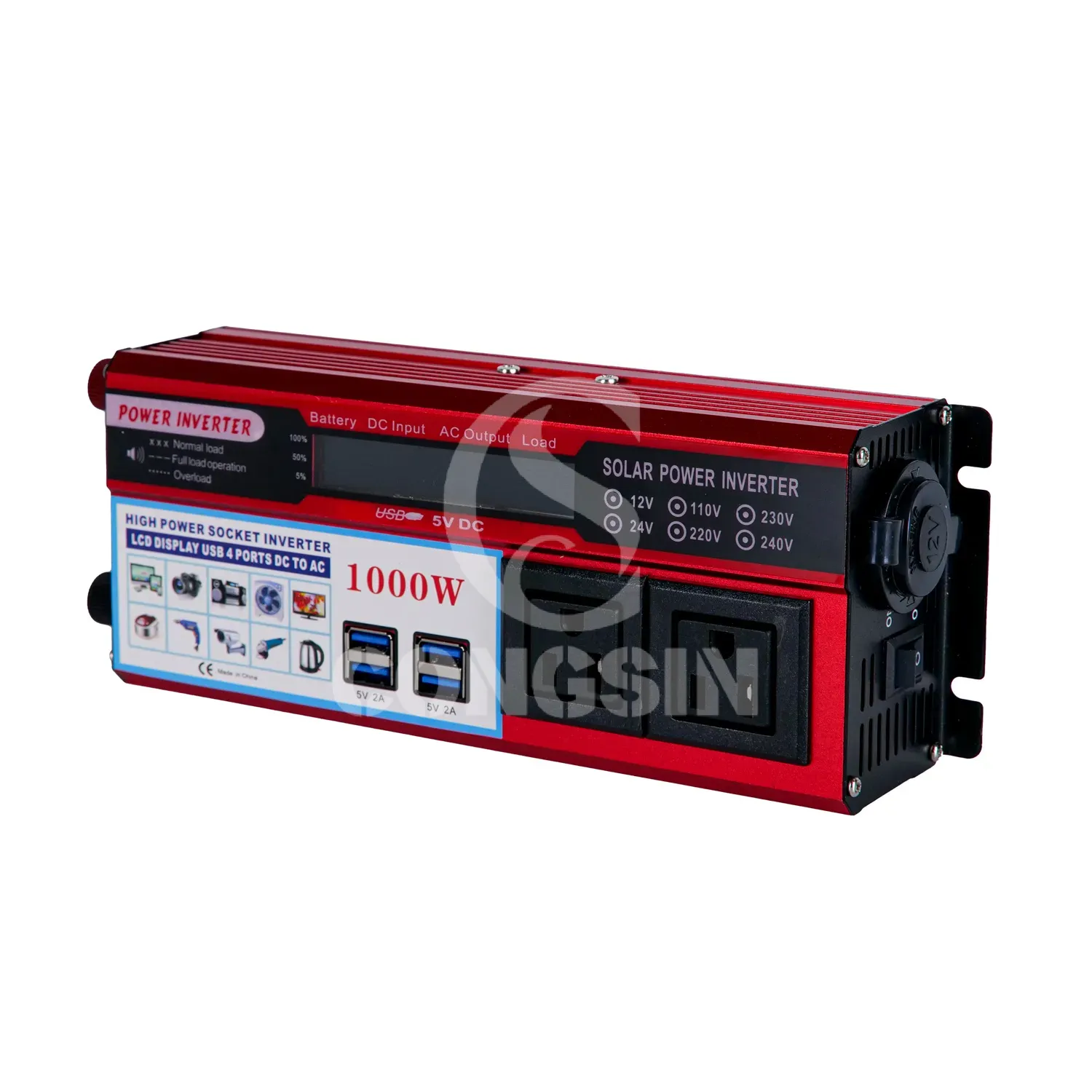
Congsin 1000W modified sine wave inverter with American Sockets and Lcd display portable 12V car RV
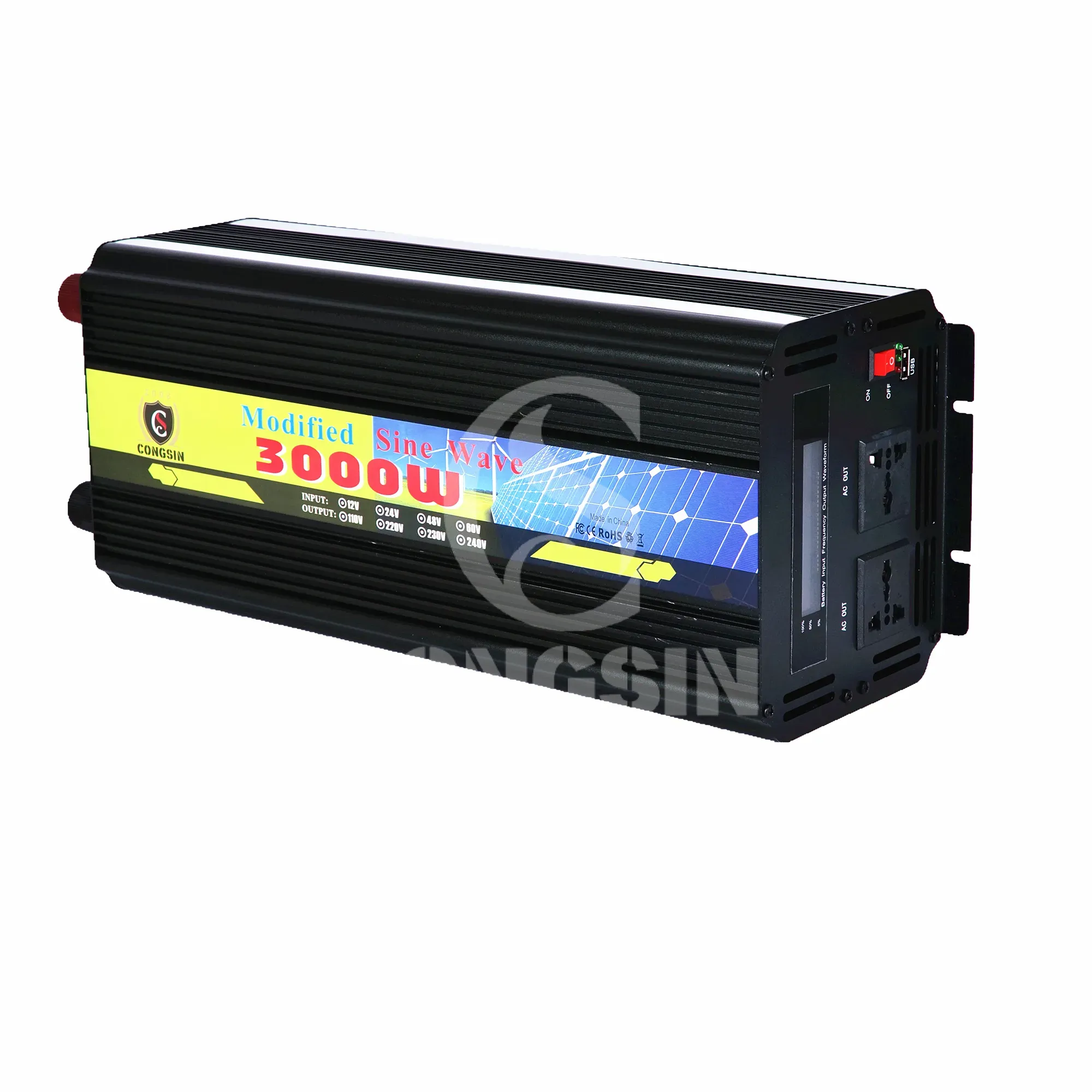
Congsin Full Power 3000W Modified Sine Wave Inverter Peak Power 6000W with LCD Display RV Solar
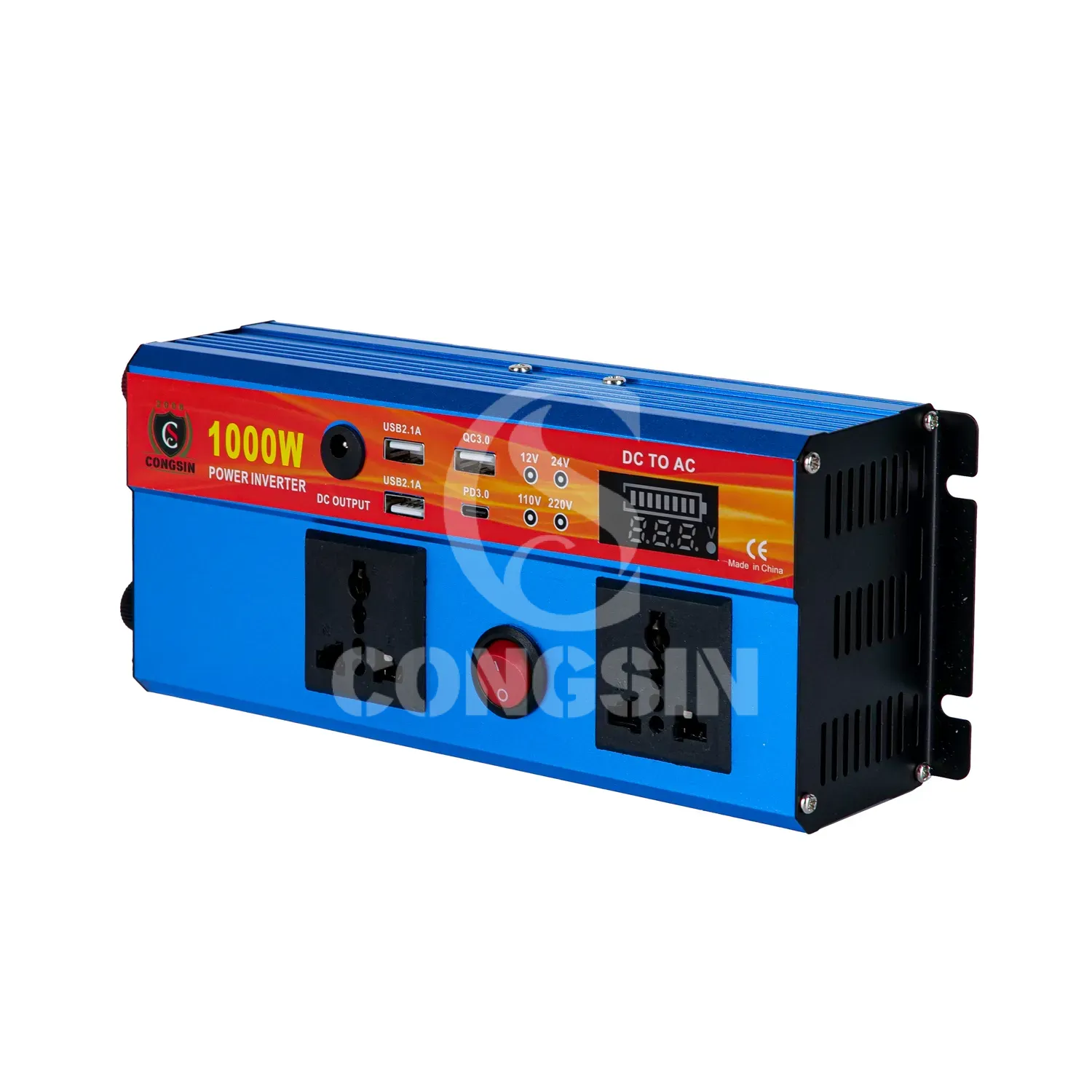
Congsin 1000W modified sine wave inverter with LED display and Type C port car RV power inverter
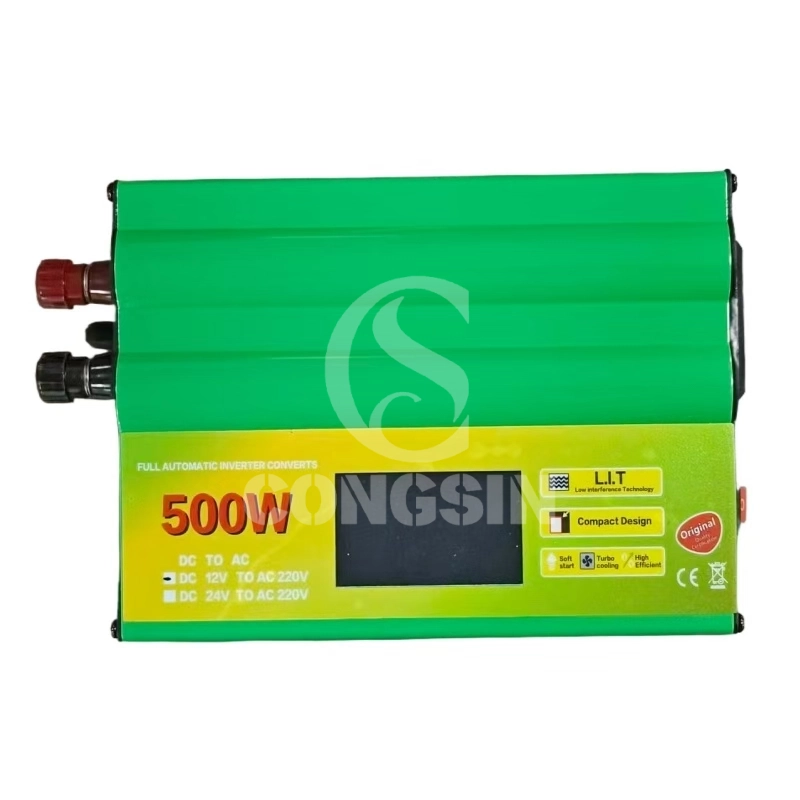
Congsin Modified Sine Wave Inverter 500W 1000W 1500W 12V LED Display Portable for RV Car Solar

CONGSIN is a trusted OEM factory for power inverters, solar charge controllers, and DC converters. Reliable solutions for global B2B buyers.
 High Quality
 7/24 Service
 Guaranteed Warranty
© 2025 Congsin. All Rights Reserved.