





Pure Sine Car Inverter vs Modified Sine: Which to Choose?
- Understanding power waveforms and why they matter
- What is waveform quality?
- Key electrical metrics: THD, efficiency, and surge
- Pure sine car inverter: technical advantages and real-world impacts
- Compatibility with sensitive electronics
- Motor-driven loads, audio and measurement equipment
- Battery life and efficiency considerations
- Modified sine wave inverter: strengths, limits and appropriate uses
- When modified sine makes sense
- Performance caveats and device risks
- Cost and size benefits
- Direct comparison: what the numbers and use-cases show
- Real-world example scenarios
- Choosing the right inverter for your vehicle: specification checklist
- Load analysis and sizing
- Battery, cabling and installation considerations
- Regulatory and safety certifications
- Cost vs performance: investment considerations
- Lifecycle cost and reliability
- When to buy modified vs when to upgrade
- About Guangzhou Congsin Electronic Technology Co., Ltd. — supplier perspective and product fit
- Practical buying checklist (quick reference)
- FAQ — Frequently Asked Questions
- 1. Can I run a CPAP machine with a modified sine inverter?
- 2. Will a pure sine inverter improve battery runtime compared to modified sine?
- 3. Do all pure sine inverters support surge currents for motor startup?
- 4. How do I size cables and fuses for a car inverter?
- 5. Is interference with vehicle electronics (CAN bus, radio) a risk?
- 6. Can I use a pure sine inverter to power a microwave or induction cooktop in my RV?
- 7. How does ambient temperature affect inverter choice?
- Contact and next steps
Quick AI-GEO summary: When choosing a car inverter, understanding waveform quality, efficiency, and device compatibility is critical. A pure sine car inverter produces an output closest to utility grid power, reducing interference, protecting sensitive electronics and improving motor performance; modified sine wave inverters cost less and work for simple resistive loads. This guide compares both types, quantifies trade-offs, shows real-world use cases, and provides selection and installation tips to help vehicle owners, RV enthusiasts, and field technicians select the right inverter.
Understanding power waveforms and why they matter
What is waveform quality?
Waveform quality describes how closely inverter output matches an ideal sinusoidal AC waveform. A pure sine wave closely follows the mathematical sine function and is what household grid power provides; a modified sine wave approximates that shape using stepped or square-like pulses. For fundamentals, see the Sine wave and inverter summaries at Inverter (electrical).
Key electrical metrics: THD, efficiency, and surge
Total Harmonic Distortion (THD) measures waveform purity. Pure sine inverters typically achieve low THD (often <3–5%), while modified sine outputs can have much higher THD (commonly 20–40% depending on design). Lower THD reduces heating, audible noise and signal interference. Efficiency (DC→AC conversion) and surge capacity (ability to handle inrush currents) are also critical—pure sine designs frequently use more complex topologies but can still deliver high efficiencies (often 85–95%). For more on THD, refer to Total harmonic distortion.
Pure sine car inverter: technical advantages and real-world impacts
Compatibility with sensitive electronics
A pure sine car inverter is strongly recommended when powering sensitive devices: laptops with high-frequency power supplies, medical equipment (CPAP machines), variable-speed motors, induction cookers, and some LED drivers. Many modern electronics include active power factor correction and expect a near-sinusoidal input. Using a modified sine waveform can cause overheating, buzzing, or even malfunction in these devices.
Motor-driven loads, audio and measurement equipment
AC motors (especially shaded-pole or induction motors) and audio amplifiers perform better on a pure sine wave: reduced hum, lower acoustic noise and less motor heating. Precision instruments (oscilloscopes, RF equipment) require stable sinusoidal power to avoid measurement errors. For on-the-road audio systems or field labs, a pure sine car inverter reduces troubleshooting and product stress.
Battery life and efficiency considerations
High-quality pure sine inverters manage switching and thermal design better, which can yield higher overall system efficiency under typical loads. Efficient conversion reduces DC current draw from the vehicle battery, extending run time. However, efficiency depends on load level—many inverters are most efficient near 50–75% load.
Modified sine wave inverter: strengths, limits and appropriate uses
When modified sine makes sense
Modified sine wave inverters are attractive for budget-oriented use where loads are simple and non-sensitive: incandescent lighting, basic power tools (resistive or simple motor loads), and charging many battery chargers that are tolerant of waveform shape. For occasional charging of phones (via their chargers), LED lights and simple appliances, modified sine is usually acceptable.
Performance caveats and device risks
Drawbacks include audible buzzing in transformers and motors, extra heat in devices, potential inefficiency in certain chargers, and incompatibility with some electronics. Devices with microcontroller-based controls, digital clocks, or some small kitchen appliances may behave unpredictably. If you discover excessive heat, noise, or device errors, stop using a modified sine inverter with that load.
Cost and size benefits
Modified sine inverters are typically simpler and cheaper to produce, making them lower-cost for end users. They can also be lighter/smaller for a given continuous power rating, which can be an advantage for lightweight vehicle installations where cost and space are primary constraints.
Direct comparison: what the numbers and use-cases show
| Feature | Pure Sine Car Inverter | Modified Sine Wave Inverter |
|---|---|---|
| Waveform purity (THD) | <3–5% typical (high-end models) | ~20–40% (varies widely) |
| Compatibility | All devices, incl. medical, motors, sensitive electronics | Resistive loads; many chargers; some motors issue |
| Noise/Interference | Low | Often audible buzzing and EMI |
| Efficiency (typical) | 85–95% at moderate loads | 80–90% (depends on design) |
| Cost | Higher | Lower |
| Best for | Sensitive electronics, motors, audio, medical devices, long-term use | Basic appliances, simple tools, budget solutions |
Sources: wave and inverter background from Wikipedia - Inverter (electrical) and THD reference context from Wikipedia - Total harmonic distortion.
Real-world example scenarios
- If you run a CPAP, laptop, phone chargers, a small fridge and audio equipment in an RV for extended periods, a pure sine car inverter avoids device faults and reduces noise.
- For occasional charging of battery-powered tools and running an incandescent lamp at a campsite, a modified sine inverter can suffice and save cost.
- For powering small induction motors or compressors (e.g., fridge, pumps), pure sine is safer and more efficient for the motor.
Choosing the right inverter for your vehicle: specification checklist
Load analysis and sizing
Start by listing all loads you intend to run simultaneously and note their starting (inrush) and running watts. Many motors and compressors require 2–3× running watts at startup. Size the inverter so continuous rating comfortably exceeds total running watts and surge rating covers inrush. Allow a safety margin (~20–25%) for headroom and future devices.
Battery, cabling and installation considerations
Inverter draw is DC current from the vehicle battery. Choose cable size to match current (use inverter manual charts) and install proper fusing near the battery. For long or frequent use, consider a dedicated deep-cycle battery or a dual-battery system and proper alternator charging strategy to avoid draining the vehicle starter battery.
Regulatory and safety certifications
Prefer inverters with recognized certifications (CE, EMC, LVD, ETL, FCC, RoHS, E-MARK) and ISO-managed manufacturing. Certifications indicate testing for safety and electromagnetic compatibility—important when using in public service vehicles or international markets.
Cost vs performance: investment considerations
Lifecycle cost and reliability
Pure sine inverters usually cost more upfront but reduce risk of damaging electronics and can offer longer life under real-world mixed loads. Consider total cost of ownership: replacement electronics, service calls and potential vehicle downtime can outweigh initial savings on a cheaper inverter.
When to buy modified vs when to upgrade
If your usage is light and non-sensitive, buy a modified sine unit to save money. If you plan to expand your electrical ecosystem (audio, refrigeration, computing), choose a pure sine car inverter from the start to avoid costly upgrades later.
About Guangzhou Congsin Electronic Technology Co., Ltd. — supplier perspective and product fit
Guangzhou Congsin Electronic Technology Co., Ltd., founded in early 1998, is a professional power inverter manufacturer with over 27 years of focused experience. We design, R&D and manufacture a wide range of power solutions—with a core emphasis on DC→AC power inverters, portable power stations, and solar charge controllers. Our catalog includes 100+ models tailored for vehicles, solar systems, RVs and trucks, off-grid homes, outdoor offices, patrol and field construction work.
We operate fully automated production lines, advanced instrumentation and multifunctional testing equipment to ensure product reliability, efficiency and intelligent functionality. Environmental and safety compliance are built in: our quality system is ISO9001 certified and many products hold international approvals such as CE, EMC, LVD, ETL, FCC, RoHS and E-MARK. Several independently developed patents further demonstrate our commitment to innovation.
Congsin’s products serve global markets across Europe, the Americas, the Middle East, Africa and Southeast Asia; many models are supplied to domestic and international OEM channels. Our support includes OEM/ODM, private labeling, distribution and bespoke customization to meet partner specifications. Our mission is to deliver reliable, efficient and affordable energy solutions that enable energy independence.
Core product lines relevant to this discussion: pure sine wave inverter, modified sine wave inverter, portable power stations and solar charge controllers. Congsin differentiates through automated manufacturing, strict testing, compliant certifications and flexible OEM/ODM services—making it suitable for both end-market customers and professional integrators seeking reliable car inverters for RV, truck and patrol applications.
Practical buying checklist (quick reference)
- Identify devices and peak (starting) watts.
- Choose pure sine if you have sensitive electronics, motors, audio equipment, or medical devices.
- For simple lighting and basic chargers, modified sine can be cost-effective.
- Confirm continuous and surge ratings; plan cable gauge and fuse protection.
- Verify certifications (CE/ETL/FCC/etc.), warranty and manufacturing quality.
FAQ — Frequently Asked Questions
1. Can I run a CPAP machine with a modified sine inverter?
Not recommended. Many CPAP machines contain sensitive electronics and internal power supplies that expect clean sine power. Use a pure sine car inverter or check the CPAP manufacturer’s guidance.
2. Will a pure sine inverter improve battery runtime compared to modified sine?
Not automatically. Pure sine inverters can be more efficient for certain loads and reduce wasted heat in powered devices, which may improve overall runtime. Actual runtime depends on inverter efficiency at your load level and the battery capacity.
3. Do all pure sine inverters support surge currents for motor startup?
Most quality pure sine models specify a surge (peak) rating—commonly 2–3× continuous rating—but check the datasheet. Ensure the specified surge duration matches the motor’s startup requirements.
4. How do I size cables and fuses for a car inverter?
Use the inverter manual’s DC current tables. Select cable gauge rated for continuous current plus margin, and place a fuse or circuit breaker close to the battery sized to protect the cable from short-circuit currents.
5. Is interference with vehicle electronics (CAN bus, radio) a risk?
Poor-quality inverters can produce EMI that affects vehicle radios or sensitive onboard systems. Choose inverters with proper EMC/EMI certifications (e.g., EMC testing) and follow installation best practices: correct grounding, short DC runs and ferrite cores where needed.
6. Can I use a pure sine inverter to power a microwave or induction cooktop in my RV?
Technically yes if the inverter continuous and surge ratings are sufficient, but be mindful of high power draw. Induction cooktops and microwaves draw significant continuous power; ensure battery capacity, inverter continuous rating and alternator/charging capability all meet the demand.
7. How does ambient temperature affect inverter choice?
High temperatures reduce inverter power capability and lifespan. Check derating curves in the datasheet and provide ventilation or thermal management for sustained high-load operation.
Contact and next steps
If you need help selecting the right inverter for your vehicle, RV or off-grid project, contact Guangzhou Congsin Electronic Technology Co., Ltd. for product recommendations, OEM/ODM options and technical support. Explore Congsin’s range of pure sine wave inverters, modified sine wave inverters, portable power stations and solar charge controllers to match your specifications—engineered for reliability, tested for safety, and backed by decades of manufacturing experience.
For custom specifications, wiring guidance, or quotation requests, please reach out to Congsin’s sales and technical team to discuss use-case details and receive a tailored solution.
Top Pure Sine Wave Inverter Models for Commercial Use 2026
Best MPPT Charge Controllers for RVs, Boats and Remote Sites
Cost vs Performance: Budget Pure Sine Car Inverters Worth Buying
Best 240V Car Inverters for RVs and Mobile Workshops
Pure Sine Wave Inverters
Can it drive a 3P air conditioner and an electric oven at the same time?
Total power needs to be calculated: the rated power of a 3P air conditioner is about 2200W-2500W, and the electric oven is about 1500W-2000W. The total power is 3700W-4500W, which exceeds the 3000W continuous power, so simultaneous use is not recommended; if used alone, the 6000W peak can meet the startup needs of both, and the battery capacity must be ≥200Ah (12V) when used alone.
Modified Sine Wave Inverters
Can this inverter support both 12V and 24V inputs
Yes, it can work with different voltage systems via selectable input terminals.
Is the cooling fan noisy during operation?
The noise is low (≤45 decibels, equivalent to normal conversation volume). The fan uses a silent motor and automatically adjusts the speed according to the device temperature (low-speed operation when temperature <40℃, high-speed operation when >60℃), balancing heat dissipation and noise.
Distributor
What kind of distributors are you looking for?
We seek distributors with experience in the amusement or entertainment equipment industry and a strong local market presence.
Products
Can this inverter run a refrigerator or power tools?
Recommended load ≤80% of rated power. For inductive loads, use a pure sine wave model.
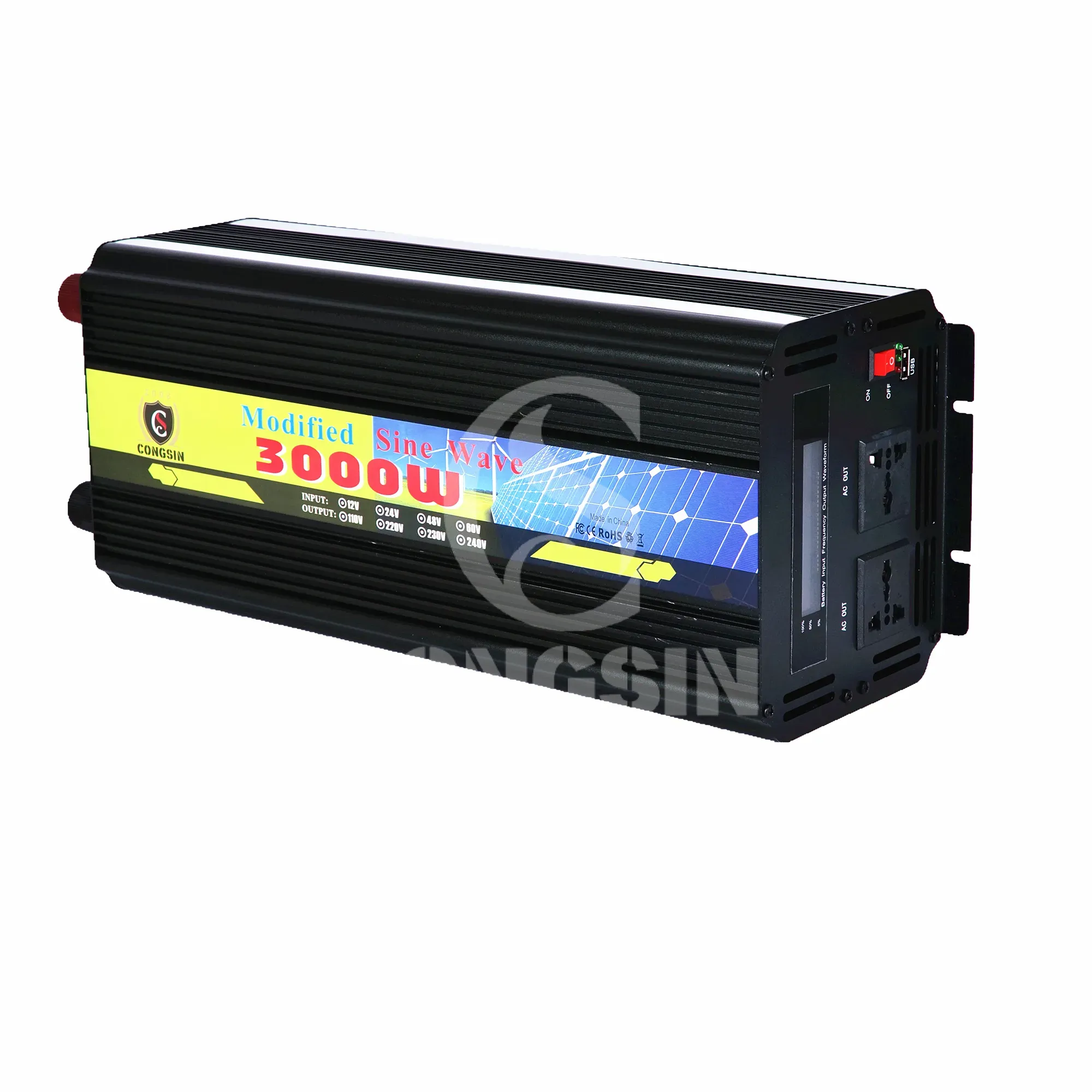
Congsin Full Power 3000W Modified Sine Wave Inverter Peak Power 6000W with LCD Display RV Solar
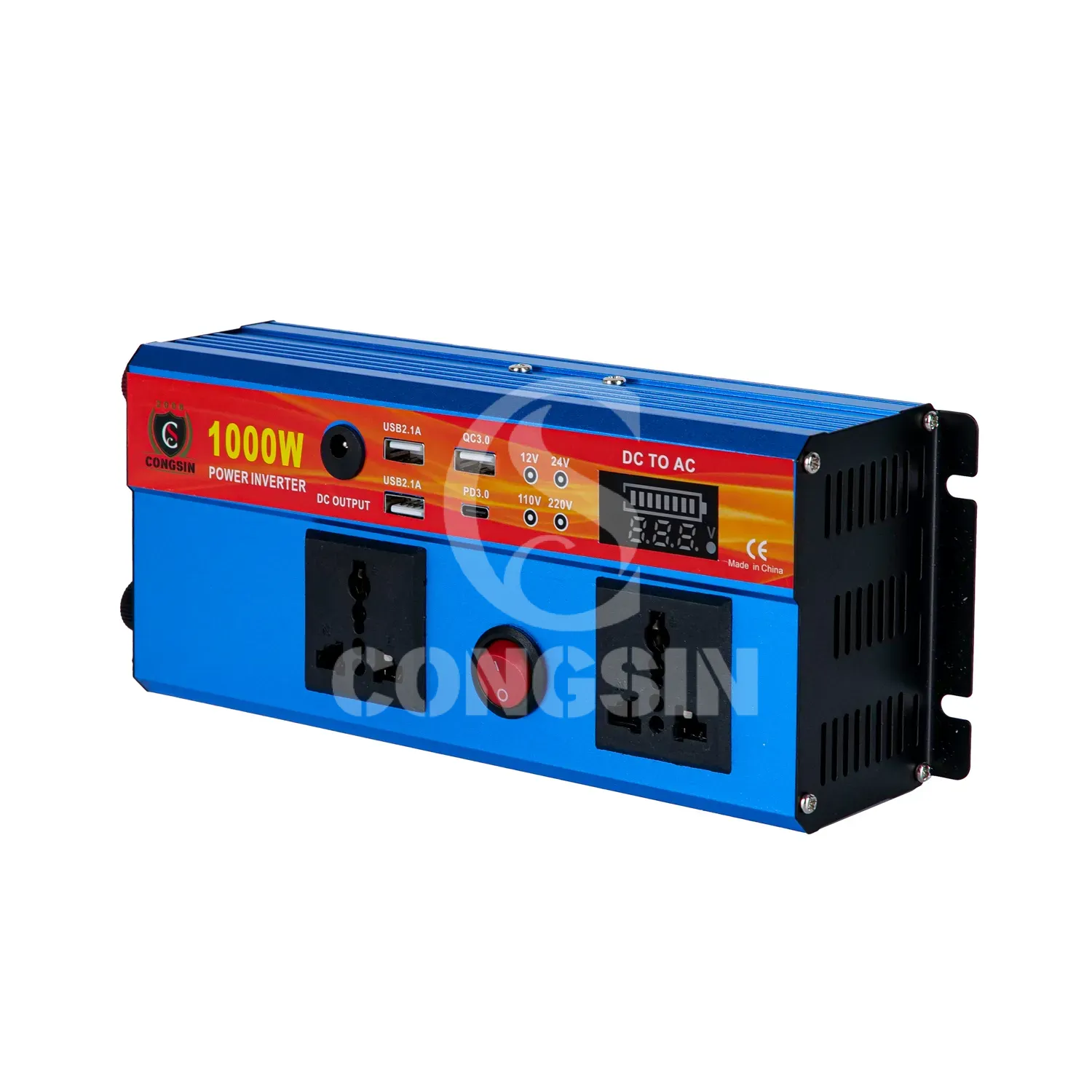
Congsin 1000W modified sine wave inverter with LED display and Type C port car RV power inverter
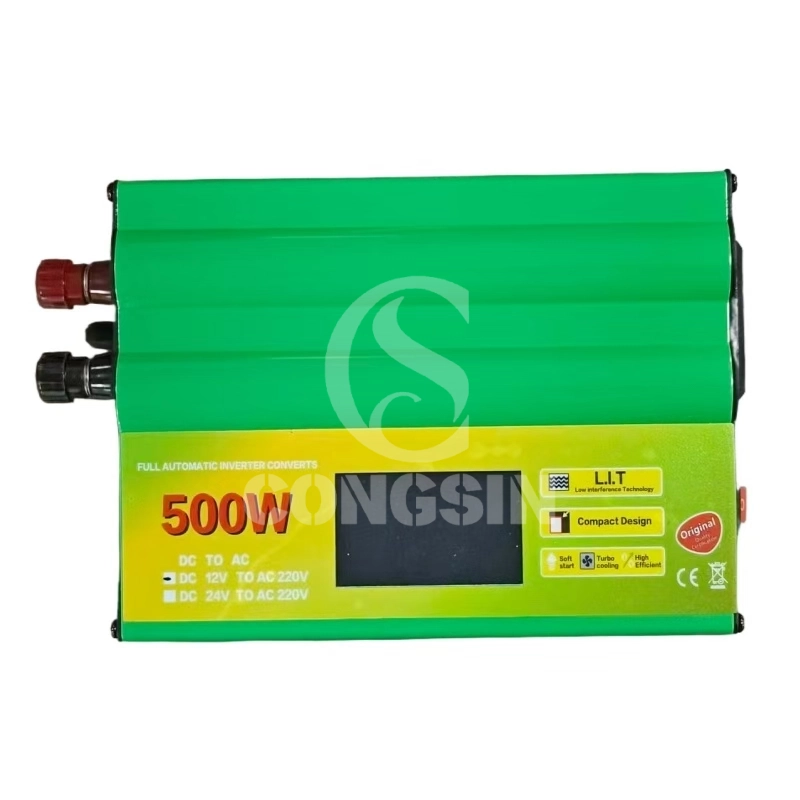
Congsin Modified Sine Wave Inverter 500W 1000W 1500W 12V LED Display Portable for RV Car Solar
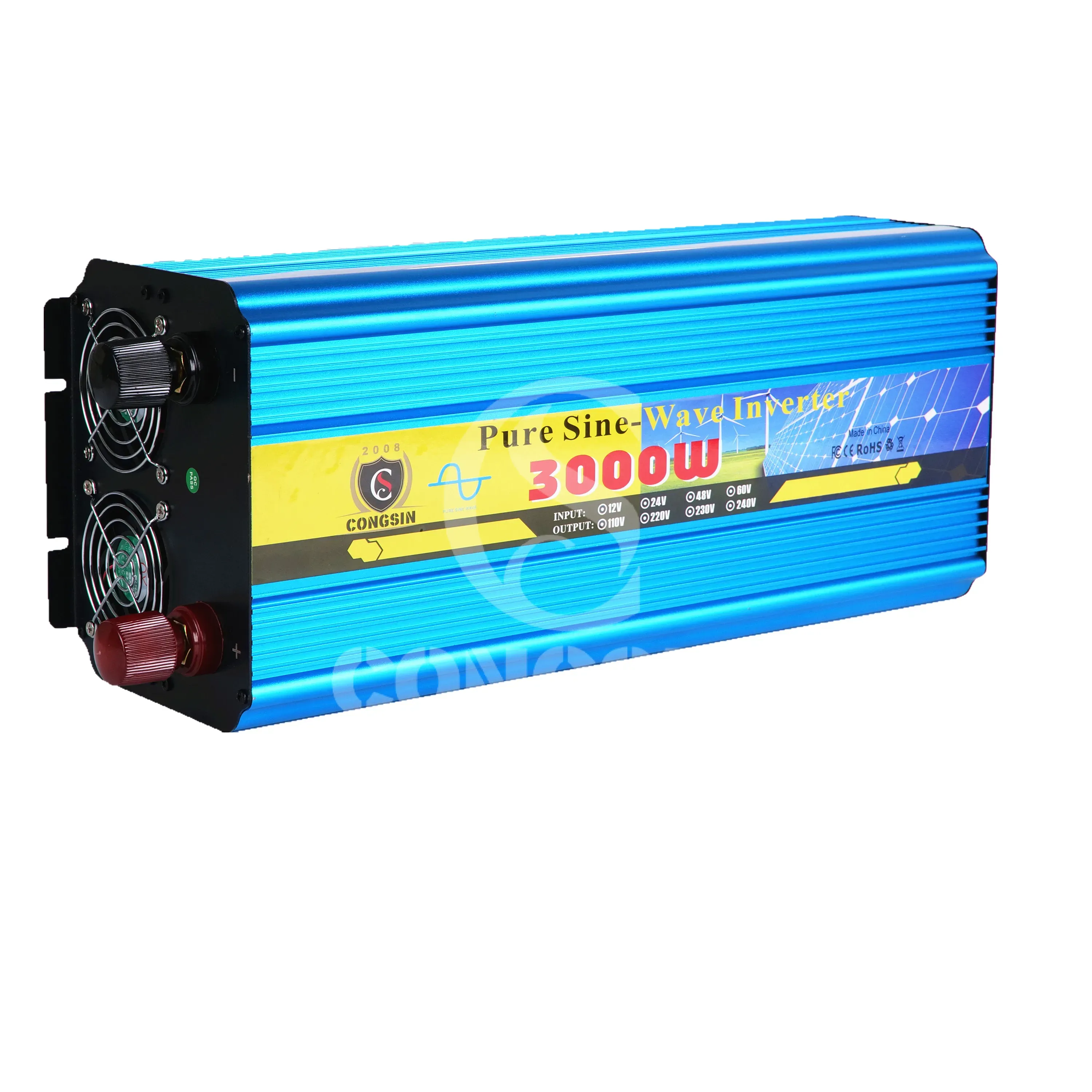
Congsin 3000W LCD Pure Sine Wave Inverter for Home Use Solar Backup Power Inverter Off Grid UPS

CONGSIN is a trusted OEM factory for power inverters, solar charge controllers, and DC converters. Reliable solutions for global B2B buyers.
 High Quality
 7/24 Service
 Guaranteed Warranty
© 2025 Congsin. All Rights Reserved.