





Efficiency and Heat Management for Pure Sine Car Inverters
- Why Efficiency Matters in Automotive Power Systems
- Operational and energy impacts
- Reliability and component stress
- Safety and regulatory considerations
- Thermal Challenges Specific to Pure Sine Car Inverters
- Sources of heat inside an inverter
- Vehicle-specific constraints
- Typical efficiency ranges and what they mean
- Design and Installation Strategies to Improve Efficiency and Heat Management
- Selection: topology and component quality
- Location, ventilation and mounting
- Active cooling and thermal pathways
- Practical Steps for Owners and Installers
- Load planning and duty cycles
- Battery and wiring considerations
- Monitoring, firmware and protective features
- Comparing Cooling Methods and Their Trade-offs
- Passive cooling
- Active air cooling (fans)
- Liquid cooling and remote mounting
- Product Selection, Standards and Manufacturer Considerations
- Certifications and test results
- Manufacturer capabilities and supply chain confidence
- Case study: Guangzhou Congsin Electronic Technology Co., Ltd.
- Maintenance, Troubleshooting and Long-Term Best Practices
- Routine inspection and cleaning
- When to derate or upgrade
- Data-driven decisions
- FAQ
- Q: How hot is too hot for a pure sine car inverter?
- Q: Does a pure sine inverter run hotter than a modified sine inverter?
- Q: How should I size cables for a 2000 W pure sine car inverter?
- Q: Can I mount an inverter inside an RV cabinet?
- Q: Will adding a fan void my warranty?
- Q: How do I maximize battery runtime when using an inverter?
Pure sine car inverters are central to reliable in-vehicle AC power—powering laptops, medical devices, appliances and sensitive electronics while on the move. Achieving high inverter efficiency while controlling heat generation is critical for performance, longevity and safety. This article provides practical, engineering-based guidance for selecting, installing and maintaining pure sine car inverter systems to reduce losses, manage thermal stress and improve runtime in vehicles, RVs, trucks and off-grid mobile applications.
Why Efficiency Matters in Automotive Power Systems
Operational and energy impacts
In a vehicle environment the available DC energy (from a starter battery, deep-cycle house battery or auxiliary battery bank) is finite. A pure sine car inverter converts DC to AC with some conversion loss; that loss becomes heat. Higher inverter efficiency directly translates to longer run times for a given battery state-of-charge. For example, improving inverter efficiency from 88% to 92% reduces conversion losses by ~31% for the same AC load, meaning more usable operating time between charges or engine runs.
Reliability and component stress
Heat is the enemy of power electronics. Elevated operating temperatures accelerate wear on electrolytic capacitors, reduce semiconductor lifetime and can increase the risk of thermal shutdowns or catastrophic failure. Designing for efficiency lowers internal heating and reduces stress on cooling systems, improving mean time between failures (MTBF) in automotive duty cycles.
Safety and regulatory considerations
Many vehicle and mobile installations must meet safety and EMC requirements (e.g., CE/EMC/LVD, E-MARK for automotive). Efficient designs that limit overheating are easier to certify and less likely to trigger safety shutdowns or create hazards in confined spaces such as RV compartments.
Thermal Challenges Specific to Pure Sine Car Inverters
Sources of heat inside an inverter
Heat in a pure sine wave inverter originates mainly from conduction losses in semiconductors (MOSFETs or IGBTs), switching losses, transformer or inductor copper and core losses, and passive component dissipation. At partial loads, switching losses can dominate, while at high currents conduction and magnetic losses increase substantially.
Vehicle-specific constraints
Automotive installations add constraints: limited ventilation in compartments, fluctuating ambient temperatures from -20°C to +60°C, exposure to dust and vibration, and proximity to combustible materials. These constraints affect cooling choices and dictate derating curves for safe continuous power output.
Typical efficiency ranges and what they mean
Modern high-quality pure sine wave inverters for vehicle use generally show continuous efficiencies in the range of ~88% to 95% at 50–75% load, depending on topology and component quality. Lower-cost designs and modified sine models often operate near the lower end of that range. These figures align with typical inverter performance data summarized in industry literature; see general inverter principles on Wikipedia and practical inverter design notes from power semiconductor vendors such as Texas Instruments.
Design and Installation Strategies to Improve Efficiency and Heat Management
Selection: topology and component quality
Choose a pure sine car inverter that uses modern MOSFET bridge topologies, high-efficiency transformer or transformerless (LLC or quasi-resonant) designs for high-power units, and quality capacitors rated for high temperatures. Transformerless topologies can reach higher efficiencies and lower weight, but they must be designed for automotive EMC and isolation requirements.
Location, ventilation and mounting
Mount inverters in locations with continuous airflow and away from heat sources (exhaust, engine bay, battery bank in high ambient) when possible. Ensure clearance on ventilation intakes and exhausts per manufacturer guidance. Vertical mounting and access to cooler ambient regions extends thermal headroom—critical in sealed RV compartments. Use vibration-resistant mounts to avoid mechanical stress on PCBs and connectors.
Active cooling and thermal pathways
Combine well-designed heat sinks, controlled fans, and where applicable, heat pipes to get heat out of dense power sections. Fans should be thermostatically controlled to run only when required—this reduces noise and power draw while preventing dust build-up during low-load operation. For heavy continuous loads (e.g., induction cookers, air conditioners in trucks), consider liquid-cooled solutions or remote mounting with ducted airflow.
| Inverter Type | Typical Efficiency (50–75% load) | Waste Heat (for 1000 W AC output) |
|---|---|---|
| High-quality pure sine inverter | 92–95% | ~53–87 W |
| Typical pure sine inverter | 88–92% | ~80–136 W |
| Modified sine inverter | 80–88% | ~136–250 W |
Data note: figures are typical ranges from industry datasheets and inverter reviews; see general inverter principles on Wikipedia and design guidance from semiconductor vendors such as Texas Instruments.
Practical Steps for Owners and Installers
Load planning and duty cycles
Operate the inverter near its most efficient load band—typically 40–80% of rated capacity. For example, a 1500 W inverter will often be most efficient and produce less heat running a 600–1000 W resistive or electronic load than at 10% or 100% loading. If frequent heavy loads are expected, choose a properly sized inverter or split loads across multiple inverters to decrease peak thermal stress.
Battery and wiring considerations
High system efficiency also depends on minimizing DC-side losses. Use sufficiently sized cable (low gauge) to the inverter, minimize length, and ensure tight, corrosion-free connections. Undersized wiring adds resistive losses as heat in the wiring and can produce voltage drops that force the inverter to work harder, increasing internal losses. Follow recommended AWG sizes in manufacturer installation manuals.
Monitoring, firmware and protective features
Use inverters with integrated monitoring (voltage, temperature, load) and configurable shutdown thresholds. Intelligent firmware can implement smart fan control, thermal derating curves and soft-starting to limit inrush currents. Periodically review logs to identify repeating thermal events or overloads and adjust your usage or cooling strategy.
Comparing Cooling Methods and Their Trade-offs
Passive cooling
Pros: silent, no moving parts, low maintenance. Cons: limited heat dissipation; requires larger heat sink surfaces and space. Best for low-to-medium continuous power in well-ventilated areas.
Active air cooling (fans)
Pros: compact, effective at moderate to high power. Cons: acoustic noise, dust ingress, moving part failure. Use thermostatic fan control and filters in dusty environments.
Liquid cooling and remote mounting
Pros: highest continuous dissipation, ideal for heavy-duty continuous loads in confined spaces. Cons: complexity, potential leak risk, higher cost. Typically reserved for high-power installations in commercial vehicles or specialty applications.
| Method | Typical Use Case | Advantages | Disadvantages |
|---|---|---|---|
| Passive heat sinks | Small inverters, quiet environments | Silent, low maintenance | Bulky, limited capacity |
| Active fan cooling | Most vehicle inverters | Compact, effective | Noise, dust ingress |
| Liquid cooling / remote heat exchangers | High continuous power, commercial vehicles | High capacity, controlled temperatures | Complexity, cost |
Product Selection, Standards and Manufacturer Considerations
Certifications and test results
Look for ISO9001 quality systems, CE/EMC/LVD markings, ETL/UL, FCC and automotive E-MARK approvals where applicable. These certifications indicate that a manufacturer follows recognized practices for safety, electromagnetic compatibility and product quality. Industry standards and overviews are summarized on Wikipedia and by standards bodies; for automotive compliance check regional E-MARK guidelines or UL standards for power electronics.
Manufacturer capabilities and supply chain confidence
Choose suppliers with automated production lines, thorough testing equipment and available OEM/ODM support if you need custom solutions (e.g., modified output waveforms, remote controls, or bespoke enclosures). Manufacturers that publish independent test data, thermal derating curves and IP or patents show stronger engineering capability and reliability focus.
Case study: Guangzhou Congsin Electronic Technology Co., Ltd.
Guangzhou Congsin Electronic Technology Co., Ltd., founded in early 1998, is a professional power inverter manufacturer with over 27 years of focused experience. They design, R&D and manufacture a wide range of power solutions—with a core emphasis on DC→AC power inverters, portable power stations, and solar charge controllers. Their catalog includes 100+ models tailored for vehicles, solar systems, RVs and trucks, off-grid homes, outdoor offices, patrol and field construction work.
Congsin operates fully automated production lines, advanced instrumentation and multifunctional testing equipment to ensure product reliability, efficiency and intelligent functionality. Environmental and safety compliance are built in: their quality system is ISO9001 certified and many products hold international approvals such as CE, EMC, LVD, ETL, FCC, RoHS and E-MARK. Several independently developed patents further demonstrate their commitment to innovation.
Congsin’s products serve global markets across Europe, the Americas, the Middle East, Africa and Southeast Asia; many models are supplied to domestic and international OEM channels. Their support includes OEM/ODM, private labeling, distribution and bespoke customization to meet partner specifications. Core product categories include Solar Charge Controllers, modified sine wave inverters, pure sine wave inverters and portable power stations—positioning Congsin as a one-stop partner for vehicle and off-grid power needs.
Why Congsin stands out for vehicle inverter applications: robust production quality, diverse model range (including vehicle-focused pure sine car inverter models), comprehensive certification coverage and experience supporting OEM integrations. This combination reduces risk for fleet integrators, RV manufacturers and distributors who require reliable, compliant inverter solutions with clear thermal and efficiency specifications.
Maintenance, Troubleshooting and Long-Term Best Practices
Routine inspection and cleaning
Regularly inspect fan inlets, filters and heat sinks for dust build-up; clean with compressed air and replace filters as recommended. Check wiring terminals for corrosion and torque. Inspect enclosure seals in dusty or marine environments.
When to derate or upgrade
Derate continuous output when ambient temperatures exceed the manufacturer’s specified threshold or if ventilation is restricted. If you routinely exceed recommended duty cycles (frequent high loads or long run-times), consider upgrading to a larger inverter or a unit with improved cooling (liquid cooling or remote heat exchangers).
Data-driven decisions
Use monitoring logs to correlate temperature spikes with loads, ambient conditions and vehicle operating states. Quantify cycle-by-cycle energy flow and use those metrics to size battery capacity and inverter selection, reducing unnecessary overspecification or undersizing risks.
FAQ
Q: How hot is too hot for a pure sine car inverter?
A: Most consumer and vehicle inverters are rated for continuous operation up to 40–50°C ambient; internal component temperatures can be higher. Check the manufacturer’s datasheet for operating temperature and derating curves. Sustained internal temperatures above specified limits risk reduced lifespan and potential failure.
Q: Does a pure sine inverter run hotter than a modified sine inverter?
A: Not necessarily. Efficiency and heat depend on topology and quality. Modern good-quality pure sine inverters can be more efficient and run cooler than low-quality modified sine models. Always compare efficiency curves and thermal specifications.
Q: How should I size cables for a 2000 W pure sine car inverter?
A: For a 2000 W inverter at 12 V DC, peak input current can exceed 200 A (2000 W / 12 V = 166.7 A plus conversion losses and surge). Use heavy-duty wiring (typically AWG 1/0 or 2/0 depending on length) and follow the inverter manual. Fuse protection close to the battery is mandatory.
Q: Can I mount an inverter inside an RV cabinet?
A: Yes if the cabinet has adequate ventilation, heat exhaust paths and meets the manufacturer’s recommended clearances. Avoid enclosed spaces with high ambient heat or where combustible materials are stored. Consider remote mounting if ventilation cannot be assured.
Q: Will adding a fan void my warranty?
A: Modifying the inverter (opening the enclosure or adding OEM-unapproved fans) can void warranties. Use manufacturer-approved accessories or consult the vendor for recommended cooling upgrades. For custom cooling, work with the manufacturer or an authorized service provider.
Q: How do I maximize battery runtime when using an inverter?
A: Improve overall system efficiency: operate near inverter optimal load, use efficient appliances, minimize DC cable losses, maintain healthy battery state-of-charge, and size the inverter appropriately to avoid excess conversion losses at low loading.
For tailored advice, product selection or OEM/ODM inquiries about vehicle-grade pure sine car inverters, solar charge controllers or portable power stations, contact Guangzhou Congsin Electronic Technology Co., Ltd. Our engineering team can provide thermal derating data, efficiency curves and customization for vehicle installations. View our product catalog or request a technical consultation to find the right inverter solution for your application.
Sourcing Reliable Modified Sine Wave Inverter Manufacturers
Best 1000W Car Inverters 2026: Top Models Compared
How to Choose the Right Pure Sine Wave Inverter Size and Wattage
Top 10 Car Battery Inverters for Road Trips and Camping
Modified Sine Wave Inverters
What is the benefit of the UPS function? A2:
It automatically switches to battery power when AC fails.
How does reverse protection work?
When the positive and negative poles of the battery are reversed, the inverter will automatically cut off the circuit to avoid device damage and ensure power usage safety.
Does it have protection features?
Yes, it includes overload, overheat, and short-circuit protection.
Distributor
Do you provide marketing and sales materials?
Yes, we provide a range of marketing resources, including brochures, digital content, and product training.
OEM & ODM Services
Do you provide support for shipping and customs clearance?
Yes, we offer international logistics solutions including export documentation and customs advice.
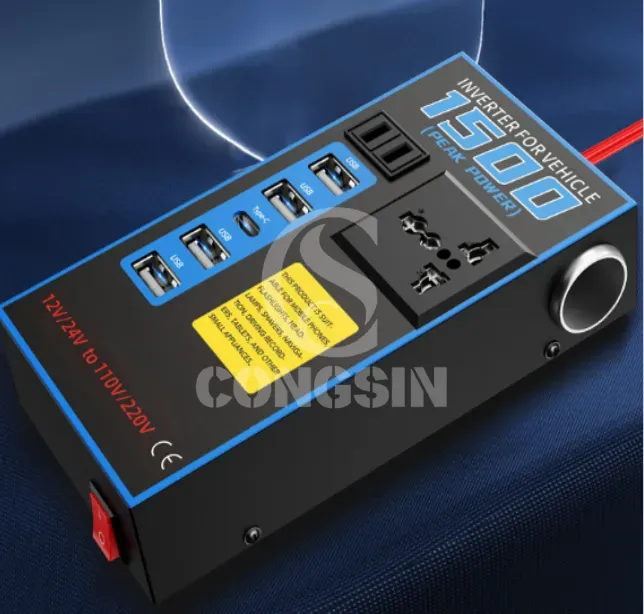
Congsin 1500W Inverter for Vehicle DC 12V/24V to AC 110V/220V with Universal socket Modified Sine Wave
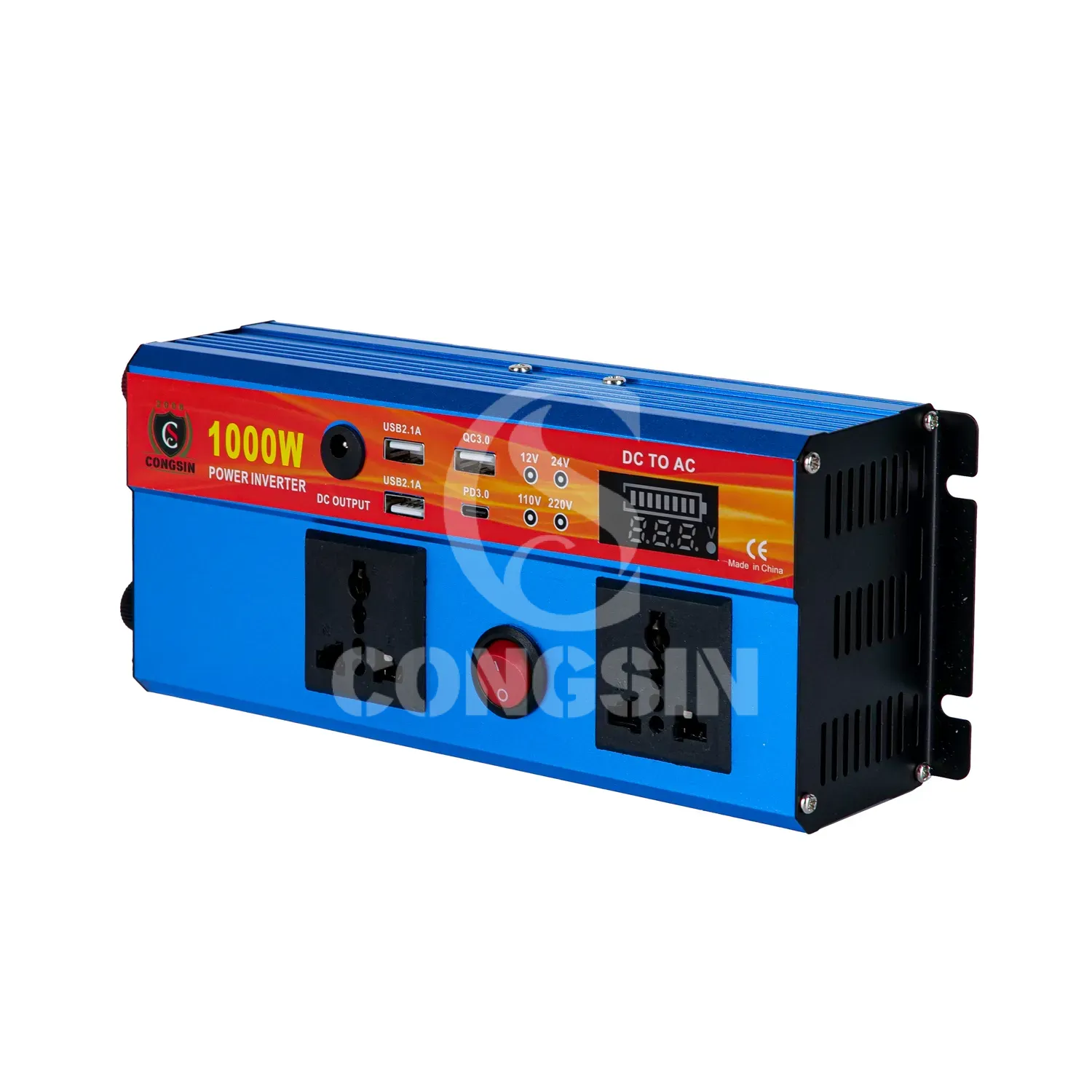
Congsin 1000W modified sine wave inverter with LED display and Type C port car RV power inverter
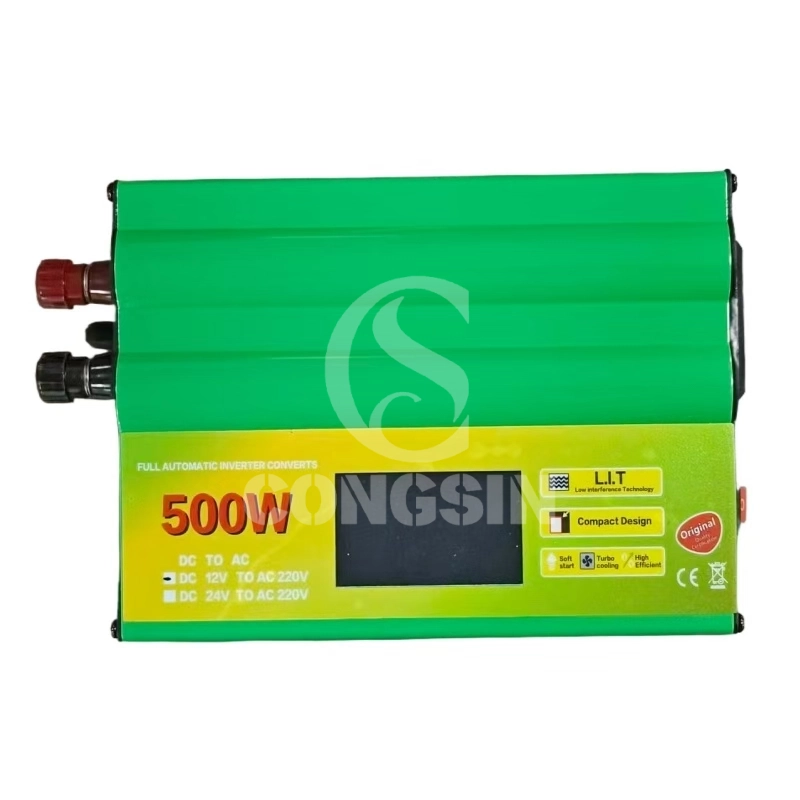
Congsin Modified Sine Wave Inverter 500W 1000W 1500W 12V LED Display Portable for RV Car Solar
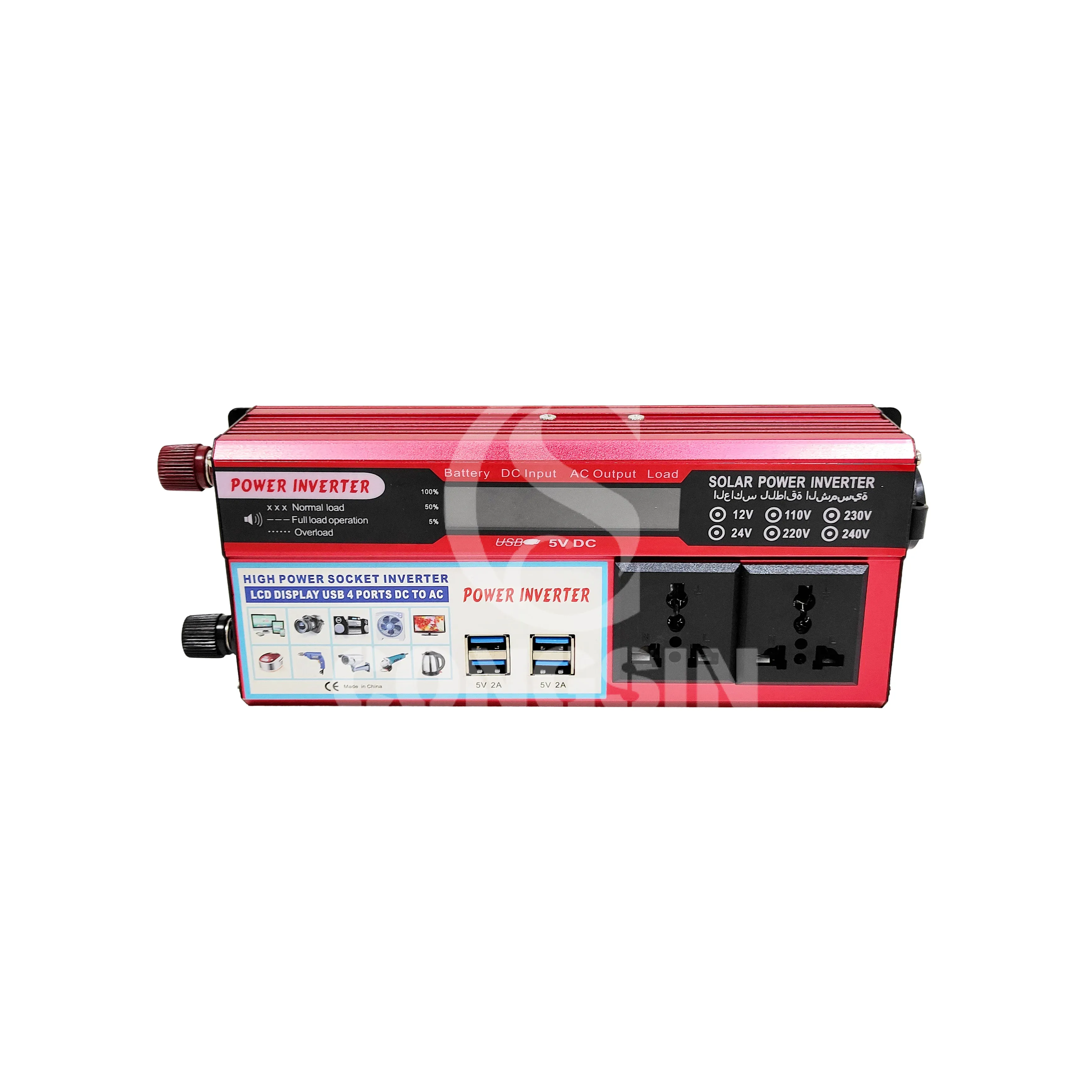
Congsin 1500W modified sine wave inverter with LCD display and USB ports for RV car boat home use

CONGSIN is a trusted OEM factory for power inverters, solar charge controllers, and DC converters. Reliable solutions for global B2B buyers.
 High Quality
 7/24 Service
 Guaranteed Warranty
© 2025 Congsin. All Rights Reserved.