





Pure Sine Car Inverter Efficiency and Battery Compatibility Tips
- Understanding inverter basics and why waveform matters
- What a pure sine car inverter does
- Waveform, THD and real-world efficiency
- Where conversion losses occur
- Maximizing pure sine car inverter efficiency
- Match inverter size to expected load
- Understand efficiency vs load curve
- Reduce standby losses and smart power modes
- Battery compatibility and sizing for vehicle installations
- Battery chemistry: lead-acid vs LiFePO4 and other lithiums
- Sizing example and practical calculation
- Recommended battery capacities for common mobile loads
- Installation, wiring and maintenance best practices
- DC input voltage matching and series/parallel battery setups
- Wire gauge, fuse sizing and connection quality
- Thermal management and placement
- Choosing the right pure sine car inverter and verifying performance
- Key specifications to evaluate
- Testing and verification
- Common failure modes and troubleshooting checklist
- Manufacturer profile: Guangzhou Congsin Electronic Technology Co., Ltd.
- FAQ — Common questions about pure sine car inverters and batteries
- 1. Why choose a pure sine car inverter over a modified sine model?
- 2. How do I calculate battery capacity for my inverter?
- 3. Can I run an induction motor or compressor from a car inverter?
- 4. Are lithium batteries compatible with all pure sine car inverters?
- 5. What cable size and fuse should I use?
- 6. How does temperature affect inverter efficiency and battery runtime?
- Contact and product inquiry
Pure sine car inverter installations require balancing inverter efficiency, real load behavior and battery characteristics to deliver reliable AC power from a vehicle DC source. This guide provides actionable, verifiable tips to maximize usable runtime, reduce energy loss, and ensure safe compatibility between pure sine car inverters and vehicle batteries—covering waveform benefits, efficiency tradeoffs, battery chemistry, correct sizing calculations, wiring and maintenance.
Understanding inverter basics and why waveform matters
What a pure sine car inverter does
A pure sine car inverter converts low-voltage DC (commonly 12V, 24V or 48V) into AC power with a smooth sinusoidal output suitable for sensitive electronics, motors and power supplies. Unlike modified or stepped sine outputs, a pure sine wave closely matches utility grid power and minimizes harmonic distortion (THD), improving compatibility and efficiency for many loads. For a technical overview of inverters and typical performance characteristics see Wikipedia: Inverter (electrical).
Waveform, THD and real-world efficiency
Pure sine wave output reduces electrical noise and heating in inductive loads (motors, compressors) and ensures switch-mode power supplies run efficiently. Total harmonic distortion (THD) is typically <3% on quality pure sine inverters versus much higher THD for modified sine designs—this directly affects device efficiency and longevity. While waveform quality doesn't change the inverter's DC→AC conversion efficiency in ideal conditions, it reduces downstream losses in many appliances, increasing overall system efficiency.
Where conversion losses occur
Conversion inefficiency comes from switching losses, transformer and inductor losses, control electronics, thermal losses and idle draw. Typical modern pure sine inverters achieve 90–95% peak efficiency under rated loads; at light loads efficiency drops because fixed quiescent power becomes a larger fraction of output. For general efficiency behavior of inverters see the U.S. Department of Energy overview on inverters and why efficiency matters: DOE: Solar inverters — what they are and why they matter.
Maximizing pure sine car inverter efficiency
Match inverter size to expected load
Oversizing an inverter by 3–5x the continuous load increases quiescent losses relative to useful output and may reduce system-level efficiency. Choose an inverter whose continuous rating is roughly 20–50% above typical continuous loads to balance headroom for efficiency and device stress. If you need large surge capacity for motors, consider an inverter with adequate surge-to-continuous ratio rather than grossly oversizing continuous rating.
Understand efficiency vs load curve
Most pure sine car inverters have a bell-shaped efficiency curve: peak efficiency at 50–75% of rated load, lower efficiency at very light or near-surge loads. When calculating runtime or selecting battery capacity, use inverter efficiency at the expected operating point, not peak efficiency. Manufacturer datasheets typically include an efficiency vs load curve—use those numbers in your power budget.
Reduce standby losses and smart power modes
Choose inverters with low idle draw (<0.5 A at 12V for high-efficiency models) and automatic low-power standby modes if loads are intermittent. For mobile applications where battery capacity is limited, standby power can be a major drain over days—low idle draw and auto-shutdown or ECO modes preserve battery life and increase usable runtime.
Battery compatibility and sizing for vehicle installations
Battery chemistry: lead-acid vs LiFePO4 and other lithiums
Common battery types for car and RV systems include flooded lead-acid, AGM, gel and lithium iron phosphate (LiFePO4). Each chemistry has different usable capacity (depth of discharge), charge acceptance rate, cycle life and discharge characteristics.
- Lead‑acid (flooded/AGM/gel): typically 50% recommended depth of discharge (DoD) for long life; limited cycle life and higher weight.
- LiFePO4: typically 80–90% usable DoD, higher cycle life, better high-rate discharge, and flatter voltage curve—excellent for inverter use but requires compatible charging/BMS.
For detailed battery behavior and Peukert effects (how available capacity falls at high discharge rates), see Battery University: Peukert's Law and other articles on charging: Battery University.
Sizing example and practical calculation
To estimate required battery capacity for a 12V vehicle system: first calculate load wattage, account for inverter efficiency, then convert to amp-hours (Ah).
Example: run a 300 W AC load for 4 hours from a 12 V battery through a pure sine car inverter with 90% efficiency.
- DC power required = AC load / inverter efficiency = 300 W / 0.90 = 333 W
- Battery current = DC power / battery voltage = 333 W / 12 V = 27.8 A
- Ah required for 4 hours = 27.8 A × 4 h = 111 Ah
- Account for DoD: with lead-acid (50% usable), required battery bank = 111 Ah / 0.5 = 222 Ah. With LiFePO4 (80% usable): = 111 / 0.8 = 139 Ah.
Always include a safety margin for temperature, Peukert losses at high current and aging (add 10–20% margin depending on conditions).
Recommended battery capacities for common mobile loads
Table: typical runtime estimates for a single 12 V battery bank at nominal 12 V using a 90% efficient inverter. These are example guidelines; measure actual draw and consult manufacturer datasheets for precise planning.
| AC Load (W) | Run Time (h) | Required Ah @12V (assuming 90% inverter eff) | Lead‑acid Bank (Ah) @50% DoD | LiFePO4 Bank (Ah) @80% DoD |
|---|---|---|---|---|
| 150 W (laptop, lights) | 4 h | (150/0.9)/12×4 ≈ 56 Ah | 112 Ah | 70 Ah |
| 300 W (small appliances) | 4 h | 111 Ah | 222 Ah | 139 Ah |
| 600 W (microwave short bursts) | 0.5 h | (600/0.9)/12×0.5 ≈ 28 Ah | 56 Ah | 35 Ah |
Installation, wiring and maintenance best practices
DC input voltage matching and series/parallel battery setups
Ensure the inverter nominal DC input (12/24/48 V) matches the battery system. For higher power and lower current runs, use 24 V or 48 V systems to reduce cable losses. When combining batteries, use matched, same-age batteries wired properly (series for higher voltage, parallel for capacity) and avoid mixing chemistries or unequal capacities which can cause imbalance and premature failure.
Wire gauge, fuse sizing and connection quality
Minimize voltage drop from battery to inverter by using appropriately sized cables. Voltage drop increases I²R losses and reduces inverter efficiency. Fuse the positive DC feed at battery side with an appropriately rated fuse or circuit breaker sized for continuous current plus a margin; consult inverter manual for recommended fuse rating. Use tight, corrosion-free connections and short cable runs. For guidance on DC fuse sizing and cable selection, refer to inverter manufacturer datasheets and electrical codes (local NEC or equivalent).
Thermal management and placement
Install inverters where ambient temperature is controlled and airflow is adequate. Heat increases internal losses and can trigger thermal throttling, lowering continuous output and efficiency. Keep ventilation clear, mount away from direct sunlight and avoid enclosed compartments without airflow.
Choosing the right pure sine car inverter and verifying performance
Key specifications to evaluate
When selecting a pure sine car inverter look for:
- Continuous and surge power ratings matching expected loads
- Efficiency curve and idle power consumption
- Output waveform quality (THD)
- Protections: overload, over/under voltage, temperature, short-circuit
- Certifications (CE, ETL, FCC, E-MARK) and quality system (ISO9001)
Testing and verification
Verify performance with a true RMS wattmeter and a battery monitor that measures real Ah throughput and voltage under load. Run real-world loads (motors, pumps, chargers) in controlled tests to observe inverter behavior under surge conditions and to measure actual efficiency at expected operating points.
Common failure modes and troubleshooting checklist
If an inverter trips or underperforms, check: battery voltage under load (is voltage sagging?), cable connections and fuse condition, thermal conditions (is inverter overheating?), and whether the load has high inrush currents. For motor loads, measure surge current and ensure inverter surge rating exceeds it. Replace aging batteries if internal resistance increases causing voltage sag—this is a common cause of unexpected shutdowns.
Manufacturer profile: Guangzhou Congsin Electronic Technology Co., Ltd.
Guangzhou Congsin Electronic Technology Co., Ltd., founded in early 1998, is a professional power inverter manufacturer with over 27 years of focused experience. We design, R&D and manufacture a wide range of power solutions—with a core emphasis on DC→AC power inverters, portable power stations, and solar charge controllers. Our catalog includes 100+ models tailored for vehicles, solar systems, RVs and trucks, off-grid homes, outdoor offices, patrol and field construction work.
We operate fully automated production lines, advanced instrumentation and multifunctional testing equipment to ensure product reliability, efficiency and intelligent functionality. Environmental and safety compliance are built in: our quality system is ISO9001 certified and many products hold international approvals such as CE, EMC, LVD, ETL, FCC, RoHS and E-MARK. Several independently developed patents further demonstrate our commitment to innovation.
Congsin’s products serve global markets across Europe, the Americas, the Middle East, Africa and Southeast Asia; many models are supplied to domestic and international OEM channels. Our support includes OEM/ODM, private labeling, distribution and bespoke customization to meet partner specifications. Our mission is to deliver reliable, efficient and affordable energy solutions that enable energy independence.
Key product categories: Solar Charge Controller, modified sine wave inverter, pure sine wave inverter, portable power stations. Congsin differentiates itself through long-term manufacturing experience (since 1998), extensive model range for vehicle and off-grid use, automated quality-controlled production and internationally recognized certifications—making its pure sine car inverter products a competitive choice for professional mobile power deployments.
FAQ — Common questions about pure sine car inverters and batteries
1. Why choose a pure sine car inverter over a modified sine model?
Pure sine inverters produce cleaner power with lower THD, improving compatibility with sensitive electronics, medical devices, variable-speed motors and switch-mode power supplies. They typically reduce audible noise and heating in inductive loads and prevent nuisance tripping in some appliances.
2. How do I calculate battery capacity for my inverter?
Estimate AC watt-hours needed, divide by inverter efficiency to get DC watt-hours, convert to amp-hours using battery voltage, and then account for usable DoD of your battery chemistry. See the sizing example in this article for step‑by‑step calculations.
3. Can I run an induction motor or compressor from a car inverter?
Yes, but check the inverter's surge rating. Motors have high start-up inrush currents (3–7× running current). Choose an inverter with sufficient surge capacity and ensure the battery can supply the short-term current without excessive voltage sag.
4. Are lithium batteries compatible with all pure sine car inverters?
Most inverters will run from LiFePO4 or Li‑ion batteries, but charging compatibility matters if your system includes an inverter/charger or alternator-based charging. Use a proper BMS and a charger/profile compatible with the lithium chemistry. If the inverter has a built-in charger, verify its charge voltages are appropriate for LiFePO4 or use an external charger configured correctly.
5. What cable size and fuse should I use?
Cable size depends on continuous DC current and acceptable voltage drop. Use thicker cables (lower AWG number) for higher currents and longer runs. Fuse at the battery with a rating recommended by the inverter manufacturer—usually slightly above the inverter's maximum continuous DC current rating. Consult the inverter manual and local electrical codes for precise guidance.
6. How does temperature affect inverter efficiency and battery runtime?
Higher temperatures increase inverter thermal losses and may trigger thermal protection, reducing output. Battery capacity and discharge performance are also temperature dependent; cold reduces usable capacity especially for lead‑acid types. Allow thermal management and consider insulating or heating batteries in extreme cold.
Contact and product inquiry
If you need tailored advice for vehicle installations, battery bank sizing, or OEM/ODM inverter solutions, contact Guangzhou Congsin Electronic Technology Co., Ltd. for technical consultation and product options. Explore Congsin’s range of pure sine wave inverters, portable power stations and solar charge controllers to match your vehicle power needs. For product specifications, customization and distribution inquiries, reach out to Congsin through their official channels.
Contact Congsin for consultation or view product catalogs to find the right pure sine car inverter and battery system for your application.
Cost vs Performance: Budget Pure Sine Car Inverters Worth Buying
Bidirectional Inverter vs Hybrid Inverter: Buyer Guide
Cost vs Performance: Is a 1000W Car Inverter Worth It?
Bidirectional Inverter Pricing, ROI and Cost Savings
Modified Sine Wave Inverters
How does the UPS function of this inverter work?
When the external power supply is normal, the inverter powers the device while charging the battery; when the external power supply is interrupted, it automatically switches to battery power to ensure uninterrupted operation of the device.
Is the cooling fan noisy during operation?
The noise is low (≤45 decibels, equivalent to normal conversation volume). The fan uses a silent motor and automatically adjusts the speed according to the device temperature (low-speed operation when temperature <40℃, high-speed operation when >60℃), balancing heat dissipation and noise.
Can this inverter run a refrigerator or power tools?
Recommended load ≤80% of rated power. For inductive loads, use a pure sine wave model.
Is it a pure sine wave or a modified sine wave? What's the difference?
This is a modified sine wave inverter, suitable for most conventional home appliances and electronic devices; pure sine wave is suitable for precision devices with extremely high power requirements. This modified sine wave is more cost-effective at 2000W, meeting the needs of most scenarios.
How does reverse protection work?
When the positive and negative poles of the battery are reversed, the inverter will automatically cut off the circuit to avoid device damage and ensure power usage safety.
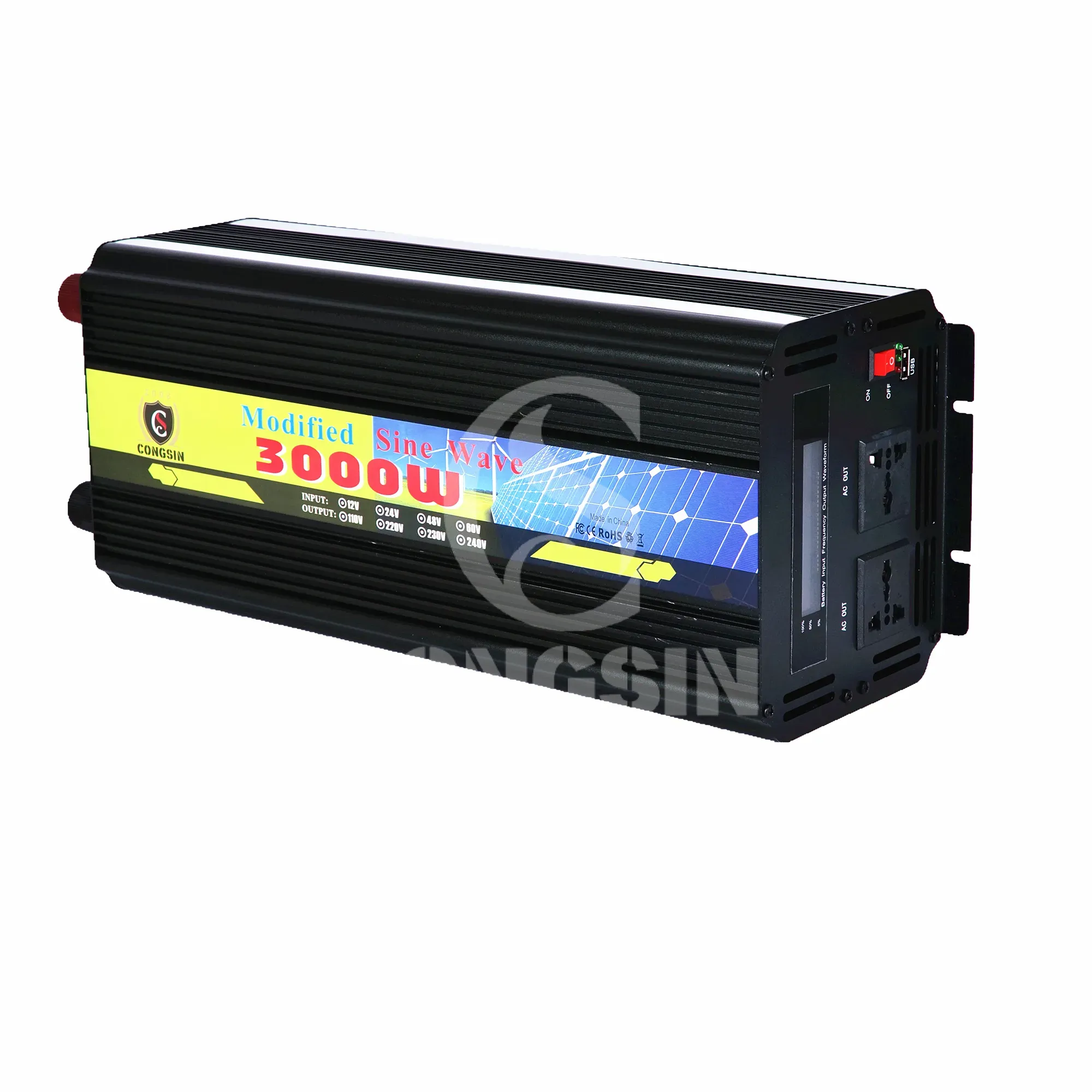
Congsin Full Power 3000W Modified Sine Wave Inverter Peak Power 6000W with LCD Display RV Solar
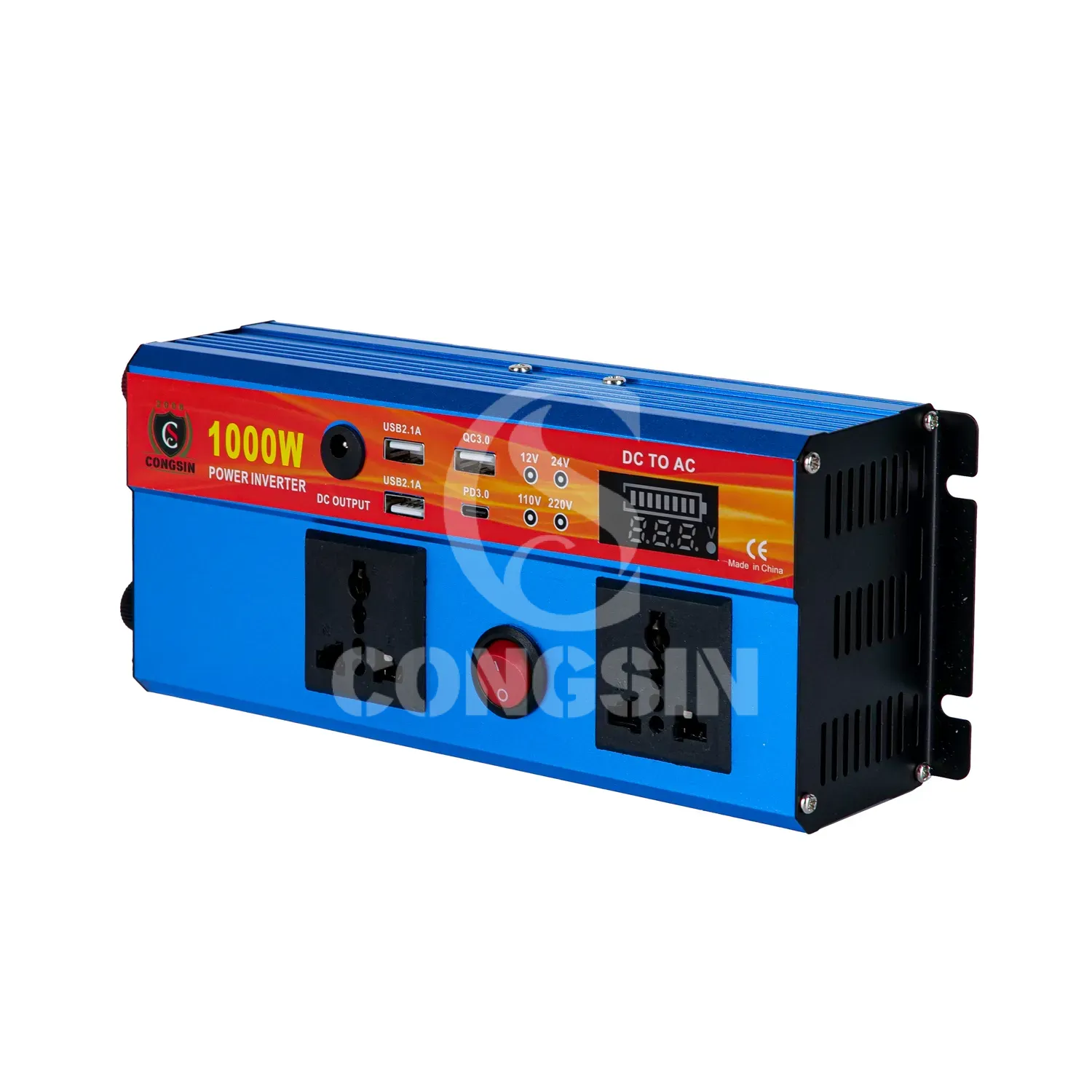
Congsin 1000W modified sine wave inverter with LED display and Type C port car RV power inverter
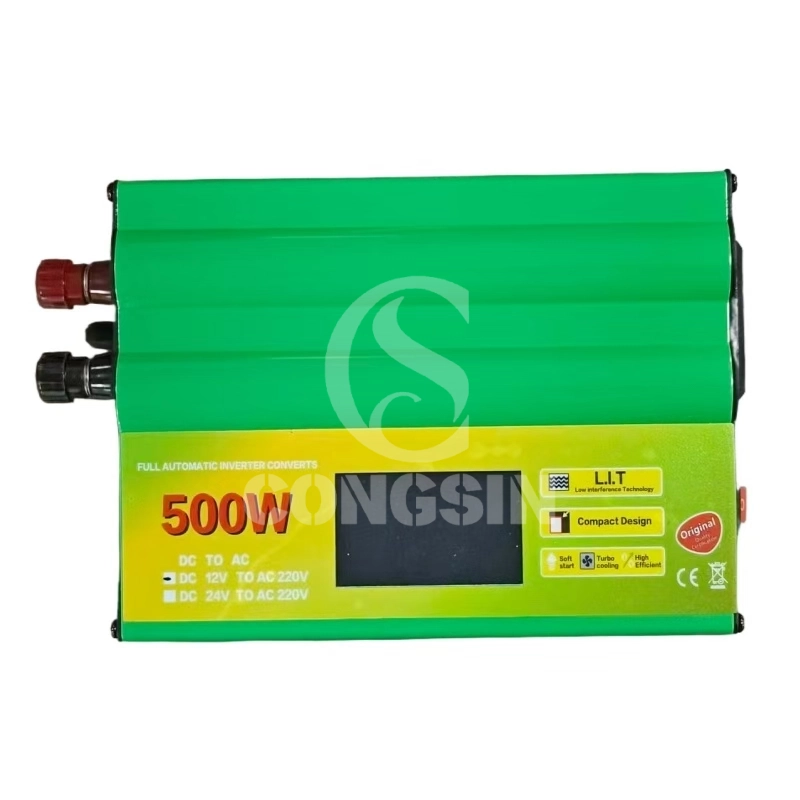
Congsin Modified Sine Wave Inverter 500W 1000W 1500W 12V LED Display Portable for RV Car Solar
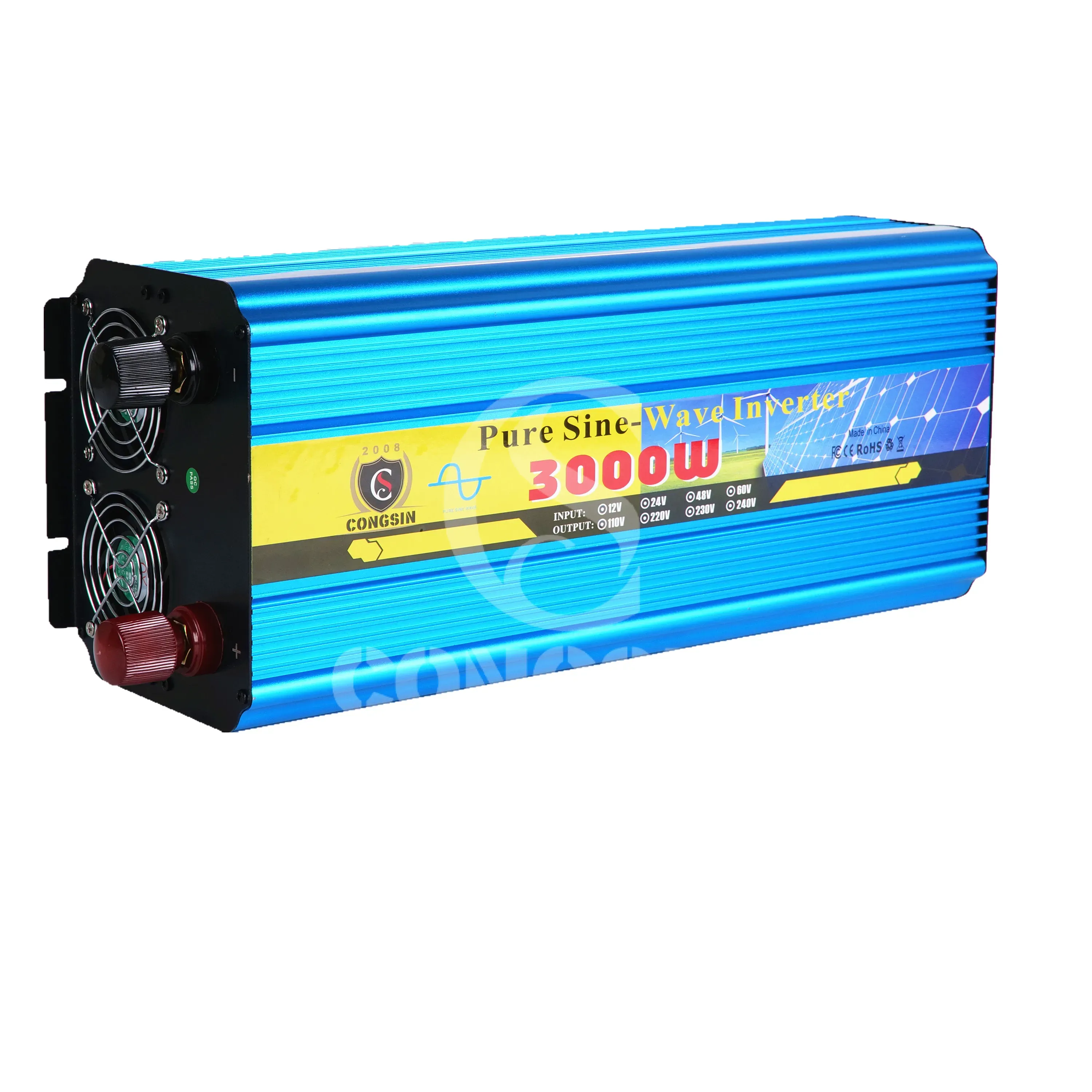
Congsin 3000W LCD Pure Sine Wave Inverter for Home Use Solar Backup Power Inverter Off Grid UPS

CONGSIN is a trusted OEM factory for power inverters, solar charge controllers, and DC converters. Reliable solutions for global B2B buyers.
 High Quality
 7/24 Service
 Guaranteed Warranty
© 2025 Congsin. All Rights Reserved.