





Portable Car Power Inverters for Camping and Emergencies
- Why portable vehicle power matters for outdoors and emergencies
- Use cases: camping, emergency backup and mobile work
- Benefits versus alternatives (generators, portable solar)
- Key risks and considerations
- Choosing the right inverter: waveform, power rating and features
- Waveform options: modified vs pure sine wave
- Sizing your inverter: continuous vs surge power
- Common features to look for
- Practical selection guide and sizing examples
- Device wattage examples and runtime estimation
- Run-time table examples (assumptions explained)
- Recommended inverter classes by use case
- Installation, wiring and safety best practices
- Mounting and ventilation
- Wiring, fuses and battery protection
- Maintenance and battery health
- Comparing inverter types and product classes
- Specification comparison
- Standards and certifications to verify
- Reference resources
- Guangzhou Congsin: manufacturer profile and product fit for mobile and emergency power
- Company overview and capability
- Product range and certifications
- Why Congsin can be a strong supplier for vehicle and camping power
- FAQ — common questions about portable car power inverters
- 1. Can I run a refrigerator from a car power inverter?
- 2. How long will my devices run from a car battery using an inverter?
- 3. Is a pure sine inverter necessary for camping?
- 4. How do I protect my vehicle battery from being drained?
- 5. Can I leave a power inverter connected while the car is off?
- 6. How do I choose between a standalone inverter and an integrated portable power station?
- Contact and next steps
Portable car power inverters convert 12V or 24V DC from a vehicle battery into usable 120V/230V AC to run appliances and electronics while camping, on road trips, or during power outages. For and local search relevance: consumers commonly look for compact “power inverter car” solutions for van life, RV camping, tailgating, storm preparedness and mobile workstations; they want clear guidance on sizing, waveform types, installation safety, run-time estimation, and trusted manufacturers that provide certifications like ISO9001 and CE. This article lays out practical steps to select, install and maintain a portable inverter, with real-world examples and manufacturer capabilities to help buyers and specifiers make informed choices.
Why portable vehicle power matters for outdoors and emergencies
Use cases: camping, emergency backup and mobile work
Portable inverters turn your car, SUV, truck or RV into a temporary power source. Common scenarios include: powering CPAP machines and medical devices during outages; running refrigerators and slow cookers while camping; charging laptops, phones, cameras and drones for remote work; and powering tools at field work or patrol stations. The term power inverter car is often used by users searching for compact, vehicle-compatible units optimized for these scenarios.
Benefits versus alternatives (generators, portable solar)
Compared with gas generators, a DC→AC inverter installed in a car is quieter, emits no exhaust when used with the vehicle (but be mindful of battery drain), and is often lower maintenance. Paired with a vehicle battery bank and solar charging, an inverter enables near-silent, off-grid operation. For reference on inverter basics and types of inverters see Wikipedia: Inverter (electrical).
Key risks and considerations
Main risks include overloading the inverter, poor ventilation leading to overheating, battery depletion, incorrect wiring, and lack of surge protection. Users should also consider electromagnetic interference for sensitive equipment and the difference between continuous and surge (peak) power ratings.
Choosing the right inverter: waveform, power rating and features
Waveform options: modified vs pure sine wave
There are two common waveform types for portable inverters: modified (or stepped) sine and pure sine wave. Pure sine inverters produce a clean AC waveform similar to grid power and are essential for sensitive electronics, variable-speed motors, medical devices and some chargers. Modified sine inverters are less expensive and acceptable for resistive loads and basic electronics but can cause extra heat, noise, or malfunction in some appliances.
Sizing your inverter: continuous vs surge power
Select an inverter with a continuous output rating that exceeds the total running wattage of connected devices, and a surge rating sufficient for starting loads (motors and compressors). A simple sizing process:
- List the running watts of each device.
- Identify highest startup (surge) watt for motor-driven devices.
- Choose inverter continuous rating ≥ total running watts and surge rating ≥ highest startup watt.
Common features to look for
Important features include: battery low-voltage cutoff, overload protection, over-temperature shutdown, multiple AC outlets and USB ports, remote switch option, LED indicators, and certifications (CE, FCC, ETL, RoHS). For solar-integrated use, look for models with built-in MPPT chargers or compatibility with separate charge controllers.
Practical selection guide and sizing examples
Device wattage examples and runtime estimation
To estimate runtime from a car battery or portable battery, use: runtime (hours) = battery capacity (Wh) × usable fraction ÷ device power (W). For a lead-acid or lithium battery in a vehicle, consider inverter efficiency (typically 85–95% for pure sine units). Below are typical device wattages used in sizing calculations:
- Laptop charger: 45–90 W
- Portable fridge: 40–100 W (average)
- CPAP: 30–70 W
- Small microwave: 700–1000 W
Run-time table examples (assumptions explained)
Assumptions: inverter efficiency 90% (pure sine), battery usable capacity 800 Wh (for a deep-cycle 100 Ah, 12V battery usable ~80% ≈ 960 Wh; conservative 800 Wh used). The runtime numbers are approximate and intended for planning.
| Device | Device Power (W) | Estimated Runtime from 800 Wh (hrs) |
|---|---|---|
| Laptop (60 W) | 60 | ~(800×0.9)/60 = 12 hrs |
| Portable fridge (60 W avg) | 60 | ~12 hrs |
| CPAP (50 W) | 50 | ~14.4 hrs |
| Small microwave (800 W) | 800 | ~0.9 hrs (~54 minutes) |
For precise runtime planning, measure actual device consumption and include inverter efficiency and battery state of charge. For solar recharging or long trips, factor in solar array power and charge controller efficiency.
Recommended inverter classes by use case
Short list:
- Camping, phone/laptop charging, lights: 300–600W pure sine inverter or a 300–1000W portable power station.
- Running a small fridge and multiple devices: 600–1500W pure sine inverter.
- Running microwaves, high-power tools: 2000W+ inverter with appropriate starter surge capability and heavy-duty wiring.
Installation, wiring and safety best practices
Mounting and ventilation
Install the inverter in a dry, ventilated location away from direct heat or fuel vapors. Maintain clearance per the manufacturer’s instructions to allow fan cooling and avoid dust build-up.
Wiring, fuses and battery protection
Use appropriately gauged cables rated for the inverter’s continuous current. Place a fuse or circuit breaker close to the battery positive terminal sized to the inverter’s maximum input current. Poor wiring increases voltage drop and heat—both reduce effective power and risk failure.
Maintenance and battery health
Keep battery terminals clean and tight, monitor state of charge, and avoid deep discharges unless using deep-cycle batteries. Regularly inspect inverter fans, vents and case for dust and corrosion. Test safety functions (shutdowns, alarms) periodically.
Comparing inverter types and product classes
Specification comparison
| Type | Output Waveform | Typical Efficiency | Best For | Pros | Cons |
|---|---|---|---|---|---|
| Modified sine inverter | Approx. stepped/modified | 80–90% | Simple resistive loads, basic chargers | Lower cost | May cause humming, heat, or incompatibility with sensitive devices |
| Pure sine inverter | Clean sinusoidal AC | 90–95% | Sensitive electronics, motors, medical devices | Reliable performance, safe for all devices | Higher cost |
| Portable power stations (integrated) | Usually pure sine | 80–95% (varies) | All-in-one camping and emergency use | Built-in battery, outlets, often solar input | Limited by onboard battery capacity |
Standards and certifications to verify
Look for ISO9001 quality systems and international approvals (CE, EMC, LVD, ETL, FCC, RoHS, E-MARK) which demonstrate compliance with safety and emissions requirements. For background on quality management standards, see ISO 9001.
Reference resources
For technical background on inverters and solar connections, consult the U.S. Department of Energy: Solar Inverters — U.S. DOE, and the inverter overview at Wikipedia.
Guangzhou Congsin: manufacturer profile and product fit for mobile and emergency power
Company overview and capability
Guangzhou Congsin Electronic Technology Co., Ltd., founded in early 1998, is a professional power inverter manufacturer with over 27 years of focused experience. The company designs, R&D and manufactures a wide range of power solutions—with a core emphasis on DC→AC power inverters, portable power stations, and solar charge controllers. Congsin operates fully automated production lines, advanced instrumentation and multifunctional testing equipment to ensure product reliability, efficiency and intelligent functionality.
Product range and certifications
Congsin’s catalog includes 100+ models tailored for vehicles, solar systems, RVs and trucks, off-grid homes, outdoor offices, patrol and field construction work. Their product family covers Solar Charge Controllers, modified sine wave inverters, pure sine wave inverters and portable power stations. Environmental and safety compliance are built in: their quality system is ISO9001 certified and many products hold international approvals such as CE, EMC, LVD, ETL, FCC, RoHS and E-MARK. Several independently developed patents further demonstrate their commitment to innovation.
Why Congsin can be a strong supplier for vehicle and camping power
Key competitive points: long manufacturing history focused on inverter technology, broad model range enabling correct sizing from small vehicle inverters to large off-grid systems, automated production for consistent quality, and global distribution reaching Europe, the Americas, the Middle East, Africa and Southeast Asia. Services include OEM/ODM, private labeling, distribution and bespoke customization to meet partner specifications. These capabilities position Congsin well for providing reliable “power inverter car” solutions for both retail customers and commercial OEM partners.
FAQ — common questions about portable car power inverters
1. Can I run a refrigerator from a car power inverter?
Yes, but size the inverter for the refrigerator’s startup surge (often several times the running wattage). Use a pure sine inverter for compressor-driven fridges. Estimate average draw and consider duty cycle—portable fridges typically draw 40–100 W on average.
2. How long will my devices run from a car battery using an inverter?
Runtime depends on battery capacity (Wh), inverter efficiency, and device power. Use runtime = (battery Wh × usable fraction × inverter efficiency) ÷ device W. For example, an 800 Wh usable battery powering a 60 W laptop at 90% inverter efficiency runs ~12 hours.
3. Is a pure sine inverter necessary for camping?
For sensitive electronics (laptops, cameras, variable-speed tools), medical devices (CPAP) and compressors, yes—pure sine is recommended. For simple charging and resistive loads, a modified sine inverter can work but may cause inefficiencies or noise.
4. How do I protect my vehicle battery from being drained?
Use low-voltage disconnect features, monitor state of charge, add a secondary deep-cycle battery for camping, or use a portable power station. Consider a battery isolator or DC-DC charger if using the alternator and house batteries during driving.
5. Can I leave a power inverter connected while the car is off?
It’s possible but not recommended without safeguards. Continuous loads can deplete the starting battery. Use a dedicated house battery with proper isolation, or use automatic low-voltage cutoff to protect the starter battery.
6. How do I choose between a standalone inverter and an integrated portable power station?
Choose a standalone inverter if you want continuous, vehicle-tied power with larger capacity and the ability to draw from a battery bank. Choose a portable power station for plug-and-play simplicity, built-in battery and often integrated solar input for camping and short-term emergency use.
Contact and next steps
If you need reliable vehicle-compatible inverters, portable power stations, or solar charge controllers tailored for camping and emergency scenarios, consider Guangzhou Congsin Electronic Technology Co., Ltd. Their decades of focused inverter R&D, automated manufacturing, wide model range and international certifications make them a strong partner for OEM and end-user solutions. Contact Congsin for OEM/ODM, private labeling or to request product datasheets and sample testing. Visit the company’s sales channels or request a quote to match a “power inverter car” model to your specific use case.
References: U.S. Department of Energy — Solar Inverters — energy.gov; Wikipedia: Inverter (electrical); ISO — ISO 9001.
240V Car Inverter Buying Guide: Choose the Right Model
Compare High Frequency vs Low Frequency Power Inverters
Pure Sine Wave vs Modified: Which Car Inverter to Buy
Pure Sine Wave vs Modified Sine Wave Car Inverters
Modified Sine Wave Inverters
Can I customize the color and logo?
Yes, OEM/ODM customization is supported.
What devices can it power?
Suitable for fans, lights, TVs, laptops, and small electric tools.
Distributor
Do I need to carry inventory?
We offer flexible inventory options based on your market needs, and we can assist with supply chain management.
What kind of support can I expect from Feifan after becoming a distributor?
You will receive ongoing sales support, product training, technical assistance, and marketing resources to ensure your success.
Pure Sine Wave Inverters
Can this inverter drive a 3P air conditioner and a refrigerator at the same time?
Yes. The rated power of a 3P air conditioner is about 2200W-2500W, and an ordinary double-door refrigerator is about 150W-300W, with a total power of about 2350W-2800W, which does not exceed the 3000W continuous power; and the peak 6000W can cope with the instantaneous startup impact of the air conditioner. When using, ensure the battery capacity is ≥200Ah (12V) to ensure battery life.
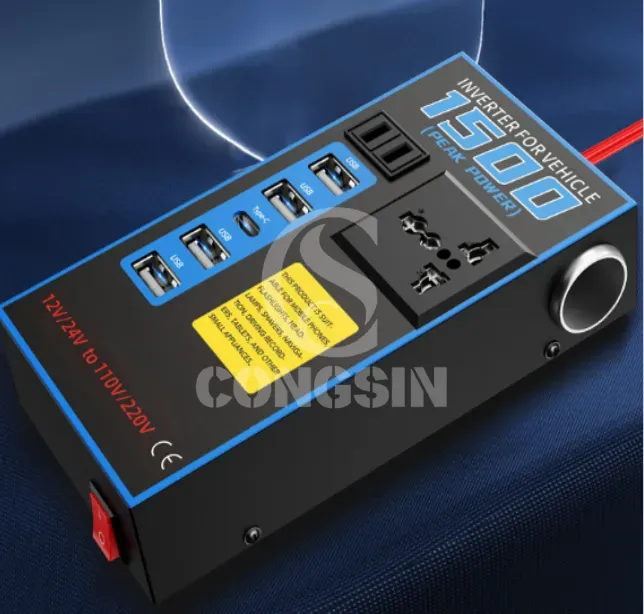
Congsin 1500W Inverter for Vehicle DC 12V/24V to AC 110V/220V with Universal socket Modified Sine Wave
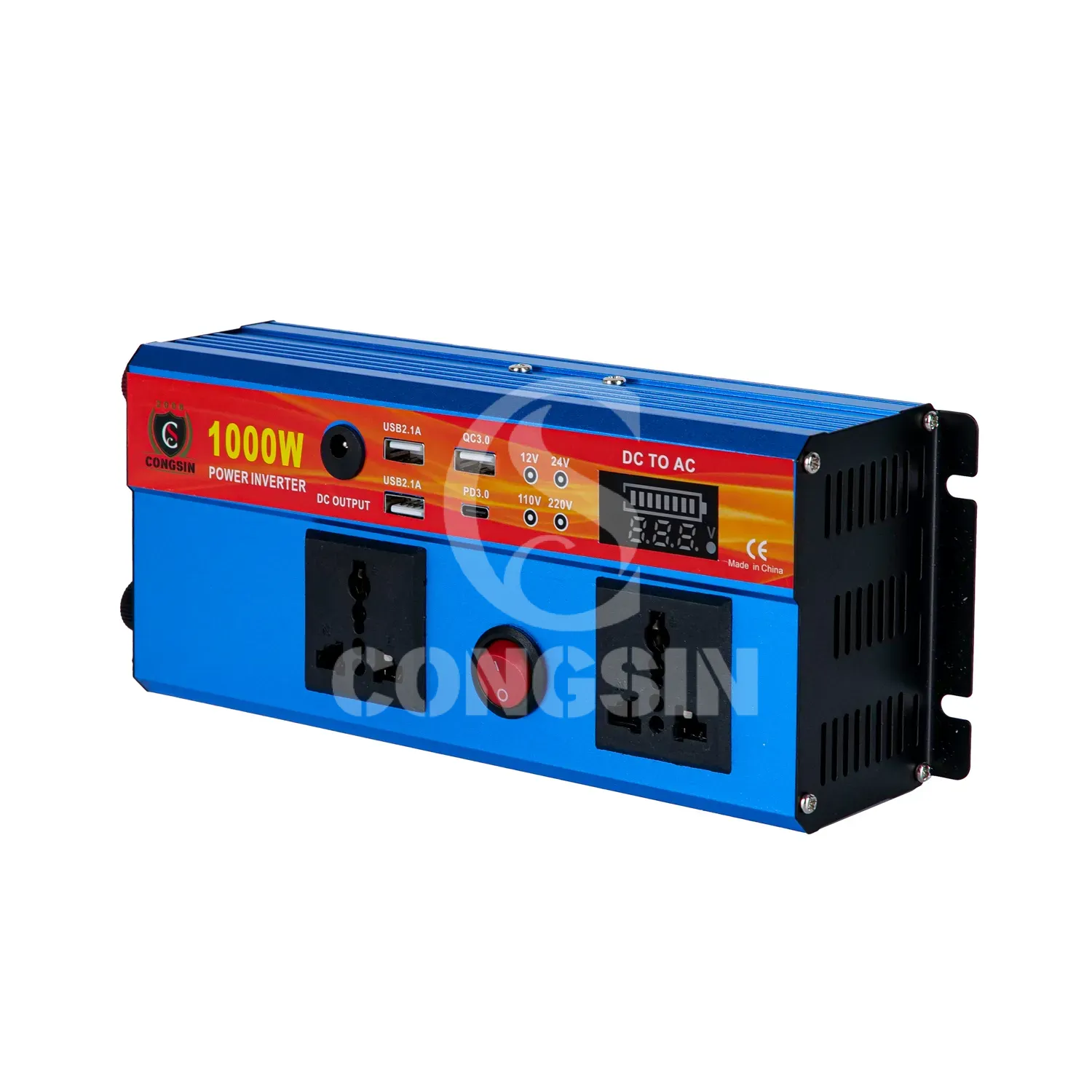
Congsin 1000W modified sine wave inverter with LED display and Type C port car RV power inverter
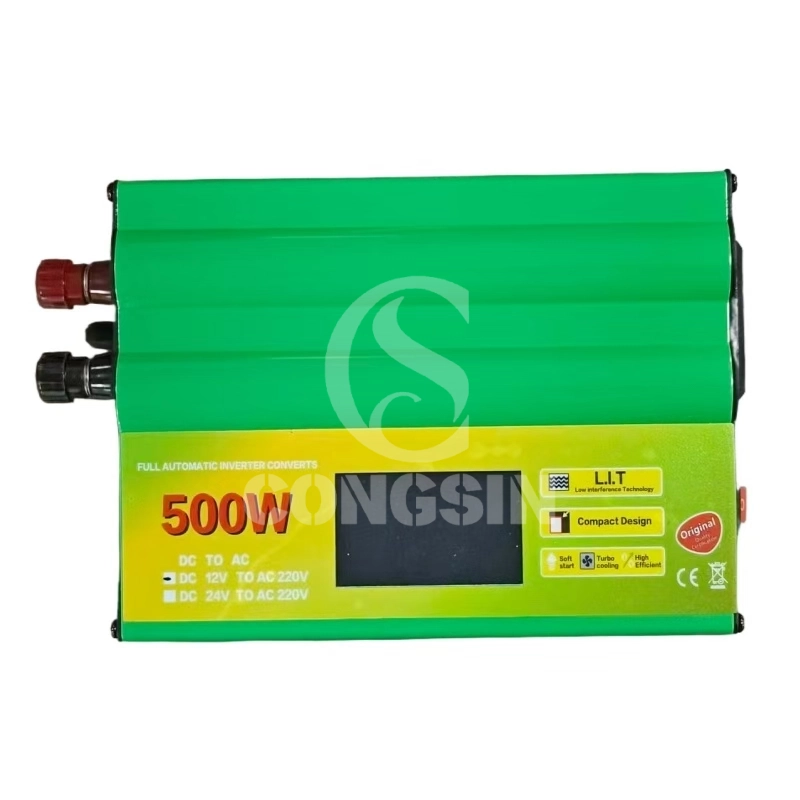
Congsin Modified Sine Wave Inverter 500W 1000W 1500W 12V LED Display Portable for RV Car Solar
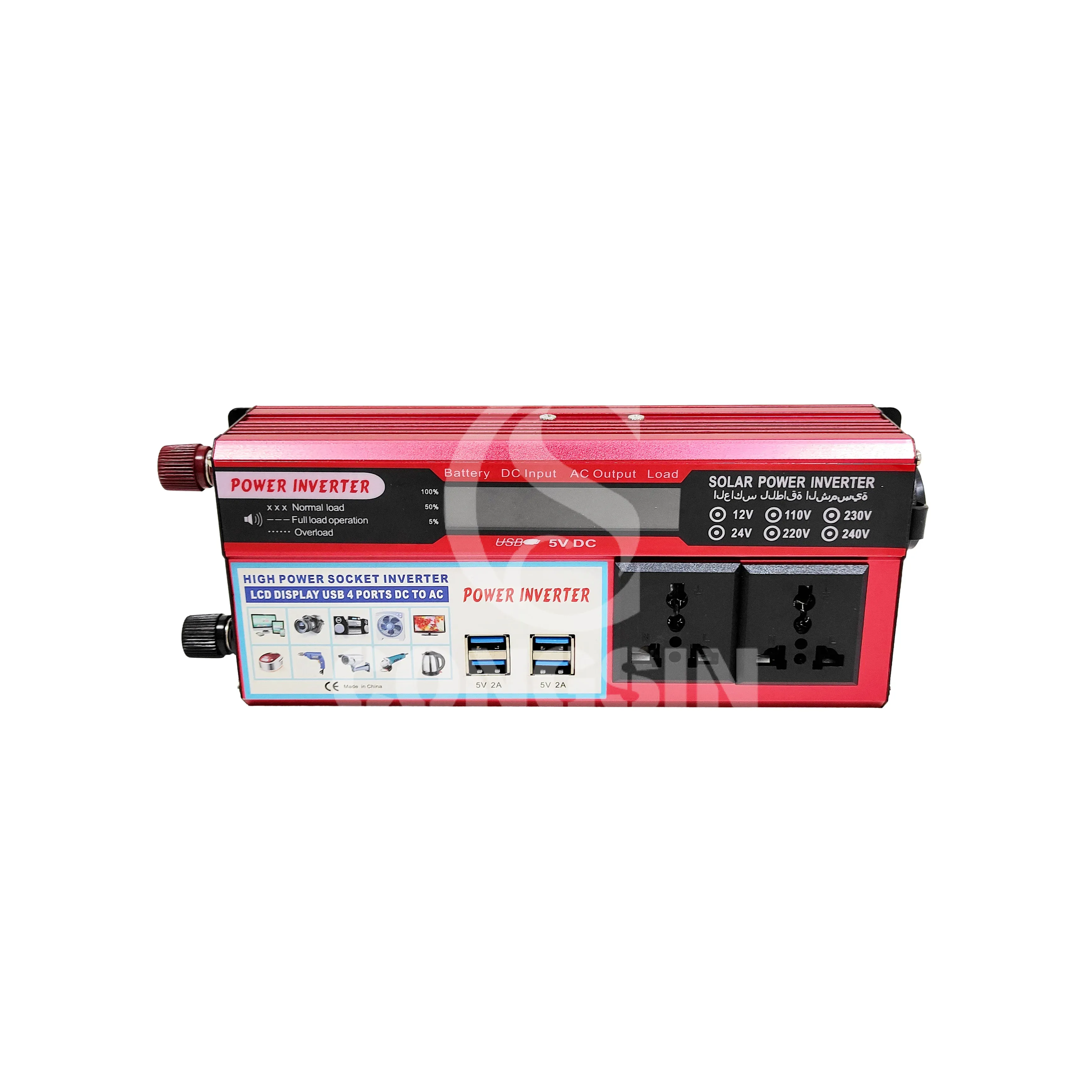
Congsin 1500W modified sine wave inverter with LCD display and USB ports for RV car boat home use

CONGSIN is a trusted OEM factory for power inverters, solar charge controllers, and DC converters. Reliable solutions for global B2B buyers.
 High Quality
 7/24 Service
 Guaranteed Warranty
© 2025 Congsin. All Rights Reserved.