





2026 Ultimate Guide: Why Off-Grid Hybrid Solar Inverters Are the Game-Changer You Need [Buyer's Checklist]
- What Is an Off-Grid Hybrid Solar Inverter?
- Quick Summary: Key Takeaways
- How Hybrid Inverters Differ from Pure Off-Grid and On-Grid Systems
- Why Off-Grid Hybrid Systems Are Essential for 2026 and Beyond
- The Ultimate 2026 Buyer's Checklist: How to Choose Your Inverter
- Expert Tips & Common Mistakes to Avoid
- Industry-Leading Solutions for Maximum Efficiency
- Conclusion
- FAQ
- Can an off-grid hybrid inverter work without a battery?
- What size hybrid inverter do I need to run a whole house?
- Are off-grid hybrid inverters legal to connect to the grid?
- How long do hybrid solar inverters last?
- Is a pure sine wave inverter better than a modified sine wave?
- What is the difference between AC and DC coupling in hybrid systems?
- Do hybrid inverters automatically switch on during a power outage?
- Can I install a hybrid solar inverter myself?
What Is an Off-Grid Hybrid Solar Inverter?
An off-grid hybrid solar inverter is a centralized energy management device that converts DC power from solar panels into AC power for home use while simultaneously managing battery storage. It features bi-directional power flow, allowing it to draw from the grid when necessary or operate completely autonomously during outages.
Unlike traditional models, a modern hybrid system intelligently functions as the "brains" of your entire electrical setup. It decides when to use solar energy, when to store it in your battery bank, and when to pull from or push to the utility grid. This seamless interaction provides unparalleled reliability.
Key functionalities include:
- Energy Conversion: Transforming raw direct current (DC) into usable alternating current (AC) for household appliances.
- Smart Energy Routing: Automatically diverting surplus solar production to charge battery banks before exporting to the grid.
- Autonomous Operation: Instantly severing grid ties during a blackout to form an independent microgrid, keeping your essential loads running safely without interruption.
Quick Summary: Key Takeaways
The key takeaways are that hybrid inverters offer the ultimate flexibility by combining grid-connected convenience with complete off-grid reliability. They feature built-in charge controllers and a dual MPPT tracker to maximize your solar yield across varying weather conditions in 2026.
Upgrading to a next-generation model ensures you are ready for the evolving energy landscape. The most notable benefits for modern homeowners include:
- Grid and Off-Grid Harmony: Enjoy the financial perks of net metering alongside the security of autonomous backup power.
- Advanced Solar Yield: Built-in charge tracking mitigates the effects of complex roof angles, shading from trees, and passing clouds, ensuring every drop of sunlight is captured.
- Smart-Home Readiness: Modern units seamlessly integrate with artificial intelligence home management systems and advanced battery chemistries, securing your investment for years to come.
How Hybrid Inverters Differ from Pure Off-Grid and On-Grid Systems
Hybrid inverters differ from traditional setups by seamlessly transitioning between grid and battery power. While on-grid systems shut down during outages and pure off-grid setups require massive battery banks, a solar battery backup system utilizing a hybrid inverter offers peak shaving, net metering, and robust emergency backup.
Understanding the limitations of legacy systems highlights exactly why hybrid architecture is superior:
- On-Grid Limitations: Standard string inverters rely entirely on utility power. For safety and compliance reasons, they must completely shut down during a grid failure, leaving homeowners in the dark despite having perfectly functioning solar panels on their roof.
- Off-Grid Autonomy: Pure off-grid systems are fully independent, but this independence comes at a high cost. They require massive, highly expensive battery banks to survive several consecutive cloudy days, leading to a much longer return on investment.
- The Hybrid Advantage: Hybrid models bridge the gap. They utilize grid power as a secondary backup when battery levels run low, enabling you to install a smaller, more cost-effective battery bank while still guaranteeing power security during severe outages.
Why Off-Grid Hybrid Systems Are Essential for 2026 and Beyond
Off-grid hybrid systems are essential for 2026 because they combat grid instability and optimize Time-of-Use (TOU) rates. They prepare homes for the future by discharging batteries during peak pricing hours, integrating EV charging, and enabling scalable smart microgrid setups.
The energy landscape is shifting rapidly, making standard solar installations less viable. Here is why upgrading is critical:
- Combating Grid Instability: With extreme weather events like hurricanes and heatwaves becoming more frequent, power grids are under unprecedented strain. Hybrid systems guarantee your lights stay on, protecting your family and sensitive electronics during rolling blackouts.
- Time-of-Use Optimization: Because peak utility rates typically occur in the evening (when solar panels stop producing), homeowners can rely on their stored energy to avoid high costs. In fact, as reported by SolarReviews, time-of-use pricing drastically rewards homeowners who can shift their grid energy consumption to off-peak times by deploying smart battery storage.
- Future-Proofing for Tomorrow: As electric vehicle (EV) adoption surges, home electricity consumption will skyrocket. A hybrid inverter manages this massive new load seamlessly, balancing EV chargers against household appliances to prevent panel overloads.
The Ultimate 2026 Buyer's Checklist: How to Choose Your Inverter
To choose the right inverter, you must evaluate power sizing, surge capacity, and battery compatibility. Your checklist should prioritize a pure sine wave inverter for sensitive electronics, dual tracking for complex roofs, and an IP65 rating for safe outdoor installation.

When navigating the market, strictly adhere to these criteria to secure a high-performance unit:
- Power Sizing & Surge Capacity: Always calculate your continuous wattage needs versus starting surge loads. Large appliances, such as HVAC units and well pumps, demand massive instantaneous power (Locked Rotor Amps). Ensure your inverter's surge rating is at least double its continuous rating.
- Battery Compatibility: Modern systems must support both high-voltage lithium-ion (LiFePO4) frameworks and legacy lead-acid battery banks, giving you flexibility in your storage budget.
- MPPT Trackers: Choose units with dual or quad Maximum Power Point Tracking (MPPT). This is non-negotiable for homes with multi-angled roofs or partial shading issues, as it allows independent optimization of different solar panel strings.
- Waveform Quality: Demand pure sine wave output. Unlike cheaper modified sine wave variants, pure sine models replicate the exact electrical wave supplied by the utility grid, extending the lifespan of sensitive electronics like laptops, medical devices, and smart TVs.
- IP Rating: Verify that the enclosure carries an IP65 or IP66 rating. This guarantees the internal circuitry is shielded against heavy dust, rain, and snow, making it safe for weatherproof outdoor installations.
Expert Tips & Common Mistakes to Avoid
The most common mistake to avoid is undersizing your inverter’s surge capacity, which leads to system crashes when heavy appliance motors start. Always ensure your setup complies with local utility regulations and over-provision your solar array by 20 percent.
Even with the best hardware, improper planning can throttle your system's efficiency. Keep these expert strategies in mind:
- Mistake: Undersizing Surge Capacity: Do not merely add up the running wattage of your appliances. If an air conditioner kicks on while the refrigerator compressor is running, an undersized inverter will fault and shut down.
- Mistake: Ignoring Local Regulations: Connecting to the public grid requires strict compliance. Specifically, anti-islanding protection is a legal necessity. As detailed by Intertek, UL 1741 compliance guarantees safe grid integration and ensures the system will not backfeed lethal voltage into power lines, protecting utility maintenance workers during local blackouts.
- Tip: Over-Provision Solar Arrays: Always size your solar panel capacity about 20% higher than your inverter's maximum output. This compensates for natural panel degradation over time, shading losses, and high-heat efficiency drops.
- Tip: Keep Firmware Updated: Modern inverters are highly software-driven. Regularly updating the unit's firmware unlocks new smart monitoring features, optimizes energy flow algorithms, and drastically improves overall battery longevity.
Industry-Leading Solutions for Maximum Efficiency
Industry-leading solutions provide sub-20ms transfer times, ensuring your lights never flicker during an outage. Companies like Guangzhou Congsin Electronic Technology Co., Ltd. deliver highly efficient hybrid inverter charger systems built with military-grade components and intelligent monitoring applications to maximize your return on investment.
Investing in tier-one manufacturing is the only way to guarantee decades of uninterrupted service. When evaluating top brands, look for:
- Seamless Transfer Times: High-quality units feature Automatic Transfer Switches (ATS) capable of shifting from grid to battery power in under 20 milliseconds, keeping computers and Wi-Fi routers perfectly online.
- Congsin’s Proven Expertise: Founded in 1998, Guangzhou Congsin Electronic Technology Co., Ltd. brings over 27 years of dedicated manufacturing experience to the solar sector. Operating fully automated, ISO9001-certified production lines, they offer over 100 power-solution models. Their focus on rigorous R&D results in products boasting CE, FCC, and RoHS compliance. Whether you need an industrial setup or Remote-home Off-Grid Power Solutions, their custom OEM/ODM capabilities and advanced testing instrumentation ensure absolute reliability.
- Real-World ROI: Leveraging superior technology allows for self-consumption optimization. By intelligently routing power, premium units actively drive down monthly utility dependencies, paying for themselves in record time.
Conclusion
Off-grid hybrid solar inverters are the definitive solution for achieving energy independence without sacrificing reliability. By utilizing our 2026 buyer's checklist, you can confidently invest in a system that fits your home, budget, and future energy needs.
These advanced devices blend the very best of grid-tied convenience with off-grid resilience. By accounting for proper surge loads, demanding pure sine wave outputs, and leveraging smart-grid features to offset Time-of-Use rates, your solar setup will be thoroughly future-proofed against rising utility costs and unpredictable weather events.
Contact us today to optimize your off-grid hybrid solar strategy.
FAQ
Can an off-grid hybrid inverter work without a battery?
Yes, some modern hybrid inverters can operate without a battery by supplying solar power directly to your loads. However, without a battery, you will lose backup capabilities during a grid outage.
What size hybrid inverter do I need to run a whole house?
For a standard home, you typically need an inverter sized between 8kW and 12kW. It depends entirely on your simultaneous peak energy usage, including heavy loads like AC units and electric water heaters.
Are off-grid hybrid inverters legal to connect to the grid?
Yes, provided they meet your local utility's certifications (such as UL 1741 in the US) for anti-islanding protection, preventing them from backfeeding power into the grid during a blackout.
How long do hybrid solar inverters last?
A high-quality hybrid inverter usually lasts between 10 to 15 years. Proper ventilation, regular dust cleaning, and keeping the unit out of direct sunlight can maximize its lifespan.
Is a pure sine wave inverter better than a modified sine wave?
Absolutely. Pure sine wave inverters replicate the exact power supplied by the grid, ensuring sensitive electronics like computers, TVs, and medical equipment run safely and efficiently.
What is the difference between AC and DC coupling in hybrid systems?
DC coupling routes solar energy directly to the battery with high efficiency. AC coupling converts DC to AC first (often via microinverters) and is generally easier to retrofit into existing solar setups.
Do hybrid inverters automatically switch on during a power outage?
Yes. High-quality hybrid models feature an automatic transfer switch (ATS) with a response time of less than 20 milliseconds, providing seamless backup power without interrupting your appliances.
Can I install a hybrid solar inverter myself?
While highly skilled DIYers can mount the hardware, connecting hybrid systems involves lethal voltages and complex utility regulations. Professional installation by a certified electrician is strongly recommended.
Comparing Brands: Renogy vs Victron 2000W Pure Sine Inverters

The 2026 Ultimate Guide to Off-Grid Solar Panel Kits: Battery and Inverter Included [Complete Setup]
Pure Sine Car Inverter Efficiency and Battery Compatibility Tips
How to Choose the Best MPPT Charge Controller for Inverters
Modified Sine Wave Inverters
What devices can it power?
Suitable for fans, lights, TVs, laptops, and small electric tools.
Is it compatible with both 12V and 24V vehicles?
Yes, it supports DC12V/24V dual input.
Pure Sine Wave Inverters
What is the reason for the inverter automatically shutting down during operation?
It is likely that the protection mechanism is triggered: 1. Load overload (total power of connected devices exceeds 1000W); 2. Abnormal input voltage (battery voltage <10.8V or >14.5V); 3. Device overtemperature (excessively high ambient temperature or cooling fan failure). It is recommended to disconnect some loads, check the battery voltage or clean the heat dissipation port before trying again.
What capacity battery is needed to meet long-term use?
It needs to be calculated according to the total power of the device, the formula is "Battery Capacity (Ah) = Total Device Power (W) × Usage Time (h) ÷ Input Voltage (12V)". For example, to drive a 1000W device for 5 hours, the required battery capacity = 1000×5÷12≈417Ah, it is recommended to use 2 200Ah batteries in parallel (total capacity 400Ah, actual usage about 4.8 hours).
Distributor
Do you provide marketing and sales materials?
Yes, we provide a range of marketing resources, including brochures, digital content, and product training.
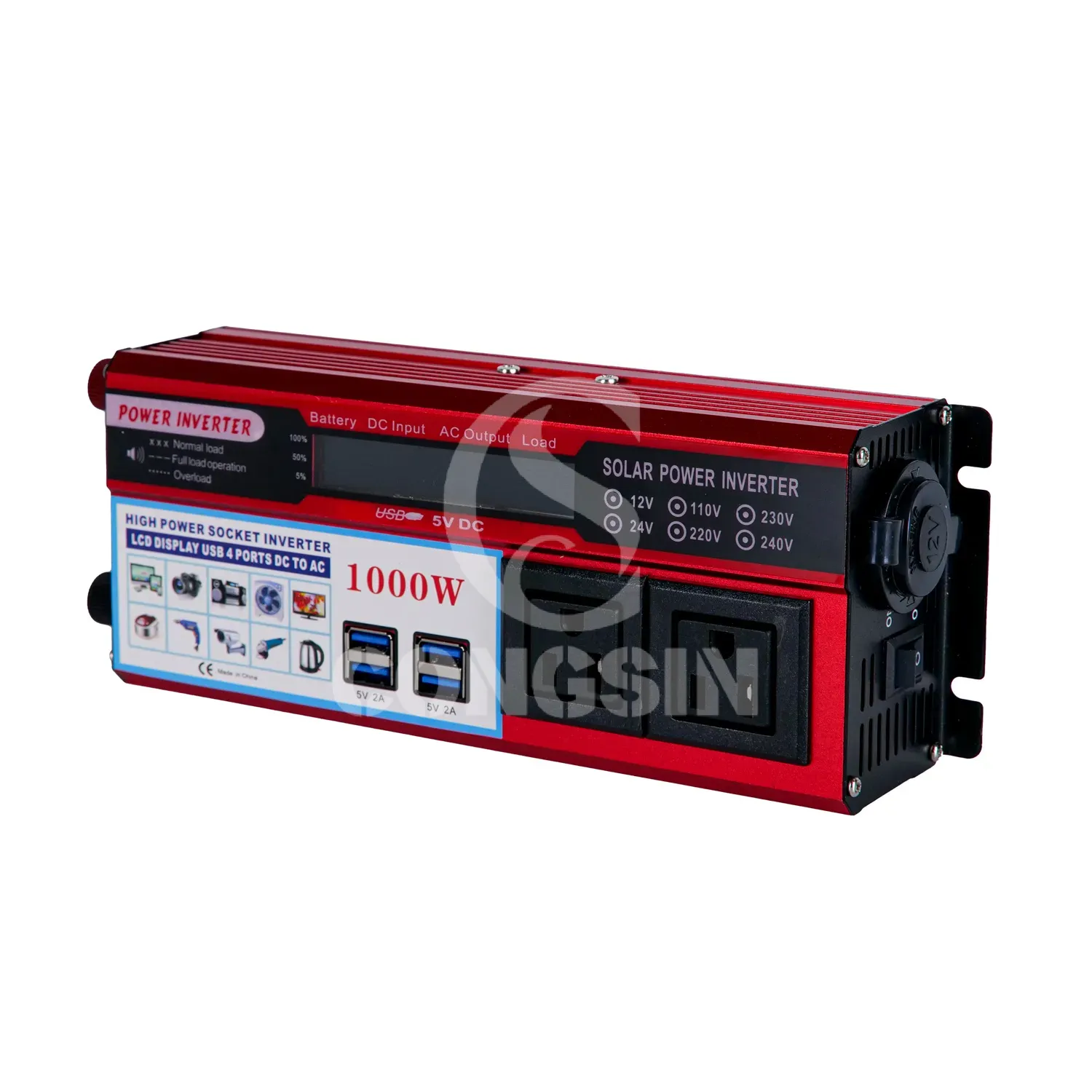
Congsin 1000W modified sine wave inverter with American Sockets and Lcd display portable 12V car RV
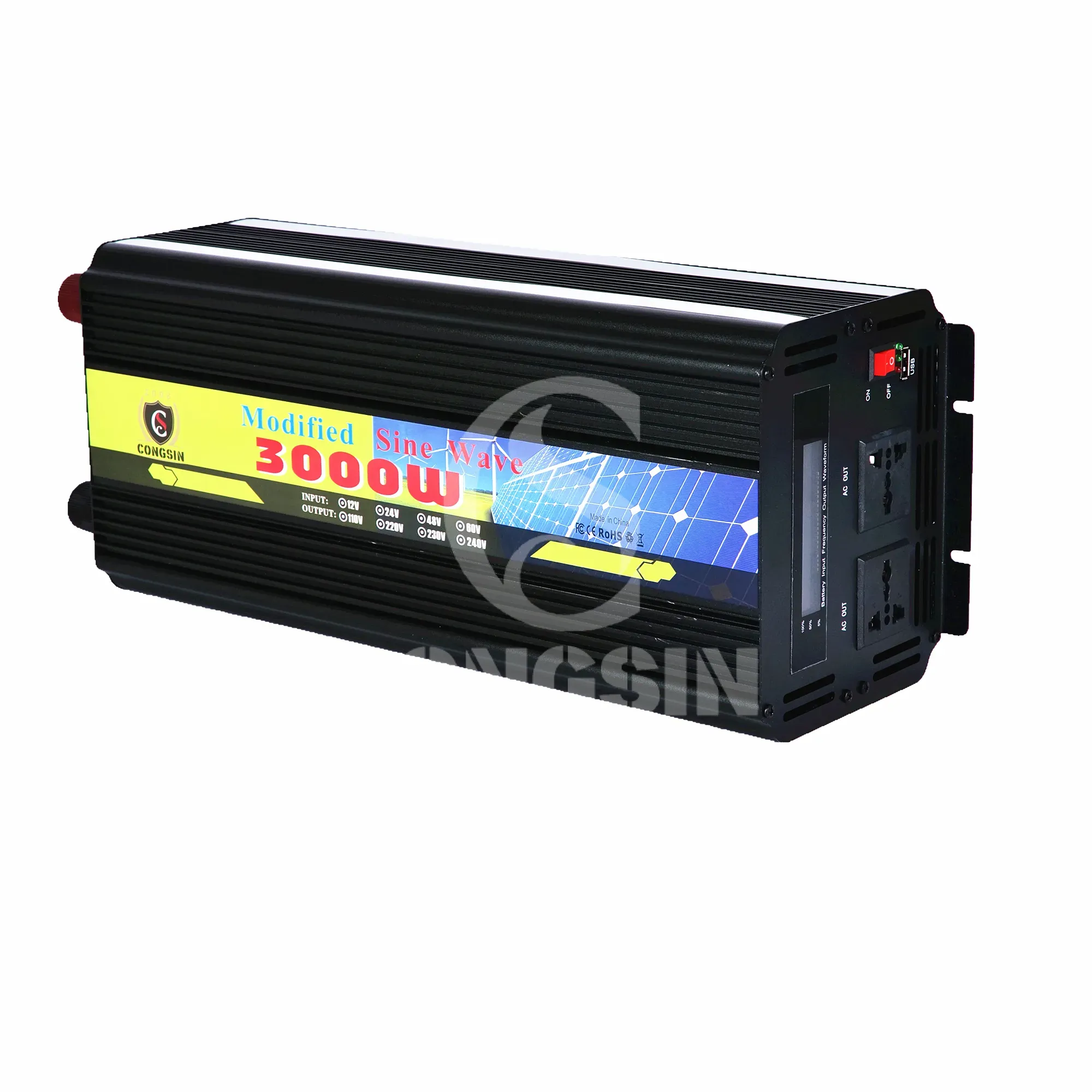
Congsin Full Power 3000W Modified Sine Wave Inverter Peak Power 6000W with LCD Display RV Solar
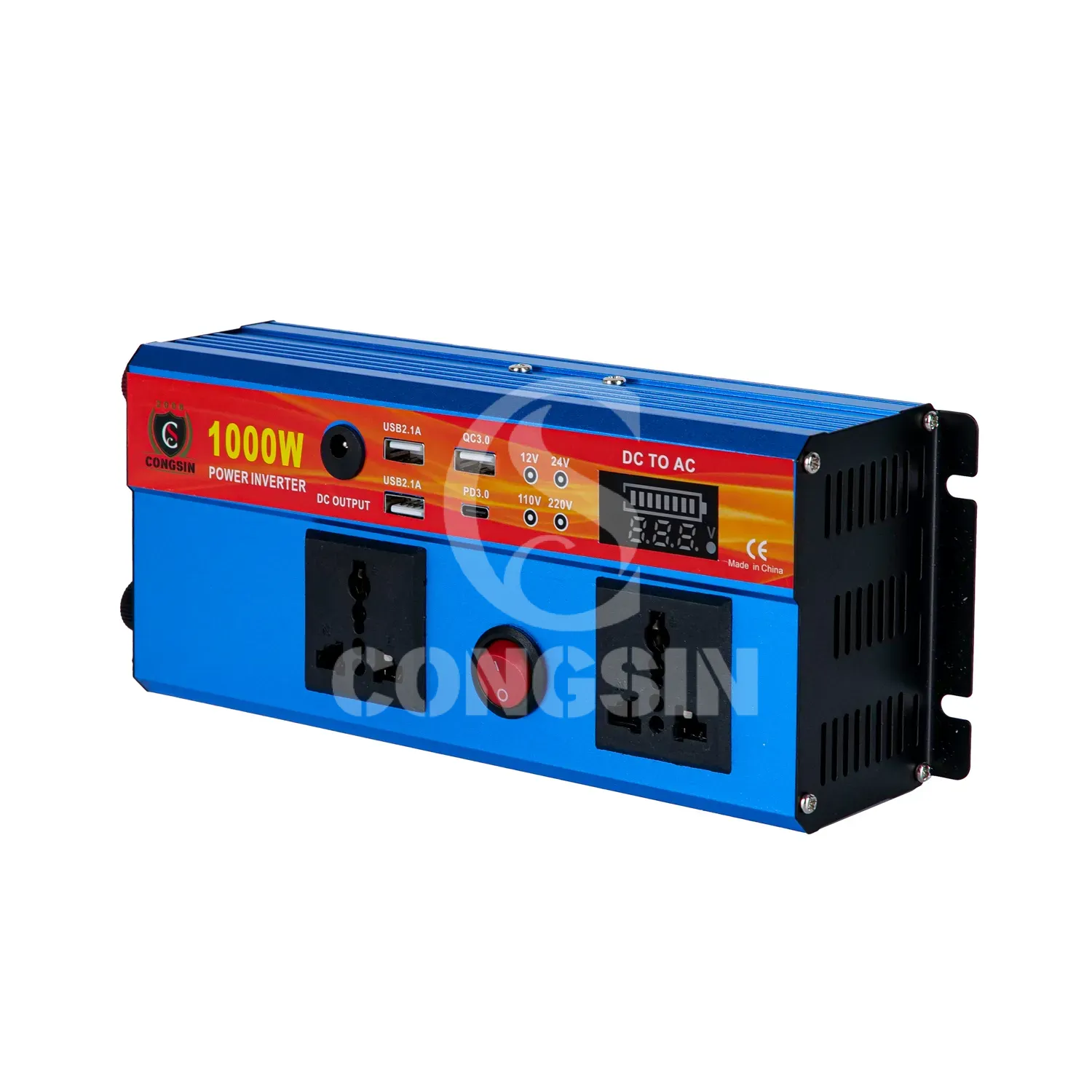
Congsin 1000W modified sine wave inverter with LED display and Type C port car RV power inverter
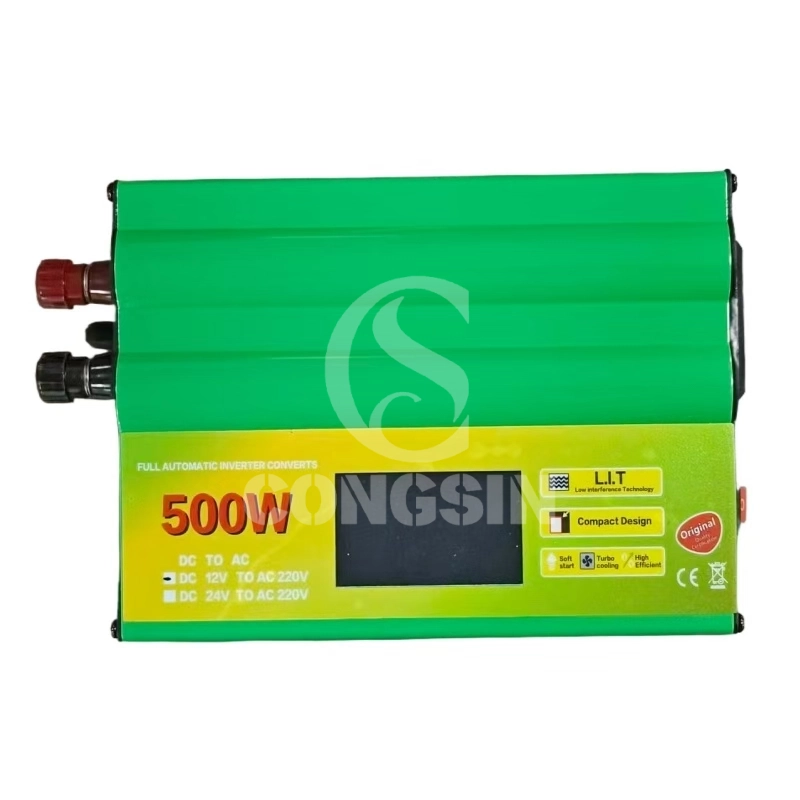
Congsin Modified Sine Wave Inverter 500W 1000W 1500W 12V LED Display Portable for RV Car Solar

CONGSIN is a trusted OEM factory for power inverters, solar charge controllers, and DC converters. Reliable solutions for global B2B buyers.
 High Quality
 7/24 Service
 Guaranteed Warranty
© 2025 Congsin. All Rights Reserved.