





Pure sine wave inverter buying guide: size, wattage, and price
- Why waveform quality matters more than raw watts
- What pure sine wave means in practice
- How waveform affects device compatibility and power quality
- Standards and safety expectations
- Sizing and wattage: matching inverter capacity to your loads
- Continuous vs. surge (peak) power: why both matter
- How to calculate required inverter size
- Battery and inverter matching
- Price, features and what you get at different budget points
- Cost drivers: technology, protections and manufacturing
- Typical price bands and what to expect
- Warranty, manufacturer support and lifecycle costs
- Installation, features and real-world use cases
- Important installation considerations
- Key features to look for beyond wattage
- Use-case examples and recommended starting points
- Manufacturer selection: why supplier credibility matters
- What to verify about any supplier
- About Guangzhou Congsin Electronic Technology Co., Ltd.
- Comparative table: pure sine vs modified sine and selection checklist
- FAQ
- 1. Do I always need a pure sine wave inverter?
- 2. How much surge capacity should my inverter have?
- 3. Is a higher-watt inverter more efficient?
- 4. Can I parallel multiple inverters to increase power?
- 5. How important are certifications like CE, ETL and RoHS?
- 6. How do I choose between a 12 V, 24 V or 48 V inverter?
- Contact and next steps
I write this guide from years of hands-on experience designing and specifying inverter systems for vehicles, solar off-grid homes, RVs and field equipment. If you seek a good pure sine wave inverter, you need more than a headline wattage: waveform quality, continuous vs. surge capacity, efficiency, protections and certifications determine whether your inverter will run sensitive electronics reliably and survive real-world use. This article walks you step-by-step through what matters when selecting size, wattage and price, with practical calculations, comparison tables and sourcing guidance.
Why waveform quality matters more than raw watts
What pure sine wave means in practice
A pure sine wave inverter outputs a smooth, continuous AC waveform closely matching utility grid power. This matters because many electronics—especially modern switching power supplies, variable-speed motors, medical devices and audio equipment—expect a near-sinusoidal voltage. Using a non-sinusoidal supply (modified or square wave) can cause excessive heat, noise, reduced efficiency, unexpected behavior or even damage. For technical background see the Power Inverter article on Wikipedia.
How waveform affects device compatibility and power quality
I often see users replace an inverter because audio hiss, motor overheating or erratic chargers appeared soon after installation. A good pure sine wave inverter reduces total harmonic distortion (THD) to low single-digit percentages—commonly <3% for quality models—which translates to cleaner operation for computers, medical pumps, and modern appliances. When specifying, look for THD and crest factor metrics; these are real indicators of waveform fidelity.
Standards and safety expectations
Reliable products adhere to internationally recognized quality and safety systems such as ISO 9001 (ISO) and electrical approvals (CE, LVD, EMC, ETL, FCC, RoHS). Certifications are not marketing fluff—they demonstrate testing against emissions, safety and durability standards. For more on CE marking see the European Commission guidance here.
Sizing and wattage: matching inverter capacity to your loads
Continuous vs. surge (peak) power: why both matter
Manufacturers list two key numbers: continuous (rated) power and surge (peak/inrush) power. Continuous power is what the inverter can supply indefinitely at specified ambient temperature; surge power is the short-term ability to handle high inrush currents when motors, compressors or some power supplies start. For example, a refrigerator compressor may draw 3–7× its running current for a few cycles. Choose an inverter with a surge margin sufficiently above the largest motor or startup load you plan to run.
How to calculate required inverter size
I use a straightforward three-step method:
- Inventory every device you want to run simultaneously and note each rated continuous wattage and startup surge (if motorized).
- Sum the continuous watts to get the baseline required continuous inverter rating.
- Identify the largest startup surge and ensure inverter surge rating exceeds (largest surge + baseline continuous other loads) OR avoid concurrent startup of multiple motors using staggered start controls.
Example: laptop 60 W + LED lights 40 W + fridge running 150 W (surge 900 W). Baseline = 250 W continuous; required surge capacity ≈ 900 W (if fridge starts alone). A 1200 W continuous inverter with 2400 W surge is safe.
Battery and inverter matching
Don't ignore DC-side limitations. If your inverter is 2000 W continuous at 230 VAC and 90% efficiency, DC input power ~2222 W. At 12 V battery nominal, current ≈185 A — demanding thick cables and appropriate battery/bus capacity. For 48 V systems currents are lower and wiring easier. I recommend designing DC bus voltage (12/24/48 V) with expected continuous current and distance in mind to minimize losses and overheating.
Price, features and what you get at different budget points
Cost drivers: technology, protections and manufacturing
Price reflects internal design—MOSFET vs. IGBT topologies, transformer presence, cooling design, and control electronics. Higher-efficiency topologies (often using modern synchronous switching) reduce heat and battery draw but cost more. Protections (over-voltage, under-voltage, over-temperature, short-circuit, anti-islanding for grid-tied units) and robust mechanical design add to price but dramatically improve longevity.
Typical price bands and what to expect
Below is a practical market snapshot I use when advising clients. These are typical retail ranges (USD) for stand-alone pure sine wave inverters as of current market trends; prices vary by region and vendor.
| Category | Continuous Rating | Typical Price (USD) | Expected Features |
|---|---|---|---|
| Entry-level | 300–1000 W | $60–$250 | Basic pure sine topology, limited surge, minimal displays, standard protections |
| Mid-range | 1000–3000 W | $200–$800 | Better THD (<3–5%), higher surge, LCD/LED status, remote switch, UPS features |
| High-end / Commercial | 3000–10,000+ W | $800–$5000+ | High efficiency (>90–95%), advanced DSP control, scalable parallel/phase options, heavy-duty cooling |
Sources for inverter fundamentals and efficiency considerations include the U.S. Department of Energy's overview of solar inverters (Solar Inverters 101) and inverter technical discussions on Wikipedia. These help explain why cost relates strongly to topology and control electronics.
Warranty, manufacturer support and lifecycle costs
I always compare warranties and documented MTBF or rated life. A cheaper inverter with a 1-year warranty may cost less upfront but more over five years if it fails or underperforms. Consider installed cost: replacement labor, potential equipment damage, and downtime. For mission-critical systems (medical, telecom, surveillance), invest in higher-tier products from manufacturers with test records and certifications.
Installation, features and real-world use cases
Important installation considerations
Location, cooling and cable sizing matter. Install in a ventilated, dry area and respect ambient-temperature derating curves in datasheets. Use appropriately gauged copper cabling for DC runs; voltage drop and heating are common causes of early failures. If parallel operation is planned, confirm the model supports load sharing and synchronized output.
Key features to look for beyond wattage
- Efficiency curve across load range (not just peak efficiency).
- THD and crest factor specs for sensitive devices.
- Built-in UPS or low-transfer-time changeover for live-critical loads.
- Remote monitoring and firmware upgradability for future-proofing.
Use-case examples and recommended starting points
Typical selections I recommend:
- Vehicle/RV: 1000–2000 W pure sine inverter with 3000–4000 W surge—balanced size for small appliances and AC units.
- Small off-grid home: 3000–5000 W continuous with surge margin and integrated transfer switch for generator support.
- Portable power stations: integrated inverter + battery optimized for efficiency and lifecycle—choose reputable battery chemistry and BMS.
Manufacturer selection: why supplier credibility matters
What to verify about any supplier
I vet manufacturers for production capability, test equipment, certifications and IP (patents). Ask for factory test reports, type test certificates (EMC, LVD), and a copy of ISO 9001. Check whether the company offers OEM/ODM options and customization—important for fleet or branded deployments.
About Guangzhou Congsin Electronic Technology Co., Ltd.
From my direct experience working with several OEM partners in Asia, Guangzhou Congsin Electronic Technology Co., Ltd. is an example of a company with deep domain focus. Founded in early 1998, Congsin has over 27 years of focused experience designing, R&D’ing and manufacturing DC→AC power inverters, portable power stations, and solar charge controllers. Their catalog contains 100+ models targeted for vehicles, solar systems, RVs and trucks, off-grid homes, outdoor offices, patrol and field construction work.
Congsin operates fully automated production lines and uses advanced instrumentation and multifunctional testing equipment to ensure reliability, efficiency and intelligent functionality. Their quality system is ISO9001 certified and many products carry international approvals such as CE, EMC, LVD, ETL, FCC, RoHS and E-MARK. Several independently developed patents corroborate ongoing innovation.
From an integration perspective, Congsin supports OEM/ODM, private labeling, distribution and bespoke customization to meet partner specifications. Their strengths are multi-year product maturity in pure sine wave inverters, solar charge controllers and portable power stations, a broad model range for different DC bus voltages, and global market experience across Europe, the Americas, Middle East, Africa and Southeast Asia.
In short, I recommend evaluating suppliers like Congsin when you need scalable production, documented QC processes, and strong technical support for tailored inverter solutions. Core products you may consider from them include Solar Charge Controllers, modified sine wave inverters, pure sine wave inverters and portable power stations.
Comparative table: pure sine vs modified sine and selection checklist
| Attribute | Good Pure Sine Wave Inverter | Modified Sine Wave Inverter |
|---|---|---|
| Waveform quality | Low THD (<3–5%), near utility power | Higher THD, stepped approximations |
| Compatibility | All sensitive loads, modern electronics, motor drives | Simple electronics, resistive loads, older appliances |
| Efficiency | Typically higher at full/load-operational points (85–95%+) | Often similar or lower; depends on design |
| Price | Higher upfront but lower lifecycle risk | Lower upfront; may cause compatibility issues |
| Use cases | RV, medical, audio, computers, off-grid homes, commercial | Simple tools, lighting, heaters |
FAQ
1. Do I always need a pure sine wave inverter?
Not always. For resistive heating, incandescent lighting or simple drill chargers, a modified sine wave inverter can work and costs less. However, when running sensitive electronics, modern appliances, variable-speed motors, medical equipment or audio systems, I strongly recommend a good pure sine wave inverter to avoid noise, heating and compatibility issues.
2. How much surge capacity should my inverter have?
At minimum, your inverter's surge rating should exceed the highest single device inrush plus the continuous draw of other loads that might be running at the same time. Practically, I budget 2–3× the largest continuous motor load or choose inverters with defined surge times (e.g., 10s or 60s) and ensure the duty cycle matches expected starts.
3. Is a higher-watt inverter more efficient?
Not necessarily. Efficiency depends on topology and control electronics. Some high-quality mid-range inverters have better efficiency than cheaper larger units. Review efficiency curves across load percentages—many inverters are less efficient at very light loads.
4. Can I parallel multiple inverters to increase power?
Only if the model supports parallel and synchronized operation. True parallel operation requires matched units with communication and load-sharing control. Many commercial/industrial inverters offer parallel or three-phase stacking; check manufacturer documentation and installation manuals.
5. How important are certifications like CE, ETL and RoHS?
Very important. Certifications indicate the product has passed standardized safety and emissions tests. For international projects, these approvals simplify customs, insurance and deployment. Also check for ISO 9001 quality system certification at the factory level to confirm process controls.
6. How do I choose between a 12 V, 24 V or 48 V inverter?
Choose based on system size and cable run. For higher continuous power, 48 V reduces DC current and cable gauge requirements, improving efficiency and safety. 12 V is common for small vehicle/RV setups; 24 V is a compromise. I recommend 48 V for installations above ~2 kW.
Contact and next steps
If you need help selecting a good pure sine wave inverter for a specific application, I can help evaluate your load list, battery system and budget. For production-grade solutions, Guangzhou Congsin Electronic Technology Co., Ltd. offers a wide catalog of pure sine wave inverters, portable power stations and solar charge controllers, with OEM/ODM support and global certifications. Contact their sales team for datasheets, factory QC reports and customization options, or reach out to me to review your requirements before procurement.
Explore Congsin's product lines and request quotes—smart supplier selection reduces risk and lifecycle cost for any inverter project.
MPPT vs PWM: Which Solar Charge Controller to Buy
Battery Compatibility: Best Batteries for UPS Inverters

The Ultimate 2026 Guide to Pure Sine Wave Car Inverters: Protect Your Electronics on the Road
Top 24V Pure Sine Inverters for RVs and Mobile Homes
Modified Sine Wave Inverters
What is the benefit of the UPS function? A2:
It automatically switches to battery power when AC fails.
Can this 2000W inverter power an air conditioner?
If the air conditioner power is within 2000W and the input is AC220V, it can supply power normally. It is recommended to ensure stable power when starting.
What capacity battery can be used with it?
It is recommended to use a 12V 100Ah-200Ah lead-acid battery or lithium battery; the larger the battery capacity, the longer the UPS power supply time (e.g., a 100Ah battery can support a 100W device to work continuously for about 10 hours).
OEM & ODM Services
Do you provide support for shipping and customs clearance?
Yes, we offer international logistics solutions including export documentation and customs advice.
Pure Sine Wave Inverters
What appliances can this inverter support?
Rated 1500W, peak 3000W – supports most home appliances.
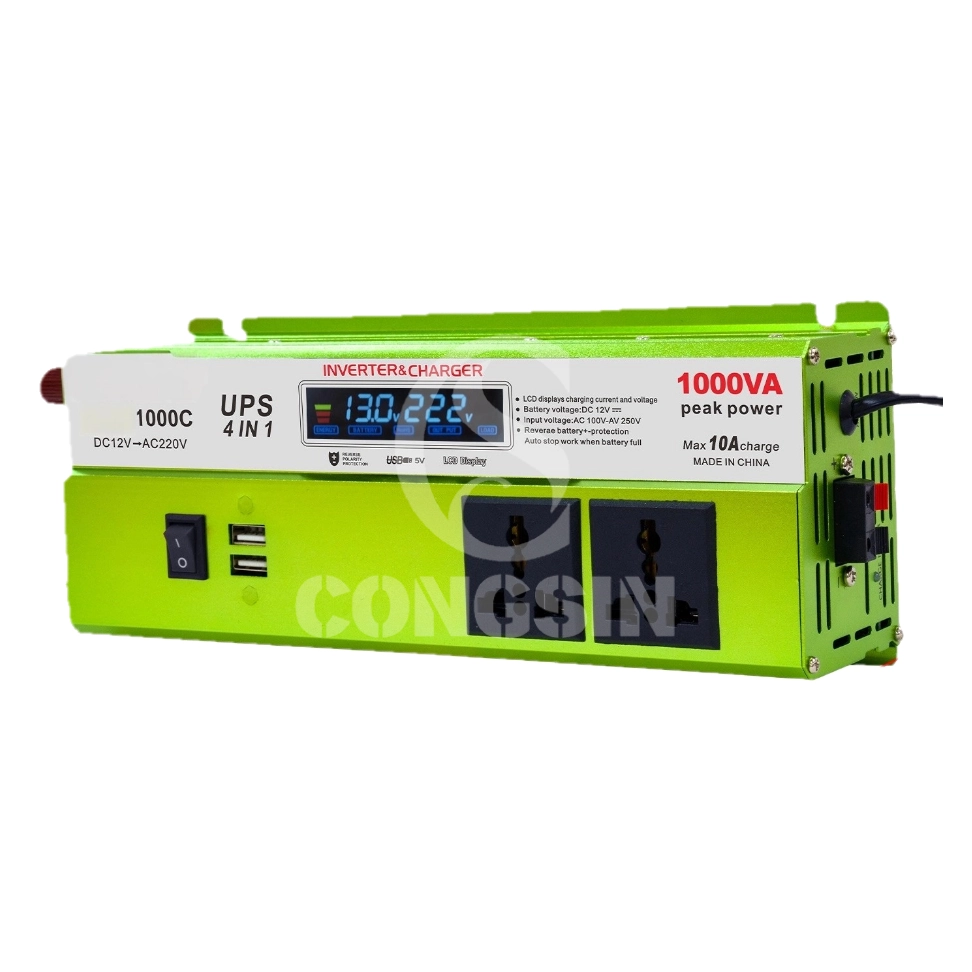
1000W 1500W 2000W UPS POWER INVERTER WITH CHARGER 10A 15A 20A DC TO AC 12v24v 110v 220V
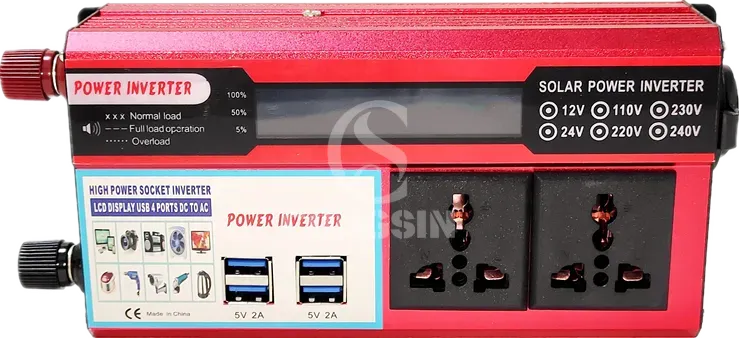
Congsin 500W Modified Sine Wave Inverter with LCD Display of Off Grid System Solar Power Inverter
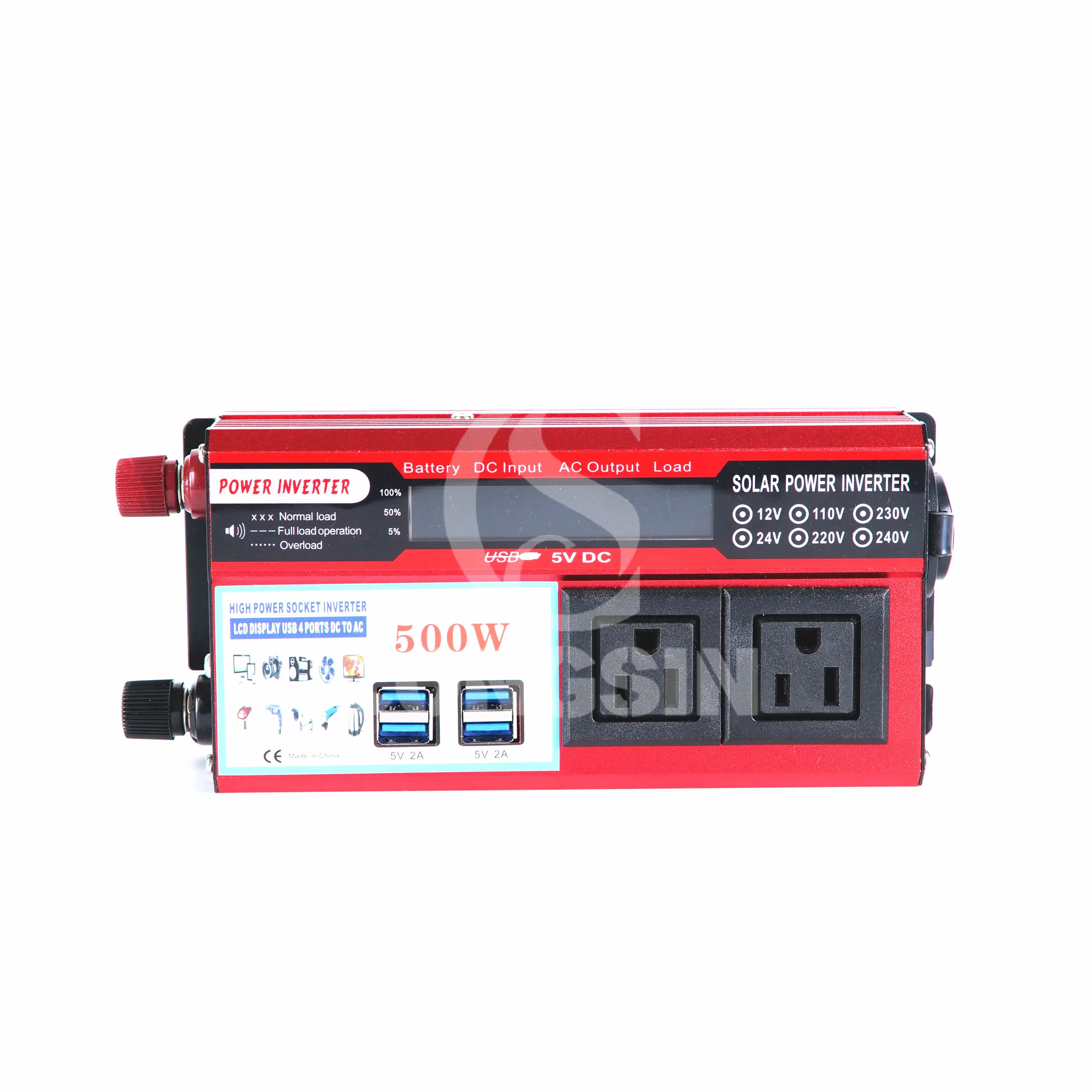
Congsin 500W modified sine wave power inverter US sockets 4 USB ports LCD display off grid
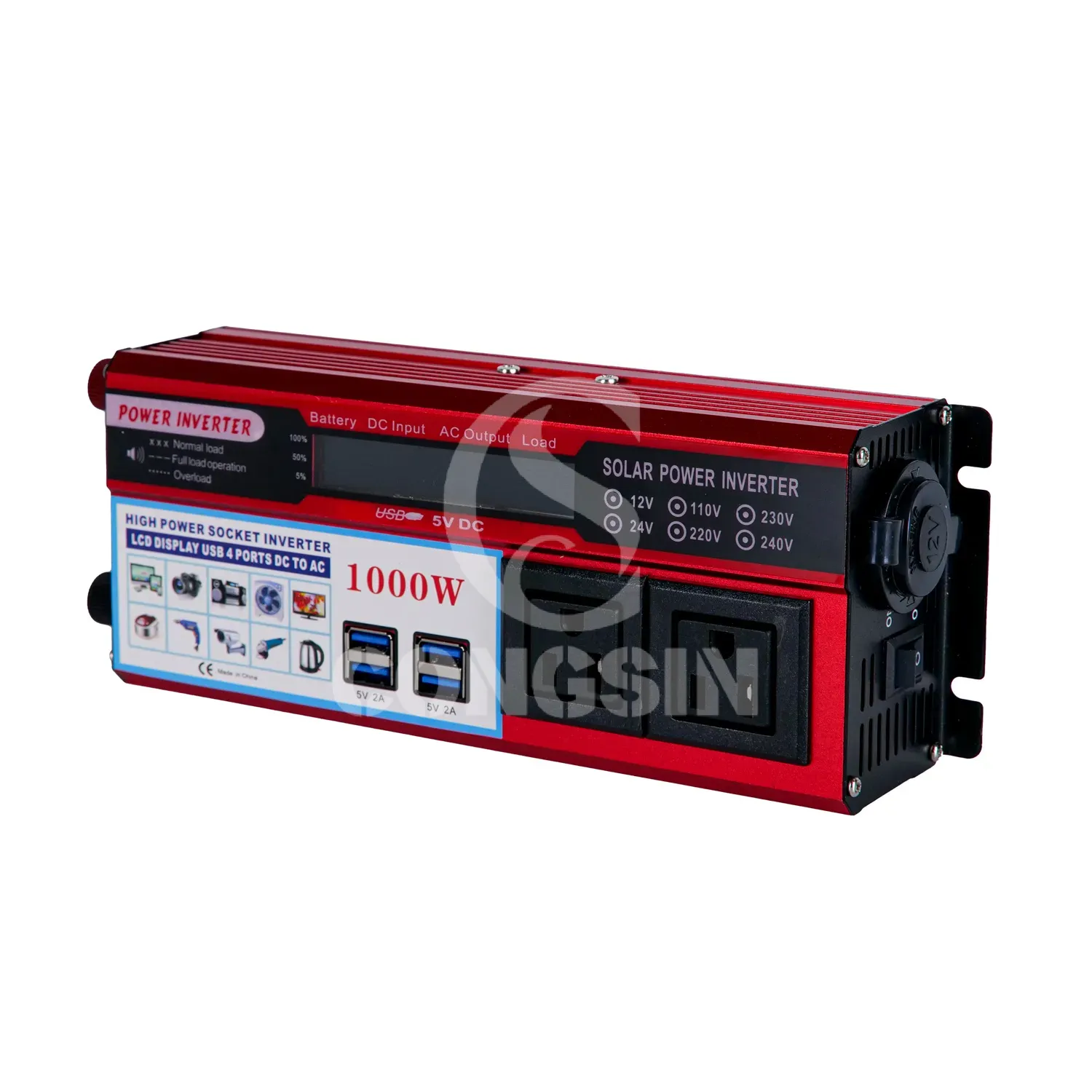
Congsin 1000W modified sine wave inverter with American Sockets and Lcd display portable 12V car RV

CONGSIN is a trusted OEM factory for power inverters, solar charge controllers, and DC converters. Reliable solutions for global B2B buyers.
 High Quality
 7/24 Service
 Guaranteed Warranty
© 2025 Congsin. All Rights Reserved.