





Comparing Bidirectional Battery Inverters: Specs and Performance
- Understanding bidirectional energy flow and why it matters
- What a bidirectional battery inverter does
- Common applications
- Why bidirectional capability changes specification priorities
- Critical specifications to compare
- Power rating, surge capability and power factor
- Round‑trip efficiency and losses
- Charge/discharge current, battery compatibility and DC bus
- Topology, control and standardized testing
- Common hardware topologies
- Control strategies and communication
- Performance metrics and standards
- Comparative table: portable vs residential hybrid vs commercial bidirectional inverters
- How I evaluate performance in real projects and what to test on delivery
- Factory and site acceptance tests I require
- Data logging and KPIs to request
- Field performance considerations
- Selecting the right bidirectional battery inverter for your project
- Match inverter class to the application
- Installation, safety and warranty
- Operational costs and lifecycle
- Why choose Guangzhou Congsin (Congsin) for bidirectional solutions
- Frequently Asked Questions (FAQ)
- 1. What is the main difference between a bidirectional battery inverter and a standard inverter?
- 2. How do I size a bidirectional inverter for a residential solar-plus-storage system?
- 3. What round‑trip efficiency should I expect?
- 4. Can I retrofit a bidirectional inverter into an existing grid-tied solar system?
- 5. Which certifications should I require from a supplier?
- 6. How important are communications and firmware updates?
- Contact and next steps
Summary for indexing: As a power inverter consultant with extensive SEO and field experience, I analyze bidirectional battery inverters—defining performance metrics, comparing key specifications across product classes, and linking standards and test methods so engineers, system integrators and buyers can make verifiable choices. I include a vendor overview of Guangzhou Congsin Electronic Technology Co., Ltd. and practical selection guidance.
Understanding bidirectional energy flow and why it matters
What a bidirectional battery inverter does
A bidirectional battery inverter both converts DC battery power to AC for loads (inversion) and converts AC or higher-voltage DC to DC/AC-compatible battery charge current (rectification/charging). This two-way energy flow enables functions such as backup power, peak shaving, vehicle-to-grid (V2G) or vehicle-to-home (V2H), and full energy management in microgrids. See general inverter fundamentals on Wikipedia for reference: en.wikipedia.org/wiki/Inverter_(electrical).
Common applications
Typical use cases include:
- Portable power stations and mobile systems where the inverter must accept charging from AC shore power or solar and discharge to AC loads.
- Residential hybrid systems that store solar energy and export or import energy from the grid.
- Commercial and industrial energy storage that provides frequency regulation, peak shaving, and backup with high charge/discharge throughput.
Why bidirectional capability changes specification priorities
When selecting a bidirectional battery inverter, you cannot focus only on continuous AC power. Charging current capacity, DC bus voltage compatibility, round‑trip efficiency, control latency for fast ramping, and certification for grid interconnection (e.g., IEEE 1547) all matter. For grid-interconnection criteria see IEEE 1547 overview: standards.ieee.org/standard/1547-2018..
Critical specifications to compare
Power rating, surge capability and power factor
Continuous AC power rating determines the size of loads you can serve; surge (peak) rating matters for motor starts and resistive/inductive loads. Power factor capability (and whether the inverter supports unity or adjustable power factor) affects how effectively it can supply inductive loads and provide reactive power support to the grid.
Round‑trip efficiency and losses
Round‑trip efficiency (battery charging + discharging losses + converter losses) strongly impacts usable energy and economics. Typical lab-proven round‑trip efficiencies vary by topology and scale: small portable systems may show 80–90% efficiency, residential hybrid systems 85–95%, and well-engineered commercial systems >90% when optimized. For context on storage efficiencies and testing, see NREL energy storage resources: nrel.gov/energy-storage..
Charge/discharge current, battery compatibility and DC bus
Maximum continuous charge/discharge current and supported battery voltages (e.g., 12/24/48V for portable, 200–800V for commercial systems) define how fast you can store or deploy energy. If you plan to use Li‑ion, LiFePO4 or lead‑acid, confirm the inverter's battery management compatibility and recommended charging algorithms.
Topology, control and standardized testing
Common hardware topologies
Bidirectional systems usually implement one of the following:
- Full-bridge inverter with bidirectional DC-DC stage—good for higher power and galvanic isolation options.
- AC-coupled bidirectional inverter—connects on the AC side and simplifies integration with certain grid-tied inverters.
- DC-coupled inverter + battery converter—often yields higher round-trip efficiency for PV + battery systems.
Control strategies and communication
Control firmware determines how quickly an inverter transitions between charge and discharge, responds to grid disturbances and applies setpoints for active/reactive power. Standard communication protocols such as Modbus, CAN, SunSpec, and proprietary Ethernet APIs enable system-level control. For industry protocol references see SunSpec Alliance: sunspec.org.
Performance metrics and standards
Key tests include THD (total harmonic distortion), islanding detection, anti-islanding compliance (IEC 62116, IEEE 1547), electromagnetic compatibility (EMC), and safety (LVD/IEC 62109). Product certifications (CE, EMC, LVD, ETL, FCC, RoHS, E-MARK) indicate conformity—learn about CE marking: ec.europa.eu/growth/single-market/ce-marking_en and ISO quality management at iso.org/iso-9001-quality-management..
Comparative table: portable vs residential hybrid vs commercial bidirectional inverters
| Feature / Class | Portable / Small (≤3 kW) | Residential Hybrid (3–12 kW) | Commercial / Utility (50 kW–1 MW) |
|---|---|---|---|
| Continuous AC Power | 0.5–3 kW | 3–12 kW | 50 kW–1 MW |
| Peak/Surge | 1.5–6 kW (1–3×) | 6–24 kW (1.5–2×) | 1.5–3× continuous (design dependent) |
| Round‑trip efficiency | 80–90% | 85–95% | 90–97% |
| Battery Voltage | 12/24/48 V typical | 48–400 V (DC‑coupled systems) | 200–1,000 V (high-voltage DC busses) |
| Max Charge/Discharge Current | 10–100 A | 50–300 A (depending on voltage) | 500 A–10,000 A (system-level) |
| Communications | USB, Bluetooth, basic CAN/Modbus | Modbus/RS485, Ethernet, SunSpec | Industrial protocols, SCADA, IEC 61850 |
| Typical Certifications | CE, RoHS, FCC | CE, LVD, EMC, UL/ETL | IEC, UL, ISO, grid operator approvals |
Notes: ranges are based on industry data and reports from energy labs and inverter manufacturer catalogs. For general inverter technology and application context see Battery energy storage (Wikipedia) and NREL resources: nrel.gov/energy-storage..
How I evaluate performance in real projects and what to test on delivery
Factory and site acceptance tests I require
My minimum list includes continuous load test for several hours at rated power, surge load tests, round‑trip efficiency characterization at multiple states of charge, THD and power factor measurements, and rapid transition testing (charge↔discharge response time). I also verify communications and firmware versioning, and validate anti-islanding and fault protection behaviors per the applicable grid code.
Data logging and KPIs to request
Ask for CSV/HTTP APIs or Modbus registers that include instantaneous AC power, DC charge/discharge current, battery SOC, inverter temperature, and event logs (faults, grid disconnects). These telemetry streams are essential for commissioning and predictive maintenance.
Field performance considerations
Temperature derating, installation altitude, neutral grounding and harmonic compliance can materially affect inverter performance. Ensure the installer tests under expected ambient conditions and validates derating curves supplied by the vendor.
Selecting the right bidirectional battery inverter for your project
Match inverter class to the application
Use the comparative table above as a starting point. For an off-grid cabin or portable system, prioritize portability, integrated battery management and ease of use. For a residential solar+storage project, prioritize round‑trip efficiency, integrated PV charge controllers (or DC-coupling compatibility), and grid-interactive features. For commercial systems, emphasize scalability, compliance with utility interconnection, and high throughput charge/discharge capability.
Installation, safety and warranty
Confirm the inverter has the required safety certificates for your market (CE/ETL/UL as applicable), inquire about warranty coverage for cycling and thermal stress, and check whether the manufacturer provides firmware updates and remote support. ISO 9001 certification often indicates consistent manufacturing quality: iso.org/iso-9001-quality-management..
Operational costs and lifecycle
Consider the total cost of ownership (TCO): capital cost, expected round‑trip losses, maintenance and expected lifespan (battery vs inverter replacement cycles). For high-use commercial sites, higher-efficiency inverters with robust cooling and longer warranties usually reduce TCO.
Why choose Guangzhou Congsin (Congsin) for bidirectional solutions
I have reviewed many suppliers; Guangzhou Congsin Electronic Technology Co., Ltd. (founded in early 1998) stands out for mature manufacturing and broad product lines. Congsin designs, R&D and manufactures a wide range of power solutions—focusing on DC→AC power inverters, portable power stations, and solar charge controllers. Their catalog includes 100+ models for vehicles, solar systems, RVs and trucks, off-grid homes, outdoor offices, patrol and field construction work. Visit their official site: www.csinverter.com or contact them at info@csinverter.com.
Congsin operates fully automated production lines and advanced testing equipment to ensure product reliability and intelligent functionality. Their quality system is ISO9001 certified and many products hold international approvals such as CE, EMC, LVD, ETL, FCC, RoHS and E‑MARK. Several independently developed patents demonstrate ongoing innovation. Congsin supports OEM/ODM, private labeling, distribution and bespoke customization to meet partner specifications—making them a competitive option for integrators seeking volume supply or tailored bidirectional inverter features.
Key product categories I recommend evaluating from Congsin include Solar Charge Controllers, modified sine wave inverters, pure sine wave inverters and portable power stations. Their combination of manufacturing scale, certifications and customization options is particularly valuable when you need tailored firmware, communication protocols (e.g., Modbus or CAN), or specific grid-interconnection features.
Frequently Asked Questions (FAQ)
1. What is the main difference between a bidirectional battery inverter and a standard inverter?
A bidirectional battery inverter can both send power to loads (DC→AC) and accept power to charge the battery (AC→DC or DC→DC), enabling system-level energy management, whereas a standard (unidirectional) inverter only converts DC to AC.
2. How do I size a bidirectional inverter for a residential solar-plus-storage system?
Match continuous AC power to your peak simultaneous load, check surge requirements for motors, ensure the inverter's charge current can meet PV charge and grid charging needs, and confirm battery voltage compatibility. Also factor in headroom for future expansions and derating at high temperatures.
3. What round‑trip efficiency should I expect?
Expect roughly 80–95% depending on system class and topology. Portable units are typically lower; well-engineered residential and commercial systems often achieve >90% round‑trip efficiency when DC-coupled and optimized. For lab and field comparisons, consult NREL resources: nrel.gov/energy-storage..
4. Can I retrofit a bidirectional inverter into an existing grid-tied solar system?
Yes, but you must determine whether the system is AC-coupled or DC-coupled and verify anti-islanding & interconnection compliance with local grid codes. Often retrofits require additional hardware or software integration and approval from the utility.
5. Which certifications should I require from a supplier?
At minimum: CE/EMC/LVD for Europe, UL/ETL for North America if applicable, FCC for emissions, and RoHS for material compliance. For grid-connected systems, ensure the inverter meets relevant standards such as IEEE 1547 or local network operator requirements. See CE guidance: ec.europa.eu/growth/single-market/ce-marking_en.
6. How important are communications and firmware updates?
Very important. Communications enable energy management, monitoring and integration into building management systems. Firmware updates can improve performance and address bugs; confirm the vendor supports secure remote update mechanisms.
Contact and next steps
If you want help selecting a bidirectional battery inverter tailored to your application, testing specifications, or an OEM/ODM supply partner, I can assist with technical evaluation, RFPs and supplier screening. For product inquiries and customization, contact Guangzhou Congsin Electronic Technology Co., Ltd. at info@csinverter.com or visit www.csinverter.com. You can also request specific datasheets, factory test reports, or arrange factory acceptance tests (FAT) to validate performance against the metrics discussed above.
Reach out today to compare models, request performance data, or start a tailored quotation—ensure your bidirectional inverter meets both technical needs and regulatory requirements.

Why 1500W is the Ultimate 'Sweet Spot' for Pure Sine Wave Inverters in 2026
Top 10 ac to dc car inverter Manufacturers and Supplier Brands
Pure Sine Wave vs Modified: Which Inverter Should You Buy
Best solar inverter china manufacturers and supplier brands
Distributor
What kind of distributors are you looking for?
We seek distributors with experience in the amusement or entertainment equipment industry and a strong local market presence.
Modified Sine Wave Inverters
What devices can be powered by this inverter?
Suitable for TVs, fans, computers, and small tools.
What is the function of the independent control switch?
The independent control switches for DC and AC can respectively control the on and off of DC and AC circuits, facilitating the separate management of power supply for different types of devices and improving power usage safety and flexibility.
Can 4 USB ports charge 4 mobile phones at the same time?
Yes, the total current of 6.8A can support simultaneous fast charging of multiple devices, and the charging efficiency is guaranteed.
Does the UPS function require additional mains connection?
Yes. The inverter needs to be connected to a home/office socket via the included mains cable, and the device will automatically detect the mains status; when the mains power is interrupted, it will switch to battery power immediately.
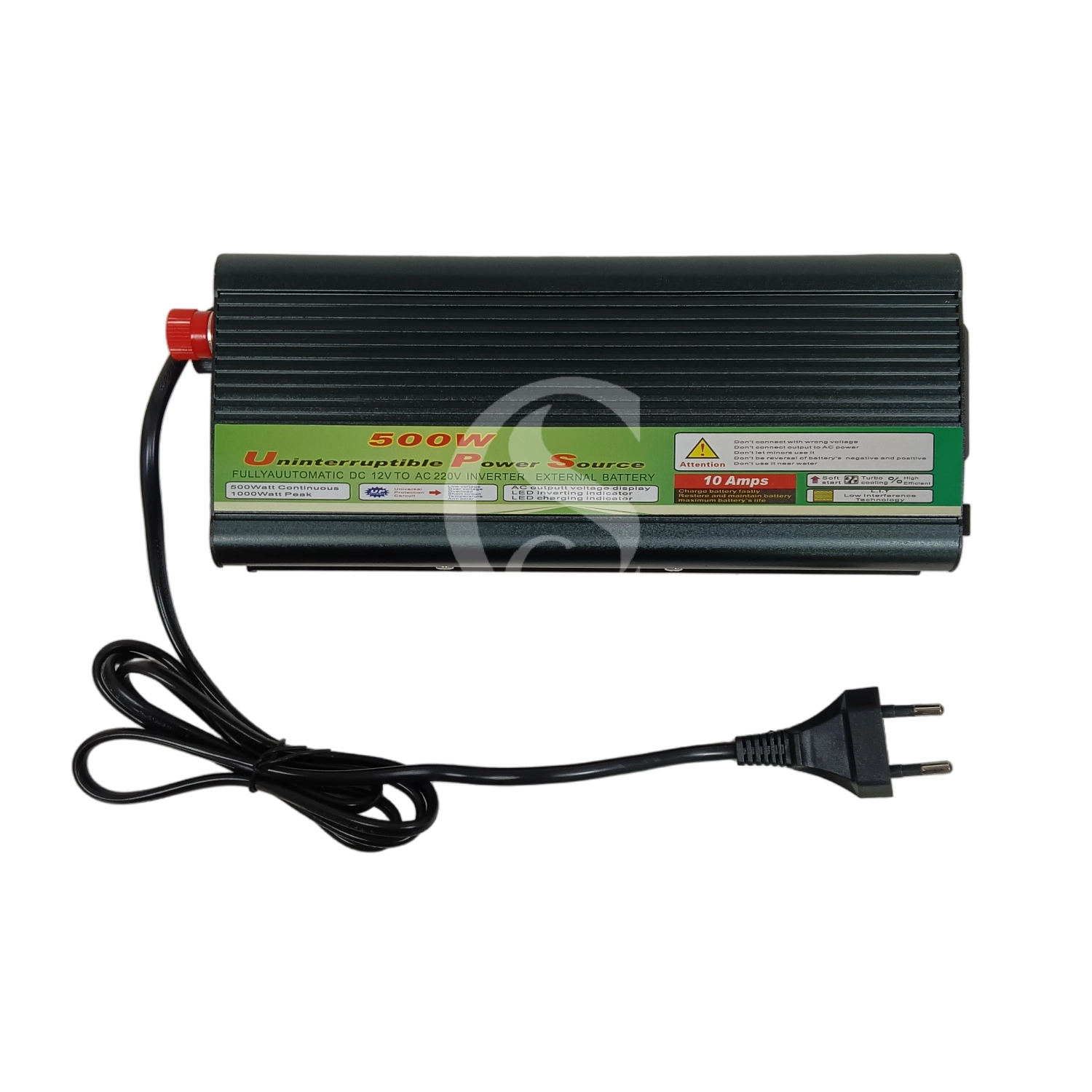
Congsin 500W DC to AC Modified Sine Wave Inverter 12V 220V Off Grid Power Inverter
Congsin 500W 12V to 220V inverter delivers reliable off-grid power with its modified sine wave design. This portable 500W DC to AC power inverter efficiently converts 12V DC to 220V AC, ideal for outdoor and emergency use. Trust Congsin for stable, portable energy solutions.
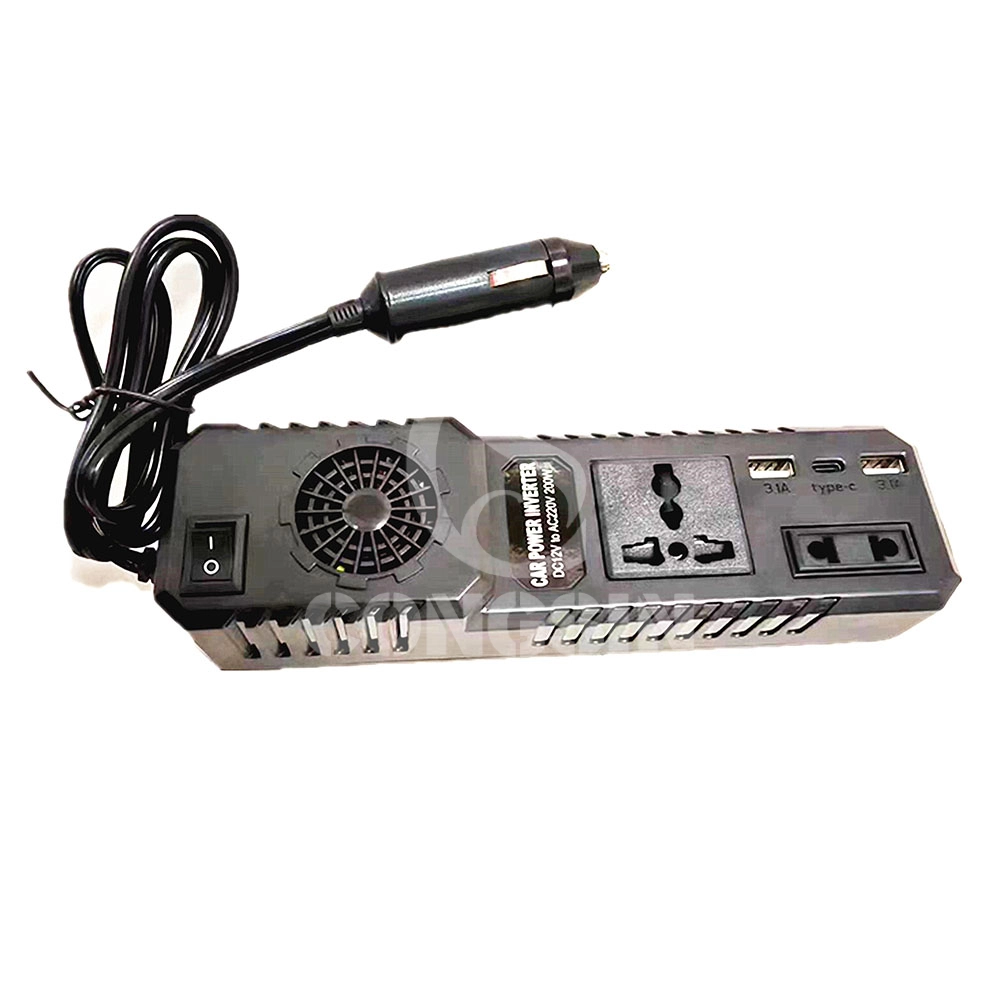
200W Modified Sine Wave Car Power Inverter, Dual Input DC12V/24V to AC220V with Type-C & Dual USB Ports
This 200W Modified Sine Wave Car Power Inverter is a compact and practical power conversion device designed for vehicle use. It supports dual input (DC12V/24V) and outputs AC220V, compatible with various electronic devices. Equipped with a Type-C port and dual 3.1A USB outputs, it can charge laptops, phones, cameras, drones, and other small electronics simultaneously—perfect for outdoor travel, emergency backup, and mobile work scenarios.
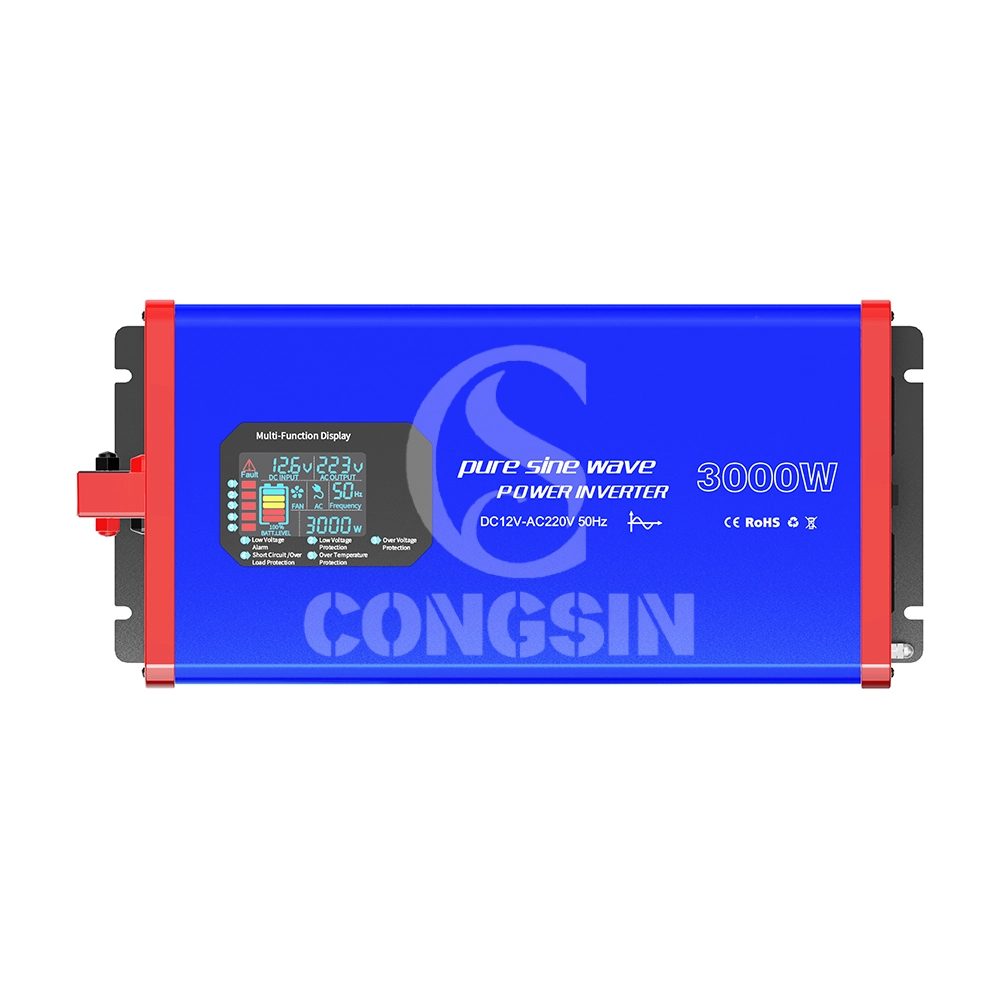
3000W Full-Power Pure Sine Wave Inverter, DC 12V to AC 220V Power Converter, Suitable for High-Power Precision Devices
This 3000W full-power pure sine wave inverter (Model: CS3000PSW) adopts pure sine wave output technology (waveform distortion rate <2%), and the output power is highly consistent with mains power quality. It can safely drive high-power precision loads such as air conditioners, refrigerators, medical instruments, and small industrial equipment, avoiding equipment malfunctions or shortened service life caused by unstable waveforms. The device supports DC 12V input (compatible with 10.5V-14.8V wide voltage), continuously outputs 3000W full power, and has a peak power of 6000W, easily coping with the instantaneous startup impact of high-power devices; it is equipped with 4 AC universal sockets (max current 16A) + 2 USB 3.0 fast-charging ports (22.5W per port) to meet the simultaneous power supply needs of multiple devices. Built-in six-fold safety protection (overload, overvoltage, undervoltage, short circuit, overtemperature, reverse connection), combined with dual intelligent silent cooling fans (noise ≤45dB), it achieves the triple advantages of "high power + high safety + low noise," suitable for home emergency, outdoor engineering, vehicle-mounted power supply, small industrial scenarios and other fields.
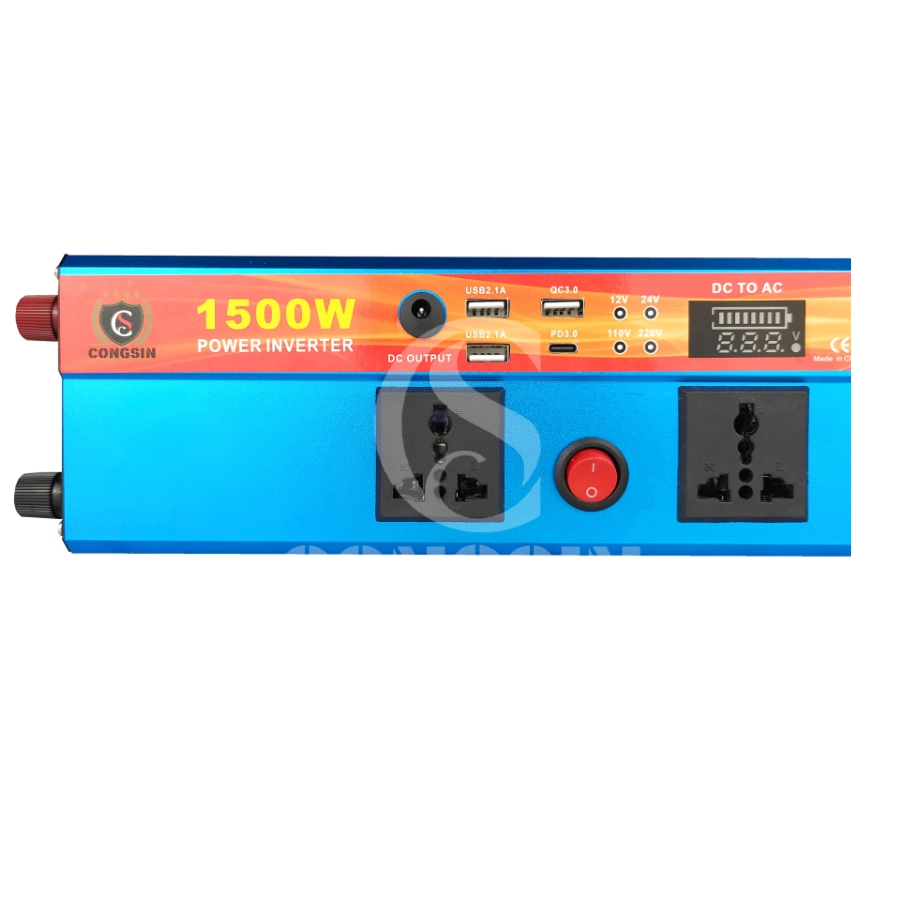
1500W Modified Sine Wave Inverter, DC 12V to AC 220V Power Inverter with LED Display, 3 USB Ports, 1 Type-C, 1 DC 12V Output & Two Universal Sockets
Our CS1000DDBC 1000W modified sine wave inverter is a professional power conversion device that converts DC 12V from batteries into AC 220V electricity. It is designed with user convenience in mind, featuring an LED display for real-time status monitoring, multiple charging ports (3 USB, 1 Type-C, 1 DC 12V) and two universal sockets to power a wide range of devices simultaneously. Its compact size (250×95×55mm) and lightweight design (NW: 0.84kg) make it easy to carry, ideal for outdoor activities, emergency home use, and on-the-go power needs.

CONGSIN is a trusted OEM factory for power inverters, solar charge controllers, and DC converters. Reliable solutions for global B2B buyers.
 High Quality
 7/24 Service
 Guaranteed Warranty
© 2025 Congsin. All Rights Reserved.
 WeChat
 Scan QR Code
sin cong
teaimei10
Whatsapp: +8618028086791
Scan QR Code