





How to Choose Right Wattage Car Power Inverter
- Understanding inverters and vehicle power basics
- What a power inverter car does and why wattage matters
- Key electrical terms: continuous, peak (surge), and input voltage
- Why efficiency and waveform type affect real-world wattage
- How to calculate the correct inverter wattage
- Step 1 — List all devices and their wattages
- Step 2 — Account for startup surges
- Step 3 — Add a safety margin and consider efficiency
- Practical sizing guide and examples
- Common device power draws and recommended inverter sizes
- Example calculation — weekend trip with fridge and laptop
- Battery and wiring implications
- Choosing features, certifications and long-term reliability
- Waveform: modified vs. pure sine wave
- Certifications and safety standards
- Reliability features to look for
- Buying recommendations and manufacturer considerations
- Match product specs to real usage—not marketing
- Why choose a specialized manufacturer
- Case study: Guangzhou Congsin Electronic Technology Co., Ltd.
- Installation, maintenance and best practices
- Proper wiring and fusing
- Battery health and runtime estimation
- Maintenance and troubleshooting
- FAQs
- 1. How do I know if I need a pure sine wave inverter?
- 2. Can I run heavy tools (e.g., a circular saw) from a car power inverter?
- 3. Will a 300W inverter run my laptop and small fridge?
- 4. How does inverter efficiency affect battery life?
- 5. Should I connect an inverter directly to my car battery or use a separate deep-cycle battery?
- 6. What certifications matter when buying a car inverter?
Quick summary: Choosing the right wattage car power inverter means matching your vehicle’s 12V (or 24V) DC supply to the AC loads you plan to run, allowing for starting surges, inefficiencies, and safety margins. This article explains how to calculate continuous and surge requirements, compares inverter types (modified vs. pure sine), and provides practical sizing charts and real-world examples to help you buy an inverter that’s safe, efficient, and fit for your needs.
Understanding inverters and vehicle power basics
What a power inverter car does and why wattage matters
A power inverter converts your car's DC battery voltage (commonly 12V in passenger vehicles, 24V in larger trucks) into AC voltage suitable for household-style devices. The inverter's rated wattage determines the maximum continuous power it can supply. Undersizing an inverter can lead to overload shutdowns or damage; oversizing increases cost and may waste space and battery capacity. For technical background on inverters and their operation, see the Wikipedia overview of inverters (Inverter (electrical)).
Key electrical terms: continuous, peak (surge), and input voltage
When selecting wattage, distinguish between:
- Continuous wattage: The power the inverter can supply continuously (e.g., 300W, 1000W).
- Peak or surge wattage: Short-term power capacity to handle startup currents of motors or compressors (often 2–3× continuous rating).
- Input voltage: The vehicle's supply (12V, 24V). A mismatch requires a different inverter model.
These definitions are important because many appliances (like refrigerators or power tools) have high starting currents.
Why efficiency and waveform type affect real-world wattage
Inverter efficiency (typically 85–95% for quality units) means some input power is lost as heat. Also, waveform matters: modified sine wave inverters are cheaper but can cause issues with sensitive electronics, while pure sine wave inverters provide clean AC equivalent to grid power—recommended for computers, medical equipment, and some motor-driven devices. More on inverter waveforms: Sine wave and inverter waveform discussion.
How to calculate the correct inverter wattage
Step 1 — List all devices and their wattages
Make an inventory of what you want to run simultaneously in the car: laptop, phone charger, fridge, power tool, etc. Device labels (on the adapter or manual) usually list wattage or voltage and current (amps). If only amps are listed for AC devices, power (W) = volts (V) × amps (A) (e.g., 120V × 2A = 240W).
Step 2 — Account for startup surges
Motorized appliances such as refrigerators, pumps, or power tools can draw a large inrush current at startup. Use a surge multiplier (typically 2–3×) for these devices. Example: a refrigerator with a running draw of 150W might require 300–450W surge capacity to start reliably.
Step 3 — Add a safety margin and consider efficiency
Add at least a 20–30% safety margin to the calculated continuous load to avoid running the inverter at its limit (which reduces lifespan and can trigger thermal shutdown). Also divide required AC power by expected efficiency (e.g., if you need 300W and inverter is 90% efficient, input draw ≈ 333W from battery). These adjustments help estimate the battery capacity and wiring requirements.
Practical sizing guide and examples
Common device power draws and recommended inverter sizes
Below is a practical guide that maps typical car/portable devices to recommended inverter continuous and surge wattage. These figures are industry-typical estimates and are intended to be conservative—always check the device nameplate or manual for exact numbers.
| Device | Typical running watts | Recommended inverter continuous watts | Recommended surge watts |
|---|---|---|---|
| Smartphone/tablet charger | 5–20 W | 50 W | — |
| Laptop (typical) | 45–90 W | 150 W | — |
| Portable fridge / car fridge | 40–80 W (running) | 200–400 W | 400–800 W (depending on compressor type) |
| Coffee maker (small) | 600–1200 W | 1200–1500 W | 1500–3000 W |
| Power tools (drill, circular saw) | 500–2000 W | 1500–3000 W | 3000–6000 W |
| CPAP machine | 30–60 W | 150–300 W | — |
Source: typical manufacturer specifications and industry norms; for inverter theory see Wikipedia.
Example calculation — weekend trip with fridge and laptop
Suppose you want to run a car fridge (running 60W, surge 300W) and a laptop (80W). Continuous load = 60 + 80 = 140W. Add 30% margin → 182W. You need surge capacity >300W, so choose an inverter rated for at least 300–400W continuous with a higher surge (or a 400–600W model). A 400W pure sine inverter with 800W surge would be appropriate.
Battery and wiring implications
Remember that inverter wattage determines DC current draw. For a 12V system, input current (A) ≈ AC watts / (12V × efficiency). For a 400W inverter at 90% efficiency: input ≈ 400 / (12 × 0.9) ≈ 37 A. Use appropriately sized cabling and fusing per the inverter manufacturer to prevent voltage drop and overheating. For battery capacity planning, consider how long you need to run loads (Ah = W × hours / (V × efficiency)).
Choosing features, certifications and long-term reliability
Waveform: modified vs. pure sine wave
Modified sine wave inverters are economical and fine for resistive loads and simple chargers. However, they can cause humming, poor motor performance, interference, and potential damage or inefficiency with sensitive electronics and some appliances. Pure sine wave inverters provide clean AC identical to grid supply and are the recommended choice for laptops, medical devices, modern TVs, and induction motors. See waveform discussion on Wikipedia (Sine wave).
Certifications and safety standards
Choose inverters with recognized safety and electromagnetic compatibility certifications: CE, EMC, LVD, ETL, FCC, RoHS, and automotive E-MARK (for vehicles). Certification ensures the inverter meets regulatory requirements for safety and interference. For quality management and manufacturing credibility, ISO 9001 certification is a meaningful indicator (ISO 9001).
Reliability features to look for
- Built-in protections: over-voltage, under-voltage, overload, over-temperature, short-circuit.
- Thermal management: active cooling fans with temperature control.
- Quality components: low-noise transformers, MOSFETs or high-frequency switching stages for efficiency.
- Warranty and manufacturer support—longer warranty often correlates with component confidence.
Buying recommendations and manufacturer considerations
Match product specs to real usage—not marketing
Manufacturers sometimes advertise peak wattage prominently but bury continuous ratings. Always verify continuous wattage, surge capability, input voltage compatibility (12V, 24V), waveform type, and recommended cable size. If you plan to run multiple devices concurrently, size the inverter based on combined loads including surges.
Why choose a specialized manufacturer
Working with established inverter manufacturers reduces risk. Experienced manufacturers provide rigorous testing, production quality control, and the ability to customize solutions for vehicles, RVs, trucks, or off-grid cabins. A manufacturer with decades of focus in DC→AC inverters, portable power stations, and solar charge controllers brings product maturity and certification experience.
Case study: Guangzhou Congsin Electronic Technology Co., Ltd.
Guangzhou Congsin Electronic Technology Co., Ltd., founded in early 1998, is a professional power inverter manufacturer with over 27 years of focused experience. The company designs, R&D and manufactures a wide range of power solutions—with core emphasis on DC→AC power inverters, portable power stations, and solar charge controllers. Congsin's catalog includes 100+ models tailored for vehicles, solar systems, RVs and trucks, off-grid homes, outdoor offices, patrol and field construction work.
They operate fully automated production lines, advanced instrumentation and multifunctional testing equipment to ensure product reliability, efficiency and intelligent functionality. Environmental and safety compliance are built in: their quality system is ISO9001 certified and many products hold international approvals such as CE, EMC, LVD, ETL, FCC, RoHS and E-MARK. Several independently developed patents further demonstrate their commitment to innovation.
Congsin’s products serve global markets across Europe, the Americas, the Middle East, Africa and Southeast Asia; many models are supplied to domestic and international OEM channels. They support OEM/ODM, private labeling, distribution and bespoke customization to meet partner specifications. Core products include solar charge controllers, modified sine wave inverters, pure sine wave inverters, and portable power stations.
Choosing a reputable supplier like Congsin brings these advantages: extensive product range for vehicle power inverter needs, international certifications, automated production for consistent quality, and OEM/ODM flexibility for specialized vehicle integrations. If you need reliable inverters for cars, RVs or off-grid installations, these factors materially reduce operational risk and ensure compliance.
Installation, maintenance and best practices
Proper wiring and fusing
Size DC cables according to inverter input current; undersized cables lead to voltage drop and heat. Always install a fuse or circuit breaker near the battery's positive terminal sized per inverter specification to protect against short circuits. Consult the inverter manual for recommended AWG wire sizes based on continuous amp draw.
Battery health and runtime estimation
An inverter draws DC power from the battery; deeper discharges shorten battery life. For long runtimes, use deep-cycle batteries sized to your load profile and consider a dual-battery system or a portable power station for convenience. Runtime (hours) ≈ battery Ah × battery voltage × inverter efficiency / AC watts used.
Maintenance and troubleshooting
Keep inverter vents clear, periodically check connections for corrosion, and ensure firmware (if applicable) is up to date. If the inverter trips, check for overload, high input voltage, low battery voltage, or overheating. Refer to manufacturer troubleshooting guides for model-specific diagnostics.
FAQs
1. How do I know if I need a pure sine wave inverter?
If you plan to run sensitive electronics (laptops, medical devices, variable-speed motor drives, modern TVs, or audio equipment), choose a pure sine wave inverter. It reduces interference, ensures proper motor performance, and prevents potential damage. For simple resistive loads like incandescent lamps or basic chargers, a modified sine wave may suffice.
2. Can I run heavy tools (e.g., a circular saw) from a car power inverter?
You can if the inverter's continuous and surge ratings match the tool's requirements, and your vehicle/battery and wiring can supply the input current. Large power tools often require inverters rated 2000–6000W with appropriate battery capacity or a generator for sustained use.
3. Will a 300W inverter run my laptop and small fridge?
Possibly—if combined continuous load (fridge + laptop) plus surge fits within the inverter’s continuous and peak ratings. Use the sizing steps in this calculate running watts, add surge requirements and safety margin. Many small car fridges have moderate starting surges—verify the fridge’s compressor surge and choose an inverter accordingly.
4. How does inverter efficiency affect battery life?
Lower efficiency means more DC power is consumed for the same AC output, reducing runtime. For example, a 90% efficient inverter draws ~11% more from the battery versus a 100% ideal inverter. Prefer higher efficiency units for longer runtimes and less heat generation.
5. Should I connect an inverter directly to my car battery or use a separate deep-cycle battery?
Short, low-power use can be served directly from the starting battery, but frequent deep discharges harm starting batteries. For extended use, high loads, or off-grid setups, use a separate deep-cycle battery or a dedicated battery bank to preserve vehicle starting capability.
6. What certifications matter when buying a car inverter?
Look for CE, EMC, LVD, ETL or UL listings, FCC (for EMI), RoHS, and E-MARK for automotive applications. ISO 9001 for manufacturer quality systems is also a strong credibility indicator.
Need help selecting the right inverter for your vehicle or project? Contact our team to discuss load calculations, recommended models, or custom OEM/ODM solutions. View our product range and request a quote from Guangzhou Congsin Electronic Technology Co., Ltd. to find tailored car power inverter solutions including solar charge controllers, modified sine wave and pure sine wave inverters, and portable power stations.
Contact / View Products: For product details, OEM/ODM support, or to request samples and datasheets, reach out to Guangzhou Congsin Electronic Technology Co., Ltd. through their official channels.
How to Size a 24V Pure Sine Wave Inverter for Your System
Solar Inverter Warranties and Lifespan: What Buyers Must Know
Maintenance Best Practices to Extend UPS Power Inverter Life
Grid-Off Inverters vs Grid-Tied: Pros, Cons, Applications
Modified Sine Wave Inverters
Is it normal for the inverter to heat up when working?
It is normal for it to generate some heat when working. If the temperature is too high (e.g., hot to the touch), please stop using it and check if the load is overloaded.
Does it have protection features?
Yes, it includes overload, overheat, and short-circuit protection.
How to connect to the battery?
Use the included battery clips, connect the red clip to the positive pole of the battery and the black clip to the negative pole. Ensure good contact and no short-circuit risk when connecting.
OEM & ODM Services
Can I order samples before production?
Yes, we offer sample evaluation and prototype testing.
Pure Sine Wave Inverters
Does it have a charging (UPS) function?
No, this model is a pure inverter without UPS function.
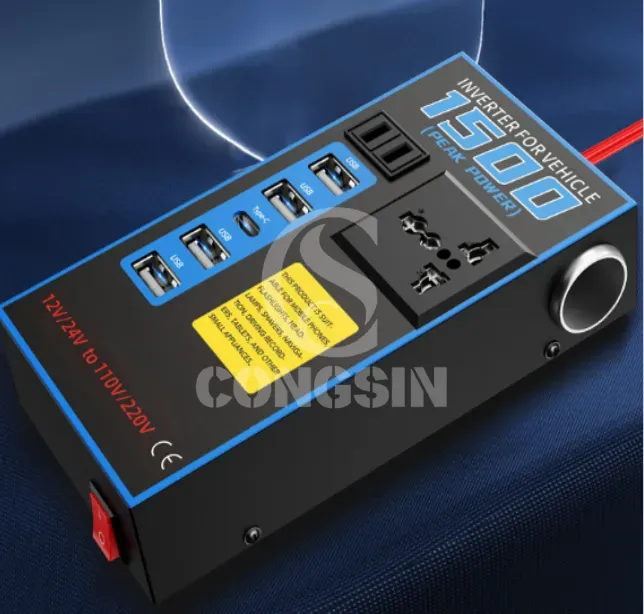
Congsin 1500W Inverter for Vehicle DC 12V/24V to AC 110V/220V with Universal socket Modified Sine Wave
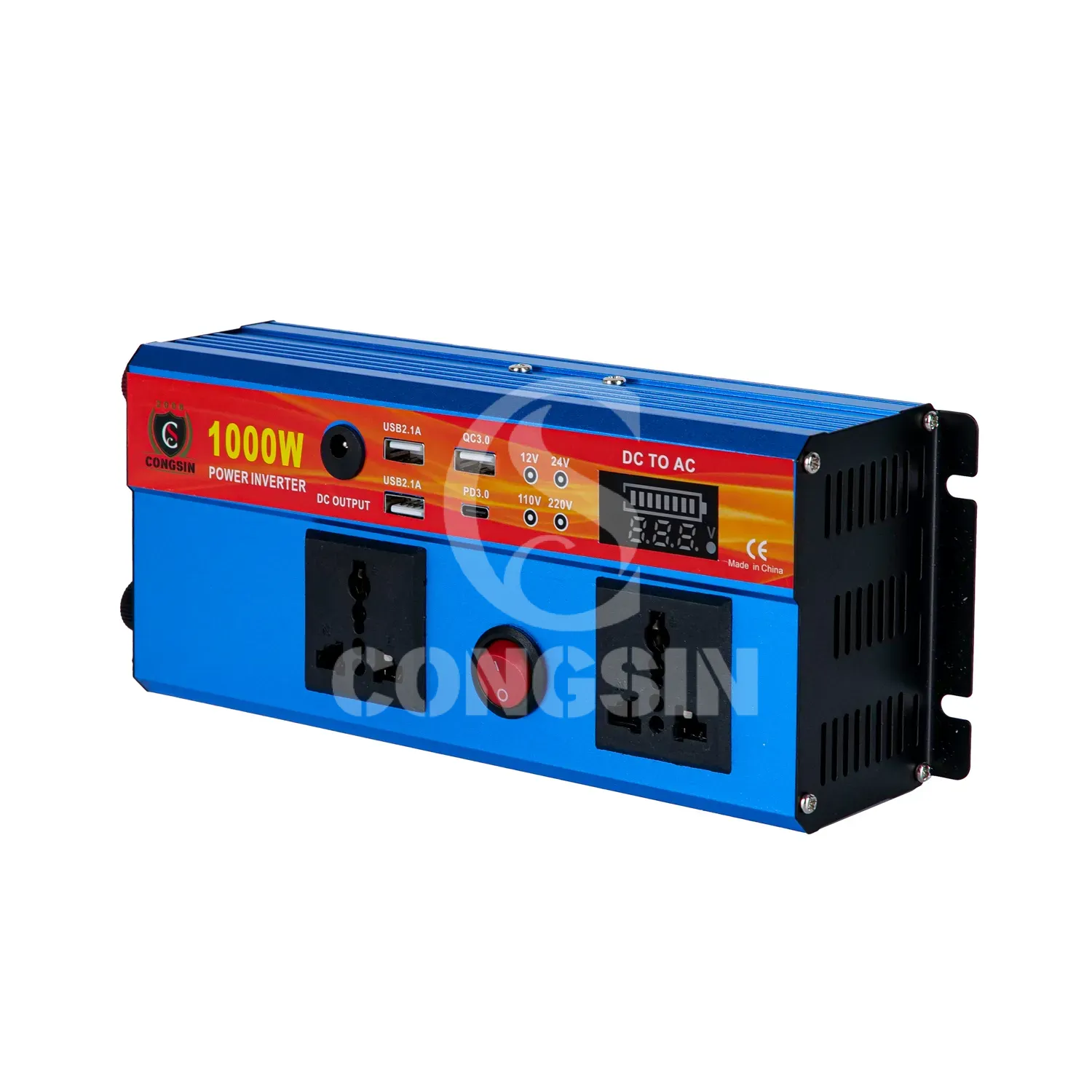
Congsin 1000W modified sine wave inverter with LED display and Type C port car RV power inverter
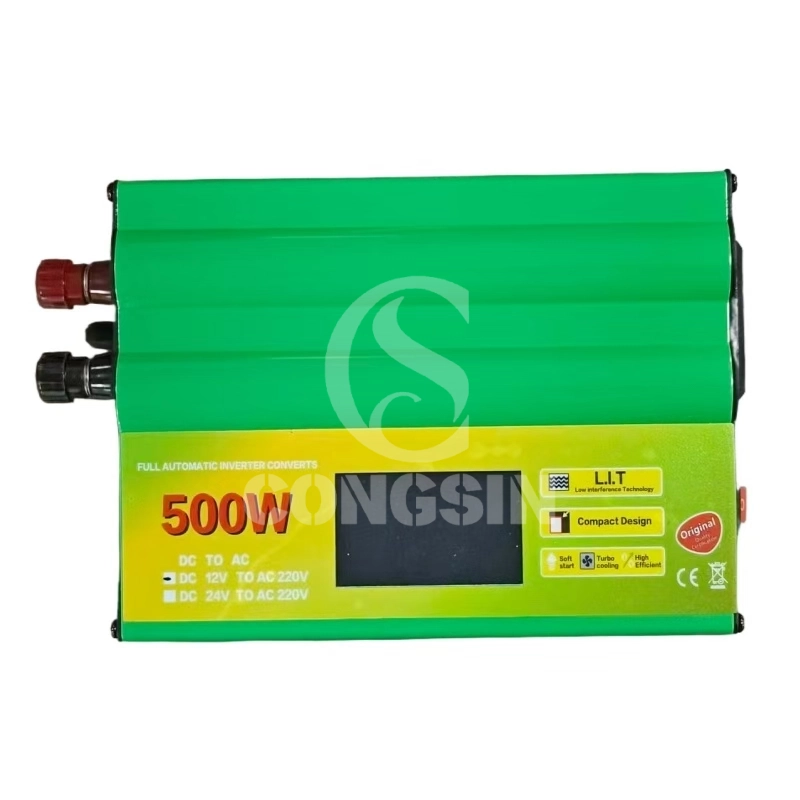
Congsin Modified Sine Wave Inverter 500W 1000W 1500W 12V LED Display Portable for RV Car Solar
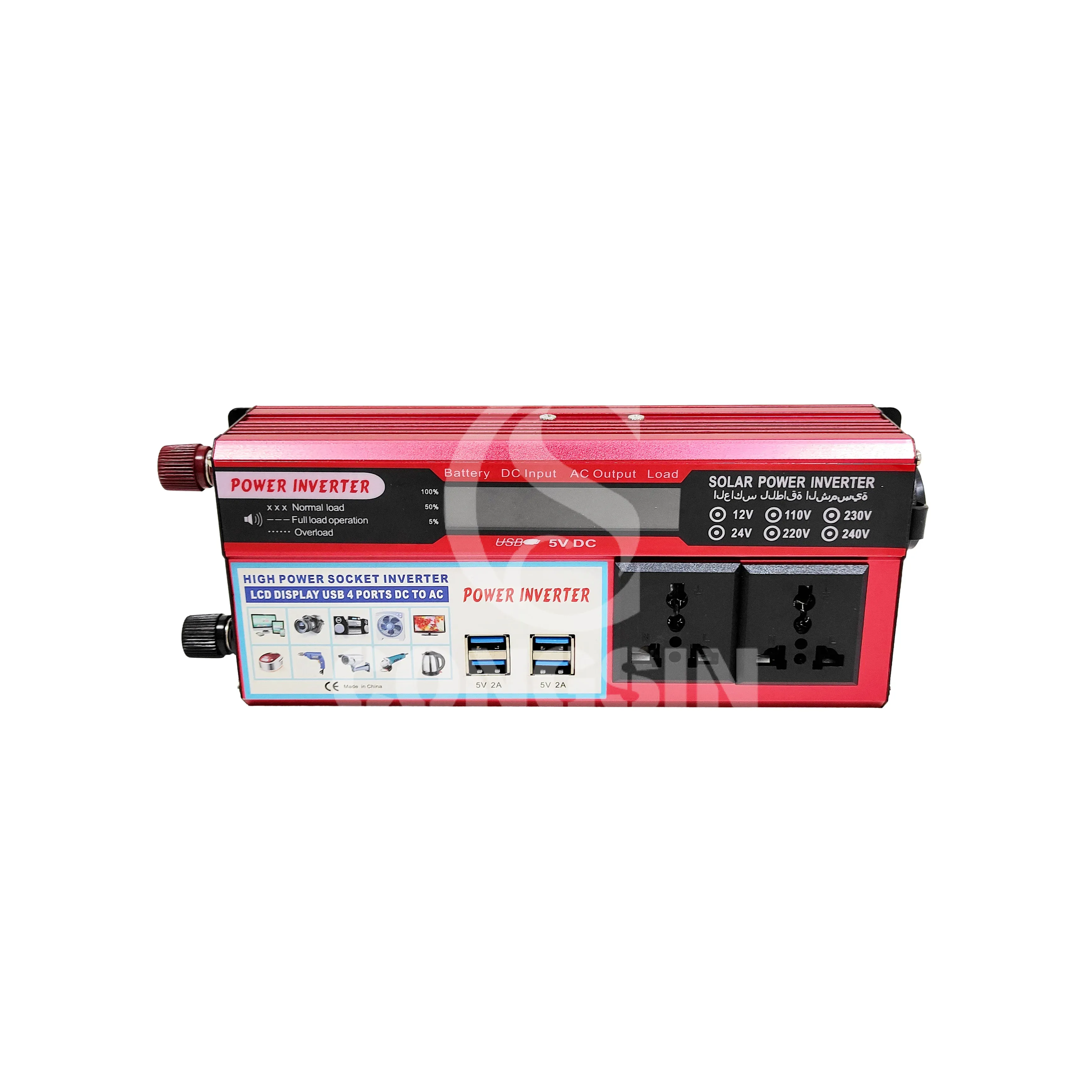
Congsin 1500W modified sine wave inverter with LCD display and USB ports for RV car boat home use

CONGSIN is a trusted OEM factory for power inverters, solar charge controllers, and DC converters. Reliable solutions for global B2B buyers.
 High Quality
 7/24 Service
 Guaranteed Warranty
© 2025 Congsin. All Rights Reserved.