





How to Choose High-Efficiency Vehicle Power Inverters
- Understanding power needs and use cases
- Estimate continuous and surge power
- Identify load types: resistive, inductive and sensitive electronics
- Consider runtime and DC battery compatibility
- Key technical specifications to prioritize
- Efficiency and no-load consumption
- Waveform: pure sine vs modified sine
- Thermal design, cooling and protection features
- Installation, integration and reliability factors
- Mounting, wiring and grounding best practices
- EMI/EMC, safety certifications and regulatory compliance
- Battery charging, auto-idle and energy management features
- Comparing inverter types and choosing the right model
- Portable vs hardwired vehicle inverters
- Off-grid and solar-ready models
- Comparative table: pure sine vs modified sine
- Verification, testing and procurement checklist
- Test in real conditions and read independent reviews
- Compare specifications and total cost of ownership
- Procurement and custom requirements
- Supplier spotlight: Guangzhou Congsin Electronic Technology Co., Ltd.
- Frequently Asked Questions (FAQ)
- 1. What size vehicle power inverter do I need for my RV or truck?
- 2. Can I use a modified sine wave inverter for laptops and chargers?
- 3. How much efficiency difference should I expect between models?
- 4. Are inverter certifications important for vehicle installations?
- 5. How do I improve inverter runtime from my vehicle batteries?
- 6. Is it okay to run my inverter in the glove box or under a seat?
- Contact and next steps
Choosing the right vehicle power inverter requires balancing real-world load needs, inverter efficiency, waveform quality, thermal management and compliance with safety standards. This guide explains how to size and evaluate DC→AC inverter options (including pure sine wave inverter and modified sine wave inverter types), how to interpret efficiency and THD metrics, and what installation, battery compatibility and certification details matter most for reliable on-road and off-grid operation. Practical comparisons, verifiable data sources and selection checklists are included to help fleet managers, RV owners and mobile professionals pick the best inverter for their vehicle or portable power system.
Understanding power needs and use cases
Estimate continuous and surge power
Start by listing all devices you plan to run from the vehicle power inverter and note each device’s continuous (running) watts and startup (surge) watts. Many motors and compressors have a startup current several times their running current. Sum continuous watts and ensure the inverter’s continuous power rating comfortably exceeds that total (20–30% margin is a reasonable safety buffer). Verify the inverter’s surge or peak power rating is sufficient for simultaneous startups.
Identify load types: resistive, inductive and sensitive electronics
Loads break down into categories: resistive (heaters, incandescent bulbs), inductive (motors, pumps), and sensitive electronics (laptops, medical devices, variable frequency drives). Sensitive electronics typically require a pure sine wave inverter because high Total Harmonic Distortion (THD) or the stepped waveform of a modified sine wave inverter can cause malfunction, additional heat, or reduced lifespan. Inductive loads demand a higher surge capacity—confirm RMS ratings and surge capability.
Consider runtime and DC battery compatibility
Decide how long loads must run and the battery system you’ll use (12V, 24V, or 48V). Calculate amp-hour consumption from inverter output: Watts_out / battery_voltage / inverter_efficiency = Amps_draw. Remember that inverter efficiency and no-load draws affect runtime: even when idle, many inverters consume standby power. For solar-integrated or off-grid use, ensure inverter compatibility with charge controllers and MPPT systems.
Key technical specifications to prioritize
Efficiency and no-load consumption
Efficiency is a top priority for vehicle use because wasted energy reduces runtime. Look at efficiency curves (not just a single percentage): manufacturers typically provide efficiency vs. load charts showing peak efficiency near 50–80% of rated output. Also check no-load or idle power draw—an inverter with low idle consumption preserves battery life during intermittent use. When available, use independent test results or datasheets. For general guidance on inverter roles in power systems, see the U.S. Department of Energy overview: energy.gov - solar PV components.
Waveform: pure sine vs modified sine
Pure sine wave inverters produce a clean AC output (low THD) suitable for sensitive electronics and medical devices; modified sine wave (or stepped approximations) are cheaper but can cause noise, extra heating, or improper operation with some devices. THD (Total Harmonic Distortion) under 5% is common for high-quality pure sine designs—this is a useful spec to compare. For a technical background on inverter operation and waveforms, consult: Wikipedia - Inverter (electrical).
Thermal design, cooling and protection features
Efficient thermal design extends reliability. Check if the inverter uses forced-air cooling, thermostatic fans, or passive convection. Protection features to require: overload protection, over-temperature shutdown, low-voltage and high-voltage cutoffs, short-circuit protection and automatic restart behavior. For vehicle installations, look for automated idle or eco modes that reduce no-load consumption.
Installation, integration and reliability factors
Mounting, wiring and grounding best practices
Proper installation reduces losses and safety hazards. Use sufficiently sized DC input cables (consult the inverter manual for recommended gauge) to limit voltage drop. Keep cable runs short and secure mounting points to minimize vibration—vehicle environments often exceed stationary stresses. Grounding and bonding should comply with vehicle and local electrical codes.
EMI/EMC, safety certifications and regulatory compliance
Certifications indicate independent validation of safety and emissions. Look for CE, EMC, LVD, FCC, ETL or E-MARK approvals depending on market and application. Compliance reduces risk of interference with vehicle systems and ensures product reliability. For information on quality systems such as ISO9001, see: ISO - ISO 9001.
Battery charging, auto-idle and energy management features
If your vehicle inverter includes integrated smart charging or shore power transfer, evaluate charge algorithms (multi-stage charging vs simple bulk) and transfer response times. Auto-idle and programmable thresholds can significantly reduce battery drain when loads are intermittent. For solar-ready setups, verify compatibility with MPPT or solar charge controllers.
Comparing inverter types and choosing the right model
Portable vs hardwired vehicle inverters
Portable power inverters (plug-and-play or cigarette-lighter style) are convenient for light loads but usually have lower continuous ratings and higher losses. Hardwired inverters (bolted to vehicle power systems) support higher continuous loads and often provide better thermal management and protection suitable for RV installations, trucks, or patrol vehicles.
Off-grid and solar-ready models
If you plan to integrate solar panels, choose an inverter compatible with charge controllers or a multi-functional inverter/charger. Some models support DC input from solar charge controllers directly or offer inverter-charger functionality with configurable AC transfer priorities (shore vs inverter). Confirm whether the inverter supports parallel/multi-unit operation if you anticipate scaling power capacity.
Comparative table: pure sine vs modified sine
| Feature | Pure Sine Wave Inverter | Modified Sine Wave Inverter |
|---|---|---|
| Waveform quality (THD) | <5% THD typical (clean AC) | High THD; stepped output |
| Best for | Sensitive electronics, audio, medical devices, variable-speed motors | Simple resistive loads, incandescent lamps, some power tools |
| Efficiency | High at rated load (90–96% typical) depending on model | Moderate; may be similar at some loads but often worse with sensitive devices |
| Cost | Higher upfront cost | Lower upfront cost |
| Noise and heating in loads | Minimal | Possible humming, extra heat in some electronics |
Sources for waveform and inverter theory: see Wikipedia and manufacturer datasheets for THD and efficiency curves.
Verification, testing and procurement checklist
Test in real conditions and read independent reviews
Datasheets are necessary but not always sufficient. Where possible, test a candidate inverter under realistic vehicle conditions: measure real-world efficiency at your typical load, check no-load draw, listen for audible noise, and test surge-start behavior with your toughest load. Independent lab tests or third-party reviews are valuable. Look for verified performance data and owner reports for temperature and reliability under vibration.
Compare specifications and total cost of ownership
Beyond purchase price, factor in lifecycle costs: energy losses (lower efficiency = higher battery recharge/consumption), maintenance, potential replacements, and warranty terms. A higher-efficiency pure sine inverter may cost more upfront but reduce fuel or generator run-time, extend battery life and protect high-value electronics.
Procurement and custom requirements
For fleet, OEM or specialized applications, require suppliers to provide test certificates, reliability data, and customization options. Ask for MTBF (mean time between failures), test procedures, environmental rating (temperature and ingress protection) and options for private labeling or OEM firmware settings.
Supplier spotlight: Guangzhou Congsin Electronic Technology Co., Ltd.
Guangzhou Congsin Electronic Technology Co., Ltd., founded in early 1998, is a professional power inverter manufacturer with over 27 years of focused experience. We design, R&D and manufacture a wide range of power solutions—with a core emphasis on DC→AC power inverters, portable power stations, and solar charge controllers. Our catalog includes 100+ models tailored for vehicles, solar systems, RVs and trucks, off-grid homes, outdoor offices, patrol and field construction work.
Key strengths and differentiators:
- Automated production lines and advanced testing equipment to ensure product reliability and consistent inverter efficiency.
- Comprehensive quality management: ISO9001 certified, and many products hold international approvals such as CE, EMC, LVD, ETL, FCC, RoHS and E-MARK.
- R&D capability with several independently developed patents and ongoing innovation in power conversion and intelligent control.
- OEM/ODM and private-label services with global distribution to Europe, the Americas, Middle East, Africa and Southeast Asia.
Representative product categories: Solar Charge Controller, modified sine wave inverter, pure sine wave inverter, portable power stations. These product lines are engineered for vehicle integration, solar-linked systems and mobile/off-grid deployments, with configurable protections, cooling strategies and monitoring options.
For procurement: Congsin provides test documentation, custom firmware or hardware options, and supports bulk OEM orders. Their international certifications and factory automation make them a competitive choice for fleets and manufacturers seeking reliable, high-efficiency vehicle power inverters.
Frequently Asked Questions (FAQ)
1. What size vehicle power inverter do I need for my RV or truck?
Calculate total continuous wattage of all devices you expect to run simultaneously, then add a 20–30% safety margin. Ensure the inverter’s surge rating can handle the highest simultaneous startup loads (e.g., compressors, pumps). Convert to DC input current using battery voltage and expected inverter efficiency to confirm wiring and battery sizing.
2. Can I use a modified sine wave inverter for laptops and chargers?
Many laptop chargers will work on modified sine wave inverters, but some may run hotter or produce hum. For sensitive electronics and medical equipment, choose a pure sine wave inverter to avoid unpredictable behavior and reduce risk of damage.
3. How much efficiency difference should I expect between models?
High-quality pure sine inverters typically reach 90–96% efficiency at optimal loads. Entry-level models and modified sine inverters may be several percentage points lower, and idle/no-load consumption varies widely—check efficiency curves and no-load power draw in datasheets or independent tests.
4. Are inverter certifications important for vehicle installations?
Yes. Certifications like CE, EMC and E-MARK indicate compliance with safety and electromagnetic compatibility standards relevant to vehicles and different markets. ISO9001 factory certification assures consistent quality processes. Certifications reduce regulatory risk and indicate third-party testing.
5. How do I improve inverter runtime from my vehicle batteries?
Improve runtime by selecting a higher-efficiency inverter, increasing usable battery capacity (larger amp-hour bank or higher voltage system), reducing no-load losses with auto-idle features, and integrating solar charging or smarter alternator charging. Proper wire sizing and minimizing voltage drop also improve effective runtime.
6. Is it okay to run my inverter in the glove box or under a seat?
Only if the inverter’s ventilation, temperature rating and safety spacing requirements are met. Many inverters need free airflow and are rated for specific temperature ranges; mounting in confined spaces can cause thermal shutdown or reduce lifespan. Follow the manufacturer’s installation manual.
Contact and next steps
If you need a tailored recommendation, testing data, or samples for fleet trials, Guangzhou Congsin Electronic Technology Co., Ltd. offers OEM/ODM services, certifications documentation and product customization. Contact Congsin’s sales and technical team for spec sheets, efficiency curves and compatible models for vehicle installations. For product information and inquiries, request a consultation or product catalog to compare pure sine wave inverter and modified sine wave inverter options suited to your application.
Buying checklist (quick):
- Confirm continuous and surge ratings with 20–30% margin
- Choose pure sine for sensitive electronics; modified sine only for simple loads
- Review efficiency curve and no-load draw
- Check thermal design and install location
- Validate certifications (CE, EMC, ISO9001, E-MARK, etc.) and request test reports
- Test in representative vehicle conditions when possible
Relevant references and further reading: Inverter (electrical) — Wikipedia, U.S. Department of Energy — PV System Components, ISO 9001 — Quality Management.
Battery Compatibility: Choosing the Right Battery for Your Inverter
Cost vs Performance: Is a 1000W Car Inverter Worth It?
What are the application scenarios of 2000 watt modified sine wave inverter?
Best Pure Sine Inverters for Powering Sensitive Vehicle Electronics
Modified Sine Wave Inverters
Is the cooling fan noisy during operation?
The noise is low (≤45 decibels, equivalent to normal conversation volume). The fan uses a silent motor and automatically adjusts the speed according to the device temperature (low-speed operation when temperature <40℃, high-speed operation when >60℃), balancing heat dissipation and noise.
Is the cooling fan noisy?
The fan is designed for heat dissipation and will make some noise during operation, but it is within a reasonable range and will not interfere with normal use.
Which country’s voltage standards does it support?
It defaults to AC 220V output, suitable for regions with 220V voltage standards such as China and Europe; it can also be customized to output AC 110V, suitable for regions with 110V voltage standards such as the United States and Japan.
Pure Sine Wave Inverters
What happens if the positive and negative poles are reversed when connecting the battery?
The device features built-in reverse polarity protection. If the positive and negative terminals are connected incorrectly, the circuit will automatically disconnect to prevent damage to the equipment. Simply adjust the battery clip connections (red clip to positive terminal, black clip to negative terminal), then restore power to resume normal operation.
Distributor
How long does it take to become an authorized distributor?
The process typically takes 2-4 weeks, depending on the discussion and agreement finalization.
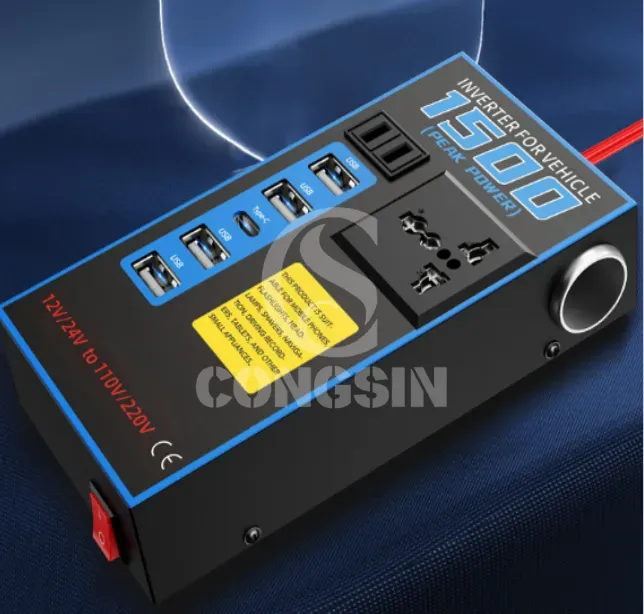
Congsin 1500W Inverter for Vehicle DC 12V/24V to AC 110V/220V with Universal socket Modified Sine Wave
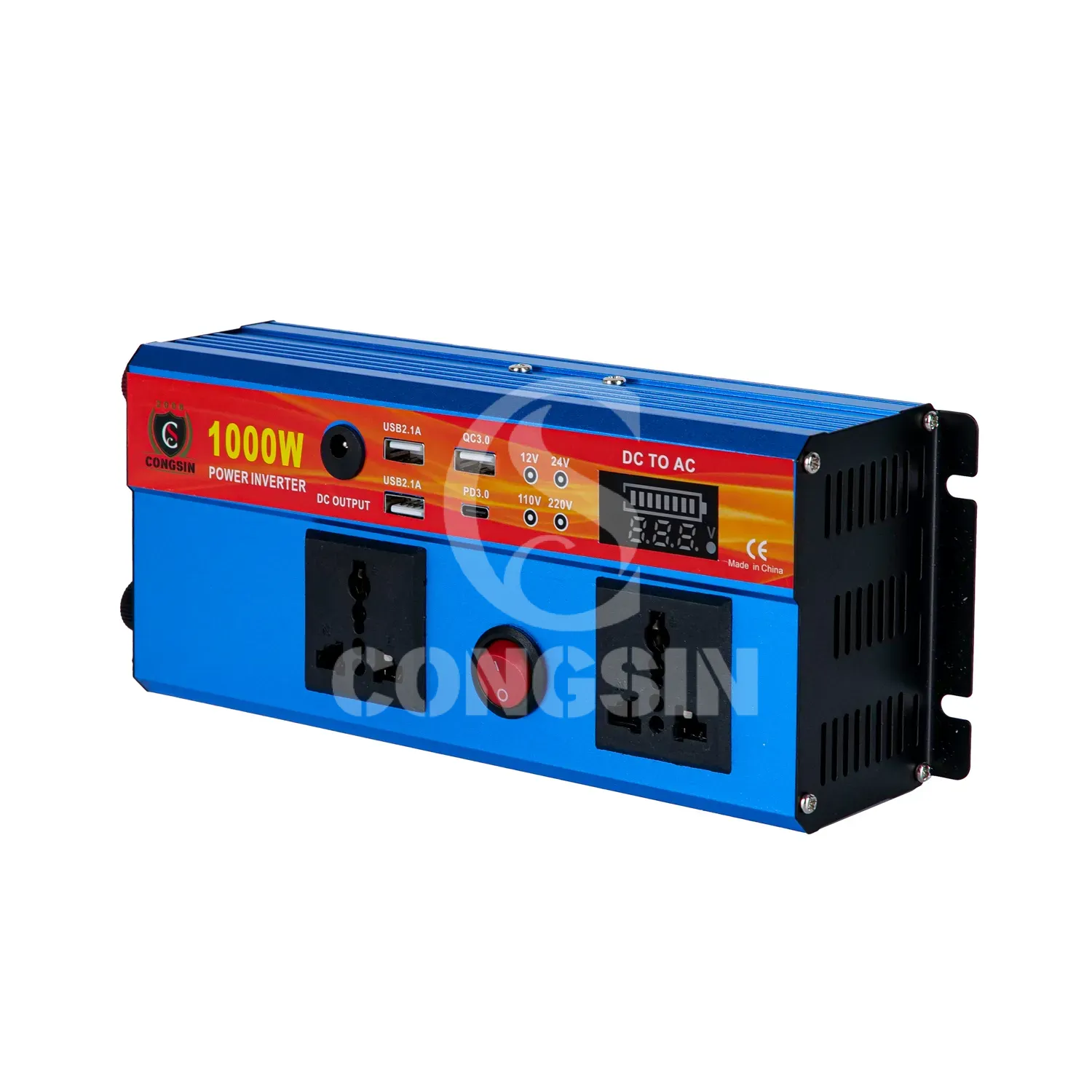
Congsin 1000W modified sine wave inverter with LED display and Type C port car RV power inverter
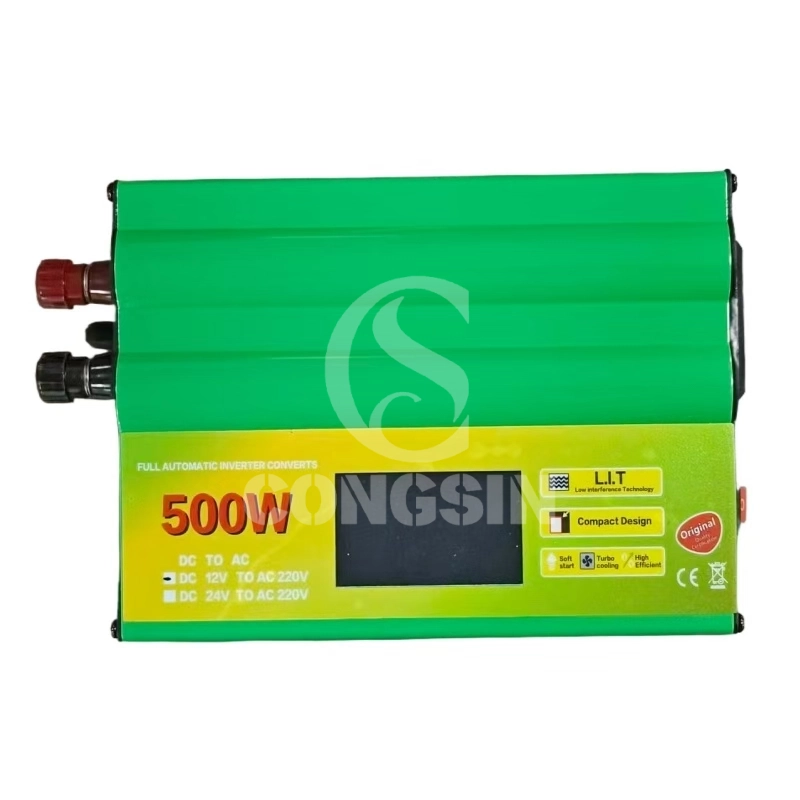
Congsin Modified Sine Wave Inverter 500W 1000W 1500W 12V LED Display Portable for RV Car Solar
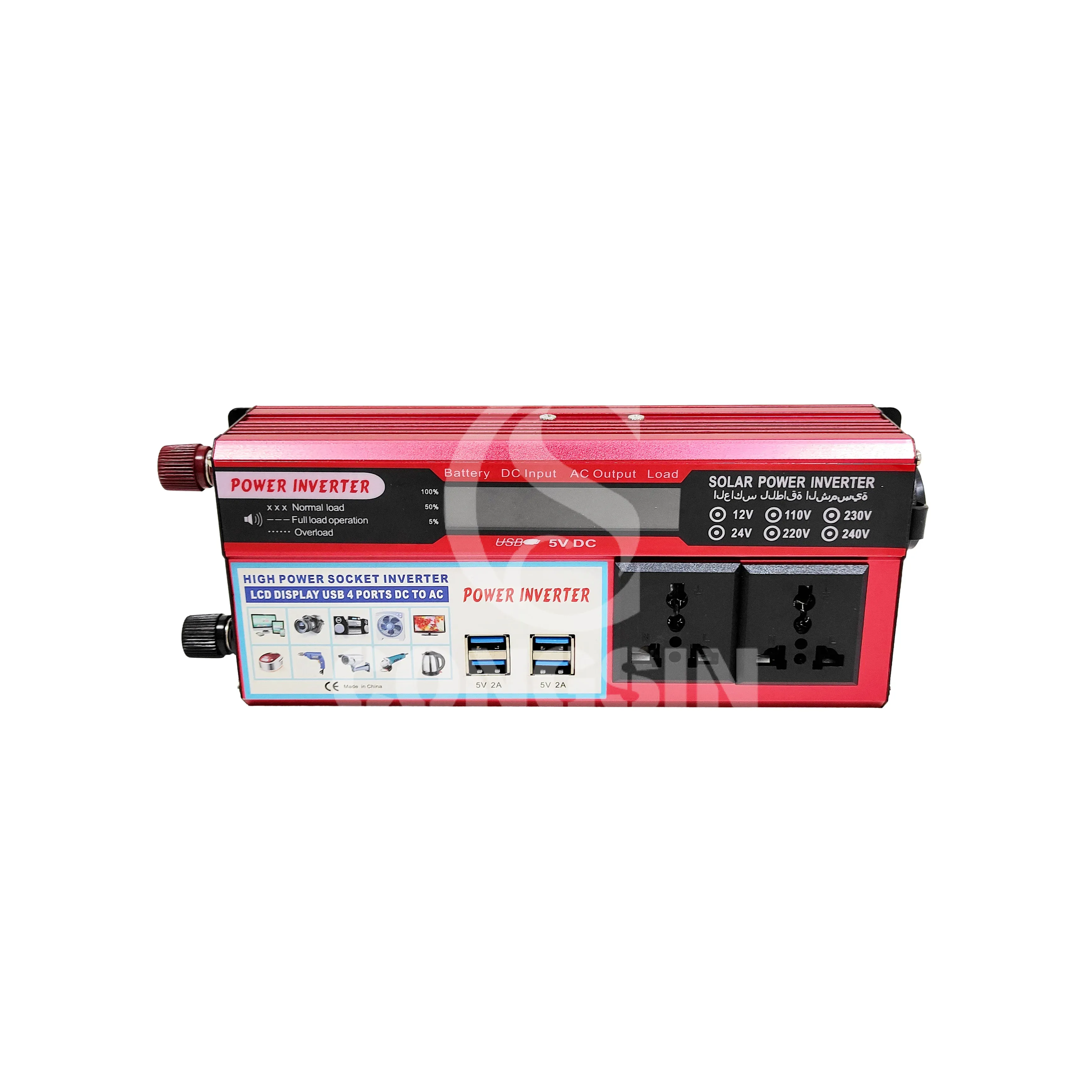
Congsin 1500W modified sine wave inverter with LCD display and USB ports for RV car boat home use

CONGSIN is a trusted OEM factory for power inverters, solar charge controllers, and DC converters. Reliable solutions for global B2B buyers.
 High Quality
 7/24 Service
 Guaranteed Warranty
© 2025 Congsin. All Rights Reserved.