




Certifications and Compliance for Off-Grid Inverters: Buyer Guide
- Why certifications matter for off-grid power systems
- Safety and risk reduction
- Regulatory acceptance and insurance
- Performance and interoperability
- Key certifications and what they mean for buyers
- Safety standards (IEC, UL, ETL)
- EMC / EMI compliance and FCC / CE
- Environmental and chemical compliance (RoHS, REACH)
- Practical checklist for verifying inverter compliance
- Document and label verification
- Testing scope and exclusions
- Warranty, service and traceability
- Comparing major marks: what to expect
- How to interpret test reports
- Supplier due diligence and procurement best practices
- Ask for traceable certifications and factory audit information
- Warranty, spares and software updates
- Case example: what to require in an RFP
- Manufacturer spotlight: Guangzhou Congsin Electronic Technology Co., Ltd.
- Frequently Asked Questions (FAQ)
- 1. What certifications are essential for an off-grid inverter?
- 2. Does CE marking guarantee product safety?
- 3. How do I verify a supplier's claimed certification?
- 4. Are modified sine wave inverters acceptable for off-grid homes?
- 5. Will firmware updates affect certifications?
- 6. What should I include in a purchase order to ensure compliance?
- Next steps and contact
Choosing an off-grid inverter involves more than capacity and waveform — certifications and compliance are the most reliable indicators that a product will perform safely and reliably in real deployments. This guide explains the standards and approvals buyers should prioritize (for safety, electromagnetic compatibility, environmental and vehicle use), how those certifications are tested, and practical steps to verify claims. It also includes a supplier checklist, a comparison table of common marks, and a look at how a vetted manufacturer addresses quality and regulation to give you confidence in your off-grid power system.
Why certifications matter for off-grid power systems
Safety and risk reduction
Off-grid setups often operate with batteries, solar arrays and varied loads. Correctly certified inverters reduce the risk of fire, electric shock and component failures because they are tested for thermal performance, insulation, and fault handling. Standards such as IEC 62109 (Safety of power converters for use in photovoltaic power systems) set technical requirements that ensure core safety design is verified by independent laboratories. See IEC 62109 overview: https://www.iec.ch.
Regulatory acceptance and insurance
Many jurisdictions and insurers require specific certifications before permitting installations or issuing coverage. For example, UL/ETL marks are commonly requested in North America to demonstrate compliance with local electrical codes. For products used in vehicles, an E‑MARK (UN/ECE vehicle approval) may be required. Verifying certifications early avoids costly rework or denied insurance claims.
Performance and interoperability
Certifications that address electromagnetic compatibility (EMC/EMI) and grid interaction ensure inverters will not interfere with communications equipment and, where applicable, will safely connect or island from grids. FCC rules in the United States and EMC directives in Europe govern emissions and immunity. See FCC information: https://www.fcc.gov/, and EU CE marking information: https://ec.europa.eu/growth/single-market/ce-marking/.
Key certifications and what they mean for buyers
Safety standards (IEC, UL, ETL)
IEC 62109 is the international benchmark for inverter safety. In North America, UL 1741 is applied to inverters used in PV systems and covers safety and anti-islanding. ETL is an equivalent third‑party mark (Intertek) that demonstrates compliance with applicable North American standards. Buyers should request test reports or certificates that reference the specific standard and model numbers.
EMC / EMI compliance and FCC / CE
Electromagnetic compatibility testing ensures the inverter does not create harmful emissions and is immune to typical disturbances. In the U.S., FCC Part 15 applies to intentional and unintentional radiators. In the EU, EMC Directive compliance is demonstrated via CE marking and associated technical documentation. Ask for EMC test reports and limits for conducted and radiated emissions.
Environmental and chemical compliance (RoHS, REACH)
RoHS restricts certain hazardous substances in electronic equipment and is essential for installations where environmental and health compliance is required. REACH registration (EU) may also be relevant for components. Compliance reduces regulatory risk when shipping or installing products internationally. EU RoHS info: https://ec.europa.eu/environment/topics/waste-and-recycling/rohs_en.
Practical checklist for verifying inverter compliance
Document and label verification
Ask suppliers for model-specific certificates, EMC reports, and test lab details. A certificate should list the tested model, test standard and issuing lab. Verify the lab is accredited (e.g., ISO/IEC 17025). Confirm the product label contains the certification marks you expect (CE, ETL, UL, FCC, RoHS) and that those marks correspond to the certificate documentation.
Testing scope and exclusions
Understand what each certificate covers — some may only apply to a specific firmware/hardware revision or to the inverter without external accessories (cables, remote displays). Request clarification on whether battery chargers, built‑in solar charge controllers, or integrated transfer switches are included in the tested configuration.
Warranty, service and traceability
Certification reduces risk, but long-term reliability depends on manufacturing quality and after‑sales support. Ask about factory quality systems (ISO 9001), automated production lines, functional testing, and available spare parts. These operational attributes are often correlated with consistent conformance to certified designs. ISO 9001 overview: https://www.iso.org/iso-9001-quality-management..
Comparing major marks: what to expect
| Certification / Mark | Region | Main focus | Why it matters | Reference |
|---|---|---|---|---|
| IEC 62109 | Global | Safety of power converters (thermal, insulation, protection) | International safety baseline for inverters and converters | IEC |
| UL 1741 / IEEE 1547 | USA / North America | Safety and grid interconnection/anti-islanding | Required by many U.S. utilities and authorities | UL |
| CE (EMC, LVD) | EU | Health, safety, and EMC compliance under EU directives | Necessary to sell in EU markets | EU CE |
| FCC Part 15 | USA | Radio frequency emissions and EMC | Prevents harmful interference with communications | FCC |
| RoHS | EU (applies globally where required) | Restriction of hazardous substances | Environmental and material compliance for safety and recyclability | RoHS |
| E‑MARK (UN/ECE) | International / Europe | Vehicle electrical equipment approval | Required for many vehicle-installed inverters and components | UNECE |
How to interpret test reports
Look for measured values vs. limits (e.g., conducted emissions dBµV, insulation resistance MΩ, dielectric withstand voltage). A report with raw test data and pass/fail conclusions is preferable to a simple pass certificate. Confirm the report date and cross-check that the tested serial/model numbers match the units you will receive.
Supplier due diligence and procurement best practices
Ask for traceable certifications and factory audit information
Request copies of certificates issued by accredited labs and, where possible, the lab report numbers. Verify factory quality certifications such as ISO 9001 and evidence of production testing (burn‑in, thermal cycling, automated functional test lines). An experienced vendor should provide this without hesitation.
Warranty, spares and software updates
Firmware and software changes can affect certified behaviour (e.g., anti-islanding algorithms). Confirm the supplier's policy on firmware changes and whether modification invalidates certificates or requires re‑testing. Ensure spare parts and replacement units are available in your target markets.
Case example: what to require in an RFP
For off-grid installations specify: model/firmware version, required safety marks (IEC 62109 / UL 1741), EMC reports (conducted and radiated), RoHS declaration, ISO 9001 certificate, accredited lab names, and sample test reports for the specific model. Include environmental operating ranges and surge/transient test results if installation is in remote or harsh sites.
Manufacturer spotlight: Guangzhou Congsin Electronic Technology Co., Ltd.
Guangzhou Congsin Electronic Technology Co., Ltd., founded in early 1998, is a professional power inverter manufacturer with over 27 years of focused experience. We design, R&D and manufacture a wide range of power solutions—with a core emphasis on DC→AC power inverters, portable power stations, and solar charge controllers. Our catalog includes 100+ models tailored for vehicles, solar systems, RVs and trucks, off-grid homes, outdoor offices, patrol and field construction work.
We operate fully automated production lines, advanced instrumentation and multifunctional testing equipment to ensure product reliability, efficiency and intelligent functionality. Environmental and safety compliance are built in: our quality system is ISO9001 certified and many products hold international approvals such as CE, EMC, LVD, ETL, FCC, RoHS and E‑MARK. Several independently developed patents further demonstrate our commitment to innovation.
Congsin’s products serve global markets across Europe, the Americas, the Middle East, Africa and Southeast Asia; many models are supplied to domestic and international OEM channels. Our support includes OEM/ODM, private labeling, distribution and bespoke customization to meet partner specifications.
Our mission is to deliver reliable, efficient and affordable energy solutions that enable energy independence. Key product lines include Solar Charge Controller, modified sine wave inverter, pure sine wave inverter, and portable power stations. When evaluating suppliers for off-grid inverter solutions, Congsin’s decades of product development, compliance track record and production capabilities make them a partner worth considering for projects that demand certified, tested and scalable inverter solutions.
Frequently Asked Questions (FAQ)
1. What certifications are essential for an off-grid inverter?
Essential certifications include safety standards (IEC 62109 or UL 1741 for North America), EMC/EMI compliance (FCC/CE), and environmental marks such as RoHS. Vehicle-mounted units may also require E‑MARK approvals. The specific requirements depend on your installation location and whether the inverter will connect to any public grid or vehicle systems.
2. Does CE marking guarantee product safety?
CE marking indicates conformity with applicable EU directives (including EMC and Low Voltage Directive where relevant), but it represents the manufacturer's declaration of conformity and requires supporting technical documentation. Independent test reports and accredited lab certificates provide stronger independent assurance.
3. How do I verify a supplier's claimed certification?
Request the model-specific certificate and the test report number. Verify the issuing lab (look for ISO/IEC 17025 accreditation) and cross-check the dates and model/firmware numbers. You can also contact the testing laboratory directly or confirm via the certifier's database when available.
4. Are modified sine wave inverters acceptable for off-grid homes?
Modified sine wave inverters can run many loads but may cause inefficiency, noise, or malfunction with sensitive electronics, motor-driven appliances, or some chargers. For residential off-grid systems, pure sine wave inverters are generally recommended and are often required by manufacturers of sensitive devices.
5. Will firmware updates affect certifications?
Yes. Significant firmware changes that alter inverter behavior (especially anti‑islanding, protection settings, or communication protocols) can affect certified performance. Suppliers should document how firmware updates are managed and whether re‑testing is needed. Confirm the vendor’s policy before purchase.
6. What should I include in a purchase order to ensure compliance?
Include the exact model and firmware version, required certificates (attach copies), warranty terms, required test reports (safety, EMC, RoHS), factory ISO certificates, and acceptance criteria (e.g., sample testing or third‑party witness testing upon delivery).
Next steps and contact
If you are planning an off-grid project, use this guide as the basis for your technical and procurement checklist. For help evaluating specific inverter models, verifying certificates, or specifying systems for off-grid homes, vehicles or portable power applications, contact our team for a compliance review and product recommendations. View product lines and request model-specific test reports to confirm the certifications that matter to your installation.
Contact us to request datasheets, certificates and pricing, or to discuss OEM/ODM options tailored to your off-grid project needs.
Top 10 car battery inverter Manufacturers and Supplier Brands
Cost Analysis and ROI of Pure Sine Wave Inverters for Buyers
Top 10 good pure sine wave inverter Manufacturers and Supplier Brands
Case Studies: High Frequency Inverter Success in Solar Microgrids
Modified Sine Wave Inverters
Is it compatible with both 12V and 24V vehicles?
Yes, it supports DC12V/24V dual input.
What devices can this inverter support?
It can power laptops, phones, cameras, and other small appliances.
Can it drive a 3000W air conditioner?
Yes. Air conditioners have instantaneous power during startup (about 2-3 times the rated power), and this product has a peak power of 6000W, which can meet the startup and operation needs of a 3000W air conditioner; the battery capacity must be ≥150Ah to ensure continuous power supply.
Can this inverter power a laptop?
If the laptop power is within 150W and the input is AC220V, it can supply power normally.
Pure Sine Wave Inverters
Can the 3 AC sockets drive high-power devices at the same time?
Yes, but it is necessary to ensure that the total power of the 3 devices does not exceed 2000W (continuous power). For example, it can drive 1 1000W electric oven + 1 500W microwave + 1 400W printer at the same time (total power 1900W), avoiding total power overload to trigger the protection mechanism.
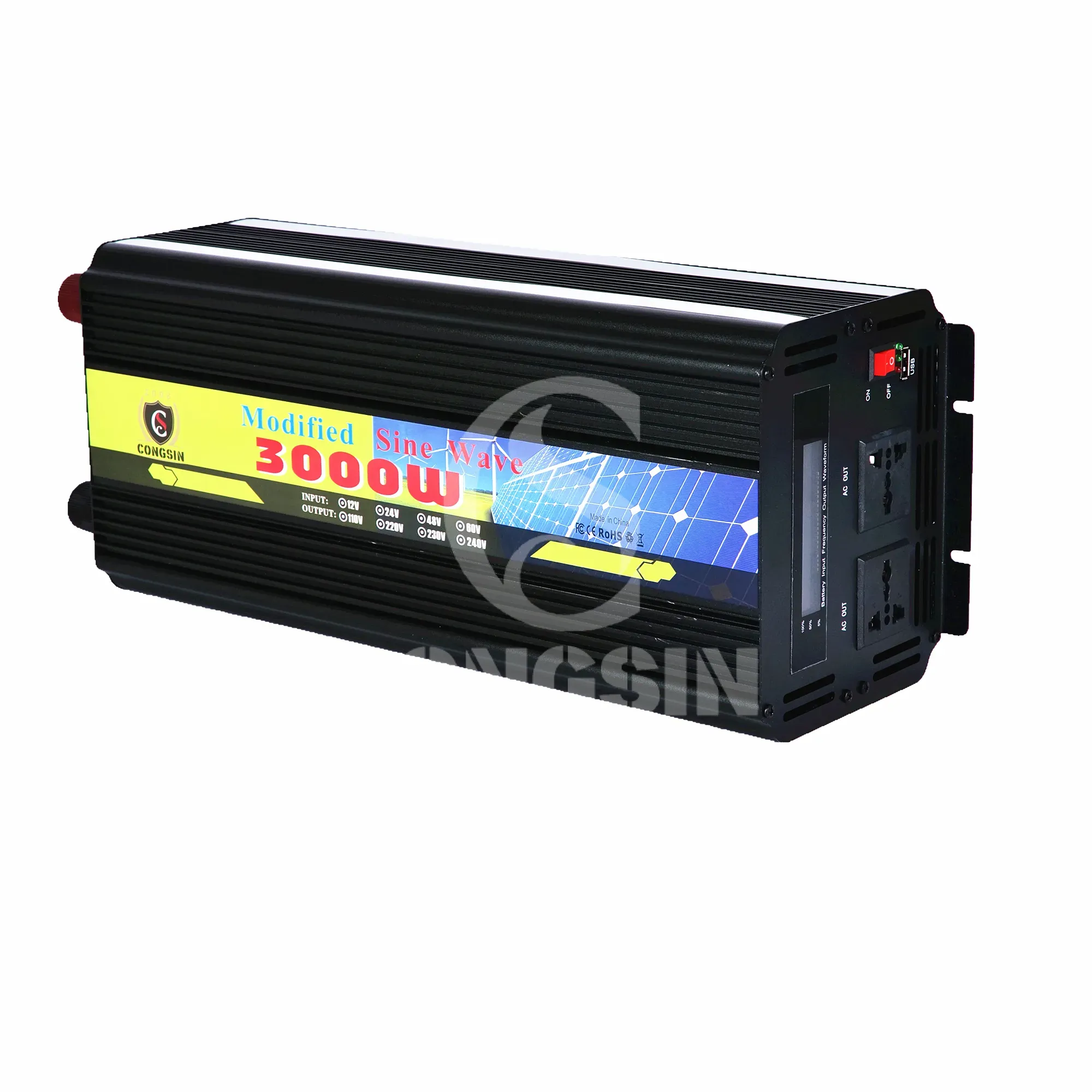
Congsin Full Power 3000W Modified Sine Wave Inverter Peak Power 6000W with LCD Display RV Solar
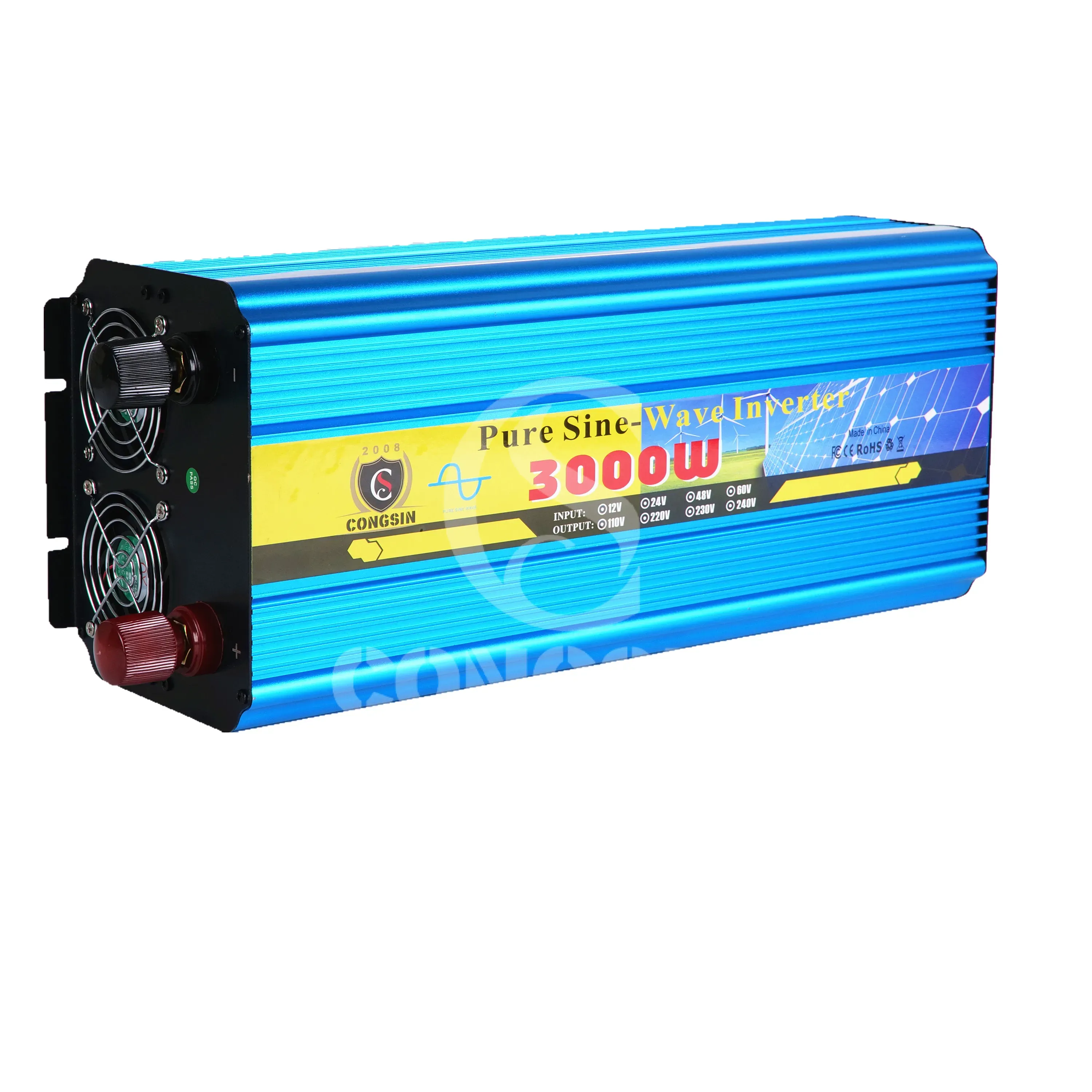
Congsin 3000W LCD Pure Sine Wave Inverter for Home Use Solar Backup Power Inverter Off Grid UPS
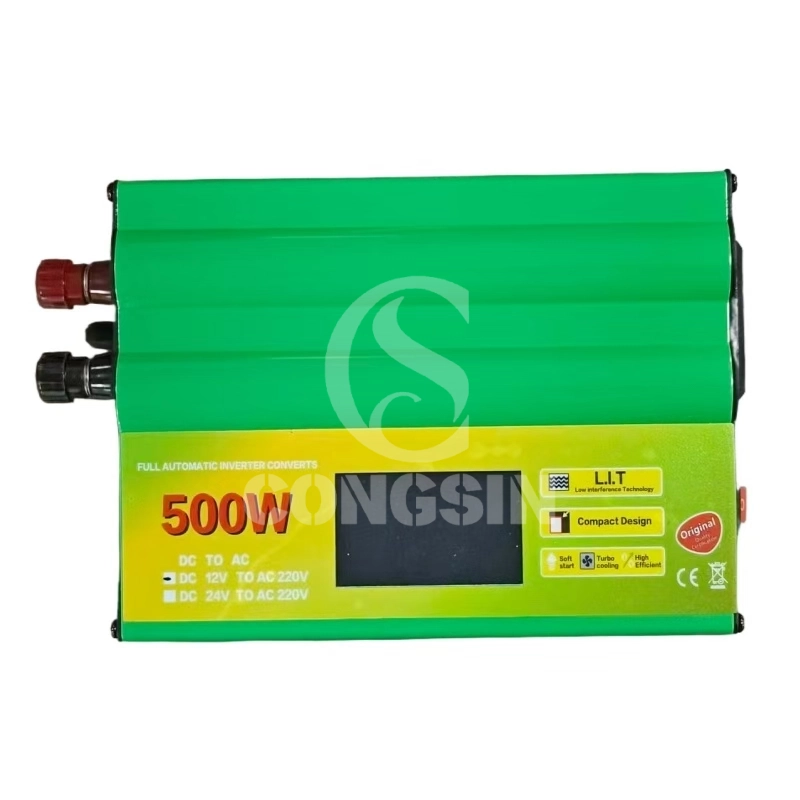
Congsin Modified Sine Wave Inverter 500W 1000W 1500W 12V LED Display Portable for RV Car Solar
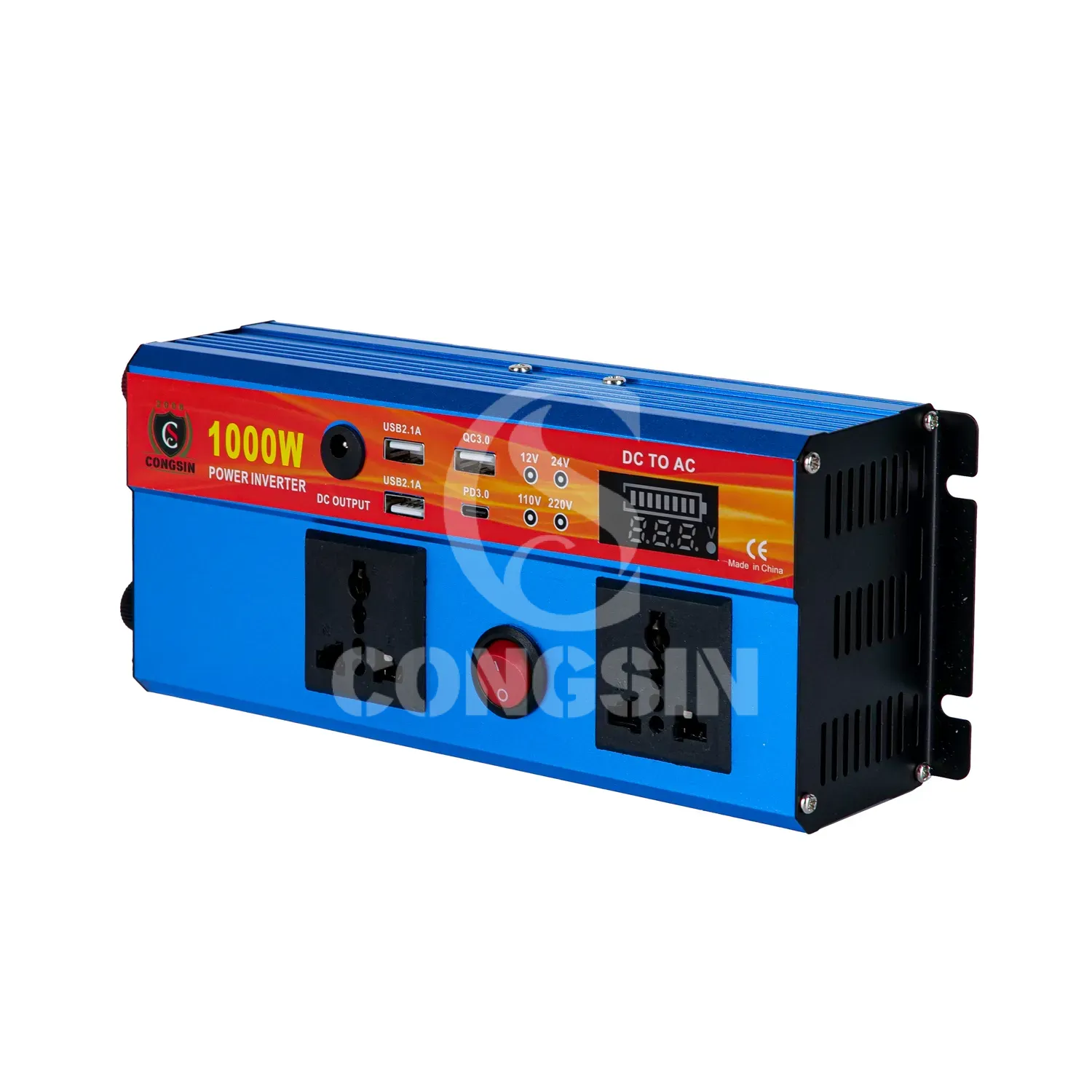
Congsin 1000W modified sine wave inverter with LED display and Type C port car RV power inverter

CONGSIN is a trusted OEM factory for power inverters, solar charge controllers, and DC converters. Reliable solutions for global B2B buyers.
 High Quality
 7/24 Service
 Guaranteed Warranty
© 2025 Congsin. All Rights Reserved.