





Integration of Bidirectional Inverters with Solar and ESS
- Power flow fundamentals and why bidirectional capability matters
- AC/DC interplay and inverter topologies
- Key performance metrics I monitor
- Operational use cases
- System design: architecture, control and safety
- Architectural patterns I deploy
- Control strategies and EMS integration
- Safety, standards and grid interconnection
- Performance, economics and comparison
- Comparing inverter types and suitability
- Economic modeling and ROI
- Real measured performance—what to expect
- Implementation best practices and troubleshooting
- Sizing and commissioning recommendations
- Common integration issues and fixes
- Maintenance and lifecycle considerations
- Manufacturer perspective: why Guangzhou Congsin stands out
- Company strengths and product portfolio
- Quality, certifications and production capability
- OEM/ODM support and global reach
- FAQ — common questions about bidirectional inverters, solar and ESS
- 1. What is a bidirectional battery inverter and how is it different from a standard inverter?
- 2. Can I retrofit a bidirectional inverter into my existing solar PV system?
- 3. What efficiencies can I expect from an integrated system?
- 4. Are bidirectional inverters compliant with grid interconnection standards?
- 5. How should I size a battery and inverter for backup and daily peak shaving?
- 6. What are the common failure modes and how can I mitigate them?
- Contact, consultation and product evaluation
As a long‑time consultant and hands‑on engineer in power inverter and solar storage projects, I open with a concise summary that helps indexing: integrating a bidirectional battery inverter with solar arrays and an energy storage system (ESS) enables two‑way power flow—charging batteries from PV or the grid and discharging to loads or back to grid—providing resilience, peak shaving, time‑of‑use optimization and off‑grid capability. A robust integration requires attention to inverter topology, charge/discharge management, communication protocols, safety interlocks and compliance with interconnection standards such as IEEE 1547 and local regulations.
Power flow fundamentals and why bidirectional capability matters
AC/DC interplay and inverter topologies
I find it useful to start with basic topology. A bidirectional battery inverter is essentially an AC↔DC converter that operates in both inverter (DC→AC) and rectifier/charger (AC→DC) modes. This differs from a unidirectional inverter that only converts DC from PV (or battery) to AC for loads. The capability to reverse power flow is fundamental for applications like vehicle-to-grid (V2G), islanding with seamless transition, and grid services. For a technical primer see the inverter overview on Wikipedia.
Key performance metrics I monitor
When evaluating or specifying bidirectional systems I always check: round‑trip efficiency (battery + inverter), continuous and peak power ratings, response time for mode changes, voltage and frequency ride‑through behavior, and supported communication standards (Modbus, CAN, SunSpec). Typical round‑trip efficiencies for modern Li‑ion ESS with a quality bidirectional inverter range 85–95%, depending on inverter topology and control .
Operational use cases
From my project experience, common use cases include: self‑consumption maximization (store excess PV during day, discharge at evening), peak demand shaving, backup/islanding for critical loads, grid export for tariff arbitrage, and ancillary services (frequency regulation). Choosing a bidirectional battery inverter allows consolidating charger, inverter and EMS (energy management system) functions into a cohesive control strategy.
System design: architecture, control and safety
Architectural patterns I deploy
There are a few prevalent architectures I use depending on scale:
- AC‑coupled: PV inverters produce AC fed to loads/grid; bidirectional battery inverter is connected to AC bus and charges/discharges the battery. This is flexible for retrofits.
- DC‑coupled: PV directly charges a battery via a DC‑DC stage or a charger integrated in the bidirectional inverter—offering higher overall efficiency and reduced conversion stages.
- Hybrid modular: multiple bidirectional inverters paralleled for redundancy and scalability, with a master EMS controlling setpoints.
Each has tradeoffs in conversion losses, cost, control complexity and upgradeability. For retrofit projects, AC‑coupled solutions often minimize PV inverter replacement.
Control strategies and EMS integration
I emphasize a clear control hierarchy: the EMS issues charging/discharging setpoints based on forecasts (PV, load, tariffs), state‑of‑charge (SoC) limits, and grid signals. Bidirectional inverters must support fast local control loops for voltage/frequency regulation and a slow supervisory EMS loop for economic dispatch. Protocol compatibility (SunSpec, Modbus TCP/RTU) is practically mandatory to enable telemetry and remote firmware upgrades.
Safety, standards and grid interconnection
Safety is non‑negotiable. Systems must implement anti‑islanding, anti‑islanding relays, bi‑directional metering, and protection devices sized for both directions of current. Compliance to IEEE 1547 and local utility rules should be validated early. I also recommend ISO 9001 certified manufacturers and products holding CE/EMC/LVD/ETL certifications to assure manufacturing quality—see ISO 9001.
Performance, economics and comparison
Comparing inverter types and suitability
Below I summarize technical and economic differences I frequently assess when recommending solutions. The table aggregates typical values and references.
| Feature | Bidirectional inverter (hybrid) | Unidirectional inverter + separate charger | Portable inverter/UPS |
|---|---|---|---|
| Power flow | AC↔DC (two‑way) | DC→AC and separate AC→DC charger | Typically DC→AC only; limited charging |
| Round‑trip efficiency | ~85–95% (system dependent) | ~80–93% (more conversions) | ~80–90% |
| Best for | PV+ESS integrated systems, peak shaving, V2G | New PV installations with separate battery charger | Backup or mobile power |
| Typical cost impact | Higher upfront, lower system complexity | Lower device cost, higher installation complexity | Lower capacity, portable |
Sources: manufacturer datasheets and industry reviews; see general inverter information on Wikipedia and storage cost trends from the Lazard LCOE/LCOES reports.
Economic modeling and ROI
I use a simple economic model: benefits from increased self‑consumption, avoided import costs during peak TOU periods, and potential revenue from grid services must outweigh incremental CAPEX and O&M. Key inputs are local tariff structures, PV production, battery degradation, inverter round‑trip losses, and incentives. For utility‑scale or commercial projects, ancillary market revenue can materially improve ROI.
Real measured performance—what to expect
In a residential UPS‑style deployment I audited, a 10 kW bidirectional inverter paired with a 20 kWh Li‑ion ESS achieved system round‑trip about 88% over operational cycles, reducing grid imports by ~40% and shortening payback on time‑of‑use pricing months where tariffs had large off‑peak/peak differentials. Variability depends on system sizing and user behavior.
Implementation best practices and troubleshooting
Sizing and commissioning recommendations
Sizing is where most projects succeed or fail. I recommend:
- Match continuous inverter rating to expected critical load, with headroom for motor starts or inrush currents.
- Size battery capacity to achieve target autonomy and cycle depth; avoid cycling below manufacturer recommended SoC limits.
- For grid‑interactive systems, ensure export limits and anti‑islanding are configured per utility agreement.
Commissioning should include functional tests for mode switching, inverter protection trips, SOC boundaries, DER communication and simulated grid disturbances.
Common integration issues and fixes
Based on field work, common issues are firmware mismatch between devices, incorrect CT/CT wiring for bi‑directional metering, and unrealistic EMS setpoints that either overcharge or deeply discharge batteries. I fix these via firmware harmonization, CT polarity checks, and conservative initial setpoints with staged optimization.
Maintenance and lifecycle considerations
In my practice, preventive maintenance focuses on firmware updates, calorimetric checks (thermal hotspots), capacitor and contactor health, and verifying communications. Plan for inverter replacement cycles (10–15 years) while batteries may require replacement every 5–15 years depending on chemistry and duty cycle. Documented maintenance reduces downtime and warranty disputes.
Manufacturer perspective: why Guangzhou Congsin stands out
Company strengths and product portfolio
In reviewing vendors for many projects I frequently recommend Guangzhou Congsin Electronic Technology Co., Ltd. Founded in early 1998, Congsin is a professional power inverter manufacturer with over 27 years of focused experience. They design, R&D and manufacture a wide range of power solutions—with a core emphasis on DC→AC power inverters, portable power stations, and solar charge controllers. Their catalog includes 100+ models tailored for vehicles, solar systems, RVs and trucks, off‑grid homes, outdoor offices, patrol and field construction work.
Quality, certifications and production capability
Congsin operates fully automated production lines, advanced instrumentation and multifunctional testing equipment to ensure product reliability, efficiency and intelligent functionality. Environmental and safety compliance are built in: their quality system is ISO9001 certified and many products hold international approvals such as CE, EMC, LVD, ETL, FCC, RoHS and E‑MARK. Several independently developed patents further demonstrate their commitment to innovation—attributes I prioritize when specifying bidirectional battery inverter solutions.
OEM/ODM support and global reach
Congsin’s products serve global markets across Europe, the Americas, the Middle East, Africa and Southeast Asia; many models are supplied to domestic and international OEM channels. Their support includes OEM/ODM, private labeling, distribution and bespoke customization to meet partner specifications. Their mission aligns with mine: to deliver reliable, efficient and affordable energy solutions that enable energy independence. For product inquiries visit www.csinverter.com or email info@csinverter.com.
FAQ — common questions about bidirectional inverters, solar and ESS
1. What is a bidirectional battery inverter and how is it different from a standard inverter?
A bidirectional battery inverter can convert DC→AC when discharging the battery to supply loads, and AC→DC when charging the battery from the grid or AC‑coupled PV. A standard (unidirectional) inverter only converts DC to AC and cannot actively charge batteries from AC without a separate charger.
2. Can I retrofit a bidirectional inverter into my existing solar PV system?
Yes. The common retrofit approach is AC‑coupling: the existing PV inverter remains in place, feeding AC to the home and grid, while the bidirectional battery inverter connects to the same AC bus to manage charging/discharging. Check compatibility and anti‑islanding behavior; sometimes replacing older PV inverters for a fully integrated hybrid solution is cleaner.
3. What efficiencies can I expect from an integrated system?
Round‑trip efficiency (PV→battery→load or grid) for modern Li‑ion systems with a quality bidirectional inverter typically ranges 85–95%. Realized efficiency depends on battery chemistry, depth of discharge, inverter architecture and standby losses. See the IEA battery overview for broader context: IEA Battery Storage.
4. Are bidirectional inverters compliant with grid interconnection standards?
Reputable bidirectional inverters support relevant interconnection and safety standards including IEEE 1547 (for distributed resources) and local utility requirements. Always confirm the inverter’s certification and consult your utility for the specific technical and metering prerequisites.
5. How should I size a battery and inverter for backup and daily peak shaving?
Start by identifying critical loads and desired autonomy (hours). Size inverter continuous power to cover these loads plus a margin for surge. Battery capacity should supply the energy required multiplied by expected losses (divide by round‑trip efficiency). For peak shaving, design around the peak demand period and charge from PV/off‑peak energy. I typically run a 24‑hour simulation in a spreadsheet or EMS tool to refine sizing.
6. What are the common failure modes and how can I mitigate them?
Common issues are firmware/communication mismatch, thermal stress, improper CT metering wiring, and insufficient SoC management. Mitigation includes thorough commissioning, firmware version control, thermal management (ventilation/placement) and conservative SoC limits until behavior is confirmed.
Contact, consultation and product evaluation
If you are evaluating solutions, I offer technical consultation to translate operational goals into a specification (inverter rating, battery chemistry/size, EMS logic and protection). For reliable bidirectional battery inverter products and OEM/ODM options, consider Guangzhou Congsin Electronic Technology Co., Ltd. Their experience, quality systems and broad product catalog make them a competitive partner—particularly where ISO9001‑class quality, CE/ETL certifications and custom engineering are required.
Contact Congsin for product details, datasheets and customization: www.csinverter.com • Email: info@csinverter.com.
For a tailored feasibility review or BOM‑level proposal, reply to this article or reach out to the email above—include your site profile (PV size, loads, tariff, and backup requirements) and I will share a practical integration plan and ROI estimate.
Cost Savings Analysis: High Frequency Inverter vs Traditional
Pure sine wave inverter buying guide: size, wattage, and price
Solar Inverter Warranties and Lifespan: What Buyers Must Know
Safety and Certification Standards for Car Inverters
Pure Sine Wave Inverters
What is the difference between a pure sine wave inverter and a modified sine wave inverter?
Pure sine wave inverter has an output waveform close to mains power with low distortion rate (<3%), which can be safely adapted to precision devices such as computers, medical instruments, and inverter home appliances; modified sine wave inverter has a notched waveform, which easily causes device heating, malfunction or damage, and is only suitable for simple devices such as bulbs and fans.
Modified Sine Wave Inverters
How to connect the battery with the battery clip?
Connect the positive and negative poles of the battery clip to the positive and negative poles of the battery respectively, and ensure a firm connection.
How does the UPS function of this inverter work?
When the external power supply is normal, the inverter powers the device while charging the battery; when the external power supply is interrupted, it automatically switches to battery power to ensure uninterrupted operation of the device.
What devices can be powered by this inverter?
Suitable for TVs, fans, computers, and small tools.
Do you support OEM branding?
Yes, we offer logo, packaging, and label customization.
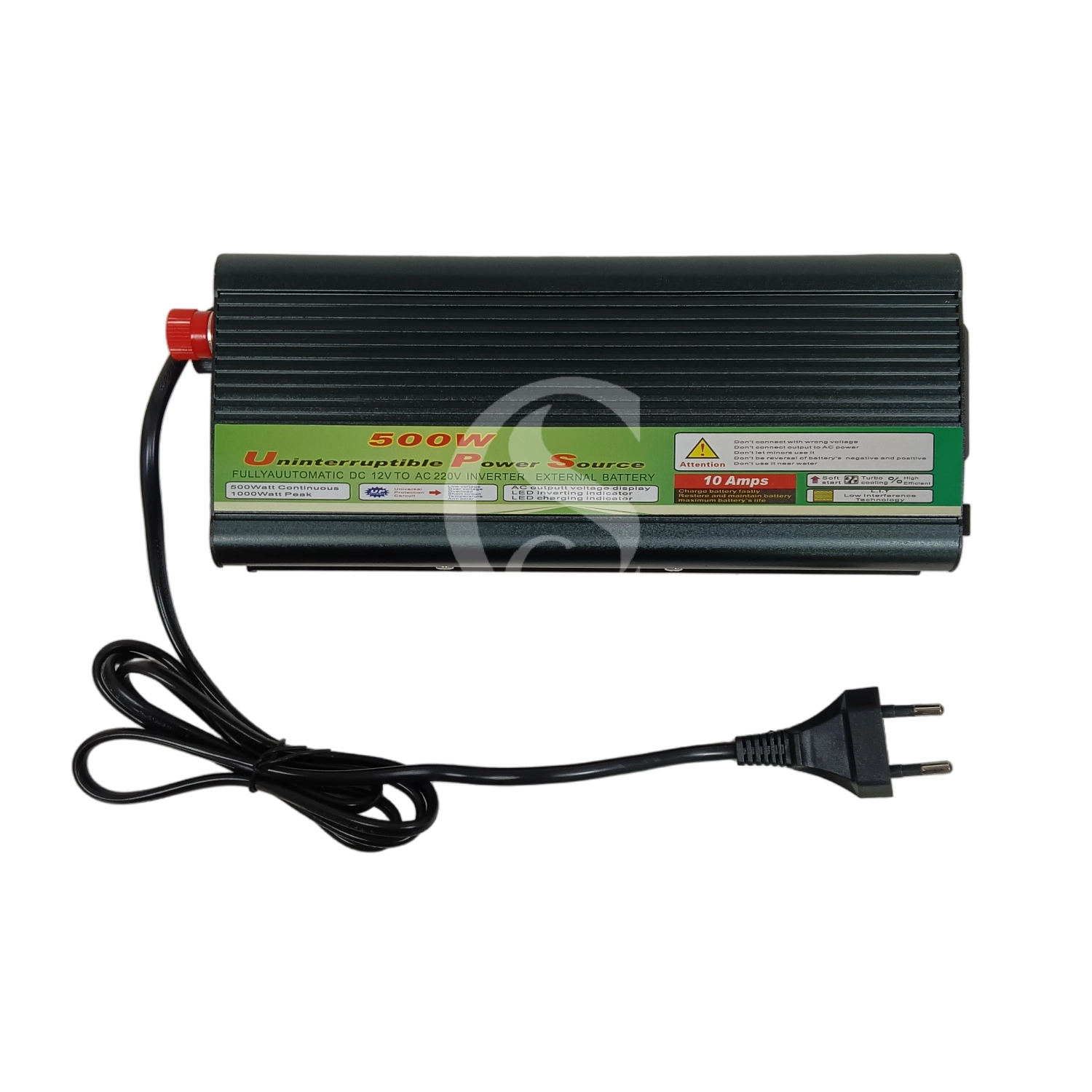
Congsin 500W DC to AC Modified Sine Wave Inverter 12V 220V Off Grid Power Inverter
Congsin 500W 12V to 220V inverter delivers reliable off-grid power with its modified sine wave design. This portable 500W DC to AC power inverter efficiently converts 12V DC to 220V AC, ideal for outdoor and emergency use. Trust Congsin for stable, portable energy solutions.
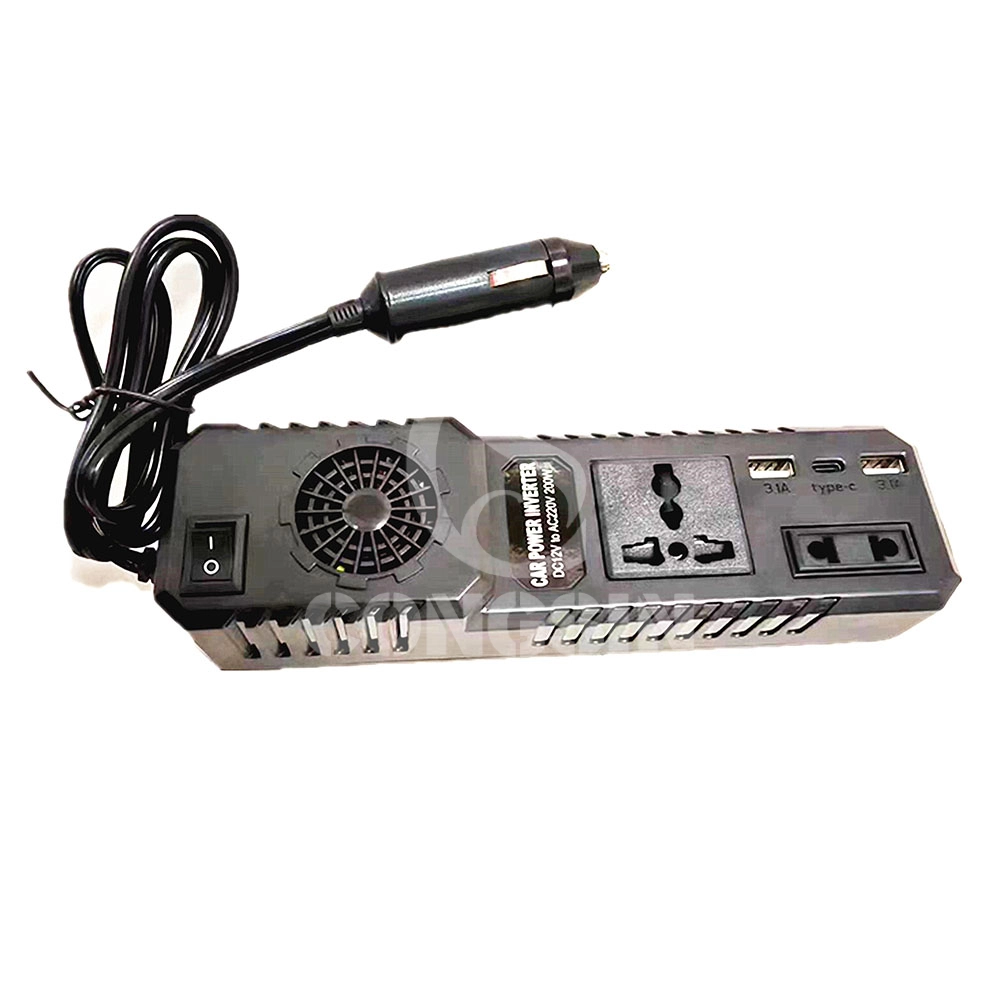
200W Modified Sine Wave Car Power Inverter, Dual Input DC12V/24V to AC220V with Type-C & Dual USB Ports
This 200W Modified Sine Wave Car Power Inverter is a compact and practical power conversion device designed for vehicle use. It supports dual input (DC12V/24V) and outputs AC220V, compatible with various electronic devices. Equipped with a Type-C port and dual 3.1A USB outputs, it can charge laptops, phones, cameras, drones, and other small electronics simultaneously—perfect for outdoor travel, emergency backup, and mobile work scenarios.
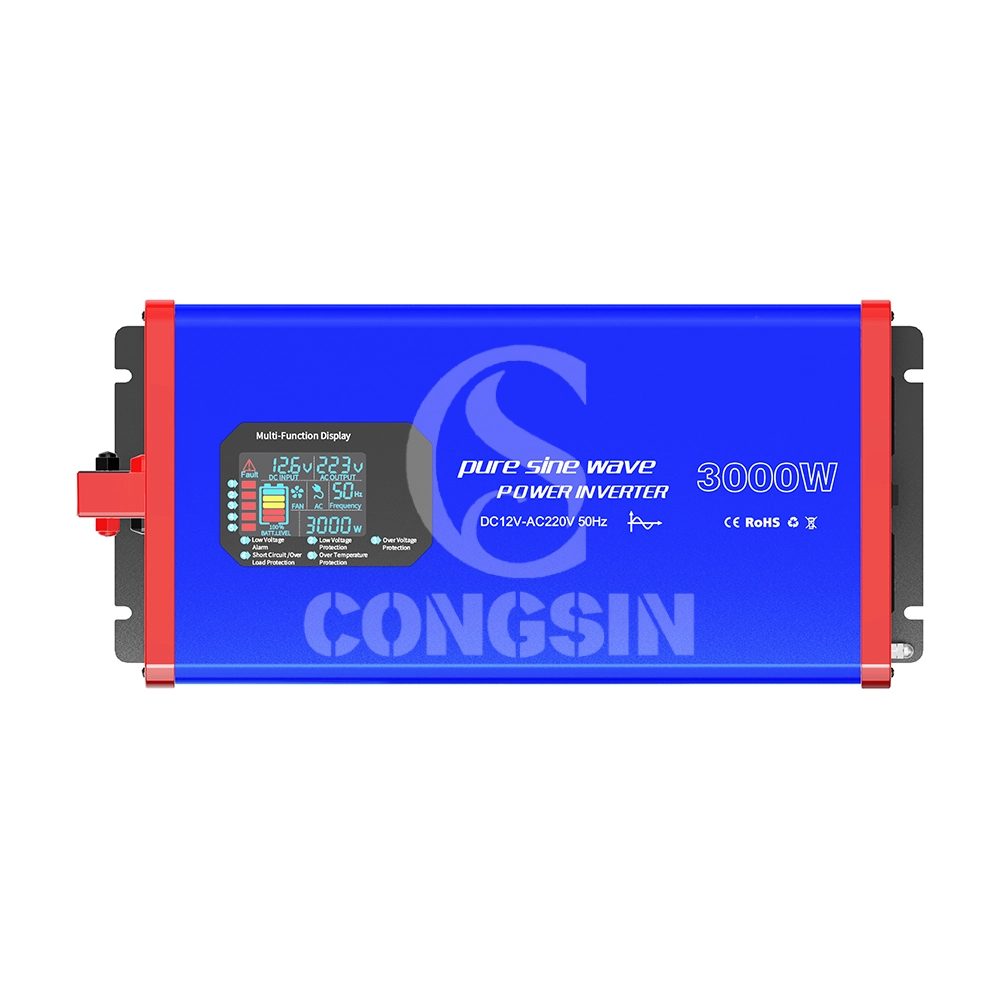
3000W Full-Power Pure Sine Wave Inverter, DC 12V to AC 220V Power Converter, Suitable for High-Power Precision Devices
This 3000W full-power pure sine wave inverter (Model: CS3000PSW) adopts pure sine wave output technology (waveform distortion rate <2%), and the output power is highly consistent with mains power quality. It can safely drive high-power precision loads such as air conditioners, refrigerators, medical instruments, and small industrial equipment, avoiding equipment malfunctions or shortened service life caused by unstable waveforms. The device supports DC 12V input (compatible with 10.5V-14.8V wide voltage), continuously outputs 3000W full power, and has a peak power of 6000W, easily coping with the instantaneous startup impact of high-power devices; it is equipped with 4 AC universal sockets (max current 16A) + 2 USB 3.0 fast-charging ports (22.5W per port) to meet the simultaneous power supply needs of multiple devices. Built-in six-fold safety protection (overload, overvoltage, undervoltage, short circuit, overtemperature, reverse connection), combined with dual intelligent silent cooling fans (noise ≤45dB), it achieves the triple advantages of "high power + high safety + low noise," suitable for home emergency, outdoor engineering, vehicle-mounted power supply, small industrial scenarios and other fields.
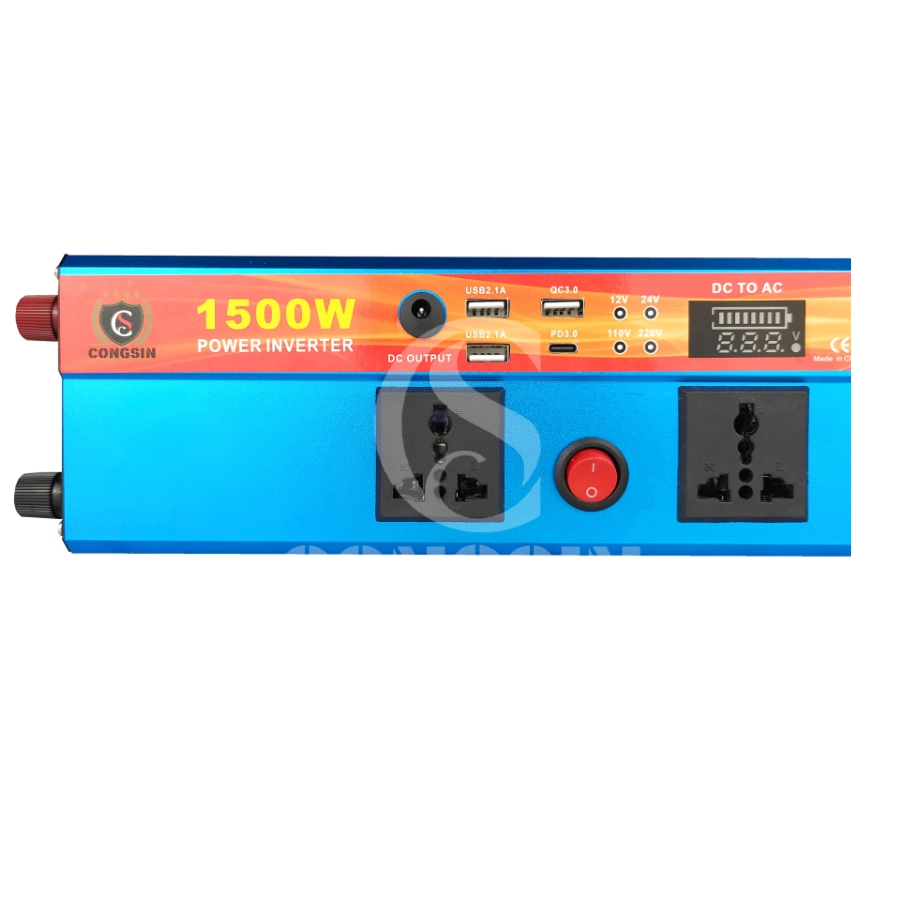
1500W Modified Sine Wave Inverter, DC 12V to AC 220V Power Inverter with LED Display, 3 USB Ports, 1 Type-C, 1 DC 12V Output & Two Universal Sockets
Our CS1000DDBC 1000W modified sine wave inverter is a professional power conversion device that converts DC 12V from batteries into AC 220V electricity. It is designed with user convenience in mind, featuring an LED display for real-time status monitoring, multiple charging ports (3 USB, 1 Type-C, 1 DC 12V) and two universal sockets to power a wide range of devices simultaneously. Its compact size (250×95×55mm) and lightweight design (NW: 0.84kg) make it easy to carry, ideal for outdoor activities, emergency home use, and on-the-go power needs.

CONGSIN is a trusted OEM factory for power inverters, solar charge controllers, and DC converters. Reliable solutions for global B2B buyers.
 High Quality
 7/24 Service
 Guaranteed Warranty
© 2025 Congsin. All Rights Reserved.
 WeChat
 Scan QR Code
sin cong
teaimei10
Whatsapp: +8618028086791
Scan QR Code