





The Ultimate Guide to Bidirectional Inverters: Everything You Need to Know for 2026 [Updated]
- What is a Bidirectional Inverter?
- Key Takeaways: Bidirectional Inverters in 2026
- How Do Bidirectional Inverters Work? The Technical Breakdown
- Traditional Solar Inverters vs. Bidirectional Inverters: Why Upgrade?
- The 2026 Landscape: Emerging Trends and Innovations
- Expert Tips & Common Mistakes in Bidirectional Setup
- Industry-Leading Reliability: The Congsin Advantage
- Conclusion
- FAQs About bidirectional inverter
- Can a bidirectional inverter work without the grid?
- What is the difference between a hybrid inverter and a bidirectional inverter?
- How much does a bidirectional inverter cost in 2026?
- Do I need a bidirectional inverter for my electric vehicle (EV)?
- What are the advantages of DC-coupled over AC-coupled bidirectional inverters?
- How do bidirectional inverters handle surge power?
- Can I upgrade my existing solar system to be bidirectional?
- What battery types are compatible with bidirectional inverters?
The global energy landscape is transforming at an unprecedented pace. As electricity rates climb and grid instability becomes a common issue worldwide, homeowners and commercial enterprises are seeking smarter ways to manage their power. At the very heart of this energy revolution is the bidirectional inverter. Once considered a niche piece of equipment, this dynamic technology has evolved into an absolute necessity for modern, resilient power setups.
In this comprehensive guide, we will explore everything you need to know about two-way power conversion for 2026. From understanding the core mechanics of how these devices function, to analyzing the latest Vehicle-to-Grid (V2G) innovations, we will equip you with the knowledge required to make informed decisions about your energy infrastructure. Whether you are upgrading an existing solar array or designing a complete off-grid sanctuary, mastering this technology is your first step toward true energy independence.
What is a Bidirectional Inverter?

A bidirectional inverter is an advanced power conversion device that converts Direct Current (DC) to Alternating Current (AC) and reverses the process from AC to DC, allowing two-way power flow. This enables the system to both power your home and charge your batteries.
Unlike standard solar inverters that only push electricity in one direction, these intelligent devices serve as the critical bridge for modern energy networks. They can seamlessly draw grid power to top up battery banks during low-rate periods, and discharge that stored battery power back to the home or utility grid when rates are high.
Key features include:
- Two-Way Flow: Seamlessly transitions between converting and rectifying power without user intervention.
- Grid Resilience: Serves as the reliable backbone for resilient off-grid microgrids and emergency backup systems.
- V2G Integration: Acts as the essential hardware required for electric vehicle Vehicle-to-Grid integrations.
Key Takeaways: Bidirectional Inverters in 2026
The main takeaways for a bidirectional inverter in 2026 revolve around maximizing self-consumption, grid independence, and smart energy management. These devices form the backbone of modern residential and commercial microgrids by providing unmatched flexibility and efficiency.
As energy costs rise and grid outages become more frequent, relying on a standard one-way system is no longer sufficient. Modern households and businesses require dynamic, automated control over their power generation and consumption.
Essential highlights for 2026 include:
- Two-Way Flexibility: Essential for maximizing the self-consumption of solar energy and enabling true energy independence in the modern smart home.
- V2G and V2H Expansion: Bidirectional chargers are unlocking the ability to use electric vehicles as massive rolling backup batteries for your house.
- Efficiency Innovations: Advances in DC-coupled architectures are minimizing conversion losses, a primary focus for the 2026 renewable energy market.
How Do Bidirectional Inverters Work? The Technical Breakdown
A bidirectional inverter works by utilizing intelligent digital control systems to switch between inverting DC to AC for household appliances, and rectifying AC to DC to safely charge battery banks. It continuously monitors grid voltage and frequency to synchronize power seamlessly.
Understanding the internal mechanics of a DC to AC bidirectional converter reveals why it is so highly valued in smart energy systems. The system relies on powerful microprocessors and advanced switching components, such as Insulated-Gate Bipolar Transistors (IGBTs), to rapidly change the direction of electrical flow without interrupting your power supply.
The technical process operates through three main functions:
- Inverting Mode (DC to AC): The inverter draws stored energy from a battery bank or an EV and converts it into usable AC power for everyday household appliances.
- Charging Mode (AC to DC): The system takes AC power from the utility grid or a gas-powered backup generator and converts it back to DC to safely charge the batteries.
- Intelligent Grid Synchronization: Built-in control systems monitor the grid's electrical frequency and voltage, ensuring uninterrupted switching during grid failures or blackouts.
Traditional Solar Inverters vs. Bidirectional Inverters: Why Upgrade?
Upgrading to a bidirectional hybrid inverter is highly recommended because traditional string inverters only allow one-way power flow and cannot charge batteries. Bidirectional models support advanced energy storage, providing backup power during grid failures and enabling intelligent load shifting.
For decades, traditional grid-tied solar systems relied on one-way inverters. While cost-effective, these older systems immediately shut down during a power outage for safety reasons, leaving homeowners in the dark despite having solar panels on their roof. As reported by the U.S. Department of Energy, pairing solar with storage allows you to maintain the balance between electricity generation and demand, making two-way systems incredibly valuable.
Upgrading is not merely a technical adjustment; it is a long-term financial strategy. Modern solar plus storage inverters offer sophisticated peak shaving and load shifting capabilities. The system automatically stores cheaper electricity from the grid during off-peak night hours, and then strategically deploys that stored power during expensive daytime peak hours to drastically reduce utility bills.
| Feature | Traditional Solar Inverter | Bidirectional Hybrid Inverter |
|---|---|---|
| Power Flow | One-way (DC to AC) | Two-way (DC to AC & AC to DC) |
| Battery Integration | No built-in support | Fully supported and managed |
| Grid Outage Capability | Shuts down completely | Provides continuous backup power |
| Energy Arbitrage | Not possible | Enables peak shaving & load shifting |
| 2026 Average Cost | $500 - $1,500 | $1,200 - $3,500 |
The 2026 Landscape: Emerging Trends and Innovations

In 2026, the bidirectional inverter landscape is defined by the massive adoption of Vehicle-to-Grid (V2G) technology, updated smart grid compliance protocols, and the integration of highly efficient Gallium Nitride (GaN) components.
The renewable energy sector is evolving rapidly. We are moving away from static solar arrays toward dynamic, interconnected microgrids. A major driver of this shift is the electrification of the automotive industry. As explained by Virta Global, V2G inverter technology enables energy to be pushed back to the power grid from the battery of an electric vehicle, effectively transforming everyday cars into mobile power plants.
Key trends shaping the market this year include:
- Explosive Growth of V2G and V2H: Vehicle-to-Grid and Vehicle-to-Home technologies are becoming standard, allowing users to power their homes directly from their EV batteries during emergencies.
- New Compliance Standards: Enhanced smart grid communication protocols (like IEEE 1547-2018 updates) are rolling out across global markets to ensure grid stability and seamless communication between utilities and residential systems.
- Advancements in GaN Technology: Gallium Nitride (GaN) components are rapidly replacing traditional silicon, making inverters lighter, cooler, and significantly more energy-efficient.
Expert Tips & Common Mistakes in Bidirectional Setup
Setting up a bidirectional battery inverter for home use requires precise battery chemistry matching and adequate sizing for surge loads. The most common mistake is undersizing the inverter, which leads to system overloads and thermal shutdowns during appliance startup.
Even the most advanced technology can fail if installed incorrectly. Proper system design is critical for maximizing both the lifespan of your equipment and your overall return on investment. Many DIY enthusiasts and novice installers overlook the nuanced requirements of two-way power systems.
To ensure your system operates flawlessly, keep these crucial guidelines in mind:
- Mistake: Mismatching Battery Profiles: Failing to match your battery chemistry (like LiFePO4, Lithium-ion, or AGM) with the inverter's precise charging parameters can lead to severely degraded battery lifespan.
- Expert Tip: Size for Surge Loads: Always size your system for "surge loads"—the sudden, high startup power required by heavy appliances like AC units, refrigerators, and well pumps—not just the continuous operating wattage.
- Mistake: Ignoring Ventilation: Overlooking proper cooling and ventilation requirements can reduce the inverter's conversion efficiency and trigger automated thermal shutdowns during peak operation.
Industry-Leading Reliability: The Congsin Advantage
When investing in power conversion technology, selecting an experienced inverter manufacturer with a proven R&D pedigree is crucial. High-quality manufacturing ensures that your DC to AC bidirectional converter operates safely, efficiently, and reliably for decades.
Since early 1998, Guangzhou Congsin Electronic Technology Co., Ltd. has focused extensively on delivering robust energy solutions. With over 27 years of dedicated manufacturing experience, Congsin designs and produces a comprehensive range of power products, including pure sine wave inverters, portable power stations, solar charge controllers, and advanced solar plus storage inverters.
- Certified Manufacturing Quality: Operating with ISO9001 certification and fully automated production lines, Congsin ensures that every product meets stringent international safety and environmental standards, holding approvals like CE, EMC, LVD, ETL, FCC, RoHS, and E-MARK.
- Global Reach & Scale: Congsin's products serve global markets across Europe, the Americas, the Middle East, Africa, and Southeast Asia. The company supplies over 100 distinct models tailored for vehicles, solar systems, RVs, trucks, and off-grid homes.
- Versatile OEM/ODM Partnerships: Understanding that different markets require unique solutions, Congsin provides robust OEM/ODM services, private labeling, distribution, and bespoke customization to meet specific partner specifications globally.
Whether you are managing a large-scale commercial project, designing custom mobile power units, or equipping an off-grid cabin, Congsin's catalog provides unparalleled flexibility. Their mission remains clear: to deliver reliable, efficient, and affordable energy solutions that enable true energy independence for users worldwide.
Conclusion

To summarize, bidirectional inverters are the indispensable foundation of modern, resilient energy storage, enabling a seamless transition between grid reliance and true battery independence. As we move into 2026, upgrading to a two-way power system ensures you are fully future-proofed for V2G integrations, smart grid savings, and critical emergency backup scenarios. By bridging the gap between solar generation, battery storage, and the utility grid, these devices offer unmatched control over your home or business's energy consumption. Contact us today to optimize your bidirectional inverter strategy.
FAQs About bidirectional inverter
Can a bidirectional inverter work without the grid?
Yes, high-quality bidirectional inverters can operate in an "off-grid" or "island" mode. They disconnect from the main utility during an outage and draw power strictly from solar panels and battery storage to safely supply your home without backfeeding the dead grid.
What is the difference between a hybrid inverter and a bidirectional inverter?
The terms are often used interchangeably in the solar industry. A hybrid inverter is inherently bidirectional because it manages inputs from solar panels (DC), connects to the grid (AC), and handles the critical charging and discharging of a battery bank (converting DC to AC and AC to DC).
How much does a bidirectional inverter cost in 2026?
Prices vary based on capacity, brand, and features, but typical residential units (5kW to 10kW) range from $1,200 to $3,500 in 2026. Commercial or heavy-duty OEM models will scale higher depending on specific customization, power capacity, and phase requirements.
Do I need a bidirectional inverter for my electric vehicle (EV)?
Standard EV charging only requires a one-way charger. However, if you want to use your EV's battery to power your home during an outage (V2H) or sell energy back to the grid (V2G), you absolutely need a specialized bidirectional charger/inverter.
What are the advantages of DC-coupled over AC-coupled bidirectional inverters?
DC-coupled systems are generally more efficient because solar panels and batteries both naturally operate on DC power. This architectural design minimizes the number of times power is converted between DC and AC, reducing "clipping" and lowering overall energy loss.
How do bidirectional inverters handle surge power?
Most are engineered with high surge capacity to start heavy, motor-driven appliances like air conditioners and water pumps. Premium models feature a surge rating that is double their continuous wattage output for short intervals, usually lasting a few seconds, to prevent system overloads.
Can I upgrade my existing solar system to be bidirectional?
Yes, you can retrofit an existing grid-tied solar system by AC-coupling a bidirectional battery inverter. This flexible method allows you to seamlessly add battery storage and backup capabilities without needing to replace your existing string solar inverter.
What battery types are compatible with bidirectional inverters?
They are compatible with a wide range of battery chemistries, including advanced Lithium Iron Phosphate (LiFePO4), standard Lithium-ion, and traditional Lead-Acid (AGM or Gel) models. It is absolutely crucial to set the correct charging parameters on the inverter to perfectly match your specific battery type.
Battery Compatibility: Best Batteries for Off-Grid Inverters
Bidirectional Inverter Buyer's Guide: Choose the Right Model
Comparing Pure Sine Wave vs Modified Sine Vehicle Inverters
Battery compatibility and charging modes for off-grid inverters
Modified Sine Wave Inverters
What is the working principle of the UPS function?
When the external power supply is normal, the inverter powers the device and charges the battery; when the external power supply is interrupted, it automatically switches to battery power to ensure uninterrupted operation of the device.
Is it compatible with both 12V and 24V vehicles?
Yes, it supports DC12V/24V dual input.
Does it only support DC12V input voltage?
The regular model has DC12V input, and other input voltages such as DC24V can be customized. Please consult customer service for details.
How many devices can it power at the same time?
Dual universal sockets + two USB ports can power multiple devices (such as two home appliances + two mobile phones) at the same time, as long as the total power does not exceed 600W.
Pure Sine Wave Inverters
Can it run inductive loads like fridges or tools?
Yes, pure sine wave output supports all load types.
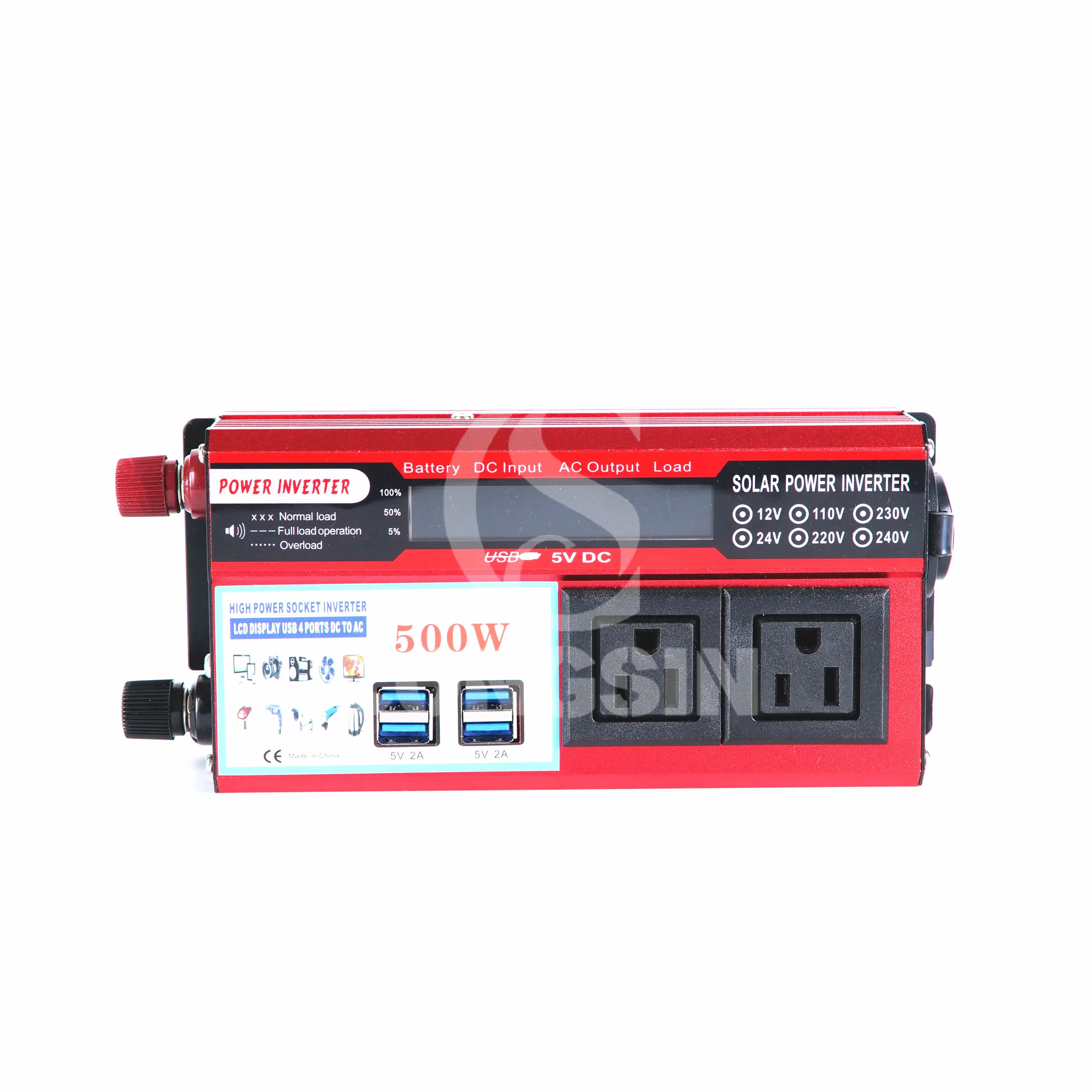
Congsin 500W modified sine wave power inverter US sockets 4 USB ports LCD display off grid
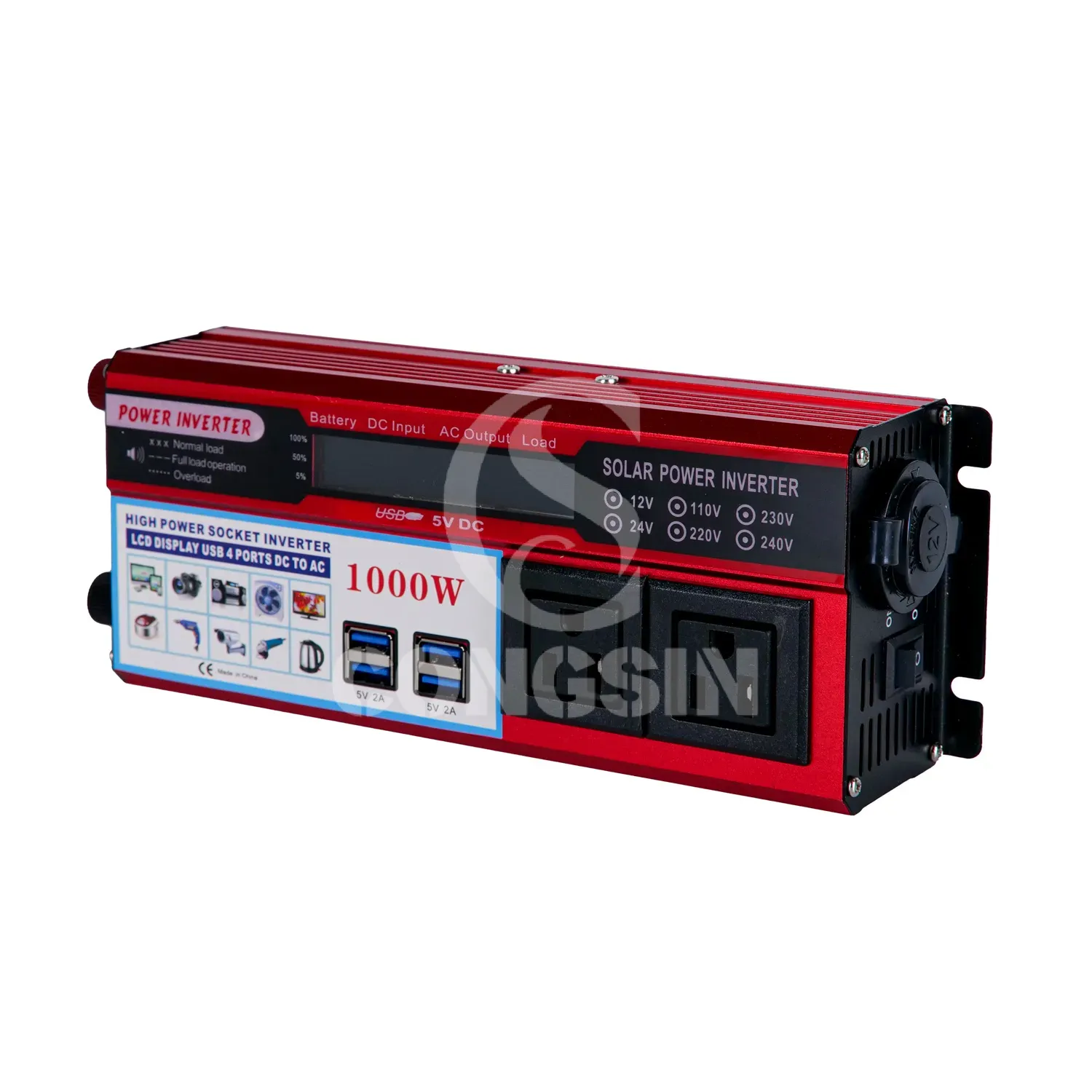
Congsin 1000W modified sine wave inverter with American Sockets and Lcd display portable 12V car RV
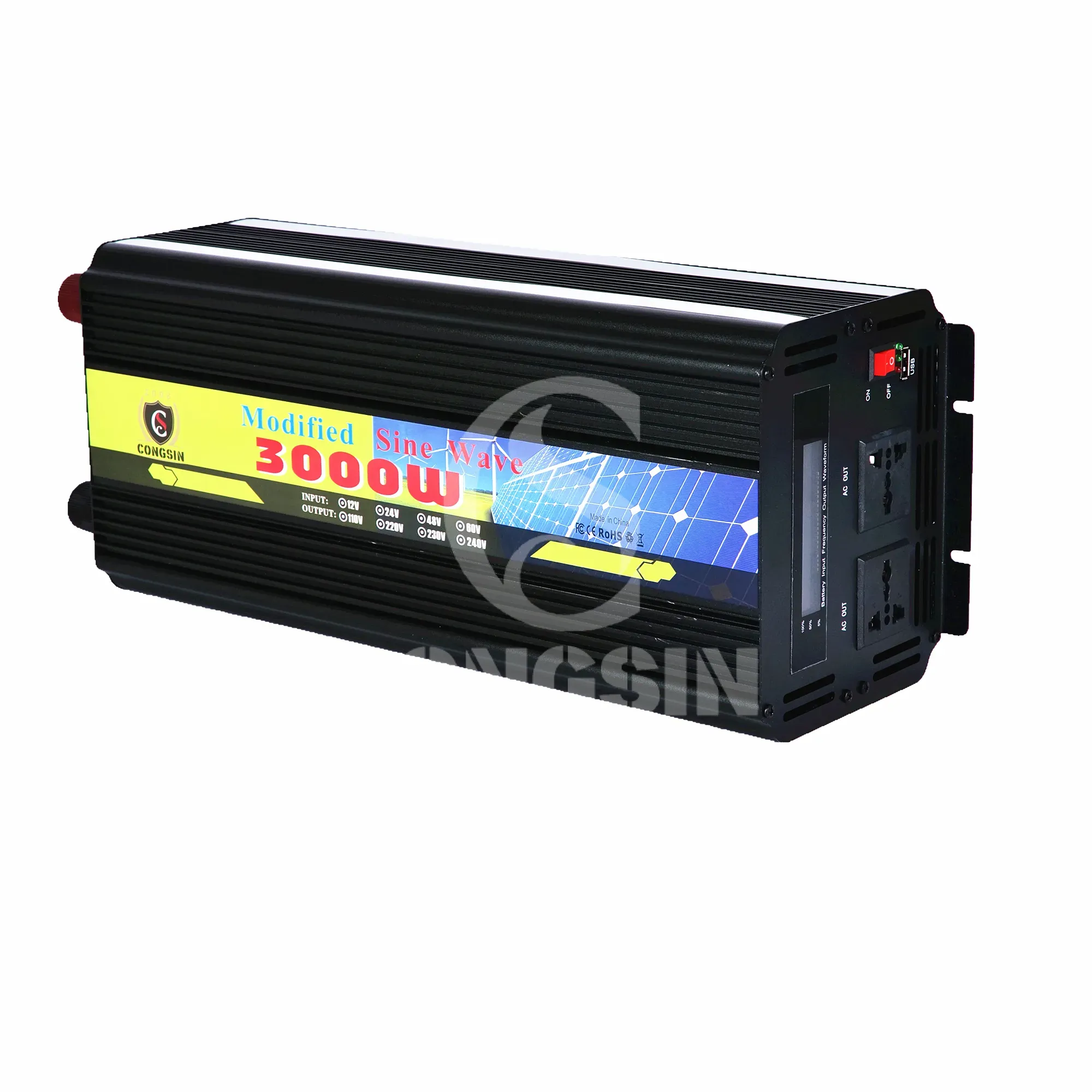
Congsin Full Power 3000W Modified Sine Wave Inverter Peak Power 6000W with LCD Display RV Solar
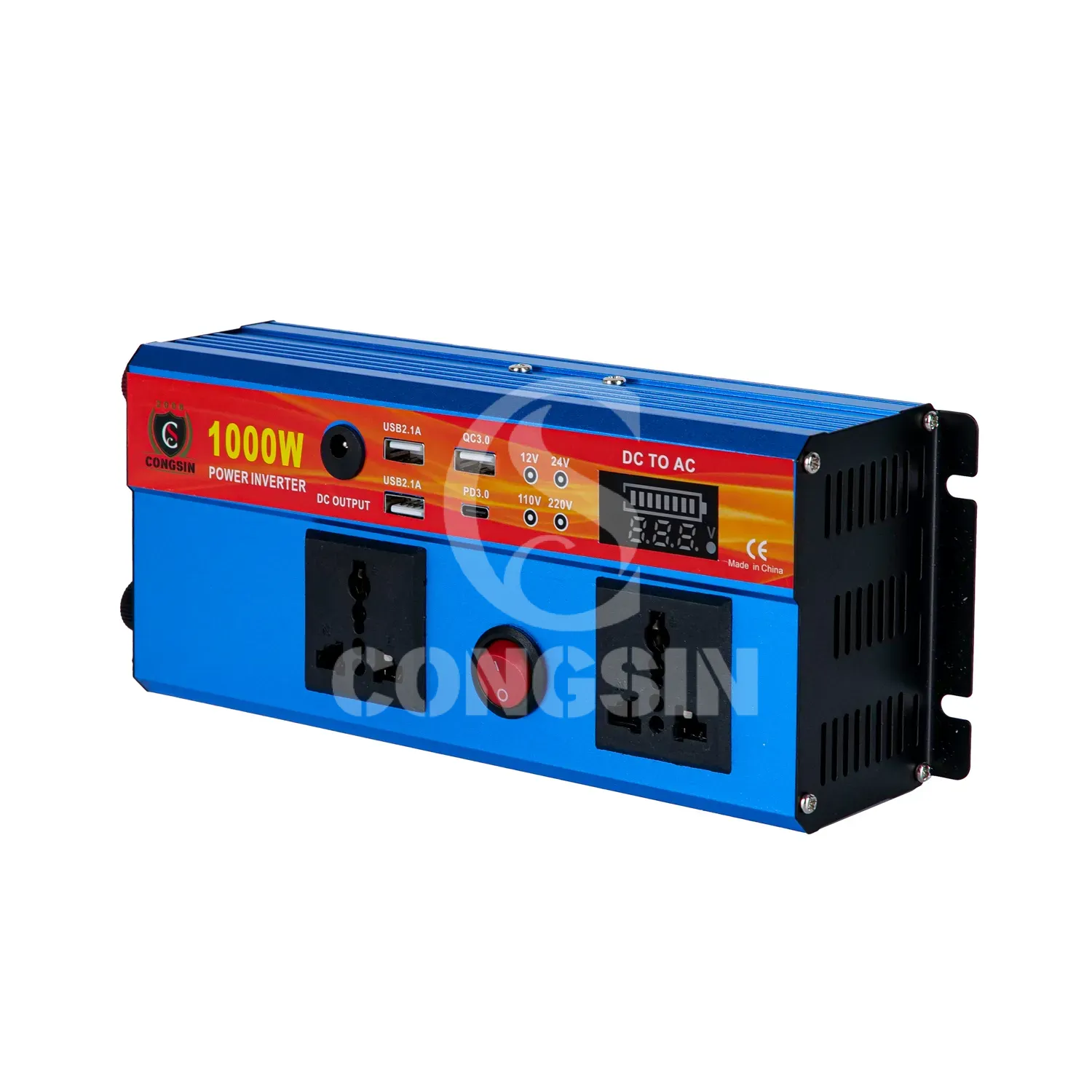
Congsin 1000W modified sine wave inverter with LED display and Type C port car RV power inverter

CONGSIN is a trusted OEM factory for power inverters, solar charge controllers, and DC converters. Reliable solutions for global B2B buyers.
 High Quality
 7/24 Service
 Guaranteed Warranty
© 2025 Congsin. All Rights Reserved.