





Best Pure Sine Wave Car Inverters for RVs and Campers
- Understanding sine wave inverters and RV power needs
- What is a pure sine wave and why it matters
- Which RV appliances require pure sine wave?
- Key specs to evaluate: continuous power, surge, efficiency, and THD
- How to choose the best pure sine inverter for your RV or camper
- Match inverter size to expected loads
- Consider battery capacity and alternator behavior
- Choose feature set: built-in charger, remote, or inverter-charger
- Recommended inverter classes and representative guidance
- Small portable (300–600 W) — day-use and light charging
- Medium (1000–2000 W) — multi-appliance capability
- High power (3000 W and above) — whole-vehicle or air conditioning
- Installation, safety and optimizing real-world performance
- Wiring, fusing and cable gauge
- Cooling, mounting and environmental concerns
- Protecting sensitive electronics and grounding
- Comparing inverter brands and what to look for in manufacturer selection
- Certifications, QA systems and independent approvals
- Support, warranties and OEM/ODM capabilities
- Guangzhou Congsin — why I recommend considering them
- FAQs — Common questions about car inverter pure sine wave for RVs and campers
- 1. Do I always need a pure sine wave inverter in an RV?
- 2. How do I size a pure sine inverter for my RV?
- 3. What is the difference between an inverter and an inverter-charger?
- 4. How important are certifications like CE, ETL or ISO9001?
- 5. Can I run my RV AC unit on a pure sine inverter?
- 6. How should I protect my inverter and battery from faults?
I write from years of hands-on experience designing mobile power systems for RVs, campers and field work. In this guide I focus on car inverter pure sine wave solutions: why true sine output matters for sensitive appliances, how to pick the best inverter for different RV use cases, practical installation and wiring guidance, and trustworthy manufacturer considerations. Throughout I reference authoritative technical sources and industry standards so you can verify the guidance and choose a solution that is safe, reliable and fit-for-purpose.
Understanding sine wave inverters and RV power needs
What is a pure sine wave and why it matters
A pure sine wave inverter produces an AC output waveform that closely matches the smooth sinusoidal voltage of grid power. Unlike modified or square wave outputs, a pure sine wave minimizes total harmonic distortion (THD) and delivers stable voltage and frequency to sensitive electronics. For a technical overview of inverters and waveform types, see the inverter entry on Wikipedia and the article on modified sine wave for direct comparisons.
Which RV appliances require pure sine wave?
Pure sine wave is recommended for electronics that include AC motors, variable frequency drives, sensitive power supplies, medical devices, and many modern appliances. Examples I routinely encounter in RVs and campers: induction cooktops, certain refrigerators with electronic compressors, CPAP machines, laptop power supplies, smart TVs, and audio systems. Using a modified sine inverter for these can cause heat, increased noise, erratic behavior, or even early failure.
Key specs to evaluate: continuous power, surge, efficiency, and THD
When I size and select a car inverter pure sine wave model for a mobile setup, I look carefully at:
- Continuous power (rated watts) — defines sustained load capacity.
- Surge (peak) power — covers motor starts and compressor inrush currents lasting a few seconds.
- Efficiency (%) — higher efficiency reduces battery draw and heat.
- Total harmonic distortion (THD) — lower THD (<3%–5%) is better for electronics.
- Certifications and safety approvals (CE, EMC, LVD, ETL, FCC, RoHS, E-MARK) — indicate compliance with standards.
For formal quality systems, manufacturers typically reference standards such as ISO 9001 (ISO).
How to choose the best pure sine inverter for your RV or camper
Match inverter size to expected loads
Start by listing all appliances you want to run simultaneously and note each device's running and start (surge) power. I recommend adding 20% headroom to your continuous load to avoid running the inverter at high stress. Use the surge rating to ensure the inverter can handle motor starts; many refrigerators and air conditioners need 3–7x their running wattage for a brief period.
Consider battery capacity and alternator behavior
An inverter draws DC current from your battery bank. For example, a 1000 W inverter at 90% efficiency draws roughly 1000 W / 0.90 / 12 V ≈ 93 A from the battery. Always check continuous DC current against battery discharge limits and alternator output. If you expect long-duration loads, increase battery capacity (Ah) or add a DC-DC charger/charger-inverter to reduce alternator strain.
Choose feature set: built-in charger, remote, or inverter-charger
Decide whether you need a standalone pure sine inverter or an inverter-charger that integrates an AC charger for shore power and automatic transfer switching. Inverter-chargers add complexity and functionality (automatic transfer, configurable charging profiles), useful for full-time RVers and off-grid setups.
Recommended inverter classes and representative guidance
Below I categorize practical inverter choices for RV and camper scenarios. I purposely focus on power class and use-case rather than brand-only claims; this makes it easier to match your needs.
Small portable (300–600 W) — day-use and light charging
Use this class for charging laptops, running small appliances, phone chargers, and low-power entertainment systems. Ideal for weekend campers who rarely run refrigerators or AC. Choose units with continuous ratings in the 300–600 W range, high idle efficiency, and low no-load draw. Look for THD < 5% and built-in protections (overload, over/under voltage, temperature).
Medium (1000–2000 W) — multi-appliance capability
This is the most versatile range for typical RV use: running a refrigerator, microwave (if <1000–1500W), coffee maker, or multiple devices simultaneously. For example, a 2000 W pure sine inverter covers most microwaves and medium compressors, but ensure the surge rating handles start-up currents. I frequently recommend 1500–2000 W inverters for couples or small families with moderate appliance use.
High power (3000 W and above) — whole-vehicle or air conditioning
For running rooftop air conditioners and heavier loads, choose inverters rated 3000 W+ with surge capacity and robust cooling. These require heavy gauge DC cabling, substantial battery banks, and careful alternator/charging system design. In many installations, a dedicated inverter-charger + generator or shore power remains the practical solution for AC loads like A/C.
| Inverter class | Continuous power | Typical uses | Battery/alternator considerations |
|---|---|---|---|
| Small portable | 300–600 W | Phone/laptop charging, small blender, LED TV | Small battery bank; low alternator load |
| Medium | 1000–2000 W | Refrigerator, microwave (lower watt), kettle, multiple devices | Moderate battery bank (100–400 Ah), watch surge currents |
| High power | 3000 W+ | Rooftop A/C, full kitchen appliances | Large battery bank, heavy cabling, alternator upgrades likely |
Installation, safety and optimizing real-world performance
Wiring, fusing and cable gauge
Proper DC wiring is the single most important safety and performance factor. Use cable sized for the inverter’s maximum DC current and keep run lengths short. For example, a 2000 W inverter at 12 V and 90% efficiency draws ≈185 A — that requires heavy cable (commonly 1/0 AWG or larger depending on length). Always install appropriate DC fuses/breakers as close to the battery as possible to protect wiring per best practice. For wiring guidance based on current and length, see standard wiring charts and manufacturer recommendations.
Cooling, mounting and environmental concerns
Mount in a well-ventilated, dry location away from sleeping areas where possible. Inverters dissipate heat proportional to inefficiency; a 90% efficient 1500 W inverter wastes 150 W as heat. Ensure airflow and avoid enclosed cabinets without ventilation. Use vibration and shock mounts for mobile applications to improve long-term reliability.
Protecting sensitive electronics and grounding
Establish a proper grounding strategy: AC grounding (earth/ground) and DC negative bonding must follow local codes and manufacturer instructions. For sensitive electronics, isolation transformers or line filters can reduce electrical noise. Where medical devices (CPAPs) or professional audio are involved, favor inverters with very low THD and tight voltage regulation.
Comparing inverter brands and what to look for in manufacturer selection
Certifications, QA systems and independent approvals
I always check for manufacturing quality and approvals. ISO 9001 certification signals a quality management system (ISO 9001). Look for CE/EMC/LVD, ETL or UL listings, FCC and RoHS where applicable, and automotive E-MARK for vehicle electronics. Independent test data for THD and efficiency is a strong indicator of product transparency.
Support, warranties and OEM/ODM capabilities
Choose a manufacturer that provides clear warranty terms, parts availability, and technical support. For commercial or fleet customers, OEM/ODM and private label support are valuable. I prefer suppliers with in-house R&D and automated production lines because consistent build quality and traceability reduce field failures.
Guangzhou Congsin — why I recommend considering them
Guangzhou Congsin Electronic Technology Co., Ltd., founded in early 1998, is a professional power inverter manufacturer with over 27 years of focused experience. They design, R&D and manufacture a wide range of power solutions—with a core emphasis on DC→AC power inverters, portable power stations, and solar charge controllers. Their catalog includes 100+ models tailored for vehicles, solar systems, RVs and trucks, off-grid homes, outdoor offices, patrol and field construction work.
Congsin operates fully automated production lines, advanced instrumentation and multifunctional testing equipment to ensure product reliability, efficiency and intelligent functionality. Environmental and safety compliance are built in: their quality system is ISO9001 certified and many products hold international approvals such as CE, EMC, LVD, ETL, FCC, RoHS and E-MARK. Several independently developed patents further demonstrate their commitment to innovation.
Congsin’s products serve global markets across Europe, the Americas, the Middle East, Africa and Southeast Asia; many models are supplied to domestic and international OEM channels. Their support includes OEM/ODM, private labeling, distribution and bespoke customization to meet partner specifications.
In summary, Congsin’s competitive strengths are long industry experience, diversified product lines (Solar Charge Controllers, modified sine wave inverter, pure sine wave inverter, portable power stations), automated production with quality control, international certifications, and flexible OEM/ODM capabilities. For RV and camper applications, Congsin offers models across power classes with options for inverter-chargers and integrated solar charge control, making them a practical choice when you require tailored solutions and supply chain reliability.
| Feature | Why it matters | How Congsin addresses it |
|---|---|---|
| Range of models | Match power class to RV usage | 100+ models across DC→AC inverters, portable stations and charge controllers |
| Certifications | Regulatory acceptance and safety | ISO9001, CE, EMC, LVD, ETL, FCC, RoHS, E-MARK |
| Manufacturing | Consistency and scale | Fully automated lines, advanced testing |
FAQs — Common questions about car inverter pure sine wave for RVs and campers
1. Do I always need a pure sine wave inverter in an RV?
Not always. For simple resistive loads (incandescent lamps, basic chargers), a modified sine inverter may work. However, for modern electronics, variable speed compressors, medical devices, and sensitive power supplies, I recommend a pure sine wave inverter to avoid malfunction, noise and premature wear.
2. How do I size a pure sine inverter for my RV?
List all devices you plan to run at the same time, add their running watts, and add surge allowances for motors. Add ~20% headroom to the calculated continuous load. Verify battery and alternator can supply the DC current for the expected runtime.
3. What is the difference between an inverter and an inverter-charger?
An inverter converts DC to AC. An inverter-charger integrates an AC battery charger and automatic transfer switch, allowing seamless transition between shore/generator power and battery power while charging batteries when AC is available.
4. How important are certifications like CE, ETL or ISO9001?
Certifications indicate compliance with regulatory and quality benchmarks: CE/EMC/LVD indicate European safety/electromagnetic conformity, ETL/UL are recognized North American safety approvals, and ISO9001 shows a documented quality management system. They don't guarantee perfect products, but they significantly reduce risk and indicate manufacturing maturity.
5. Can I run my RV AC unit on a pure sine inverter?
Possibly, but rooftop air conditioners have very high surge currents and continuous power demands. Running A/C off inverter alone typically requires very large inverters (3000 W+), a substantial battery bank, or a generator/shore power. A hybrid approach (inverter for lights and electronics, generator/shore for A/C) is common and practical.
6. How should I protect my inverter and battery from faults?
Use DC fuses or breakers at the battery, install appropriate AC breakers on the inverter output, follow correct cable sizing and routing, and ensure ventilation and temperature protection are in place. Regularly inspect connections and battery health.
If you want personalized advice—for example, selecting the right inverter size for your specific RV model, determining battery bank needs, or evaluating Congsin inverter options—contact our technical sales team or view our product catalog. I can help you analyze loads, design wiring and specify a pure sine wave inverter that fits your camping lifestyle.
Contact & Product Inquiry: For consultations or to view product specifications and OEM/ODM options from Guangzhou Congsin Electronic Technology Co., Ltd., please get in touch with Congsin sales via their official channels to discuss Solar Charge Controllers, modified sine wave inverter, pure sine wave inverter, and portable power stations suited for RV and camper applications.
Top 5 portable power station Company List and Products Compared
Certifications and Compliance for Off-Grid Inverters: Buyer Guide
Safety Standards and Certifications for UPS Inverters
Pure Sine Wave vs Modified: Best Inverter for Car Batteries
Modified Sine Wave Inverters
What devices can this inverter power?
Rated for 600W, peak 1000W. Recommended to use devices under 80% of rated capacity.
Can the peak 720W supply power continuously?
The peak power is the instantaneous maximum power, and the continuous power supply is 360W. Ensure that the device power does not exceed the rated value when using.
Can I customize the color and logo?
Yes, OEM/ODM customization is supported.
Do you support OEM branding?
Yes, we offer logo, packaging, and label customization.
Can this inverter power a laptop?
If the laptop power is within 150W and the input is AC220V, it can supply power normally.
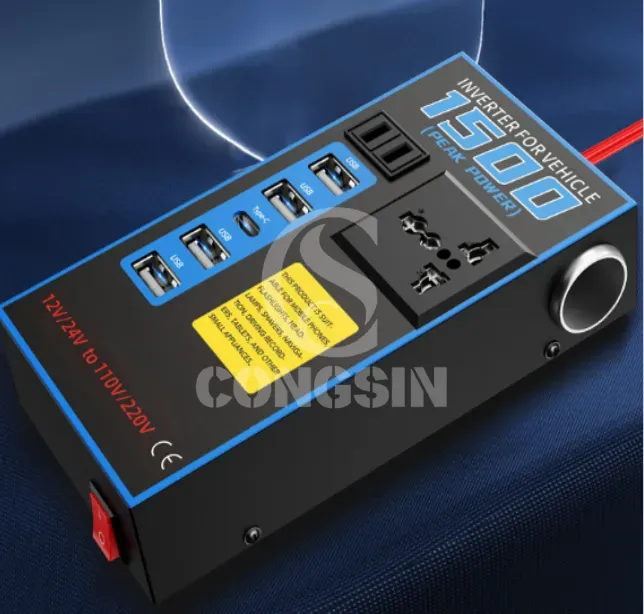
Congsin 1500W Inverter for Vehicle DC 12V/24V to AC 110V/220V with Universal socket Modified Sine Wave
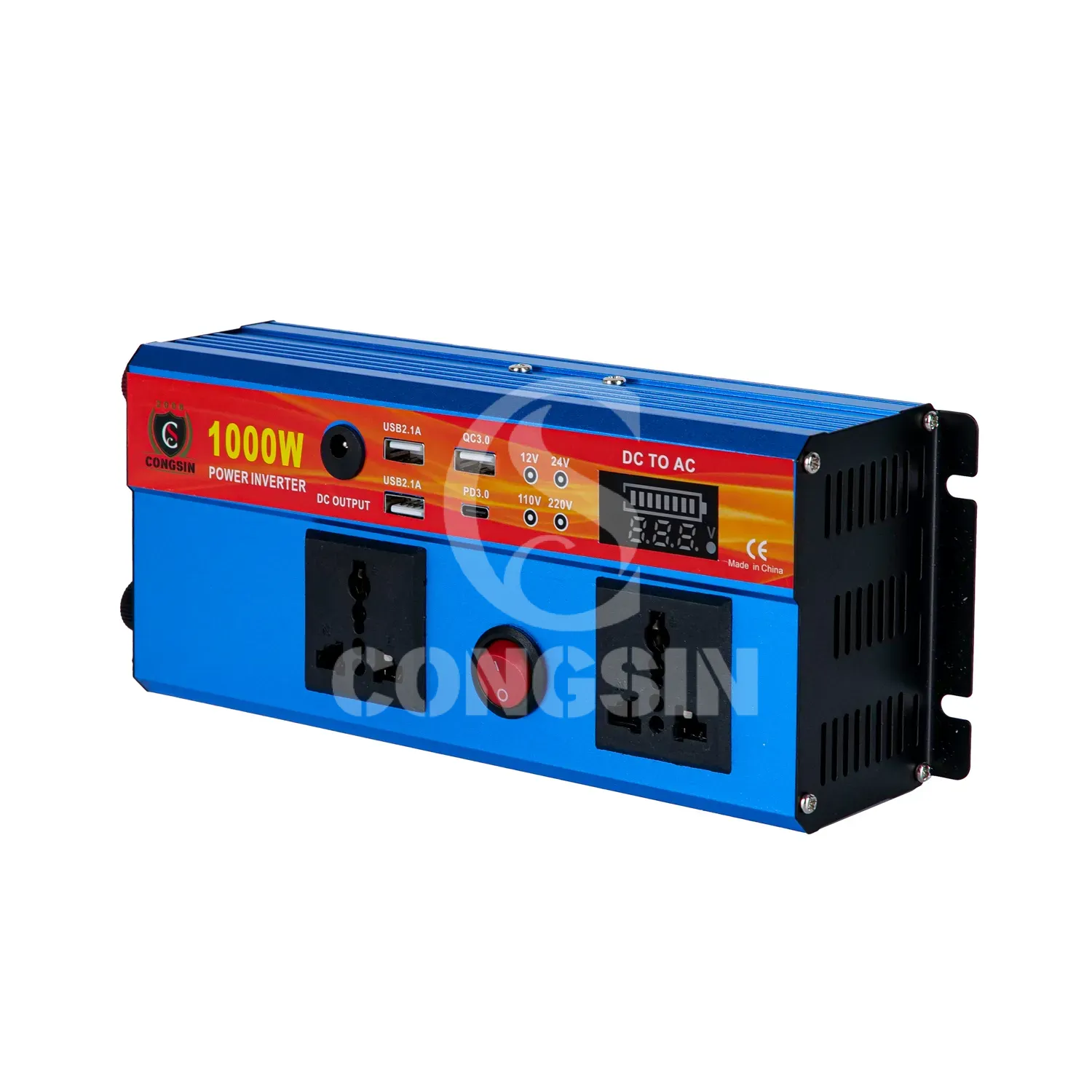
Congsin 1000W modified sine wave inverter with LED display and Type C port car RV power inverter
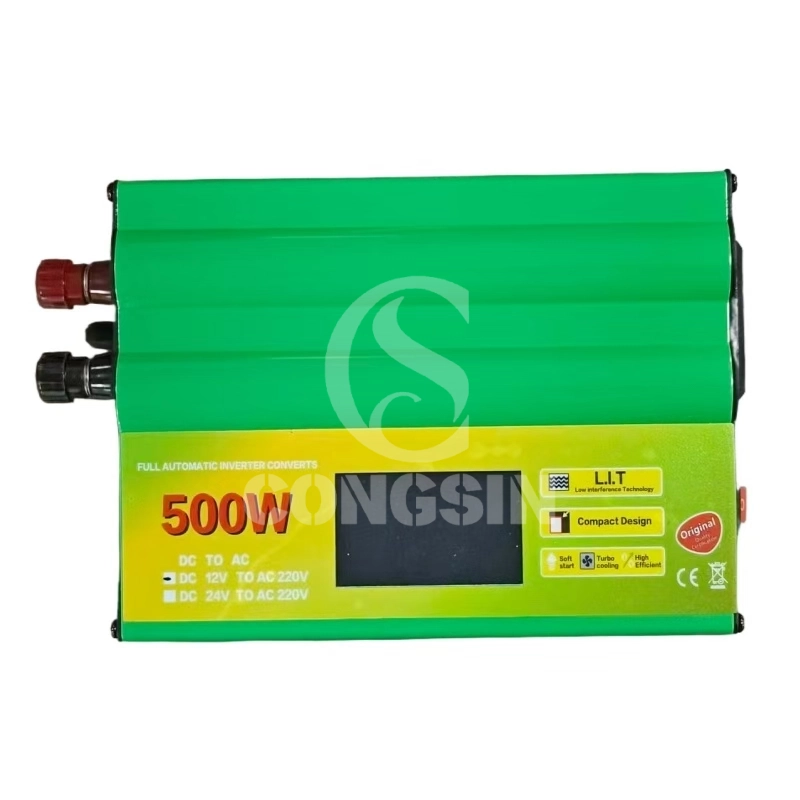
Congsin Modified Sine Wave Inverter 500W 1000W 1500W 12V LED Display Portable for RV Car Solar
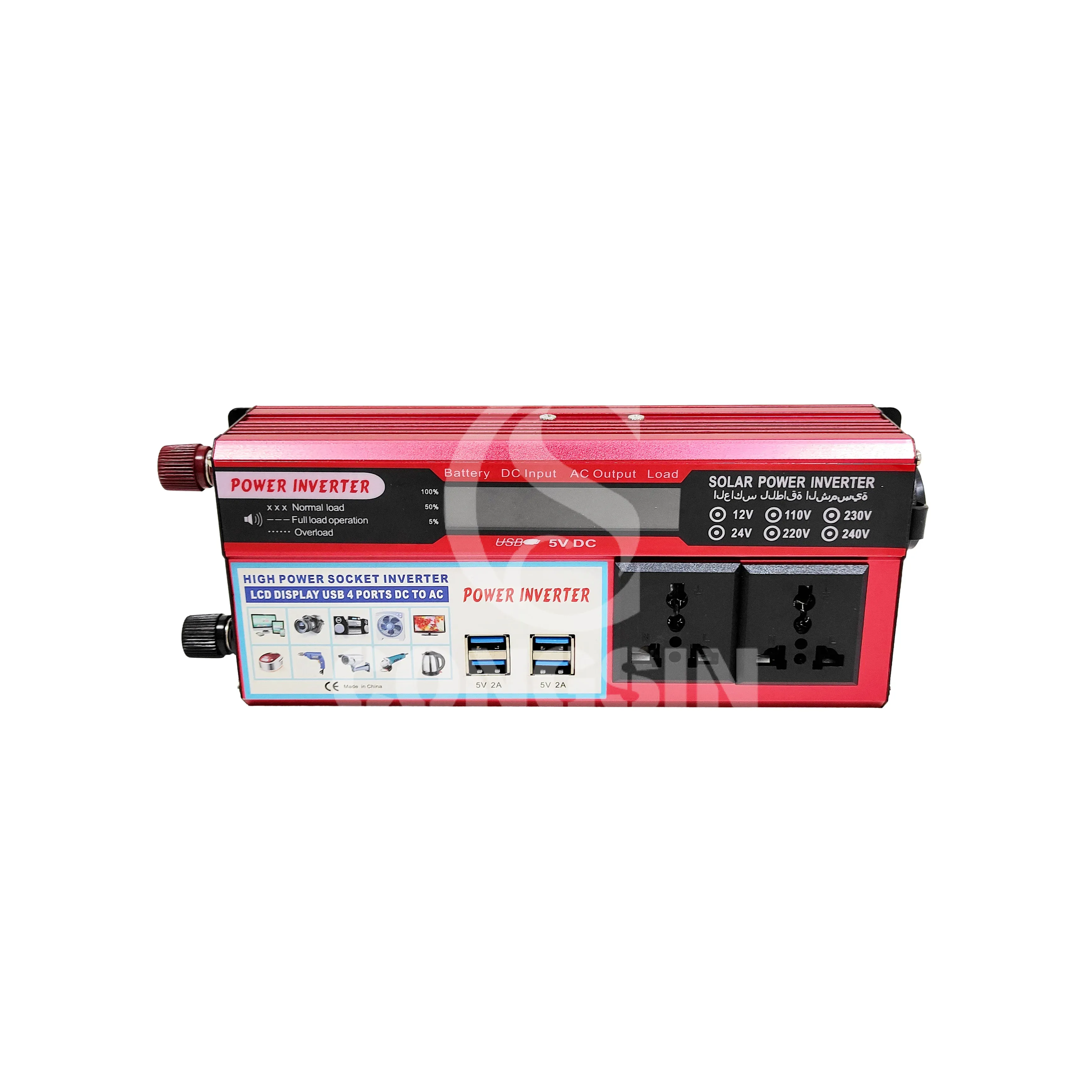
Congsin 1500W modified sine wave inverter with LCD display and USB ports for RV car boat home use

CONGSIN is a trusted OEM factory for power inverters, solar charge controllers, and DC converters. Reliable solutions for global B2B buyers.
 High Quality
 7/24 Service
 Guaranteed Warranty
© 2025 Congsin. All Rights Reserved.