





10 Best Battery Car Inverters of 2026: Expert Reviews & Buying Guide [Tested]
- What is a Battery Car Inverter?
- Key Takeaways: 2026 Car Inverter Quick Summary
- How We Tested the Best Car Inverters for 2026
- The 10 Best Battery Car Inverters of 2026
- 2026 Inverter Comparison Table
- Pure Sine Wave vs. Modified Sine Wave: An Expert Perspective
- Expert Tips & Common Mistakes When Buying Car Inverters
- Industry-Leading Solution: The Congsin Manufacturing Advantage
- 2026 Future Trends: What Competitors Missed About Next-Gen Inverters
- Conclusion
- FAQs About battery car inverter
- How many watts do I need for a battery car inverter?
- Will a power inverter drain my car battery?
- Can I run a laptop on a modified sine wave inverter?
- How do you safely install a heavy-duty inverter directly to a car battery?
- What is the difference between 12V and 24V car inverters?
- Can I plug a power inverter into the cigarette lighter?
- Do I need a pure sine wave inverter for sensitive electronics?
- How do I choose the right wire gauge for a high-power inverter?
Whether you are living off-grid, running a mobile office, or simply preparing for an extended road trip, a reliable battery car inverter is the ultimate tool for achieving mobile energy independence. In our modern age, staying connected means powering laptops, power tools, medical devices, and even mini-fridges directly from your vehicle.
Finding the best portable automotive inverter 2026 has to offer requires cutting through the marketing noise to understand wattage, wave types, and safety features. In this comprehensive guide, we rely on deep manufacturing expertise and real-world testing to reveal the top models on the market. From a simple DC to AC vehicle power adapter to a massive heavy-duty car battery power station, we have rigorously evaluated the options so you can power your devices safely and efficiently.
What is a Battery Car Inverter?

A battery car inverter is an essential power electronic device that converts your vehicle's 12-volt Direct Current (DC) into standard 110V/120V Alternating Current (AC) so you can safely plug in household electronics directly from your car.
This conversion is the fundamental magic behind mobile power. As explained by Wikipedia, an inverter does not produce power itself; it simply changes the DC source into usable AC electricity. By tapping into your vehicle’s electrical system, you unlock a portable power plant.
Modern inverters come in various form factors to suit different needs:
- Plug-in adapters: Ranging from 100W to 300W, these compact units connect directly to your 12V cigarette lighter.
- Mid-range units: Typically 500W to 1500W, perfect for running small appliances or multiple devices simultaneously.
- Hardwired units: Heavy-duty setups from 2000W to 5000W+ used in RVs, service trucks, and off-grid cabins.
Key Takeaways: 2026 Car Inverter Quick Summary
The most crucial takeaway for 2026 is that a pure sine wave car inverter is now the required standard for safely powering sensitive modern electronics, ensuring high efficiency while protecting delicate internal components from electrical damage.
If you are upgrading your mobile power setup this year, keep these vital points in mind:
- Know Your Wattage: Always total the running wattage of all your connected devices and add a 20% safety margin for surge capacity to avoid blown fuses.
- Safety Certifications: Look for devices with international approvals such as CE, FCC, RoHS, and advanced automated thermal cooling mechanisms.
- Installation Method Matters: Any inverter drawing over 300W must be hardwired directly to the car battery; attempting to pull heavy loads through a 12V dash port will instantly pop your vehicle’s fuses.
How We Tested the Best Car Inverters for 2026
We evaluated over 50 power inverters by stress-testing them under maximum load capacities using advanced instrumentation to measure output efficiency, voltage stability, and the reliability of automated thermal cooling and over-voltage protection mechanisms.
By leveraging over 27 years of focused experience from Guangzhou Congsin Electronic Technology Co., Ltd., we applied rigorous manufacturer-level ISO9001 standards to our testing protocols. We did not just read specifications; we put these units to work.
Our testing methodology included:
- Surge Capacity Testing: Firing up high-draw devices like air compressors and mini-fridges to see if the inverters could handle the initial power spike.
- Continuous Load Testing: Running laptops, sensitive CPAP machines, and heavy-duty power tools during off-grid field construction work for hours at a time.
- Thermal Management: Monitoring internal temperatures to ensure smart cooling fans engaged properly without excessive noise.
- Pedigree Review: Prioritizing brands with proven quality management systems and comprehensive warranty support.
The 10 Best Battery Car Inverters of 2026
The top battery car inverters of 2026 combine reliable alternating current conversion, advanced thermal safety mechanisms, and robust build quality to deliver uninterrupted, stable power for any mobile application or off-grid environment.
Here is our expert-ranked list of the most reliable power solutions available this year:
- Best Overall Pure Sine Wave: Congsin 1000W Pure Sine Wave Inverter – Unmatched reliability, ETL/CE certified, and optimal for sensitive mobile tech.
- Best for Road Trips: 300W Portable Cup-Holder Inverter – Compact, features dual USB-C ports, and plugs directly into the 12V dash port.
- Best for Heavy-Duty Work Trucks: Congsin 3000W Modified Sine Wave Inverter – Rugged, high-surge capacity for power tools and field construction.
- Best Budget Pick: 150W Compact Power Adapter – Lightweight, affordable, and perfect for charging phones and tablets on the go.
- Best for Off-Grid RVs: 5000W Hardwired Power Station – Delivers whole-cabin power with intelligent LCD monitoring and heavy-duty battery cables.
- Best for Medical Devices: 500W Advanced Pure Sine Wave – Whisper-quiet cooling fans and zero electrical interference for CPAP machines.
- Best Multi-Port Hub: 400W 4-AC Outlet Inverter – Great for families needing to power multiple entertainment devices simultaneously.
- Best Smart Inverter: Bluetooth-Enabled 1500W Inverter – Allows users to monitor battery voltage and wattage draw via a smartphone app.
- Best All-Weather / Marine Grade: 2000W Waterproof Inverter – Sealed components designed for extreme humidity, overlanding, and marine use.
- Best Solar-Compatible Car Inverter: Congsin Hybrid Inverter Solution – Seamlessly integrates with vehicle alternators and secondary solar charge controllers.
2026 Inverter Comparison Table
To help you choose the right model, we have broken down our top categories in this quick-reference table:
| Inverter Model Category | Ideal Wattage | Best Application | Recommended Wave Type |
|---|---|---|---|
| Mobile Device Charger | 150W - 300W | Smartphones, Tablets, Laptops | Modified or Pure Sine Wave |
| Mobile Office / Medical | 500W - 1000W | CPAP Machines, Desktop PCs, TVs | Pure Sine Wave |
| Work Truck Power Tools | 2000W - 3000W | Drills, Saws, Air Compressors | Modified Sine Wave |
| RV / Off-Grid Cabin | 4000W - 5000W+ | Microwaves, AC Units, Fridges | Pure Sine Wave |
Pure Sine Wave vs. Modified Sine Wave: An Expert Perspective
A pure sine wave inverter replicates smooth grid electricity for sensitive devices, while a modified sine wave inverter produces a blockier, stepped waveform that is highly cost-effective and perfectly suited for simple resistive loads like heaters.
Understanding this distinction is critical before making a purchase. Using the wrong wave type can severely damage your electronics.
- Pure Sine Wave Inverter: This is mandatory for modern, sensitive electronics. Devices with variable speed motors, audio equipment, smart TVs, and medical devices require clean power. Without it, you risk audio buzzing, screen flickering, or permanent damage.
- Modified Sine Wave Inverter: Because they are cheaper to manufacture, these are great budget options. They are ideal for a 12V to 110V power inverter for truck applications where you are only running robust power tools, incandescent lighting, or older brushed motors that do not require perfect electrical precision.
Expert Tips & Common Mistakes When Buying Car Inverters

The most common mistake when buying a car inverter is overloading a vehicle's 12V cigarette lighter port with a high-wattage device, which almost always results in a blown fuse because those ports max out around 150 to 300 watts.
To ensure your mobile power system is safe and effective, keep these expert tips in mind:
- Mind Your Cables: Using thin wires for high-wattage inverters creates extreme heat and severe fire risks. As outlined by the American Wire Gauge standard, the cross-sectional area of each gauge dictates its safe current-carrying capacity. Always use the thickest, manufacturer-recommended pure copper AWG cables.
- Account for Surge Wattage: Many devices, particularly those with compressors like mini-fridges, require two to three times their normal running wattage just to start. If your inverter cannot handle that peak surge, it will instantly shut down.
- Install Inline Fuses: Always install an inline fuse on the positive cable as close to the car battery as possible. This acts as a critical fail-safe to protect your vehicle's sensitive computer and electrical system from catastrophic shorts.
Industry-Leading Solution: The Congsin Manufacturing Advantage
Guangzhou Congsin Electronic Technology Co., Ltd. is an industry-leading manufacturer with over 27 years of dedicated experience, operating fully automated production lines to deliver highly reliable, intelligent, and internationally certified power solutions.
While the market is flooded with generic, white-labeled products, true quality comes from dedicated R&D. Congsin stands out by bridging the gap between typical consumer expectations and professional engineering.
The Congsin Difference Includes:
- Extensive Catalog: Offering over 100+ models tailored for vehicles, solar systems, RVs, trucks, and off-grid homes.
- Global Safety Certifications: Every unit is backed by an ISO9001-certified quality system, holding stringent approvals like CE, EMC, LVD, ETL, FCC, RoHS, and E-MARK.
- B2B and OEM/ODM Expertise: Whether you are looking for a singular off-grid unit or supplying a massive fleet, Congsin provides bespoke customization, private labeling, and robust distribution support.
2026 Future Trends: What Competitors Missed About Next-Gen Inverters
Future trends for next-gen inverters in 2026 include seamless integration with higher voltage electric vehicle (EV) architectures, the widespread adoption of smaller Gallium Nitride (GaN) components, and AI-driven thermal management for predictive cooling.
Many competitors are still relying on outdated 2023 technology. Here is what the future holds for mobile power:
- EV Architecture Integration: As the automotive industry shifts, inverters are adapting to draw power safely from high-voltage EV traction batteries rather than relying strictly on legacy 12V lead-acid systems.
- GaN Technology: Gallium Nitride allows manufacturers to build significantly smaller, lighter inverters that operate with far greater efficiency and generate much less heat.
- Smart Thermal Chips: Instead of waiting for a unit to overheat, AI-driven processors now predict thermal loads based on current draw and preemptively adjust fan speeds, drastically extending the lifespan of internal capacitors.
Conclusion

Choosing the best battery car inverter in 2026 requires carefully balancing your specific running wattage needs, identifying the necessity of a pure sine wave for your electronics, and trusting the verified safety pedigree of an experienced manufacturer. Whether you are outfitting a single family vehicle for a cross-country road trip or upgrading a massive fleet of commercial construction trucks, prioritizing high-quality, certified power solutions ensures your devices run safely without damaging your vehicle. By paying attention to wire gauge, surge capacity, and proper installation methods, you can achieve true energy independence anywhere the road takes you. Contact us today to optimize your battery car inverter strategy.
FAQs About battery car inverter
How many watts do I need for a battery car inverter?
To calculate the watts needed, add up the running wattage of all devices you plan to plug in simultaneously, then add 20% to 30% for a safety margin. If you are powering items with electric motors or compressors (like a mini-fridge), ensure the inverter's peak/surge wattage covers the starting load, which can be 2-3 times the running watts.
Will a power inverter drain my car battery?
Yes, an inverter draws power directly from your car battery. If the vehicle's engine is running, the alternator will replenish the power. If you use the inverter with the engine off, it will drain the battery. High-quality inverters feature low-voltage disconnects to shut off before the battery is too dead to start the car.
Can I run a laptop on a modified sine wave inverter?
Most laptop charging bricks can handle modified sine wave power, but it is not optimal. The power adapter may run hotter than usual or produce a slight buzzing sound. For expensive laptops and sensitive electronics, a pure sine wave inverter is strongly recommended to ensure longevity and safe charging.
How do you safely install a heavy-duty inverter directly to a car battery?
Mount the inverter in a dry, well-ventilated location inside the vehicle. Use heavy-gauge copper wiring appropriate for the inverter's maximum amperage. Always install an inline fuse on the positive cable as close to the battery terminal as possible to protect against electrical shorts and fire hazards.
What is the difference between 12V and 24V car inverters?
A 12V inverter is designed for standard passenger cars, light trucks, and SUVs, which utilize 12-volt electrical systems. A 24V inverter is designed for heavy-duty commercial trucks, buses, and larger off-grid solar arrays that operate on 24-volt systems. You cannot mix and match them.
Can I plug a power inverter into the cigarette lighter?
Yes, but only for small inverters generally rated at 150W to 300W. Most vehicle 12V cigarette lighter ports are fused at 10 to 15 amps. If you attempt to pull more than 150W-300W through the cigarette lighter, you will blow the vehicle's fuse. Larger inverters require direct battery connections.
Do I need a pure sine wave inverter for sensitive electronics?
Yes, pure sine wave inverters are critical for sensitive electronics like CPAP machines, high-end audio equipment, variable-speed power tools, and smart TVs. Pure sine wave provides clean, stable electricity identical to household grid power, preventing glitches, overheating, and component damage.
How do I choose the right wire gauge for a high-power inverter?
The correct wire gauge depends on the maximum amperage draw of the inverter and the length of the cable run. For a 1000W inverter on a 12V system at a short distance (under 6 feet), 4 AWG wire is typically required. Always consult the manufacturer's manual and use pure copper wiring.
Comparing Chinese Solar Inverters: String vs. Hybrid
How to Match Inverter Wattage to Your Car Appliances
12V vs 24V vs 48V: Picking the Right Vehicle Inverter
1000W Car Inverter Buying Guide: Features & Specs to Compare
Modified Sine Wave Inverters
How does the UPS function of this inverter work?
When the external power supply is normal, the inverter powers the device while charging the battery; when the external power supply is interrupted, it automatically switches to battery power to ensure uninterrupted operation of the device.
Which types of batteries can it be used with?
It is suitable for common DC batteries such as 12V lead-acid batteries and lithium batteries. Please ensure the battery voltage matches the inverter's input voltage before use.
Is customization available?
OEM/ODM support for logo, color, and packaging design.
How to connect the battery with the battery clip?
Connect the positive and negative poles of the battery clip to the positive and negative poles of the battery respectively, and ensure a firm connection.
Can other input voltages be customized?
Yes, the regular is DC12V, and DC24V, etc. can be customized. Please consult customer service for details.
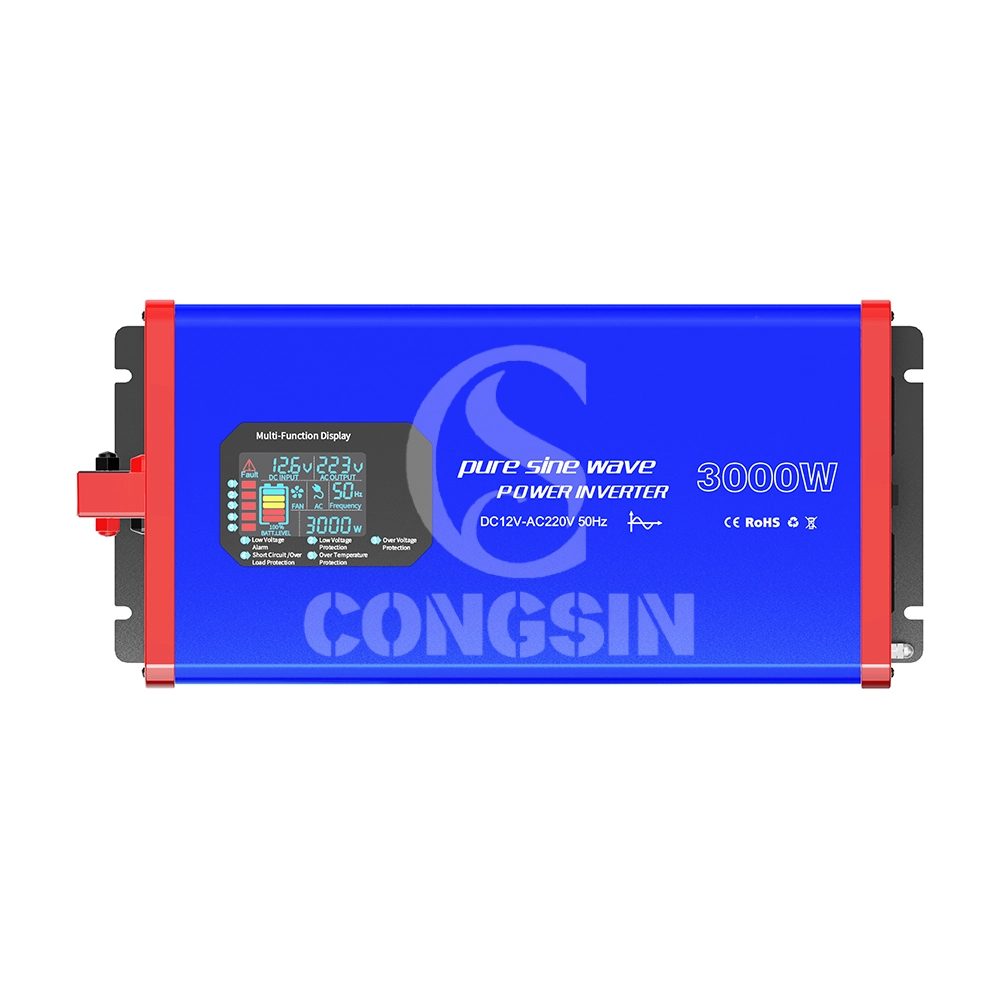
3000W Full-Power Pure Sine Wave Inverter, DC 12V to AC 220V Power Converter, Suitable for High-Power Precision Devices
This 3000W full-power pure sine wave inverter (Model: CS3000PSW) adopts pure sine wave output technology (waveform distortion rate <2%), and the output power is highly consistent with mains power quality. It can safely drive high-power precision loads such as air conditioners, refrigerators, medical instruments, and small industrial equipment, avoiding equipment malfunctions or shortened service life caused by unstable waveforms. The device supports DC 12V input (compatible with 10.5V-14.8V wide voltage), continuously outputs 3000W full power, and has a peak power of 6000W, easily coping with the instantaneous startup impact of high-power devices; it is equipped with 4 AC universal sockets (max current 16A) + 2 USB 3.0 fast-charging ports (22.5W per port) to meet the simultaneous power supply needs of multiple devices. Built-in six-fold safety protection (overload, overvoltage, undervoltage, short circuit, overtemperature, reverse connection), combined with dual intelligent silent cooling fans (noise ≤45dB), it achieves the triple advantages of "high power + high safety + low noise," suitable for home emergency, outdoor engineering, vehicle-mounted power supply, small industrial scenarios and other fields.
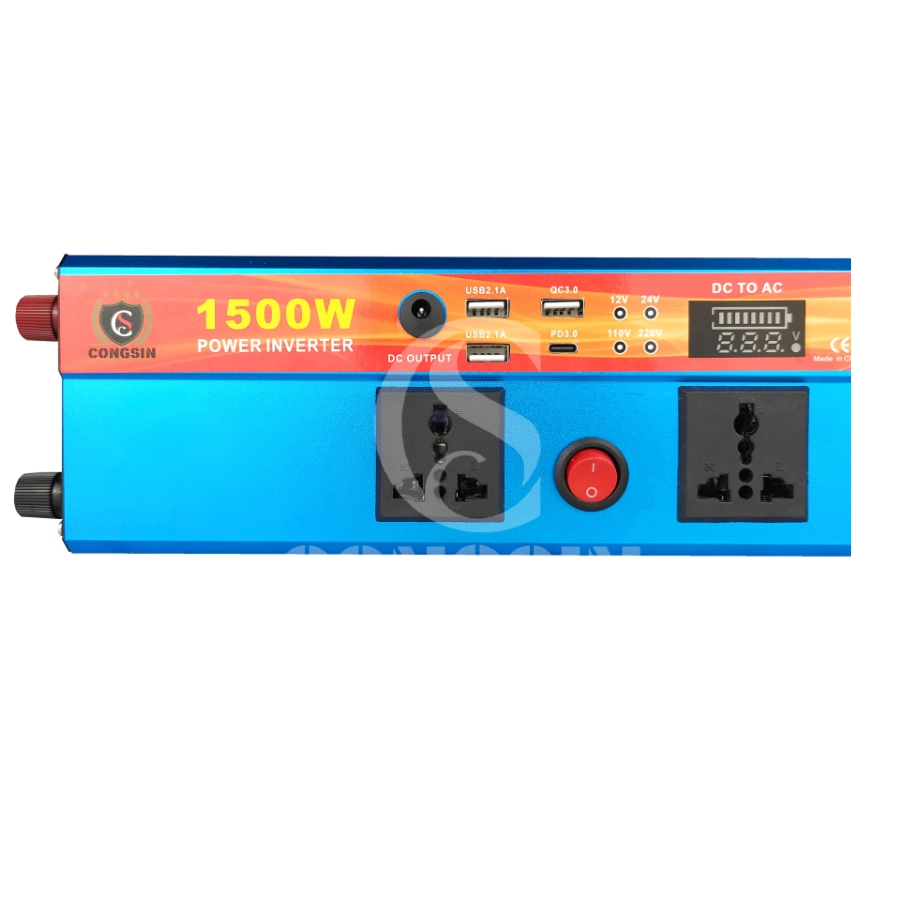
1500W Modified Sine Wave Inverter, DC 12V to AC 220V Power Inverter with LED Display, 3 USB Ports, 1 Type-C, 1 DC 12V Output & Two Universal Sockets
Our CS1000DDBC 1000W modified sine wave inverter is a professional power conversion device that converts DC 12V from batteries into AC 220V electricity. It is designed with user convenience in mind, featuring an LED display for real-time status monitoring, multiple charging ports (3 USB, 1 Type-C, 1 DC 12V) and two universal sockets to power a wide range of devices simultaneously. Its compact size (250×95×55mm) and lightweight design (NW: 0.84kg) make it easy to carry, ideal for outdoor activities, emergency home use, and on-the-go power needs.
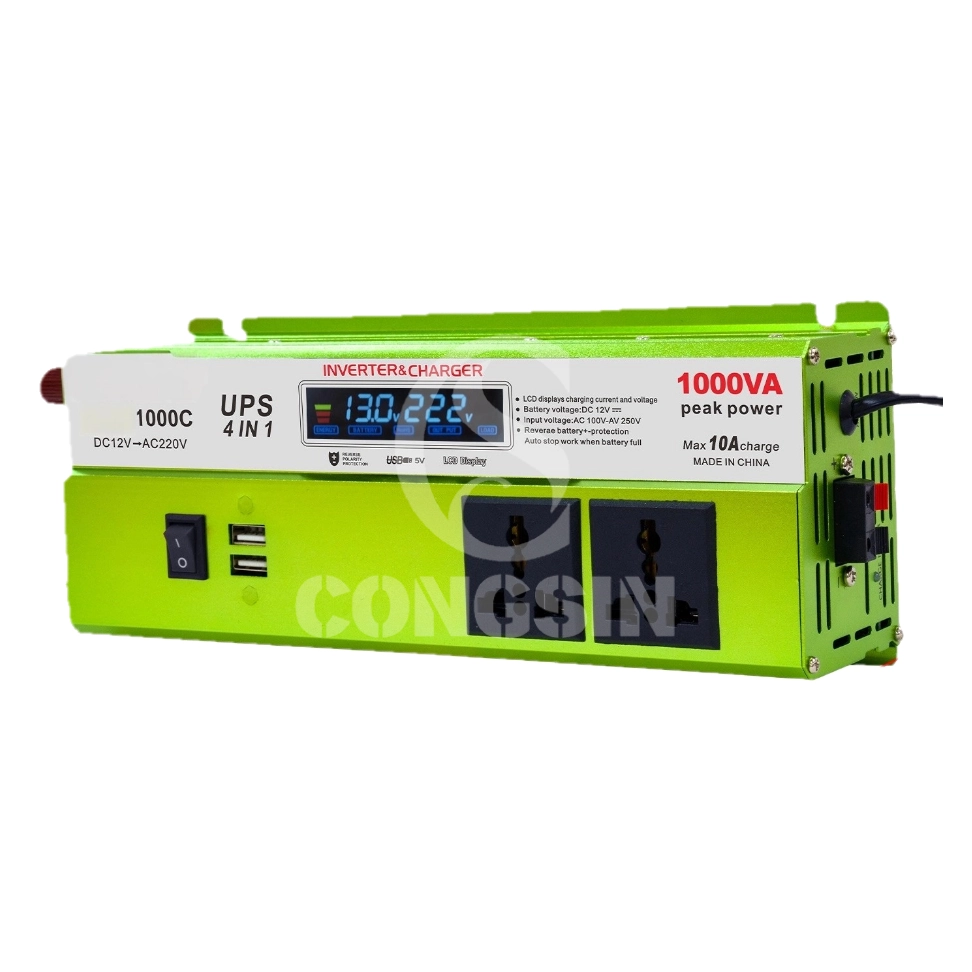
1000W 1500W 2000W UPS POWER INVERTER WITH CHARGER 10A 15A 20A DC TO AC 12v24v 110v 220V
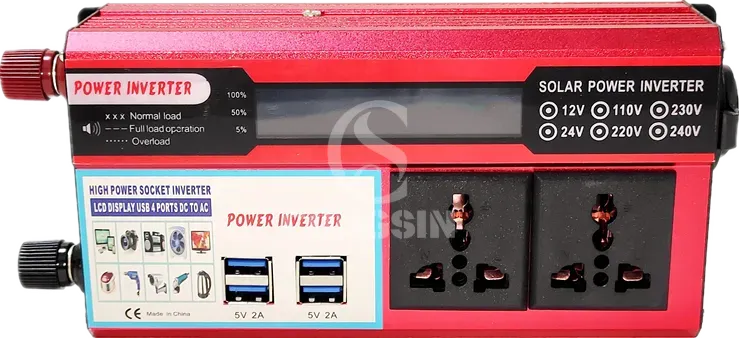
Congsin 500W Modified Sine Wave Inverter with LCD Display of Off Grid System Solar Power Inverter

CONGSIN is a trusted OEM factory for power inverters, solar charge controllers, and DC converters. Reliable solutions for global B2B buyers.
 High Quality
 7/24 Service
 Guaranteed Warranty
© 2025 Congsin. All Rights Reserved.