





Best AC to DC Car Inverters for RVs and Camping
- Why picking the right inverter matters for RV and camping life
- What problems the wrong inverter creates
- How I assess user needs in the field
- Key selection criteria I use
- How an inverter actually works — and why the phrase ac to dc car inverter is often misleading
- Clarifying terminology: AC to DC vs DC to AC
- Basic internal stages of a DC→AC inverter
- Why waveform quality matters
- Recommended inverter types and sizing for RVs and camping (practical guide)
- Typical load profiles and recommended inverter sizes
- Pure sine vs modified sine — real-world advice
- Battery and cabling considerations I always check
- Buying, installation and safety best practices I follow
- Certifications and test data to demand
- Installation tips to minimize failures
- Thermal management and maintenance
- Comparative guide: Inverter features and which I recommend for different RV and camping setups
- Feature comparison table
- How I pick a brand or manufacturer
- Why warranties and support matter
- Why choose Guangzhou Congsin for RV and camping inverter needs
- Company profile and core strengths
- Manufacturing capability and compliance
- Products and differentiation
- Real deployment examples and field lessons I've learned
- Case: weekend camper—compact pure sine solution
- Case: full-time RV with solar—integrated inverter/charger approach
- Lessons about surge margins and batteries
- FAQ
- Q: Is an ac to dc car inverter the right phrase when shopping?
- Q: Do I need a pure sine inverter for my RV?
- Q: How do I size an inverter for my RV?
- Q: Can I run my RV air conditioner from an inverter?
- Q: What maintenance does an inverter require?
- Final thoughts and contact
Best AC to DC Car Inverters for RVs and Camping
As someone who has specified and tested vehicle power systems for over a decade, I know that selecting the right inverter for RVs and camping can be confusing—partly because of terminology like “ac to dc car inverter.” In practice, most devices installed in vehicles convert DC (battery) to AC (household) power. In this article I clarify terminology, map inverter types to real RV and camping needs, compare common configurations, and provide practical buying, installation, and maintenance guidance. I also explain why manufacturers like Guangzhou Congsin Electronic Technology Co., Ltd. are strong partners for OEM and custom inverter solutions.
Why picking the right inverter matters for RV and camping life
What problems the wrong inverter creates
Choosing the wrong inverter leads to frequent blown fuses, overheated units, poor battery life, or damaged electronics (especially sensitive devices like CPAPs, laptops and modern refrigerators with electronic controls). I’ve seen users buy low-cost modified sine models and then find their CPAP alarms, laptop chargers, or modern TVs behave erratically. That’s a cost and safety issue when you’re off-grid.
How I assess user needs in the field
When I help customers, I first map their expected loads (continuous vs. surge), device sensitivity (pure vs modified sine requirement), runtime expectations, and available battery capacity (AH and voltage). That simple inventory lets me recommend a compact 300–600W inverter for phone/laptop/coffee maker use, or a 2000–3000W pure sine inverter for proper RV appliance operation.
Key selection criteria I use
I prioritize: waveform (pure vs modified sine), continuous and surge watts, efficiency at typical loads, battery cutoff/protection features, thermal management and certifications (CE, EMC, LVD, ETL, RoHS, ISO9001). These correlate strongly with reliability and long-term cost of ownership.
How an inverter actually works — and why the phrase ac to dc car inverter is often misleading
Clarifying terminology: AC to DC vs DC to AC
Many shoppers type “ac to dc car inverter” when they mean a car inverter that supplies household AC from a vehicle. Technically, an inverter converts DC to AC. The reverse is a rectifier (AC→DC). I always explain this early because accurate terminology matters when checking compatibility: you want a DC→AC inverter (car battery 12V/24V → 120/230V AC) for powering household appliances from your RV battery bank.
Basic internal stages of a DC→AC inverter
In simple terms: DC input → DC bus conditioning → inverter switching stage (creates AC waveform) → output filter → load. Waveform quality depends on switching topology and filters. For an accessible overview see the Wikipedia inverter article (Inverter (electrical)).
Why waveform quality matters
Pure sine wave inverters recreate clean sinusoidal AC and are necessary for sensitive electronics, motor-driven pumps or compressors, and many modern appliances. Modified sine wave units are cheaper and acceptable for resistive loads (lamps, simple heaters), but can cause issues with charging electronics or audio/video equipment, and increase motor heating.
Recommended inverter types and sizing for RVs and camping (practical guide)
Typical load profiles and recommended inverter sizes
Below I give practical pairings of common RV/camping devices and inverter sizes. These are based on measured device draws and typical surge currents.
| Use case | Typical continuous watts | Recommended inverter | Notes |
|---|---|---|---|
| Charging phones, laptops, light bulbs | 50–300 W | 300–600 W, pure or modified for budget | Small, high-efficiency units suffice. Pure sine recommended for laptops. |
| Coffee makers, slow cookers | 500–1200 W | 1000–1500 W pure sine | Check surge for heating element startup; use inverter with good surge rating. |
| Microwave, small fridge, power tools | 800–2000 W (fridge compressors have high surge) | 2000–3000 W pure sine with high surge capacity | Ensure battery bank and cabling support high surge currents. |
| Full RV house system (A/C, electric water heater) | 3000–6000+ W | Inverter/charger systems or generator recommended | Consider integrated inverter-charger or parallel inverter arrangements. |
Pure sine vs modified sine — real-world advice
If you plan to run any motor-driven device (compressor, pump), sensitive electronics (medical devices, laptops), or audio systems, buy a pure sine inverter. For strictly incandescent lights, resistive heaters, or occasional small-power charging, a modified sine inverter can be considered to save cost—but be aware of possible incompatibilities.
Battery and cabling considerations I always check
Inverter performance is only as good as the DC supply. I check battery amp-hour capacity, state of charge, and the cable gauge between battery and inverter. Voltage drop during surge can cripple even a robust inverter. For example, a 2000 W inverter at 12 V draws ~167 A continuous (more at surge); that requires heavy gauge cable and a sound battery bank or parallel battery arrangement.
Buying, installation and safety best practices I follow
Certifications and test data to demand
Always request product test reports and certification: ISO9001 for quality systems, CE/EMC/LVD for European safety/electromagnetic compliance, ETL or UL for North American approvals, and RoHS for material compliance. ISO9001 details: ISO 9001. These are not cosmetic—real certifications reflect consistent production and independent testing.
Installation tips to minimize failures
Mount in a ventilated location, follow manufacturer minimum battery cable gauge, fuse at the battery positive within 18 inches, and avoid ground loops. Use a dedicated inverter shore/AC input wiring if the inverter supports pass-through charging (inverter-chargers). If you’re unsure, hire a certified RV electrician to verify DC and AC distribution and grounding arrangements.
Thermal management and maintenance
Inverters derate with temperature. I advise installing units where ambient remains below 40°C when possible, and checking cooling fans and air intakes annually. Also monitor battery electrolyte or state-of-charge; depleted batteries are the leading cause of inverter stress and early failure.
Comparative guide: Inverter features and which I recommend for different RV and camping setups
Feature comparison table
| Feature | Budget (modified sine) | Mid-range (pure sine) | High-end (inverter/charger & intelligent) |
|---|---|---|---|
| Waveform | Modified sine | Pure sine | Pure sine, intelligent charging |
| Typical continuous power | 200–1000 W | 1000–3000 W | 3000–6000+ W |
| Best for | Lights, chargers | Kitchen appliances, fridge, laptops | Whole-vehicle electrification, A/C, large loads |
| Complexity | Low | Medium | High (requires system design) |
| Typical price range | Low | Mid | High |
How I pick a brand or manufacturer
I prioritize manufacturers with transparent specs, solid service networks, published test data and clear warranty terms. For OEM partners I look for companies that operate automated production lines, have ISO9001 systems, and international approvals—these indicate scale and consistent quality.
Why warranties and support matter
A 2–5 year warranty and accessible technical support save time and money on the road. I’ve worked with customers who were stranded near remote locations; quick support or an authorized service network matters more than a few dollars saved on purchase price.
Why choose Guangzhou Congsin for RV and camping inverter needs
Company profile and core strengths
Guangzhou Congsin Electronic Technology Co., Ltd., founded in early 1998, is a professional power inverter manufacturer with over 27 years of focused experience. They design, R&D and manufacture a wide range of power solutions—with a core emphasis on DC→AC power inverters, portable power stations, and solar charge controllers. Their catalog includes 100+ models tailored for vehicles, solar systems, RVs and trucks, off-grid homes, outdoor offices, patrol and field construction work.
Manufacturing capability and compliance
Congsin operates fully automated production lines, advanced instrumentation and multifunctional testing equipment to ensure product reliability, efficiency and intelligent functionality. Their quality system is ISO9001 certified and many products hold international approvals such as CE, EMC, LVD, ETL, FCC, RoHS and E-MARK. Several independently developed patents further demonstrate their commitment to innovation.
Products and differentiation
Key product families include Solar Charge Controllers, modified sine wave inverters, pure sine wave inverters and portable power stations. What sets Congsin apart in my experience is the combination of deep manufacturing experience, a wide model portfolio that suits single-vehicle installs to OEM fleet programs, and the ability to support OEM/ODM customization—valuable when you need tailored features like special connector types, custom firmware for remote monitoring, or branded firmware screens for RV integrators.
Real deployment examples and field lessons I've learned
Case: weekend camper—compact pure sine solution
A couple wanted reliable coffee, laptop charging and a small fridge on weekends. I specified a 1500 W pure sine inverter, a 200 Ah AGM battery or equivalent LiFePO4 bank, and a 120 A smart charger. The result: stable device operation, minimal noise, and 2–3 hours coffee/fridge use off-grid before recharge was needed.
Case: full-time RV with solar—integrated inverter/charger approach
For a full-time RV owner with solar, I recommended an inverter/charger with built-in transfer switch and MPPT charge controller compatibility (or separate MPPT). This simplifies shore power passthrough, generator support, and prioritized battery charging, delivering energy independence for off-grid stays.
Lessons about surge margins and batteries
Never undersize the inverter when motors or compressors are present. In one field case, a 1200 W inverter struggled with a refrigerator start that required 1800 W surge; upgrading to a 2500 W pure sine unit solved the reliability issue. Also, adequate battery state-of-charge is critical—weak batteries cause voltage sag and inverter protective shutdowns even if the inverter is correctly sized.
FAQ
Q: Is an ac to dc car inverter the right phrase when shopping?
A: No — the correct device for powering household AC loads from a car battery is a DC→AC inverter (commonly called a car inverter or power inverter). AC to DC refers to rectifiers or battery chargers. But many searchers still use the phrase ac to dc car inverter, so vendors often include both terms in descriptions.
Q: Do I need a pure sine inverter for my RV?
A: If you run sensitive electronics (laptop, CPAP, modern TVs), motors, or electronically-controlled appliances, yes—choose a pure sine inverter. For basic lights and simple resistive loads, a modified sine inverter can work but has trade-offs.
Q: How do I size an inverter for my RV?
A: List all devices you want to run simultaneously. Add their continuous wattages and check surge requirements (motors). Choose an inverter whose continuous rating covers the sum and has a surge rating for the highest starting load. Confirm battery and cable capacity to deliver the required DC current.
Q: Can I run my RV air conditioner from an inverter?
A: Running RV A/C typically needs a high-capacity inverter (3000–6000 W or more) and a large battery/solar/generator support system. Many users prefer a generator or shore power due to the A/C’s high continuous and surge demands.
Q: What maintenance does an inverter require?
A: Keep vents and fans clean, check connections and fuses, monitor battery health and state-of-charge, and update firmware where supported. Periodic inspection of mounting and wiring reduces failure risk.
Final thoughts and contact
I’ve worked on many RV and vehicle power systems and have found the right inverter decision dramatically improves reliability and enjoyment of off-grid life. Focus on waveform quality, correct sizing (including surge margin), thermal management, and a reputable supplier with certification and service. For reliable, scalable solutions—whether you need a single pure sine unit for camping or OEM inverter lines for fleets—Guangzhou Congsin offers a wide model range, strong manufacturing credentials and support for customization.
If you’d like detailed system sizing help, product specifications or OEM/ODM options from Congsin, contact their sales and technical team to discuss your RV or camping power needs and request datasheets and test reports. Reach out to Guangzhou Congsin Electronic Technology Co., Ltd. to view models, certifications and customization options.
Pure Sine Car Inverter vs Modified Sine: Which to Choose?
Top 10 pure sine wave inverter Manufacturers and Supplier Brands
Top 5 pure sine wave inverter Company List and Products Compared

2026 Ultimate Guide: Why Off-Grid Hybrid Solar Inverters Are the Game-Changer You Need [Buyer's Checklist]
Modified Sine Wave Inverters
How does the UPS function of this inverter work?
When the external power supply is normal, the inverter powers the device while charging the battery; when the external power supply is interrupted, it automatically switches to battery power to ensure uninterrupted operation of the device.
Can it be connected to a battery long-term?
Yes, ensure good ventilation to avoid overheating.
Pure Sine Wave Inverters
Does it have a charging (UPS) function?
No, this model is a pure inverter without UPS function.
Products
Can it be connected to a battery long-term?
Yes, ensure good ventilation to avoid overheating.
Distributor
Do I need to carry inventory?
We offer flexible inventory options based on your market needs, and we can assist with supply chain management.
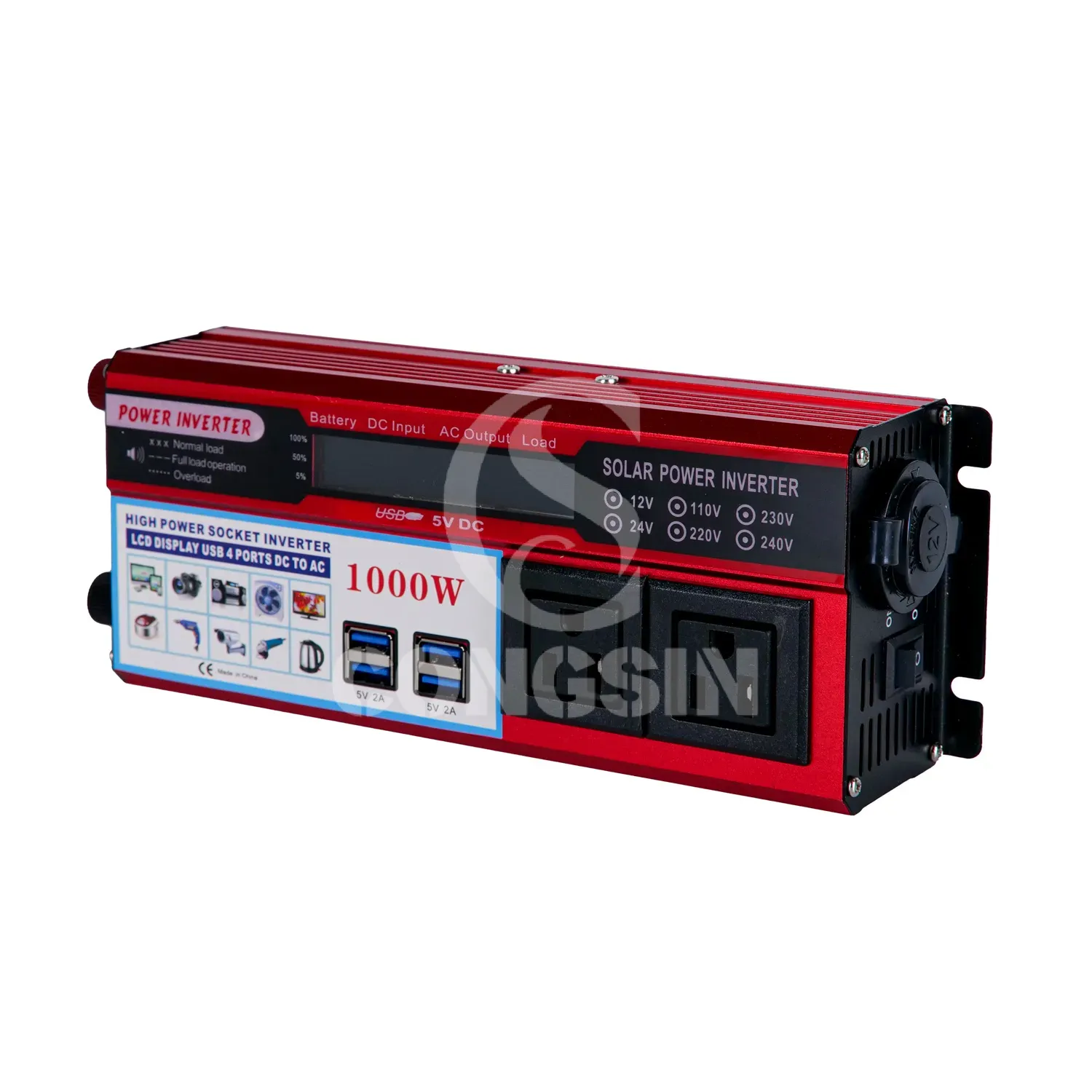
Congsin 1000W modified sine wave inverter with American Sockets and Lcd display portable 12V car RV
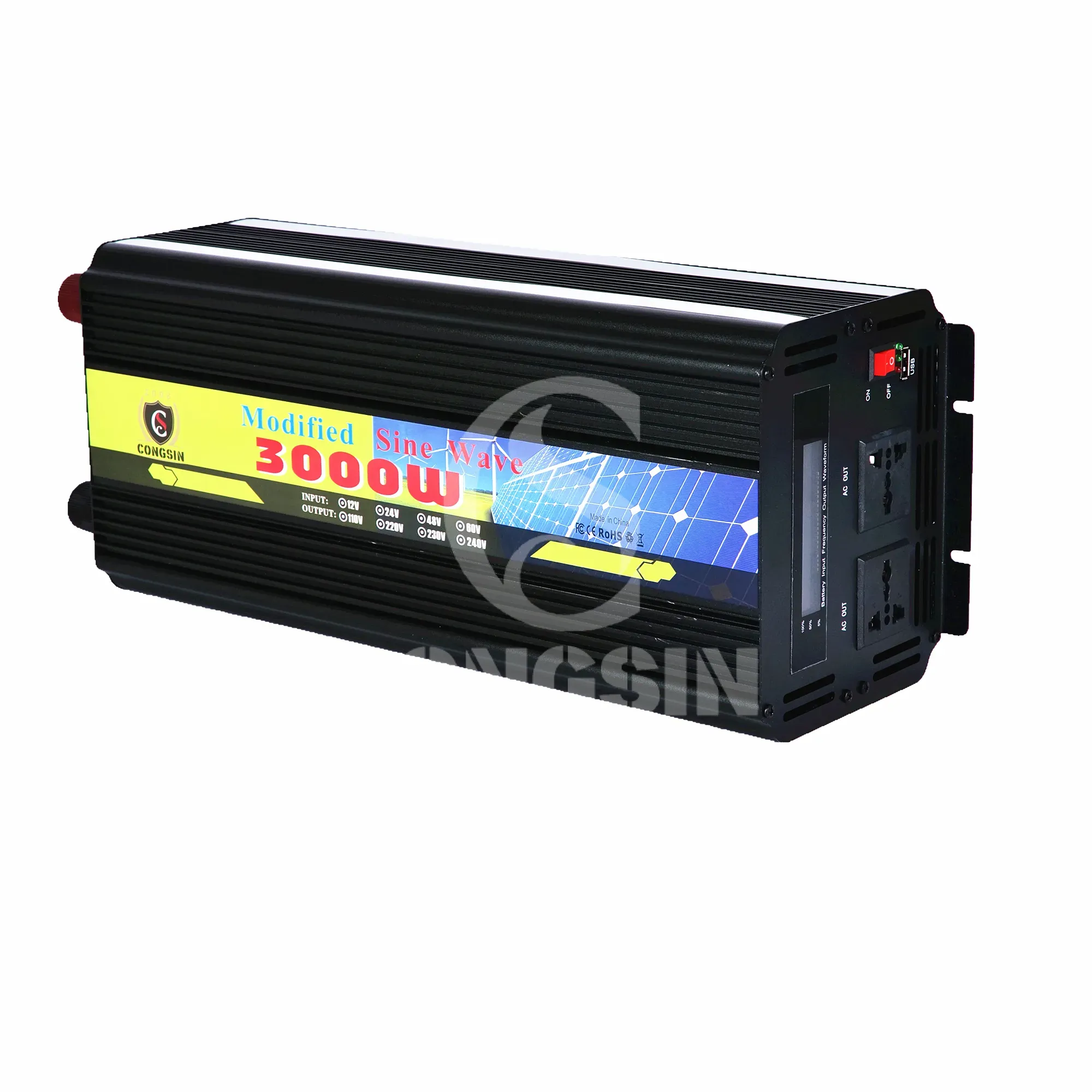
Congsin Full Power 3000W Modified Sine Wave Inverter Peak Power 6000W with LCD Display RV Solar
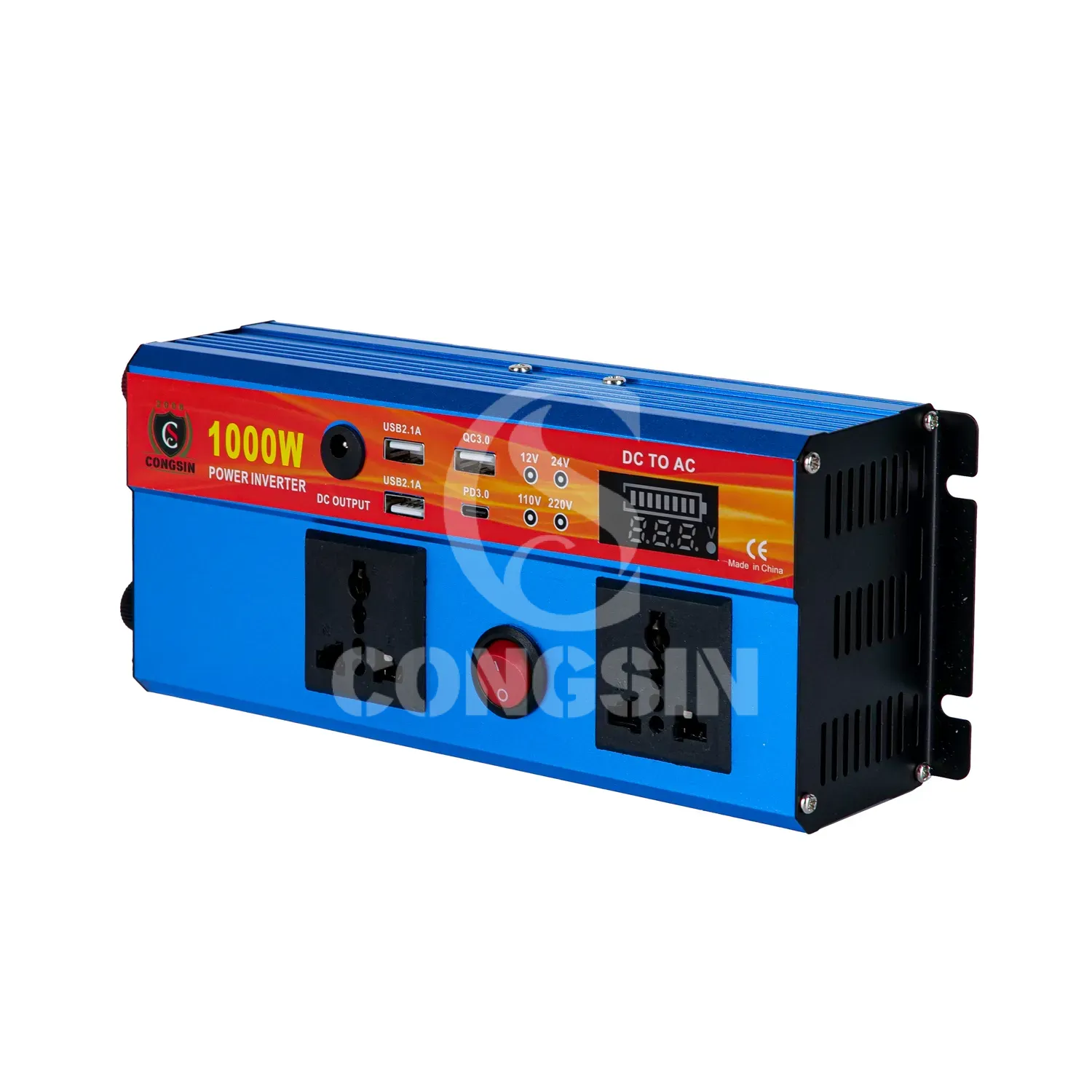
Congsin 1000W modified sine wave inverter with LED display and Type C port car RV power inverter
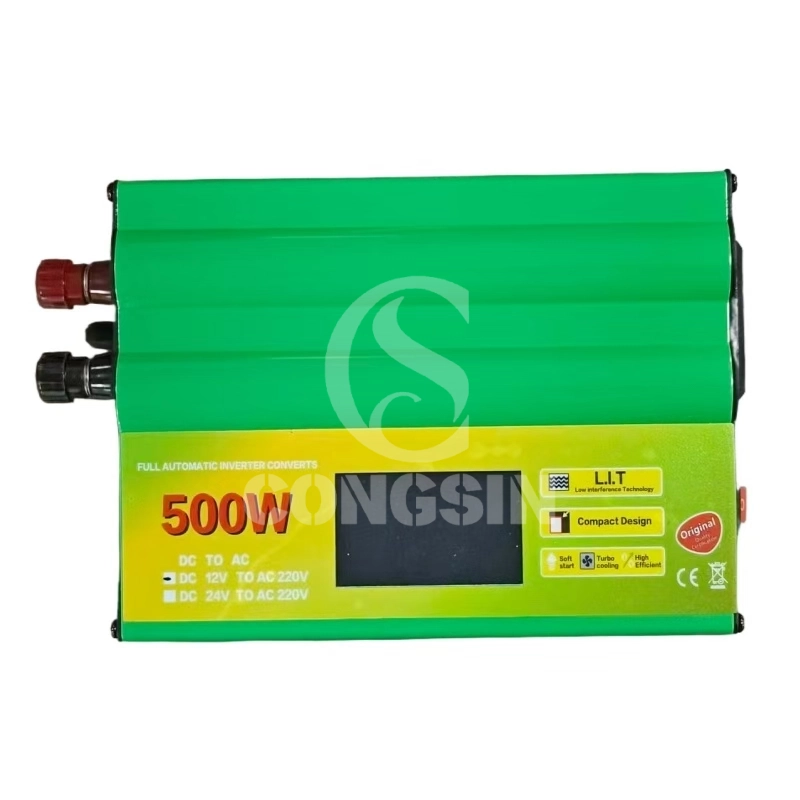
Congsin Modified Sine Wave Inverter 500W 1000W 1500W 12V LED Display Portable for RV Car Solar

CONGSIN is a trusted OEM factory for power inverters, solar charge controllers, and DC converters. Reliable solutions for global B2B buyers.
 High Quality
 7/24 Service
 Guaranteed Warranty
© 2025 Congsin. All Rights Reserved.